KTH Logo

World Water (Scarcity) Day

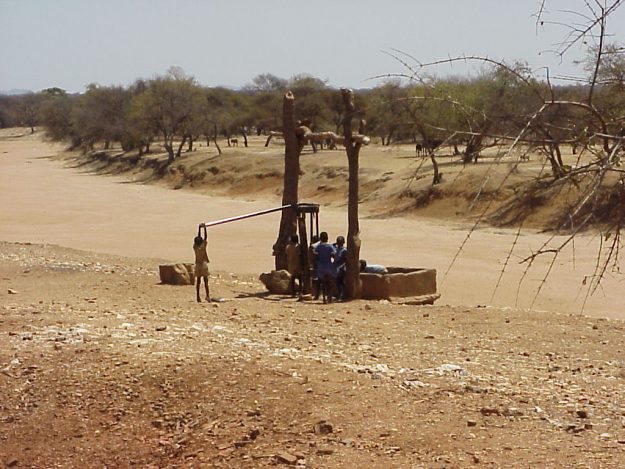
Zansukwe, Southern Zimbabwe. Photo: David Nilsson

An average woman in rural India travels 14,000 km every year just to get water. At the same time clever solutions to manage water more sustainably have found their way from India to Gotland, in the face of increased water scarcity in Sweden. These were some of the interesting things discussed at the full-day conference on water scarcity arranged by KTH and IVL yesterday, as a run-up to World Water Day, March 22.

Almost half of the world’s population live in areas under water stress today and it is not expected to diminish in the decades to come. Water scarcity has been a reality in large parts of the world for a long time, but in recent years it has become a real threat also in a place like Sweden. Water is truly a global challenge, but it manifests itself in local settings and typically must be dealt with by local actors.

On the largest island in Sweden, Gotland, the local authorities have issued a total irrigation ban already from 1 april this year – much earlier than any year before. As Patrik Ramberg, the technical director for Gotland region, explains, the island naturally has very low water storage capacity because of its geology. But the massive drainage programmes implemented in the 19th century made things much worse; most of the wetlands are gone and with them, important buffering capacity. Now a project is going on with IVL and KTH to restore storage capacity and also to promote re-use of wastewater.
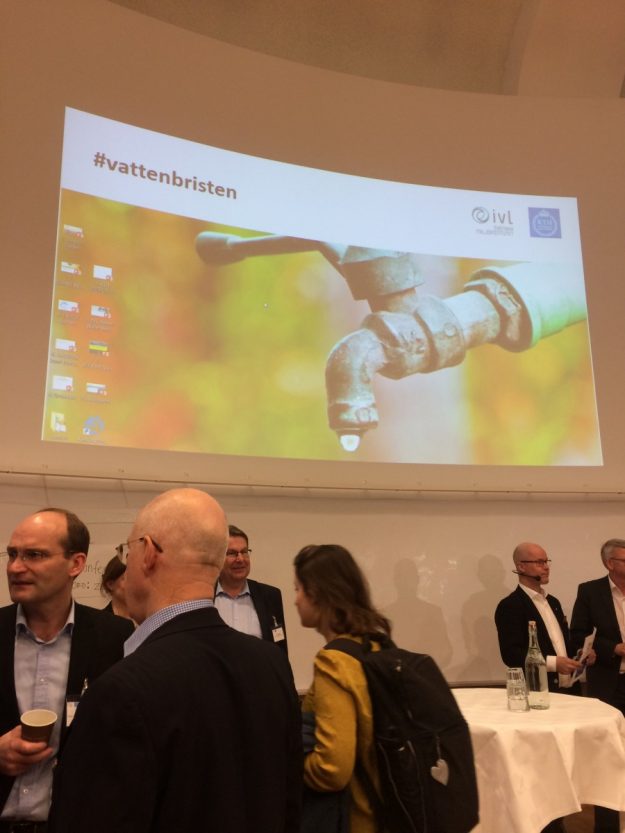
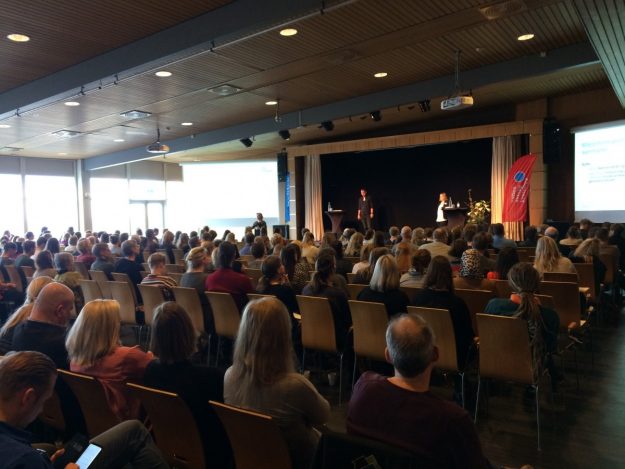
Over 100 people from research, industry, local and national agencies gathered

Re-use of wastewater came up in several of the examples and presentation. As Christian Baresel from IVL put it; why not just clean the water once, and then keep on using it within the same loop? Alexandra Lazic from Xylem showed that many different solutions for wastewater re-use already have been implemented throughout the world, not least in the USA. Technologies like ozonation, membranes, UV, advanced oxidation, bio-filters etc can be combined in an endless way to match the conditions and needs in different places.

Some large industries have already understood this and are trying ways of re-using not just the water, but also recoving some of the products in the wastewater, like phosphorous. Andreas Rosberg from the metallurgy and tools company Sandvik, pointed out that they think a more circular production would in the end also be good business.

Sweden’s scarcity problem of course pales in comparison with the Indian case presented by Rupali Deshmuk, IVL. ”We don’t even really have water scarcity in Sweden!” proclaimed Bosse Olofsson, geo-hydrology guru and KTH professor. The annual run-off  by far exceeds the withdrawals in our country and the amount of freshwater available per capita is still very high. The problem is that the water is not available where it is needed and when it is needed – such as during the growth season – and therefore water scarcity is a temporal and local phenomenon.

The largest consumer of water is by far agriculture, accounting for around 70% of the water withdrawals globally. And with rising demand from energy production, industry and food production there are bound to be conflicts. The Director General of Swedish Agency for marine and water management, Dr. Jakob Granit, cautioned that we are ill prepared for handling these kinds of conflicts. Responsibility for the many aspects of water management have been portioned out to a plethora of institutions at central, regional and local levels, and the overall picture is one of serious fragmentation.

Fredrik Gröndahl from KTH pointed to the oceans as a solution. Much more of the primary production of food, energy and raw materials could be done through sustainably farming the seas, thus relieving the terrestrial eco-systems and the limited fresh water on land. A good thing about farming the seas is that they don’t need irrigation. Fredrik, calling himself a ”sea farmer”, argued that we can live well off our polluted seas; we don’t need to add nutrients either!
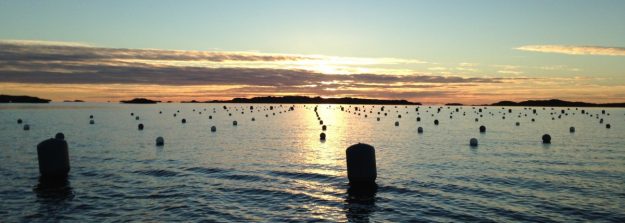
Farming the seas. Photo: F Gröndahl

Despite the ominous conference title ”Vattenbristen” (Water Scarcity) the speakers were optimistic about our ability to face up to the challenge. It is obvious that a range of solutions already exist, and that they include technical, organisational and behavioural changes that are within reach. What is needed is closer collaboration between a multitude of actors; politics, finance, academia, industry and citizens. ”Collaboration”, said Jakob Granit, ”cannot just be a word, it must also happen.” In the concluding discussion, Katarina Luhr, Stockholm City councillor invited more collaboration around water, with the view to using the city as a testbed.
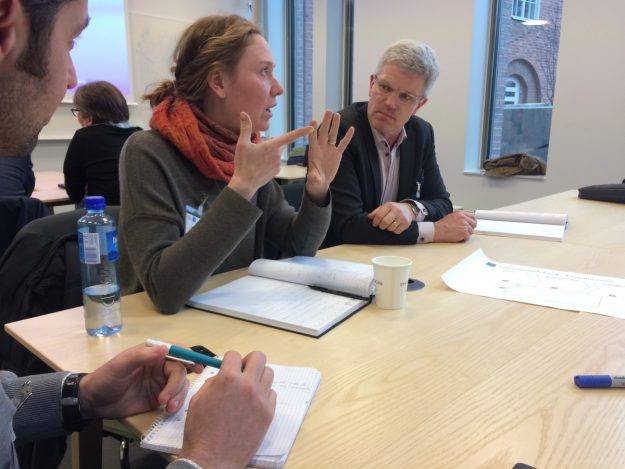
Workshop participants discussing how digitalisation can help in managing water

If we can get the collaboration right and show a viable business model around sustainable water use, we might be able to not just avoid future problems in Sweden, but also contribute to more just and sustainable water practices globally. Not a bad message for World Water Day!

Video from the conference here

 

Water and Sanitation is Rock ‘n Roll!

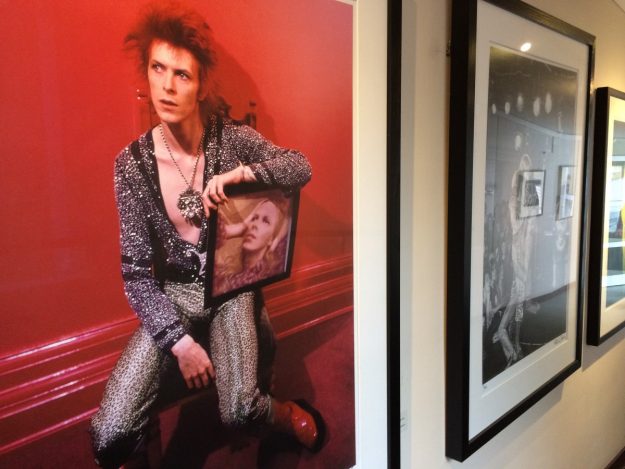
A packed room with 500 people cheering and clapping hands in front of the stage. Walls covered with photos of rock icons like Bowie, Rolling Stones and Joni Mitchell. Am I really at a conference on small scale water and sanitation?

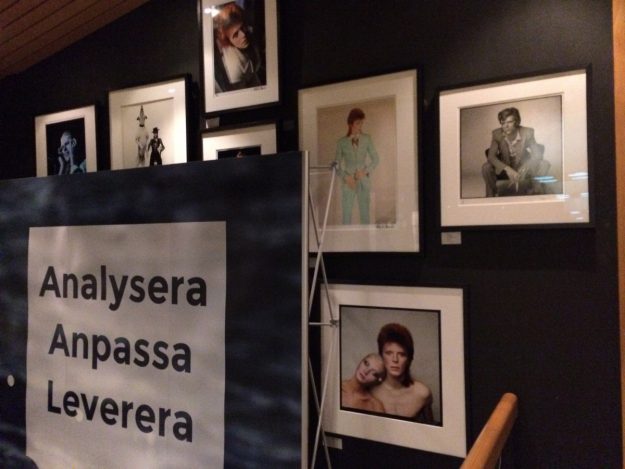
Yes – the conference organisers had the good taste of staging the VAK2019 conference on circular water and sanitation solutions in the Tylösand hotel whose proprietor Per Gessle (Roxette) has turned the establishment into a permanent rock and pop art collection. For two days, these rock and pop culture giants look down at us from their passe-partouts, peeking out from behind the sales materials and pop-up stores of mini-sewage treatment plants, filters, tanks and toilet seats. And it feels… just right.

David Bowie, photographed by Mick Rock. Rebel rebel!
Rock icons peeking out behind sales screens.

Come on. Why should there the be even the faintest connection between rock ’n roll and something as unsexy as water and sanitation, you ask?

Because there’s a revolution coming in water and sanitation. The emerging shift to a circular water economy is an outright revolt against age-old principles and norms. A new generation of professionals and consumers are taking up a fight against the burden of history, breaking out of traditions, and charting a new and independent path. If that isn’t Rock ’n Roll, then nothing is.

Maybe I’m getting carried away by the atmosphere in the company of like-minded. So let’s do a recap.

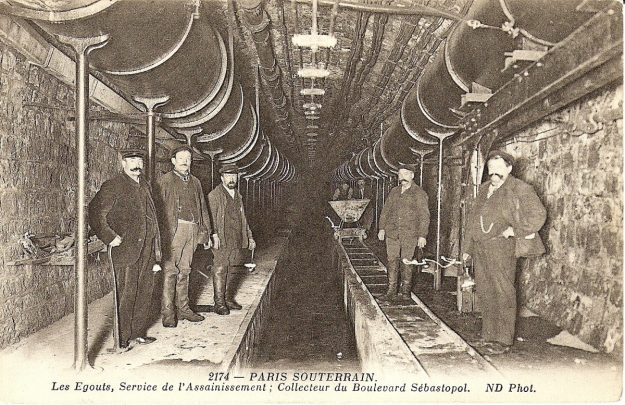
Essentially, most of our so called ”modern” water systems are based on principles of linear transport, which hail from the Middle East and Meditteranean great cultures. The flush toilet is more than 3000 years old. Although the Roman Empire went down their technology, organization and water legislation lived on and was picked up as an ideal in Europe’s 19th century modernisation processes. ”I will turn Paris into a Rome of today” said Baron von Haussmann, as he led the cleaning up of the city and built an extensive sewer network (Reid 1991). The ”Modern Infrastructure Ideal” of networked water and sewerage systems that still dominate the cities of the world are not modern. Essentially, they are antique.

“Les Egouts” of the Parisian sewers. Photo in the US public domain.

But the global water regime is now under pressure of a magnitude it has not seen since the collapse of the Roman Empire. Why? Due to its inherent logic requiring unrestrained and stable supply of raw water. But worldwide, water scarcity and climate change are now very real.

This transformative pressure has already led to change. Waste water is reused in Spain, Portugal, Israel, Greece, the United Arab Emirates, Australia, the United States and China. Especially for irrigation purposes in agriculture. At 60% of all irrigated agricultural land in Israel, recycled wastewater is used. Also so-called “urban re-use” is on the rise, e.g. flushing, cleaning, golf courses etc. And it is economically beneficial. A study in Hong Kong showed that investment in treatment and reuse of gray water for toilet flushing at property level is profitable already after five years of operation.

But Australia and Hong Kong is very far away. Is re-use of wastewater realistic in Sweden? Two things are clearly pushing us in this direction: the hunt for water and the hunt for energy.

Water is already in short supply in parts of Sweden. We are repeatedly affected by drought, especially during the summer months. More than half of Sweden’s municipalities reported water shortages 2018 and 85 of them issued irrigation bans or other restrictions. Last year Värmdö municipality terminated the service agreement with one of the golf clubs in the municipality. No more tap water for the fairways and greens.

So why not look for opportunities to use the freshwater once more? A number of researchers and students from KTH now investigate precisely this on seven islands in the Swedish, Finnish and Åland archipelago. Within the Circular Water Challenge, as the project is called, we work with the local people, the business community, the municipalities and county councils, and with other experts. Lessons learned on these micro-systems will benefit many others. Together with IVL, KTH also runs Hammarby Sjöstadsverk where we investigate how we can improve costs and performance of circular technology.

Secondly, new requirements for energy efficiency in buildings drive property owners to recover the heat in the wastewater. Some property owners are now thinking about the next step. They investigate the possibilities of reusing the actual hot water. Why not spin around the hot water for showers and basins? This is already happening and in a FORMAS-funded project we investigate what this can mean in the long run.

Yes, but this is only marginal, you might say, what would a few islands or isolated properties matter? The thing is that this is always how technology shifts begin. They start in the margin, in so-called “niches”. We already see municipalities that are planning for entire districts based on a circular principle, such as in Helsingborg. And then things start to happen with the large systems.

So when is the revolution coming? It might come sooner than we think. As I wrote in a blog over a year ago we could face a future where network consumers use both less water and energy. And this may trigger a spiral that make the systems change unexpectedly fast. Surely, we are just in the beginning of the revolution and much work remains.

But I say like Bob Dylan: ”I know a change is gonna come, oh yes it will.”


PS – don’t miss our conference 21st of March on the same topic: ”Vattenbristen”.