
From birch bark to truck cab
KTH spinoff Reselo and Scania explore fossil-free rubber
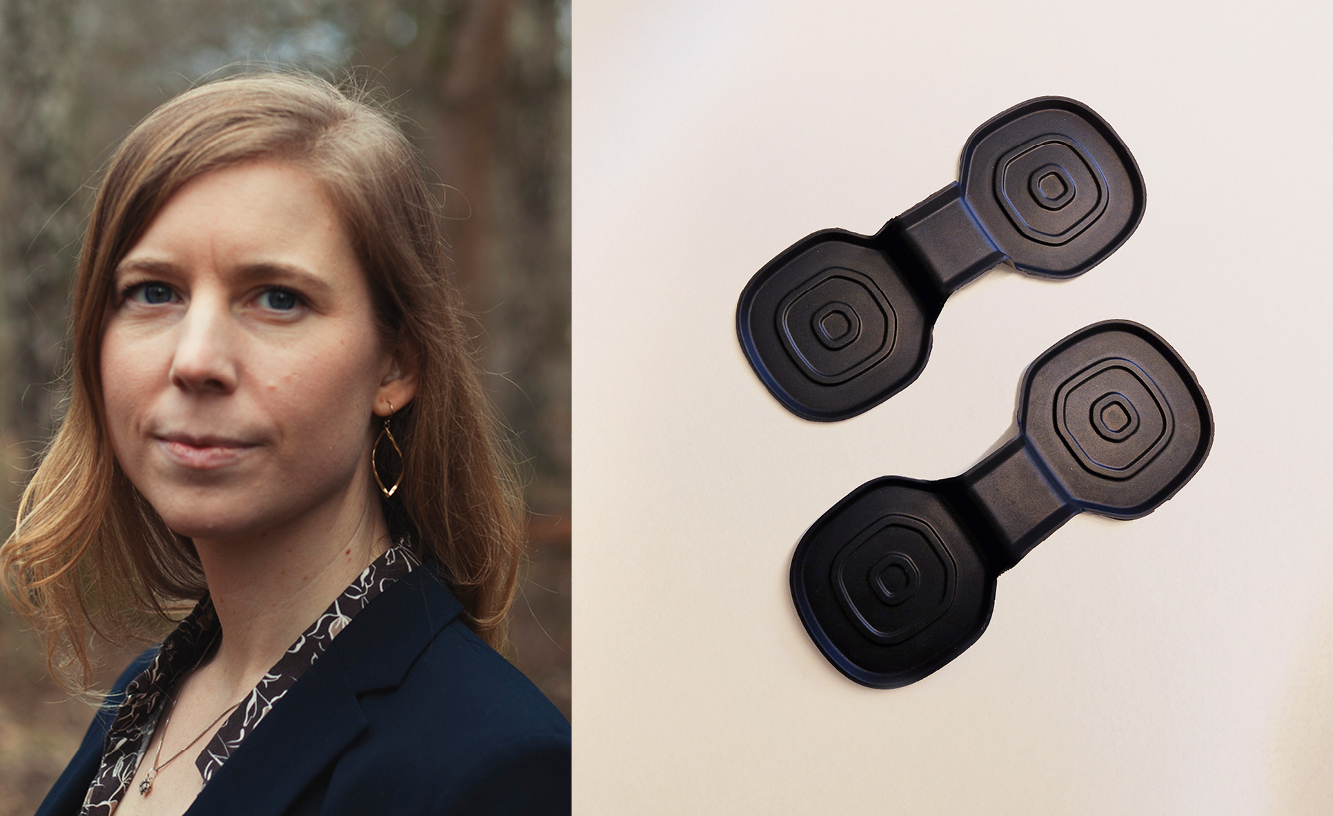
Scania and KTH spin-off Reselo are exploring how a rubber made from birch bark could help reduce the carbon footprint of tomorrow’s transport vehicles.
Reselo is collaborating with Scania, one of the world’s leading truck manufacturers. The companies met at a KTH Innovation event connecting startups and leading industry players.
A shared vision for fossil-free materials
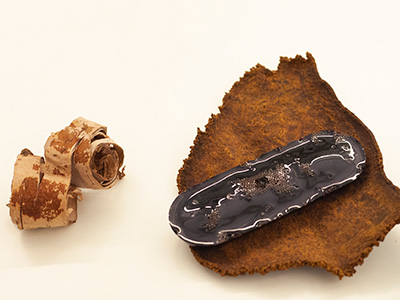
Reselo develops a bio-based alternative to fossil rubber using birch bark, a by-product from the forest industry that’s typically burned as waste. Through KTH Innovation, the team met with representatives from Scania and presented their material, Reselo Rubber.
“We immediately saw potential in the material,” says Martin Bellander, Technical Manager and rubber materials expert at Scania R&D. “Decarbonising our products and supply chain also means rethinking the materials used to build the trucks themselves – down to the smallest components. When we saw a fully bio-based polymer made from renewable waste and showing promising properties, we knew we had to explore it.”
The collaboration also includes Scania’s supplier AnVa Polytech and is funded by Vinnova. The goal: to test the material’s performance in real vehicle conditions and evaluate its potential for broader industrial use.
Building bridges between startups and industry
For Reselo, the partnership with Scania is an important step in proving the potential of their innovation at scale.
“KTH Innovation has been an invaluable link between us and future-facing companies,” says Josefin Larsson, CEO and co-founder of Reselo. “As a scaleup, it can be incredibly hard to know who to reach out to at a large company. KTH Innovation helped open that door.”
Reselo has been supported by KTH Innovation since the lab stage. The team highlights the importance of long-term support, both in forming connections and navigating the realities of working with large industrial partners.
“They’ve been there for us throughout the entire journey,” Josefin continues. “Whenever we’ve had questions or needed advice, they’ve helped us move forward. This collaboration with Scania is a great example of how those connections can create real impact.”
From lab to road
The joint project launched in mid-2024. The first phase focused on building and evaluating physical prototypes made with Reselo’s bio-based rubber.
“We’ve produced two initial parts – a rubber seal for cables going through holes, and a small mat for the cupholder in the truck cab,” says Bellander. “One is hidden, one is visible, but both serve as proof that this material could work in real vehicle conditions.”
“If the material performs well, there’s a clear opportunity to use it in a wide range of rubber components,” says Jonas Gustafsson, Senior Venture Collaboration Manager at Scania R&D. “And as we face increasing pressure to reduce Scope 3 emissions, materials like this become central to our long-term sustainability goals.”
A catalyst for industrial change
Scania sees collaborations like this as a vital part of their innovation strategy.
“KTH Innovation helps us connect early on with entrepreneurs who bring new thinking to the table,” says Jonas Gustafsson. “Startups can offer fast, focused solutions to challenges we face in our product development and give us a head start in exploring new materials, technologies, or business models.”
He continues:
“It’s not always resource-efficient for us to develop deep expertise in every new area. Working with startups can give us a significant time advantage. And by supporting Swedish entrepreneurs, we help strengthen the transport and mobility ecosystem as a whole.”
Collaboration is key

As Reselo and Scania continue testing and development, both companies highlight the importance of close collaboration in building a more sustainable industry.
“Commercialization and circular innovation both depend on partnerships,” says Josefin Larsson . “For us, having companies like Scania and AnVa believe in what we’re doing is incredibly valuable. It accelerates our growth across all areas and helps us contribute to a more sustainable future.”
Facilitating startup-industry collaboration
The Reselo–Scania collaboration was made possible through KTH Innovation’s Startup-Industry initiative, led by Marcus Dahllöf. KTH startups get the chance to present their solutions to leading companies like Scania, IKEA, Volvo Group, Swedavia, and SEB, and explore real opportunities for partnerships.
“For our startups, the ability to connect with industry at the right level, with the right people is invaluable and accelerates their chances of long-term success, says Marcus Dahllöf. We also know that even industry leading companies need access to new ideas and technologies to solve their evolving business needs.
"KTH Innovation has hundreds of startups employing all types of technologies to solve business problems across all types of industries, he continues. And we are adding another 40 startups per year. The volume, flow and quality of startups from KTH make us an ideal partner for corporate innovation.”