
Meet the Researcher Designing Future Proteins
Maija Greis, Rethinking How We Make Food
Maija is a postdoctoral researcher in PLENTY work package 3 with a background in food science and technology. She comes from Helsinki and completed her PhD at the University of Helsinki, spending a significant part of her doctoral studies at UMass Amherst in the United States. During her studies, she developed a strong interest in how we perceive food and in the factors that create texture, particularly in plant based products. Her PhD research focused on understanding the structure and texture perception of plant based yogurts.
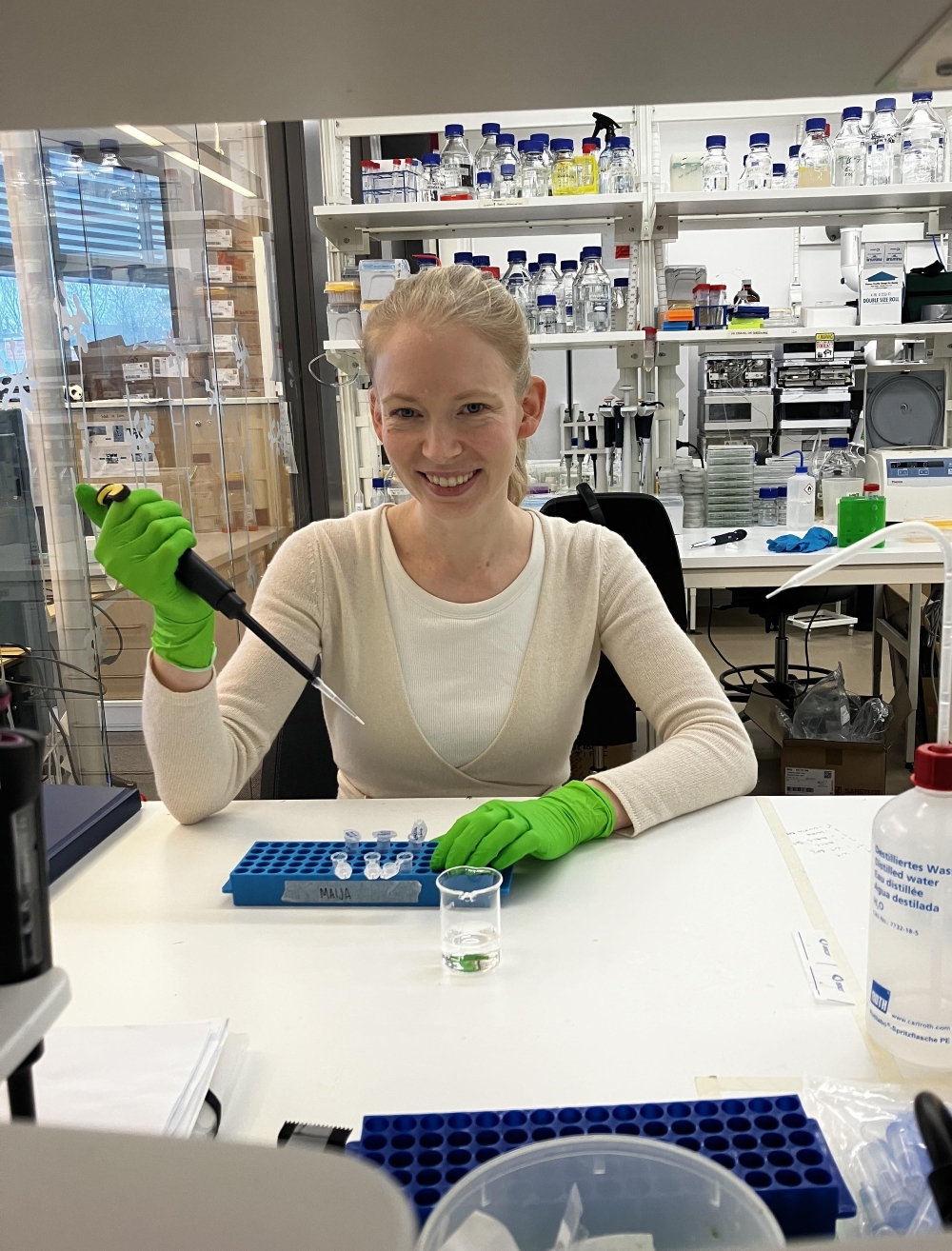
Engineering the proteins of tomorrow
At KTH, Maija’s current research takes her into a more molecular direction than traditional applied food science. Her work focuses on DNA cloning and on expressing food proteins in micro organisms. Being part of PLENTY Work Package 1 allows her to stay closely connected to food related research and feels like a return to her scientific roots.
In her project, Maija explores how food proteins can be redesigned and produced using micro organisms instead of animals. She works with engineered bacteria or yeast to produce the dairy protein beta lactoglobulin. By adjusting genetic tools and growth conditions, these micro organisms can produce many different variants of the same protein. Maija then studies how these variants differ in structure, how stable they are during heating, and how their functional properties such as gelling behavior may change.
A scientific curiosity for sustainability
What motivates her most is the opportunity to learn new techniques that can support more sustainable food production. She is also driven by scientific curiosity and by the potential of modern protein design tools when applied to food proteins.
Looking ahead, Maija hopes her research will contribute to expanding the possibilities for producing food with the help of micro organisms rather than animals. In the long term, this could support the development of foods that are more sustainable, healthy, and enjoyable to eat.
Sourdough and Scandinavian cafés
Outside the lab, Maija has another passion that combines patience, science, and creativity: sourdough baking. Although her first starter didn’t make it, she now tends a new one adopted from Hart Bageri in Copenhagen.
Still, keeping up with Stockholm’s bread scene isn’t easy - “The city’s cafés set such a high standard “, she says