MSc Mechatronics
The master's programme in Mechatronics develops your ability to integrate mechanics, electronics, sensing, control and software into intelligent products and cyber-physical systems. You combine modelling and simulation with implementation and testing to address engineering problems from a whole-system perspective. Graduates work in product development, systems engineering and research in fields such as robotics, industrial automation, transport, medical technology and autonomous systems.
Mechatronics at KTH
Mechatronics integrates mechanical systems, electronics and sensors, control, computing and software to create intelligent products and systems. What distinguishes the field is its whole-system perspective: understanding not only the individual technologies, but how their interactions shape the behaviour and performance of the complete system.
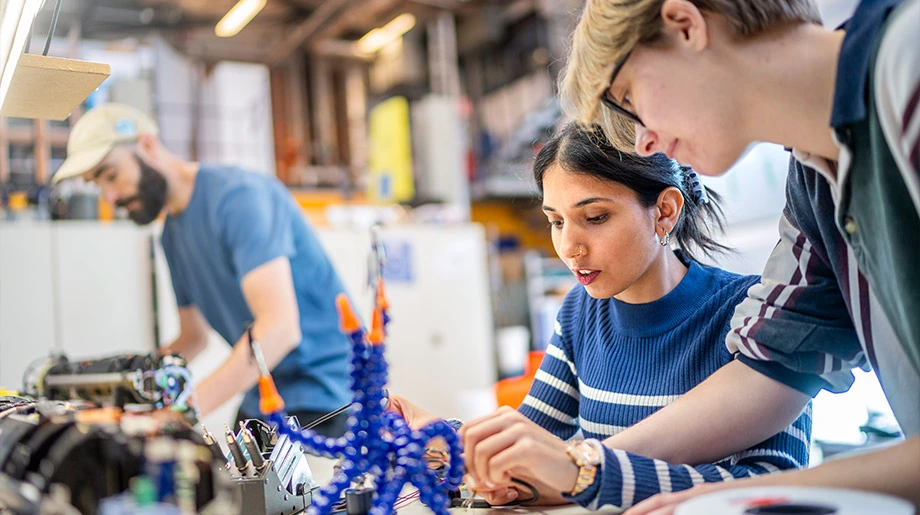
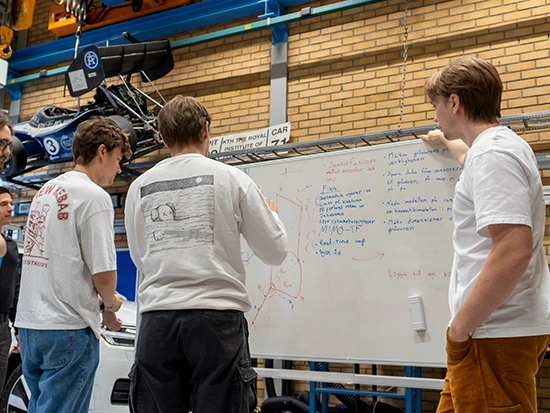
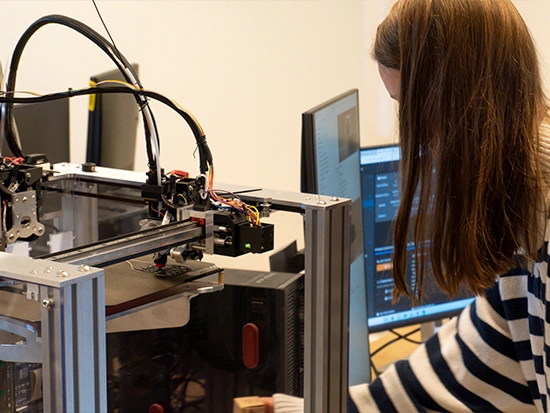
At KTH, you develop this perspective through theoretical studies, modelling and simulation, laboratory work, implementation, experimentation and testing. As the programme progresses, you apply knowledge from different engineering disciplines to increasingly integrated and open-ended problems. You learn to move between models and physical systems and evaluate alternative solutions and the trade-offs between different system requirements. Problem- and project-based learning also develops your ability to work in interdisciplinary teams, organise complex work and communicate engineering decisions.
The programme is closely connected to industry and KTH research. In courses, projects and the degree project, you may work with challenges linked to companies or ongoing research activities, giving you experience of relating technical decisions to practical requirements and constraints.
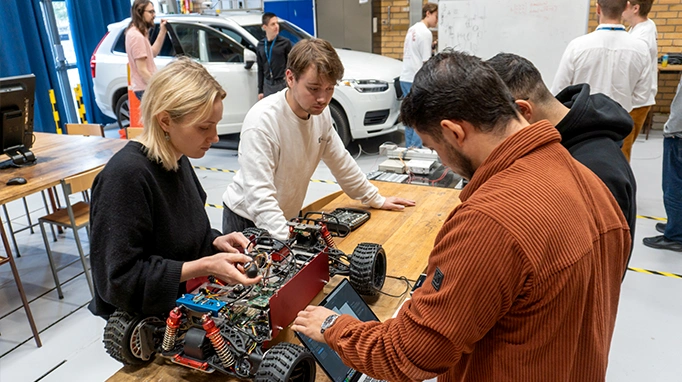
A central example is the Mechatronic Capstone course, in which you work in an interdisciplinary team on a substantial, open-ended engineering development project, often connected to industry or research. You take the project from requirements and concept development through modelling, prototyping and system integration to testing, verification and validation. Along the way, you identify knowledge gaps, investigate alternatives and make engineering decisions as the solution develops.
The programme also addresses the growing role of artificial intelligence in mechatronic and cyber-physical systems. In the mandatory part of the programme, you study how AI methods can be applied in cyber-physical systems, with an emphasis on reliability and on critically assessing their advantages and limitations. Depending on your course choices and project topics, you can explore artificial intelligence and machine learning in greater depth.
This is a two-year programme (120 ECTS credits) taught in English. Graduates are awarded the degree of Master of Science. The programme is given mainly at KTH Campus in Stockholm by the School of Industrial Engineering and Management, with access to facilities at the Department of Engineering Design and the KTH Prototype Centre .
Programme structure and progression
The programme begins with a common foundation of mandatory courses and progressively gives you greater scope to shape your studies through conditionally elective and elective courses. These choices allow you to develop an individual technical profile without following a formal track or specialisation.
A central component of the programme is the Mechatronic Capstone course, which spans three study periods across the first and second years. This course is separate from the degree project, which you complete during the final semester at KTH, in industry, or at a university or research institute in Sweden or abroad.
Courses in the programme
The courses in the programme cover topics such as modelling, dynamics and motion control, robust mechatronics, robotics, programming, embedded, real-time and distributed systems, cyber-physical systems, artificial intelligence and machine learning, control engineering, research methodology, the integrated development of mechatronic systems, innovation and management.
Courses in the master's programme in Mechatronics


Future and career
Graduates from the master's programme in Mechatronics work in fields where mechanical systems interact with electronics, sensing, control, computation and software. Career opportunities exist in areas such as automotive and transport, aerospace, robotics, medical technology, manufacturing and industrial automation, and autonomous systems. Typical roles include product developer, systems engineer, embedded software engineer, control engineer, technology specialist, technical consultant and project manager. The interdisciplinary expertise developed in the programme is particularly valuable in roles that require an understanding of complete technical systems and collaboration across traditional engineering disciplines.
Graduates have begun their careers at companies in Sweden such as AFRY, Atlas Copco, DeLaval, Electrolux, Ericsson, Mycronic, Prevas, Saab, Scania, Skogforsk, Volvo Cars, Volvo Construction Equipment and WesDyne. Some have also founded companies such as Fengco, Quandify and Relox Robotics, or joined smaller technology companies where broad mechatronics expertise is particularly valuable. The programme also provides a foundation for academic research, and graduates continue to doctoral studies at KTH and other universities in Sweden and internationally.



Sustainable development
Graduates from KTH have the knowledge and tools for moving society in a more sustainable direction, as sustainable development is an integral part of all programmes. The three key sustainable development goals addressed by the master's programme in Mechatronics are:



Addressing sustainable development in mechatronics requires a systems perspective, as technical systems interact with people, society, resources and the environment. In the compulsory curriculum, you examine these relationships and consider the economic, social and environmental consequences of engineering decisions.
SDG 3: Good Health and Well-being
Mechatronic technologies contribute to medical devices, assistive systems and safer vehicles, where sensing, control and embedded systems are essential.
SDG 7: Affordable and Clean Energy
Modelling, control and optimisation of electromechanical and cyber-physical systems can contribute to more efficient energy conversion and use in applications ranging from industrial machinery to energy systems.
SDG 9: Industry, Innovation and Infrastructure
Robust mechatronic and cyber-physical systems support advanced automation, resilient infrastructure and the development of new industrial technologies.
Faculty and research
The programme is closely connected to KTH's mechatronics research environment, which includes around 40 professors, researchers, postdoctoral researchers and doctoral students. Research focuses on model-based systems design, advanced mechatronic and cyber-physical systems, system architecture, automation, robotics and safety, and is organised into four main areas.
Trustworthy Cyber-Physical Systems
As machines become increasingly electrified, automated, connected and software-driven, research on trustworthy cyber-physical systems focuses on ensuring that they operate safely, reliably and predictably. KTH has more than 40 years of experience in cyber-physical systems and hosts TECoSA , a research centre for trustworthy edge computing systems and applications.
Model-Based Systems Engineering
Research in Model-Based Systems Engineering develops methods for the integrated design, analysis and development of complex mechatronic systems. This includes architectural, requirements, behavioural and simulation models, formal verification, safety and security, and the integration of modelling tools.
Robot Design
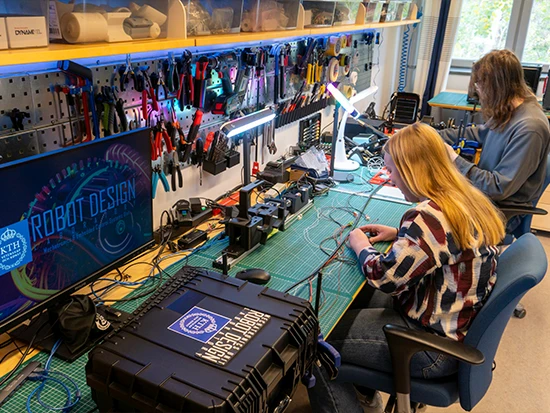
Research in robot design integrates mechanical design, advanced materials, sensing, actuation, control and artificial intelligence to develop agile, modular and safe robotic systems. Applications include assistive and wearable robotics, human-robot interaction, prosthetics and robots for social and industrial environments.
Autonomous Systems
Research in autonomous systems covers self-driving vehicles, drones and robots for applications in transport, manufacturing and forestry. Research challenges include perception, decision-making, interaction with people, safety and operation under uncertainty.
Key researchers in the programme