MSc Data-driven Health
The master's programme in Data-driven Health gives you the technical expertise to develop data and AI solutions for healthcare and medicine. You will learn to structure and process complex health data, build and evaluate statistical and machine learning models, and design secure, privacy-aware data systems. Graduates can turn health data into reliable tools for clinical decision-making, personalised medicine and more effective healthcare.

Data-driven Health at KTH
The master's programme in Data-driven Health focuses on the technical methods and systems needed to transform complex health data into reliable insights and applications. You will learn to manage and integrate data from electronic health records, medical imaging, registries, connected devices, self-reported data and public health sources; design database architectures and data models; and prepare large datasets for efficient analysis. You will also apply statistical and machine learning methods to develop and validate models for diagnosis, disease progression, personalised treatment, clinical decision-making and healthcare system improvement. You will study this in the context of how healthcare systems and data is organized, and taking into account the ethical, social and legal impacts of health data systems.
The programme offers opportunities to specialise through project and elective courses. Depending on your choice of elective courses, you can deepen your knowledge of advanced machine learning methods such as Bayesian learning, graphical models and graph neural networks, as well as medical imaging and distributed learning. You will also study how security, privacy and federated computing can enable analysis of sensitive health data. These technologies are applied to challenges such as large scale predictive modeling, multi-modal data harmonization and the development of privacy-aware systems.
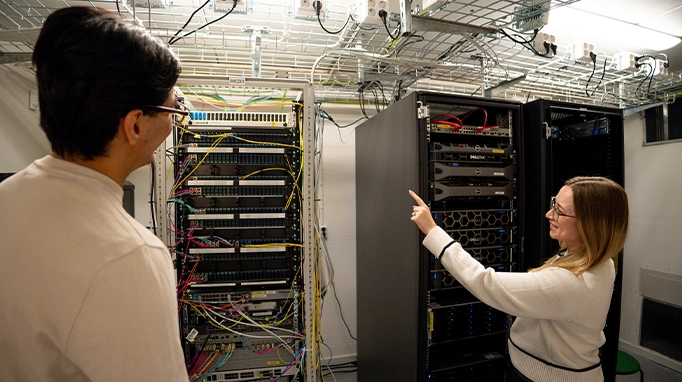
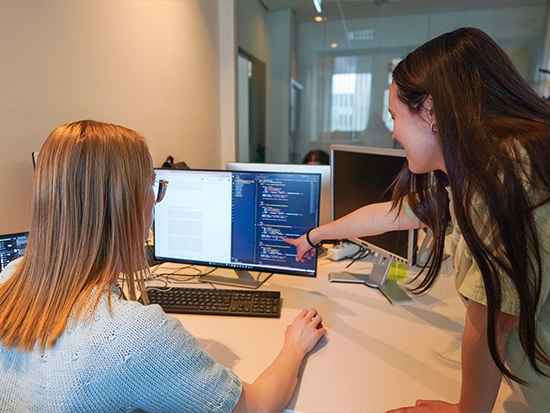
The programme has a strong focus on technical implementation, with project assignments included in most courses. You will write programs that process and analyse health data, implement and validate machine learning models, and develop, test and document larger data-driven health applications in dedicated project courses. You will work with real cases and datasets related to different diseases and healthcare settings, using the programme's in-house cloud infrastructure and makerspaces. This work gives you insight into the contexts in which technical solutions are applied, while developing your ability to solve problems, collaborate in teams and manage technical projects.
The programme combines technical skills in machine learning and data science with perspectives on ethics, privacy, healthcare systems and socio-technical-cultural aspects of health data. The research at KTH complements the programme and covers all aspects of data-driven health, from semantic engineering to FAIR data management to applied data analysis and data engineering, machine learning, and artificial intelligence. The curriculum provides a highly interdisciplinary approach, enabling you to acquire a unique expertise that appeals to many employers.
This is a two-year programme (120 ECTS credits) in English. Graduates are awarded the degree of Master of Science. The programme is mainly offered at the KTH Flemingsberg campus in Stockholm by the School of Engineering Sciences in Chemistry, Biotechnology and Health (at KTH).
Programme structure and progression
During the first year, you take mandatory courses in Statistics, Machine Learning, Databases and Warehouses, Ethics and Socio-Cultural Perspectives on Technology.
In the second year, you deepen your studies through project courses and advanced courses in areas such as Artificial Intelligence, Imaging, Distributed Learning, Health Systems and Precision Medicine. The programme concludes with a degree project connected to applied challenges in healthcare, health systems or data-driven medicine.
Courses in the programme
The courses in the programme cover topics such as machine learning and artificial intelligence in healthcare, health data management, databases and data warehouses, medical image analysis, federated learning, health systems, science and technology studies and ethics and socio-cultural perspectives on technology.
Courses in the master's programme in Data-driven Health

Future and career
Graduates pursue technical roles such as health data scientist, machine learning engineer, health data engineer, health informatics specialist, research engineer or technical consultant in digital health. They may work in healthtech and medtech companies, healthcare organisations, public agencies, research institutions and consultancies, developing data infrastructures, analytical models and AI-supported health applications. The programme also provides a foundation for doctoral studies and a research career.
Sustainable development
Graduates from KTH have the knowledge and tools for moving society in a more sustainable direction, as sustainable development is an integral part of all programmes. The three key sustainable development goals addressed by the master's programme in Best Practice are:


In the programme, you’ll learn and apply health data to improve people’s health and healthcare systems and provide equitable access to health for all. Courses on legal and ethical aspects, socio-cultural perspectives, and privacy and security balance the technological topics. The acquired knowledge is applied to designing innovative data systems that enable access to health data, improve health literacy, and develop data systems and models that can cure diseases and improve health.
Research and faculty
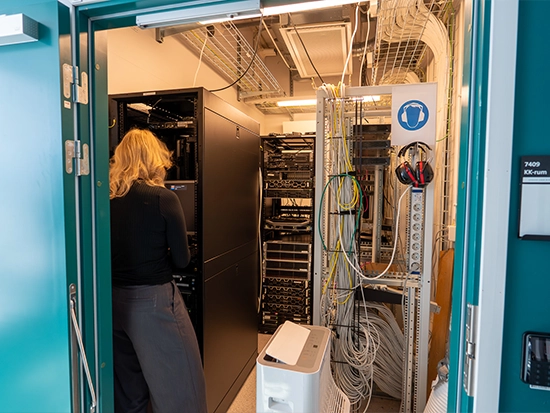
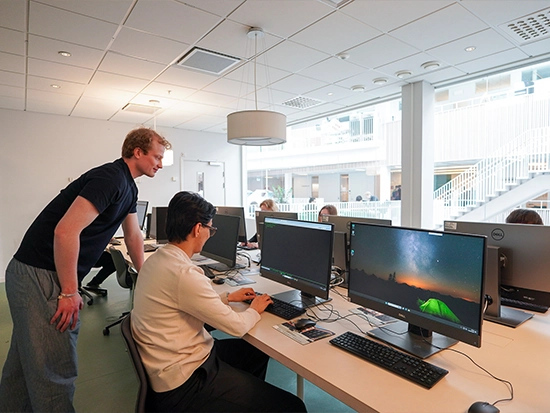
The programme is provided mainly at the KTH Flemingsberg campus with courses provided by KTH's Department of Biomedical Engineering and Health Systems . The department spans from cellular and molecular levels to complex systems and the broader subject fields of health, environment, and materials. Research is conducted in Biomedical Imaging, Health Informatics and Logistics, Neuronic Engineering and Ergonomics. The department's teaching staff have extensive experience in a student-centred, student-active pedagogy, where intractable problems are the focus. You will benefit from KTH’s dedicated software makerspace and cloud computing resources, enabling hands-on work with large-scale health datasets and advanced machine learning experiments, skills that are essential for careers in modern health tech. The programme has close links and collaborations with large parts of the healthcare system in Stockholm and Sweden, as well as with government and industry.
Faculty involved in the programme