
Rasmus
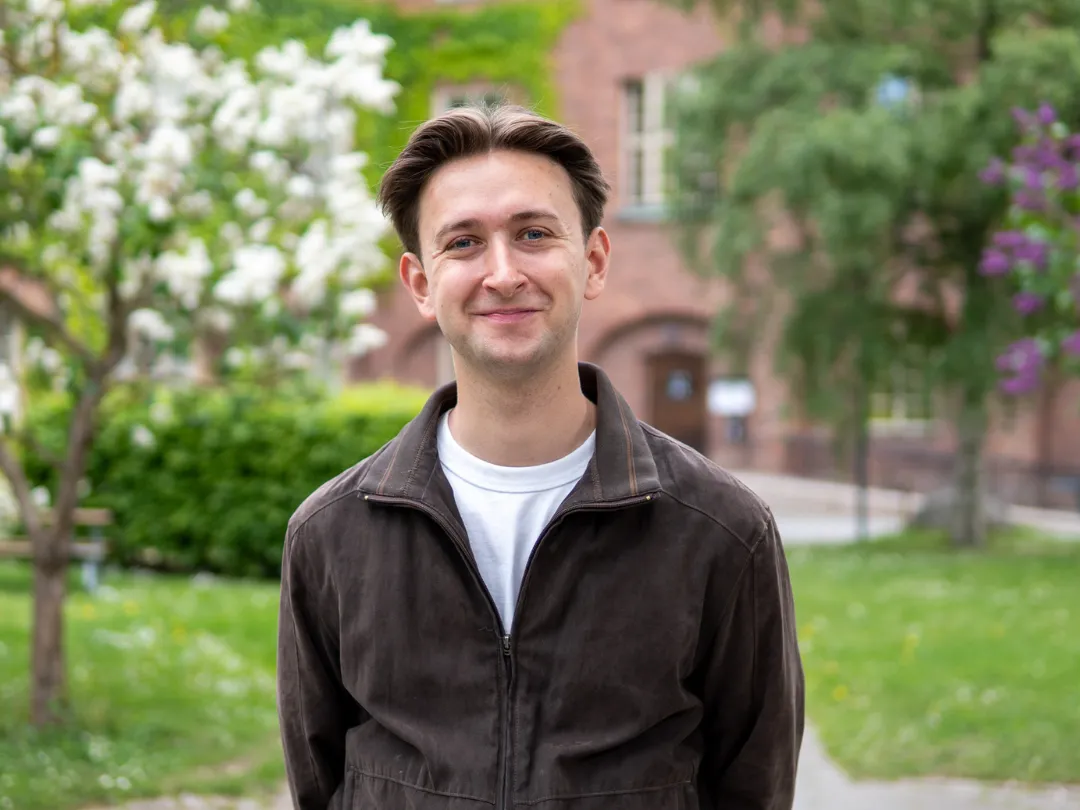
Rasmus is from Hamburg, Germany. Before moving to Sweden, he completed a dual study programme in Industrial Engineering and worked as a lean management consultant in the aerospace industry. This experience led him to pursue a master's degree in Sustainable Technology at KTH. In his free time, Rasmus enjoys sailing, road cycling, and climbing, and he recently joined the board of KTHSS, the KTH sailing club, which allows him to explore the Swedish archipelago.
Why did you choose this master's programme at KTH?
After my dual studies and a few years in the aerospace industry, I realised that my next step needed to focus on sustainability. Still, I did not want to abandon my engineering background. The Sustainable Technology programme at KTH was the strongest fit. Industrial ecology is the main scientific discipline in the master's programme, allowing me to build on my industrial engineering background with environmental sciences and preparing me for a career at the intersection of industry and sustainability. On top of that, KTH is one of the strongest technical universities in Europe, and Sweden has been a country I wanted to live in for a while.
What are the best aspects of your programme?
What I appreciate the most about the programme is how multidisciplinary the programme is. We work on sustainability issues from different perspectives and always take the economy, environment, and society into account. This approach aligns more closely to how these problems actually manifest in the real world. I also like the freedom in course selection: apart from a few mandatory courses, you can shape your focus to your own preferences. Whether you want to go more quantitative or qualitative, more technology-driven or more management-oriented, or any combination thereof. And the courses themselves are very interactive, with a lot of project work on real-world issues, allowing for theories from lectures to get applied immediately.
What are some of your favourite courses so far?
My favourite so far has been Applied Ecology. Before coming to KTH, I had never taken a biology class in my life, so it was a significant shift for me. However. The course provided a fantastic introduction to marine biology. The highlight was a five-day field trip to the Kristineberg marine research station, where my project group studied the impacts of trawling on marine ecosystems. Another course I really enjoyed was Environmental Modelling. It was my first proper introduction to modelling and helped me understand how to transform environmental questions into quantitative analyses.
How is student life in Stockholm?
Student life in Stockholm has been amazing so far. KTH is home to a vibrant student culture, with chapters and organizations catering to almost every interest. Which is how I ended up on the board of KTHSS. If you enjoy the outdoors, the city has so much to offer. The Outdoor Club organises trips and events throughout the year, including a memorable trip to Lapland that I joined last winter. Beyond the university, Stockholm itself has a lot to offer, both natural and cultural attractions. The programme can be demanding at times, but the mix of academic challenges and adventures outside of class creates a good balance.
What would you like to say to students thinking of choosing KTH for master's studies?
My biggest piece of advice is not to let your previous background discourage you if the programme seems like a stretch in terms of what you could apply to. I came to KTH from an industrial engineering and aerospace background, and much of what I am studying now in the Sustainable Technology programme was completely new to me, such as marine biology and environmental modelling. It turned out well, and the cohort includes people from very different backgrounds. If you are uncertain about whether KTH or this programme is the right choice for you, feel free to reach out. I would be happy to share my own experiences!