This page is ongoing changes as we receive information for the members of the TWGs.
MEASURING A NATION
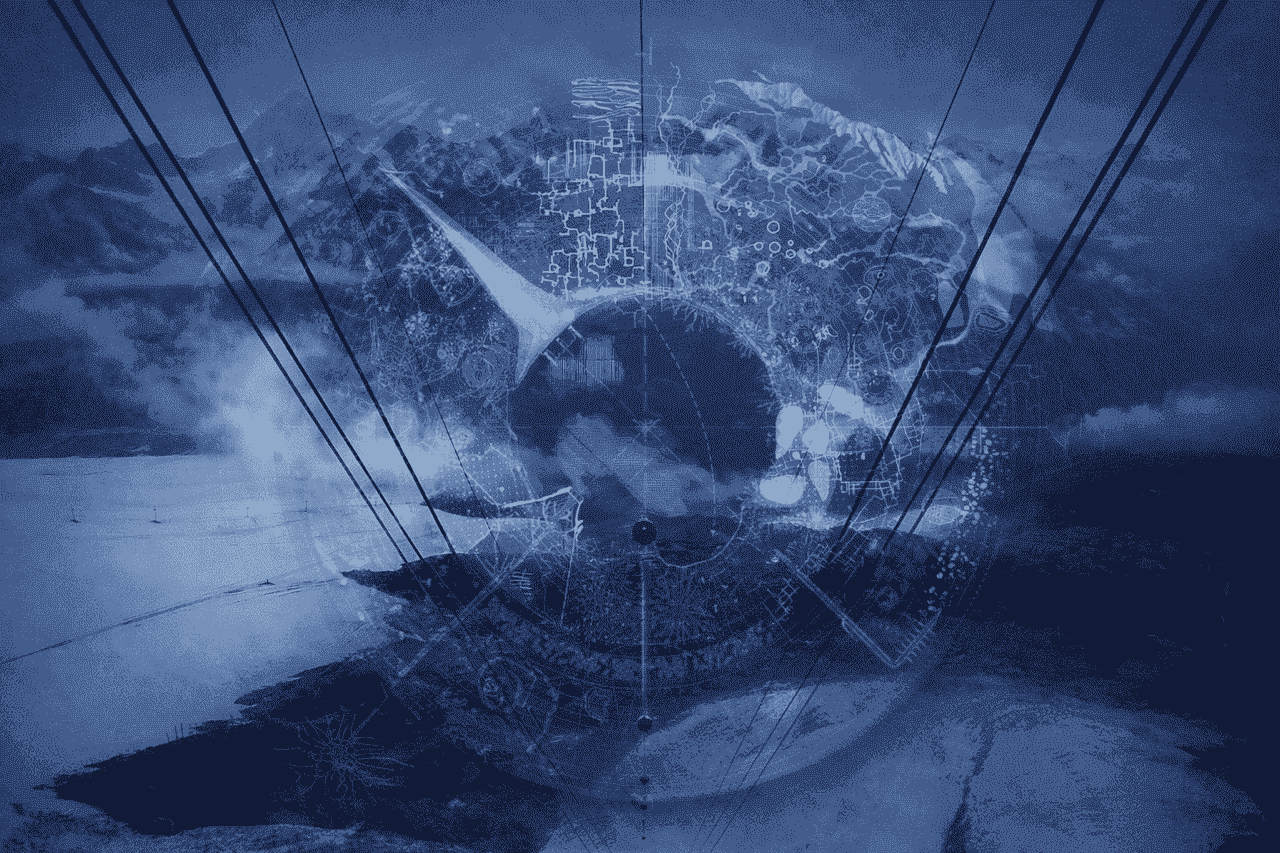
Measuring a nation wants to assemble a group to work upon exploring possibilities in the modalities and contents for the production of a documentary about natural and political borders, considering temporality, measurement methods, cartography and geopolitics at a center of a fragile environment, the one of the Alpine Arc, where different laws rules and nature is redrawing the map: melting glaciers, watersheds and landslides, disappearing physical markers and eco-systems, including ice-cores that tell us so much about the climatological past.
Members
Costanza Julia Bani (Filmmaker and Artistic Researcher, Stockholm University of the Arts / KTH) - costanzajulia.bani@uniarts.se
Melanie Plangger, independent process consultant, specialising in regional development, cross-border cooperation, and participatory processes in the Alpine Region.
Alexandra Arenes, contemporary cartographer, architect and designer at SOC (Société d’Objets Cartographiques) and shaā, atelier d’architecture et d’urbanisme; co-author of the book Terra Forma.
Klaus Dodds, geopolitical analyst and strategic adviser; higher education professional; Dean of the Faculty of Science and Technology, Middlesex University.
Giovanni Baccolo, glaciologist, Associate Professor, Dept of Geological Sciences, University ROMA TRE, Italy.
Björn Thuresson, manager of the Visualisation Studio VIC at KTH
•Erik Isberg, Postdoctoral Researcher, Division of History of Science, Technology and Environment KTH Royal Institute of Technology & Saxo Institute, University of Copenhagen.
Stefano Morosini, International research officer in the area of humanities and juridical studies, University of Bergamo.
Oliver Akermo, teacher in immersive media, director of photography and head of postproduction.
Lia Mazzari, Researcher and Sound artist at Human Geography, Dept of Geography, The Royal Holloway Centre for the GeoHumanities.
Valentin Nash, artist working with XR and immersive media, teacher at Konstfack and Stockholm University of the Arts.
Lars G Lindström, producer at Fellonica Film AB.
Annalisa Izzo, President of Fondazione Margherita, Switzerland.
Swiss co-director, tbd, Switzerland.
Swiss co-producer, tbd, Switzerland.
Photo: Helena Linder
ORGANON: LUTHERIE, PRACTICE AND KNOWLEDGE
Organon Lutherie is a collective of artists and researchers dedicated to investigating the boundaries of organology—the study and classification of musical instruments. By focusing on liminal instruments that resist classification, we want to challenge rigid, technoscientific frameworks of classifying musical instruments. Our work focuses on instruments at different stages: from their design and fabrication to composition and their meeting with performers and audiences. Using these undefinable instruments as case studies, we move beyond the digital/acoustic binary toward alternative organologies with porous categorizations. Our goal is to develop situated, open-ended frameworks that reveal how instruments store and produce knowledge.
The working group will gather and investigate the various sonic and electroacoustic practices that are present within the NAVET partner universities. Using a transdisciplinary approach, we further aim to reach out to the wider community of artists and makers within the Stockholm area. The primary collaborators will be KMH, KTH and Konstfack, where the three principal investigators will form a core group.
We will share knowledge and search for common topics and curiosities through a series of workshops and lecture performances that join the concerned groups in sharing and critical discussion. Furthermore, we will analyze the gathered material and find possible avenues for research, extracting and shaping research questions from the experience of the workshops with the goal to write one or more funding applications in order to strengthen the research environment for sonic practices within the NAVET community.
Members
Ludvig Elblaus (KTH)
Ida Lundén (Konstfack)
Mattias Petersson (KMH)
Photo: Rut Karin Zettergren
CRITICAL A.I. + ARTS
The Critical AI + Arts Thematic Working Group is bringing together researchers and practitioners across NAVET partner institutions currently working in improvisation, music, sonic interaction design, sound art, video art, virtual and extended reality, experimental design, computer science, and artistic research, among others. While our practices vary, each participating researcher is deeply engaged in transdisciplinary approaches, a quality that we all share, thus enabling the foundation for a critical inquiry whose aim is not only to enable exchange across fields but to examine the very notion of discipline in the context of contemporary artificial intelligence. The going from transdisciplinarity to multimodality as framed by current AI systems sprouts from the awareness that, as these models learn across text, image, sound, code, and gesture, making evident that we also need to redefine the conceptual and practical terrain traditionally occupied by distinct creative fields. Rather than approaching multimodality simply as a technical feature, we treat it as an epistemic shift that challenges existing forms of knowledge-making within art, design, and computation starting with transdisciplinarity itself. In this way, the group will focus on the implications of AI technologies, particularly generative models, for artistic, design, and technological practices simultaneously.
Members
Paola Torres Núñez del Prado (SKH)
Bob Sturm (KTH)
Klas Nevrin (KMH)
Rut Karin Zettergren (KKH)
Palle Torsson (Konstfack)
AI FOR OPERA PRACTITIONERS
This TWG aims to investigate how contemporary AI methods can become genuinely useful to opera practitioners.
Opera is a fundamentally live and collaborative artform whose “ideal end product” is the acoustic performance itself - shaped by human bodies, real-time interpretation, and a shared physical space with the audience. By contrast, much of today’s Music AI research revolves around symbolic representations (scores, MIDI, annotations) or digital recordings, reflecting genres where the reference point is a produced track rather than a live event. This TWG aims at bridging that gap. The focus is on supporting the operatic craft: the rehearsal room, the interpretive process, the technical and artistic challenges that singers, répétiteurs, directors, conductors, designers, choreographers, composers, and librettists negotiate daily. The goal is not to reinvent the artform, but to explore where thoughtful technological augmentation might meaningfully strengthen or extend existing practices.
By drawing on NAVET's in-house artistic and technological expertise, we will articulate concrete challenges that emerge in the creation of opera today and investigate how AI methods might alleviate bottlenecks, enrich creative exploration, and support training and professional development.