Reliability Centered Asset Management (RCAM)
Reliability Centered Asset Management (RCAM) is a research area focusing on methods and models for reliability, predictive maintenance, and asset-management decision support, with applications to electric power and energy systems.
The research combines reliability analysis, condition monitoring, maintenance optimization and life-cycle perspectives with increasingly data-driven and AI-enabled methods. The aim is to support informed decisions on maintenance, replacement and lifetime extension while considering reliability, risk and value throughout the asset life cycle.
From RCM to RCAM
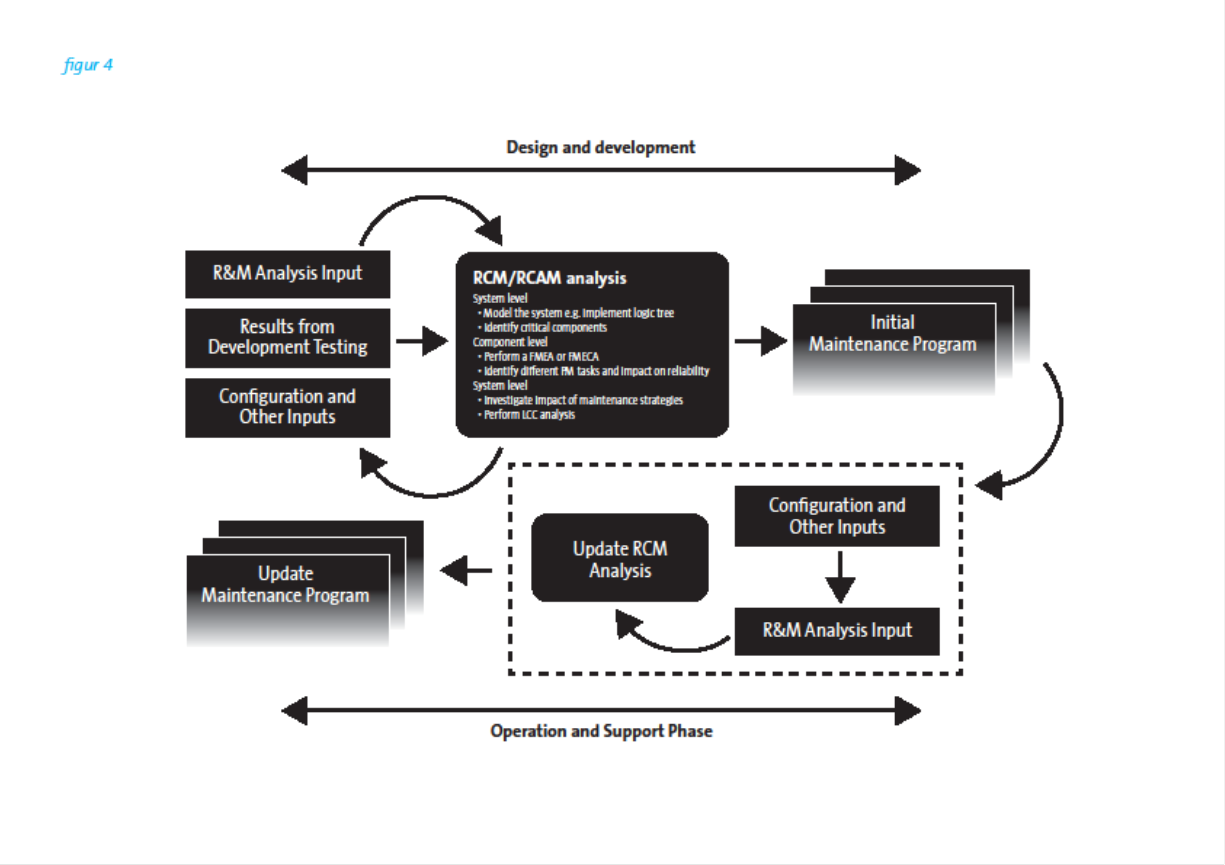
Reliability Centered Maintenance (RCM) provides a structured approach for determining maintenance strategies based on reliability and the consequences of failures. Building on this concept, Lina Bertling Tjernberg initiated the concept of Reliability Centered Asset Maintenance (RCAM) in 2002, combining RCM with quantitative reliability analysis and maintenance optimization.
The RCAM method was originally developed for electric power distribution systems and was later extended to applications including wind power and condition-based maintenance. Over time, the research has developed towards predictive maintenance, asset health assessment, life-cycle management, and risk-informed decision support.
The RCAM research group was established by Lina Bertling Tjernberg at KTH in 2002, the same year she completed her PhD at KTH. The research initially focused on electric power distribution systems and was subsequently extended to applications including wind power and condition-based maintenance. Over time, RCAM has developed towards predictive maintenance, asset health assessment, life-cycle management and risk-informed decision support for electric power and energy systems.
Current research
Current RCAM research builds on this framework and addresses predictive maintenance, condition monitoring, asset health assessment, lifetime extension and risk-informed decision support for power-system assets.
A growing research direction is the integration of engineering and physical knowledge with machine learning and artificial intelligence. This includes data-driven condition assessment, anomaly and fault detection, and Scientific Machine Learning approaches for power-system reliability and asset management.
The research spans component-level condition and failure modelling to system-level reliability and resilience, with applications in electric power grids, wind power, HVDC systems and emerging energy infrastructures.
The book
Selected RCAM publications
Bertling L., Allan R.N., Eriksson, R., A reliability-centred asset maintenance method for assessing the impact of maintenance in power distribution systems, IEEE Transactions on Power Systems, Vol. 20, No. 1, pp. 75-82, Feb. 2005.
Nilsson J., Bertling L., Maintenance management of wind power systems using Condition Monitoring Systems –Life Cycle Cost analysis for two case studies in the Nordic system, IEEE Transactions on Energy Conversion, Vol. 22, No. 1, pp. 223-229, March 2007.
Ribrant J., Bertling L., Survey of failures in wind power systems with a focus on Swedish wind power plants, 1997-2005, IEEE Transactions on Energy Conversion, Vol. 22, No. 1, pp. 167-173, March 2007.
Hilber P., Miranda V., Manuel M., Bertling L., Multiobjective Optimization Applied to Maintenance Policy for Electrical Networks, IEEE Transactions on Power Systems, Vol. 22, No. 4, pp. 1675-1682,Nov. 2007.
G. L. Rajora, M. A. Sanz-Bobi, L. Bertling Tjernberg and J. E. Urrea Cabus, A review of asset management using artificial intelligence-based machine learning models: Applications for the electric power and energy system, IET Generation, Transmission, and Distribution, June 2024. https://doi.org/10.1049/gtd2.13183
Rajora, G.L.; Sanz-Bobi, M.A.; Tjernberg, L.B.; Calvo-Bascones, P. Refining Open-Source Asset Management Tools: AI-Driven Innovations for Enhanced Reliability and Resilience of Power Systems. Technologies 2026, 14, 57. https://doi.org/10.3390/technologies14010057
Further reading: Complete Publication List