
Lina Margareta Bertling Tjernberg
Professor
Details
Researcher
About me
Academic profile
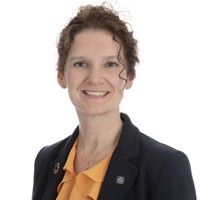
Lina Bertling Tjernberg (Docent, Ph.D., MSc.) is a Professor in Power Grid Technology at KTH Royal Institute of Technology and Deputy Head of the School of Electrical Engineering and Computer Science (EECS), with responsibility for research conditions and impact.
During the academic year 2026–2027, she is a Visiting Professor in the Department of Energy Science and Engineering at Stanford University. Her stay is supported through a sabbatical programme funded by the Swedish Foundation for Strategic Research (SSF).
She is a Fellow of the Royal Swedish Academy of Engineering Sciences (IVA), Division II Electrical Engineering, and an IEEE Fellow.
From 2018 to 2024, she served as Director of the KTH Energy Platform, established to support and catalyse interdisciplinary energy research at KTH. She received the Power Woman of the Year Award 2021 and was included in Sweden’s Maktlistan Energi in 2022. She received the IEEE PES/PELS Sweden Chapter Volunteer Award in 2024 and the IEEE Reliability Society Education Award in 2025.
She is the author of more than 150 scientific papers in journals and international conference proceedings, as well as the book Infrastructure Asset Management with Power System Applications, CRC Press/Taylor & Francis, 2018, and several book chapters. Her publications are also available through Google Scholar and ResearchGate.
Research
Her research and teaching focus on the reliability and resilience of future electric power systems. The research combines power system engineering with mathematical and data-driven methods, including statistics, optimization, machine learning, and life-cycle analysis, to develop models and decision support for reliability, predictive maintenance, and the development of future power systems.
Her research interests include the integration of different technologies and energy resources, including microgrids, battery storage, HVDC, nuclear, hydro, wind and solar power, hydrogen, and electrified transportation. The overall objective is to contribute to a secure and reliable electricity supply, efficient use of energy resources, and the transition towards a fossil-free energy system.
The research is conducted through close national and international collaborations with universities, research institutes, and industry.
Current research is primarily organised around two areas:
1. Predictive maintenance, lifetime extension and asset management
The research addresses condition monitoring, predictive maintenance, reliability-centred asset management, and risk-informed decision support for electric power systems and their components, including the Reliability-Centered Asset Management (RCAM) methodology. RCAM links component behaviour and maintenance with system reliability and costs and has been developed and applied to a range of power system assets and applications.
Current research includes a postdoctoral project funded by Digital Futures, focusing on physics-enhanced multimodal AI methods for condition monitoring and predictive maintenance of power transformers. This research area is further developed through the SSF-funded sabbatical project Scientific Machine Learning for Power System Reliability at Stanford University, focusing on combining physics-based models, engineering knowledge, and machine learning to develop new models for power system reliability assessment and predictive maintenance.
2. Flexible, robust and resilient power systems
The research addresses reliability, resilience, and life-cycle costs of future power systems, as well as how different generation technologies, energy storage, local energy systems, and sector coupling between power systems, transportation, and industry influence the development of future energy systems.
Current research includes doctoral and postdoctoral projects funded by the Swedish Radiation Safety Authority (SSM) and the EU Marie Skłodowska-Curie Actions, including UNITE! Energy, focusing on new nuclear power solutions, hydrogen and sector coupling, and life-cycle-aware modelling and optimization of future energy systems.
Professional appointments
Current appointments include the Programme Council of the Swedish Electromobility Centre (SEC), Vice Chair of Riksdagsledamöter och forskare (Rifo), the nomination committee for the Polhem Prize, the Swedish National Committee for CIRED, and assignments as an independent expert for the European Research Council (ERC) and Horizon Europe. She is also a member of the steering committee for IEEE PES Innovative Smart Grid Technologies Europe (ISGT Europe).
Previous national appointments include Chair of the General Assembly of SEK Swedish Electrotechnical Standardisation (2009–2026), Chair of the IEEE Sweden PES/PELS Chapter (2009–2019), member of the Board of PDC – Center for High Performance Computing at KTH (2024–2026), the Advisory Council of the Swedish Energy Markets Inspectorate (2009–2020), the IVA Electricity Crossroads steering committee (2014–2016), and the Swedish Government Coordination Council for Smart Grids (2012–2014).
Previous international appointments include the Governing Board of the IEEE Power & Energy Society (2012–2016), the IEEE Reliability Risk and Probability Applications Subcommittee, and the editorial team of IEEE Transactions on Smart Grid (2010–2015).
External profiles: Google Scholar| Wikipedia (English)
Courses
Degree Project in Electric Power Systems, Second Cycle (EG230X), examiner
Degree Project in Electrical Engineering, Second Cycle (EA250X), examiner
Degree Project in Electrical Engineering, Second Cycle (EA238X), examiner
Degree Project in Electrical Engineering, specialising in Energy Innovation Second Cycle (EA280X), examiner
Electric Power Engineering Project (EI2525), teacher, examiner
Individual Project in Electric Power and Energy systems I (EN2911), examiner
Individual Project in Electric Power and Energy systems II (EN2912), examiner
Introduction and Analysis of Sustainable electric Power Systems (EG112V), teacher, examiner
Introduction to Sustainable Electric Power Systems (EG111V), examiner, teacher, course responsible