KTH Logo

In the shadow of geopolitics: Notes from fieldwork in southern Greenland*

by Annika Nilsson, Researcher

As we returned to Narsarsuaq after a week of fieldwork in communities of southern Greenland, the outer world came charging in: planes arriving with tourists on their way to various local excursions and high-profile news stories about US president Trump wanting to buy Greenland, including the aftermath of political reactions of uncomfortable surprise at such an absurd idea.

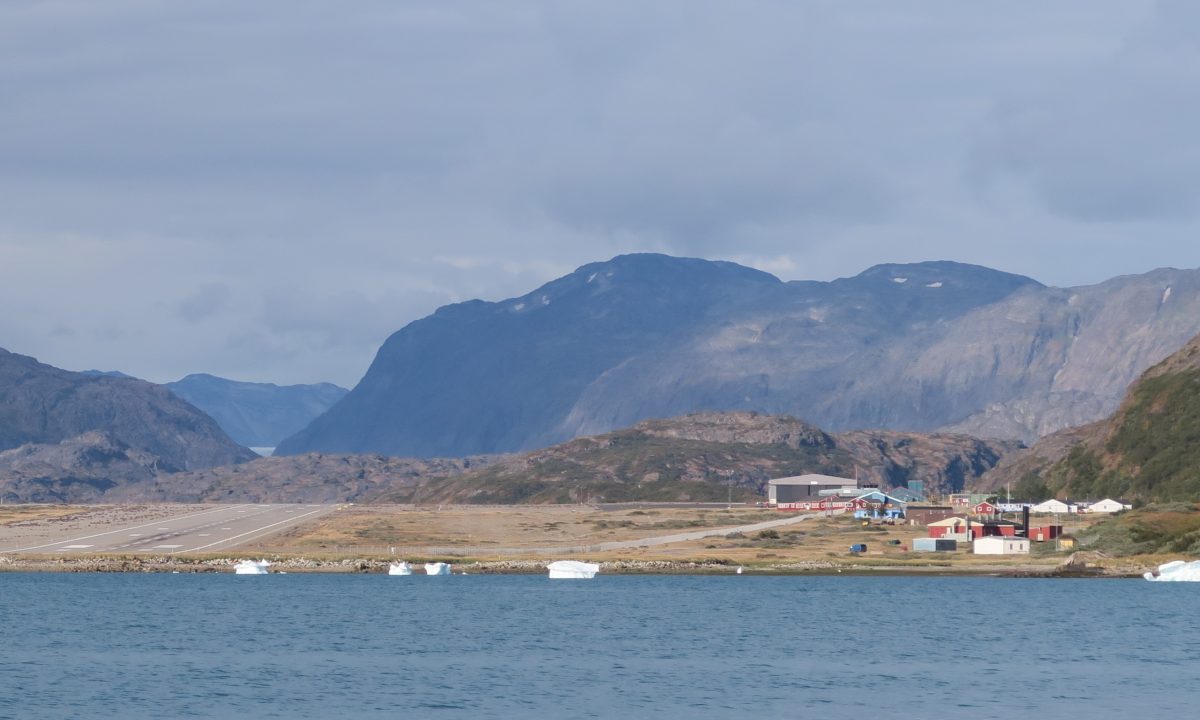
What people living in the villages and towns of Greenland think about this diplomatic exchange, we can only guess as it has not been visible in the reporting in international media. However, after talking to people and visiting places in southern Greenland, we know that opportunities to take part in important decisions are often lacking and that living conditions in small communities are often shaped by the priorities of others. The communication network is just one example. The Narsarsuaq airport in is on a US air force base, established during World War II and still serves a major communication hub for travels anywhere outside the region. The priorities of others also relate to mining, where Greenland has a long history of outsider’s attention because of its unique geology with a wealth of minerals. Past interests in southern Greenland included establishing a mine of cryolite, which was used for aluminum processing, in the small town Ivittuut. Today, we found this mine and the town deserted and the building in decay, though memories of past activities and their links to people in nearby places remain.

Approaching Narsarsuaq IMG_3361 cropped
Approaching Narsarsuaq – Photo : Annika Nilsson

AMIDST MINING AND A POST-INDUSTRIALIZED FUTURE

Today’s focus is on the strategically important rare earth minerals that occur in the same ore as uranium at Kuannersuit (Kvanefjeld) by the small town of Narsaq. At the time of our visit, people were still waiting for a decision ‘from above’ about whether a mine would be opened. The discussion and the focus on mining had however already affected the town by creating social tensions between people who were either for or against this development. Some saw it as a source of new jobs as well as a base for a livelier service industry with restaurants, grocery stores and other facilities. As pointed out by one politician, it could also help pay for infrastructure in the form of roads that would connect nearby towns. For others, concerns about the impact of pollution raised major questions, especially if the mine would become detrimental to the rich fisheries in the area. A major hope was instead that the local fish processing plant would reopen. According to the local fishermen, shrimp was again abundant. The development of the local fish processing industry was however hampered by a changed structure of the Greenlandic fishery industry and what they saw as imposed bureaucracy and rules.

Some hopes were connected to increasing tourism but with a great concern that the transport infrastructure was insufficient. Most tourists appeared to stay around Narsarsuaq. To make tourism a viable industry also for other communities would require affordable and reasonably frequent boat transport or roads that connect at least some of the small towns in the area. The high cost of transport was a major concern for many people living in villages we visited.

Modern infrastructure is also about virtual communication routes. A visit to an internet café in Narsaq illustrated the cost of access to internet – a cup of tea and a blueberry muffin bought me 15 minutes of internet access. While some people have other access option, Greenland’s sea cable for internet was being repaired when we were visiting in August, limiting wire-carried internet access for private citizens in order to allow public institutions to continue to function. So, while international politicians and businesses discuss Greenland in ways that would have profound impact on the everyday lives in southern Greenland, people’s opportunities to get their own voices and priorities heard in the debate are circumscribed by costs and access to communication networks.

CREATING OPPORTUNITIES FOR ARSUK

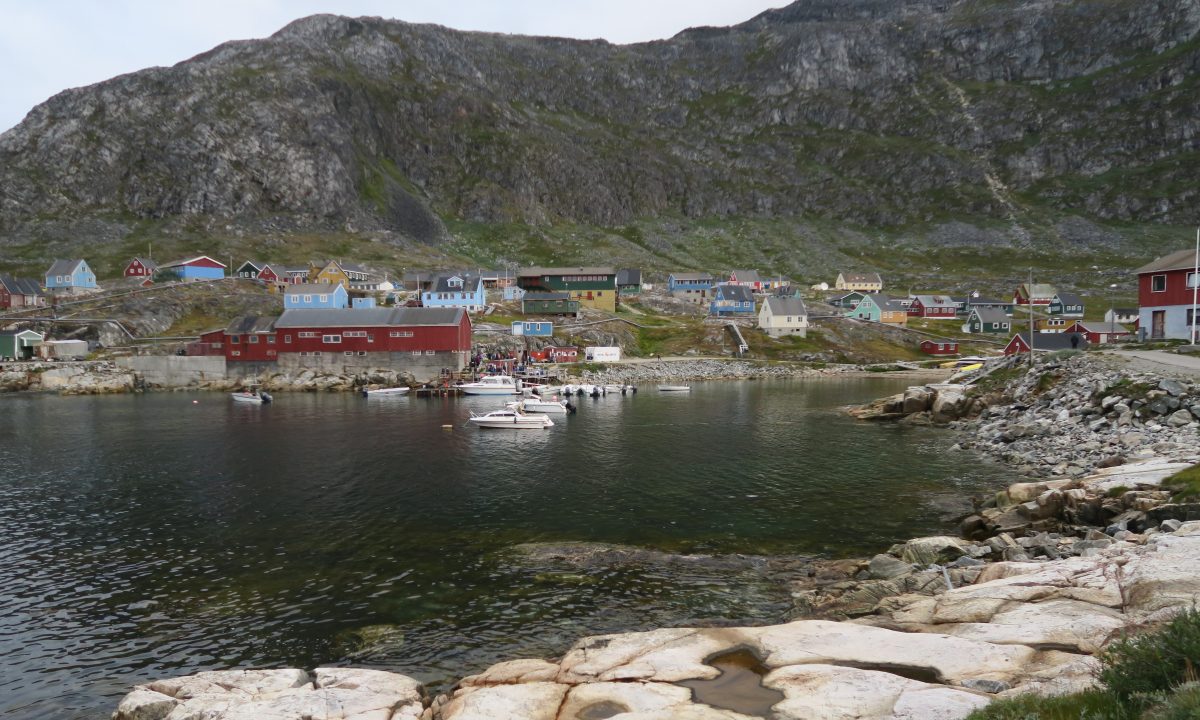
Earlier in the week, we visited the settlement of Arsuk. We heard proud stories about how this town once had one of the world’s highest per capita income, when the cod was still plentiful. However, since the crash of the cod stock that previously brought riches and job opportunities to many Greenlandic communities, the outlook for economic opportunities has been bleak. With only four children left in the local school, no nearby access to health care and a harbor that the big ships pass by but do not stop at, several people expressed concern about the future of the community. However, there were also hopes from new sources of income. They included the possibility of selling carefully hand processed wool from muskox, which two women entrepreneurs were developing as a business. Once the 15 kg of fine wool prepared, it would be sent to Denmark for spinning and later sold to others who would knit garment for the Greenlandic market and possibly also for tourists. Arsuk is also home to a fish factory, whose owner expressed hopes that fish would again become plentiful.

While fishery is still part of everyday life in Arsuk, as it has been since the small town was funded in 1805, fishing is also circumscribed by other activities. An elder fisherman described how he had been ordered by a Danish Arctic Command vessel to cut his long line and get out of the way because the military was about to start an exercise in the area. Arsuk fishing activities have previously been hampered by military and industrial activities in the Arsuk fjord, which was home both to the Ivittuut mine, which has left lead pollution in the fjord, and to the Danish Grønnedal military station, both of which were geopolitically important during World War II. Thus, when we visited Ivittutt, Grønnedal, Arsuk and Narsaq, we were at the same time at the periphery of transport infrastructure and at the center of geopolitics.

 Arsuk harbor
Arsuk harbor – Photo : Annika Nilsson

The Narsarsuaq airport may close in the future to be replaced by a regional airport near the town of Qaqortoq. However, the future is uncertain. It will depend not only on what might happen with the mine near Narsaq but also if climate change will have a positive impact on local fisheries. Indeed, in a scenario exercise with four young students, the military was highlighted as a major point of uncertainty when looking 20-30 years ahead in time. Although, when asked about what was most important, the focus was on education opportunities, the future of fisheries, and places to work. The voices of these young people and their peers need to be heard in the narratives about Greenland’s future.

*This post was initially published on the REXSAC blog. Many thanks to REXSAC for sharing this post with us.

From Sicily to Sweden: Lessons in History and Environmental Humanities

by Elisa Privitera (Lizzy), C. M. Lerici Foundation Fellow

My story with Sweden started around two years ago. It was a scorching and sunny summer. I had just gotten my Masters Degree that explored the creation of a community laboratory that sought to regenerate a historical and neglected district in Catania—my hometown in Sicily—when my supervisor said to me, “What do you think about Sweden?”

“Sweden, hmmm…” I hesitated, trying to take time in order to dig into my memory and knowledge, to collect ideas for a right answer.

Waiting patiently, my supervisor prompted me again, “So?”

I sighed, “Actually, not too much. Why do you ask?”

Two years later, at the end of January 2019, I landed in the evening at Stockholm’s Skavsta Airport in order to accomplish about 6 months of research as a visiting scholar at the Environmental Humanities Lab at the Division of History of Science, Technology and Environment here at KTH. Oh yeah, I was in Sweden!

But why did I come here? Tracing back the story, during the two years in between my masters degree and my arrival, I continued to work and do fieldwork concerning environmental and urban planning. I collaborated with some grassroots associations, which furthered my interests in the processes of reactivation of derelict spaces. And I started a PhD program where I’ve continued to explore the link between environmental issues and urban planning as a member of LabPEAT– an action-research lab of ecological and environmental design. Working on my PhD, “Evaluation and mitigation of urban and land risks”—begun in 2018 at the Department of Civil Engineering and Architecture at the University of Catania—I began to investigate the issues of community empowerment with environmental risks and the planning and regeneration of derelict areas.

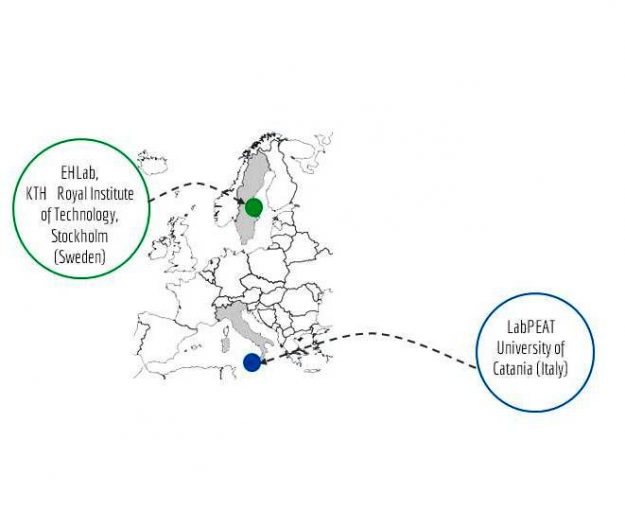
Locations of LabPEAT in Catania and EHL in Stockholm

My thesis explores risky landscapes, such as all those post-industrial or in transition landscapes that have been deeply modified and contaminated due to the heavy human footprint. If the landscape can be conceived as the place of people and people’ point of view (Pizziolo and Micarelli, 2003), how can the local knowledge collected by the people’ stories influence the planning field? Or more generally, what can be the role of subaltern communities in the production of knowledge about risk in order to co-design neglected and contaminated areas? Starting from these research questions, my aim is to experiment an alternative approach to risk landscapes by investigating the issue of environmental risk from a qualitative and environmental justice point of view and by putting particular emphasis on storytelling. Since I believe that the industrial and contaminated areas represent a melting-pot of the inequalities as well as a prime example for debate on how to plan current and future risk landscapes, I have chosen to focus on Gela, a fishing village in the South of Sicily that has been converted into one of the main Italian petrochemical poles. In Gela, I had already started to collect stories about daily life from some inhabitants. But I understood that I still needed to deepen the theme of the potential role of the narrative.

That is why I came to the Environmental Humanities Lab (EHL) on a C. M. Lerici Foundation fellowship. Understanding the roles of narratives in order to tell the right story (Barca S., 2014) or to portray a more complex story of landscapes (Gravagno F., 2008) is an expertise of the EHL.  It combines research, training, and outreach to tackle crucial societal challenges, such as climate justice, migrations, environmental justice, and rights to the city. The EHL has driven several projects on environmental justice over the years, such as Toxic Bios.

This public environmental humanities project has assisted my research through its aims to co-produce, gather, and make visible stories of contamination and resistance, by using the methodology of storytelling, as also explained in a published article. The collection of oral stories can be a useful tool for many purposes:

  • for uncovering toxic narratives centered on structural environmental injustice;
  • for co-producing knowledge;
  • for increasing the empowerment and collective capabilities of local communities (community building);
  • and for triggering an action-research path in contaminated territories in order to co-design a different future.

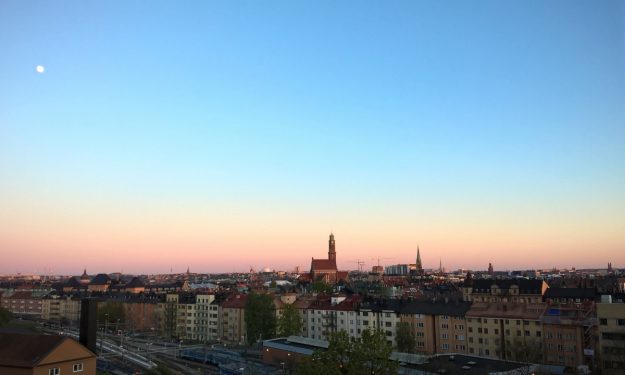
So, by having in mind the purpose of deepening the potential role of the toxic biographies in the planning of contaminated areas, I landed in the darkness at the airport of Skavsta, covered by layers of white snow during that January night. The day after my arrival I moved to live into one of the student dormitories on KTH Campus—a newly erected building with an amazing view on the cityscape of Stockholm. The following months have been an intense flurry of learning, experiences, and challenges!

View from KTH dormitory

Upon my arrival, I began a literature review about environmental justice, political ecology, and environmental history, as suggested by my KTH supervisor: Prof. Marco Armiero. Stockholm was so cold, with iced lakes and fascinating snowscapes sprinkled with nightlights in front of windows to face the darkness. February passed in a jiffy, and in March I started to attend a course for the Ph.D. candidates in “Theory and Method in Historical Research” and a course for master students in “Environmental History.” Both the courses have been challenging. In the first course, “Theory and Method in Historical Research,” I had the possibility to study and debate on many current issues, from Bruno Latour’s books to the epistemological research of feminist theory, from materiality to STS studies. The array of themes has been quite varied and helped me to frame and address my own research questions from time to time in a new way, by enriching certain points of view about it. Meanwhile, thanks to the “Environmental History” course, I investigated the historical connections between migration flows and environmental pull and push factors. These experiences gave me some insights on how to frame my topic as well.

Until then, I have collaborated with the EHL on two running projects. Also, I have collaborated and participated in the lab meetings that take place more or less once a week. On the 21st of March, I also had the opportunity to present the activities and research carried out by LabPEAT of Catania during one of these lab meetings. Over the months, I got fully involved in Division life, for instance, by attending the Higher Seminars in which other scholars come from everywhere about present on current research topics.

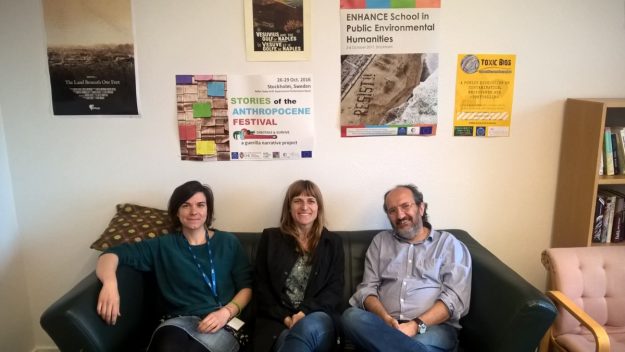
Lizzy at the Lab. From left to right: Roberta Biasillo, Lizzy Privitera, and Marco Armiero

Also, frankly speaking, I have fallen in love with fika, an on-purpose-organized break with the aim of socialising among colleagues. The fika is sweetened by tea, coffee and a lot of sweets, typical from Sweden. Some of the main sweets are the “Princess cake,” the “kanelbullar” or “kardemummabulle”, and so on. In particular, the cinnamon bun can be considered the queen of Swedish cuisine! Thereby, in my opinion, among the key-words regarding Sweden, I would suggest FIKA! Between fika, readings, assignments and interesting discussions with colleagues, April arrived. It brought lighter hours, warmer weather, Easter and Walpurgis night, or Valborg. If the days of Easter have been characterised by the blooming of the trees at Kungsträdgården that attracted locals and tourists during several days, Valborg is one of these things about which I did not know about but that is a quite important event for Swedish society. In fact, it is a custom coming from northern Europe, and it consists of lighting bonfires in public spaces in order to celebrate the arrival of spring collectively. All throughout Sweden, there are bonfires with family and groups of friends who enjoy the flames. I got to enjoy Valborg from the seaside of Stockholm!

In the middle of May, the two courses ended. I started to draft a summary of the concepts learned about toxic autobiographies and environmental justice. In the meanwhile, nicer days came. When the sun arrives, it is a bursting event, a kind of explosion of joy and chilling out, and all Swedish (and not only!) people begin to scatter among the public places of the city: picnic on the parks, walks on the city, beers in terraces and gardens, events in the squares. A festive spirit rises. I started to stroll around the city in order to explore it. I visited Skansen park which gives lots of information about the history of Sweden and typical Nordic animals, some museums, such as the Nobel Prize Museum, and the park behind the KTH campus which is full of deer and forest animals.

At the beginning of June, I went back to Italy for a conference where I  presented work I developed based on what I learned in the “Theory and Method in Historical Research” course. The title of the work is “Contaminated Entanglements,” and it will be soon part of a publication. “Contaminated Entanglements” concerns the complex set of connections between environmental components. Things, matters, bodies, humans and not, all are part of this entanglement. Especially, according to Stacy Alaimo (2010) in the contamination of the human and non- (more than) human bodies can be read the transcorporeality of the toxicity.

Another first output of this period of research at the EHL has been the paper titled “The Toxic Biographies and the “Small Data” from an Italian petrochemical town (Gela, Sicily)” that I have presented at the City Futures IV Conference in Dublin. This paper is a first and embryonic fruit of the collaborative work between the two research laboratories, LabPEAT and the EHL. This collaboration has brought us to experiment and propose an ecological and relational community design that uses toxic biographies as tools for converting the personal stories of life into collective knowledge. In fact, through the collection of stories a shift occurs from an individual tragedy to a self-aware community which can embark upon the quest for justice. By doing so, toxic auto-biographies become also a way to re-politicize the embodied experience of injustice. Once a community—formed as the result of a struggle—becomes aware of the diffused injustices, an ecological community design path can be triggered.

As July arrived, the end of my experience drew near, and I returned home. A second intense year of Ph.D. is now in front of me. The future goals for this year will be to continue to carry out a full-immersion and fieldwork in Gela (Sicily). More and more auto-biographies will be collected, and I will try to trigger an action-research path by engaging inhabitants and grassroots movements in order to map the risk landscapes as they are perceived by citizens and also in order to co-design alternative futures for this contaminated area. For sure I will have to deal with doubts, readings, editing and so on, but I am also optimistic about the decisive turning points. I do believe that future meetings with some of the scholars I have met at this division during these past few months will be fruitful and inspiring for my ongoing research!

That’s why I am really looking forward to coming back to Sweden one day again, and at the Division of History of Science, Technology and Environment of the KTH Royal Institute of Technology in particular!

Tack and see you soon!

Why everyone should watch HBO’s “Chernobyl”

By: Achim Klüppelberg, Siegfried Evens, and Johan Gärdebo (Read in Russian: Клюппельберг, Ахим – Эвенс, Зигфрид – Гердебо, Иоган – Чернобыль)

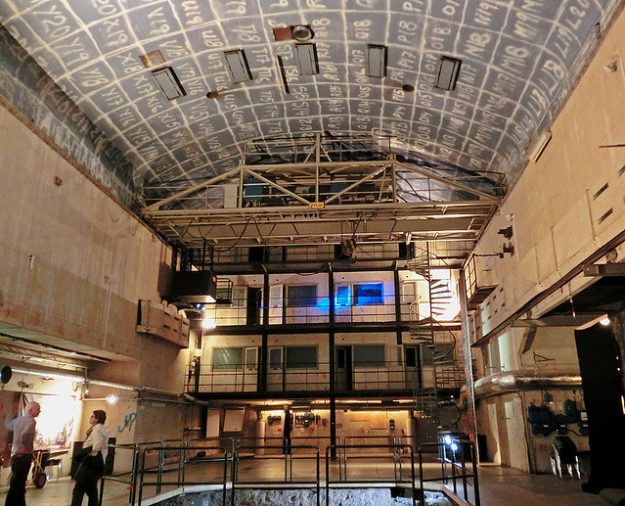
25 meters below Stockholm’s solid bedrock, HBO’s Chernobyl is being screened inside a decommissioned reactor for nuclear weapons. It is dark, a little bit chilly, and the atmosphere is tense. The thrilling music ends, the screen goes black, and the crowd spontaneously starts applauding. Afterwards, the reactor hall became a place of discussion. Can we learn from this show? We, three nuclear historians, think we can. Even more so, we all should. Roughly 451 civil nuclear reactors are online world-wide and 54 are in construction. This concerns everybody.

Displays R1 Reaktor Hallen

Drama or reality?

Let’s be clear about one thing: Chernobyl is a cinematographical masterpiece. Yet, apart from the brilliant acting, production, and music, the merits for the show’s success might ultimately go to reality itself. The show depicts everything; from the apocalyptic specifics of the nuclear disaster to the everyday life in former state-socialist countries. And in the end, even the best screenwriters in the world could not have been able to invent such a tragic and unbelievable story like the Chernobyl disaster.

That being said, entertaining historical fiction does not necessarily mean ‘correct’ historical drama. Is the series realistic? Craig Mazin, the writer of the series, has done a lot of research on the catastrophe. His bibliography provides a sufficient overview of the ever-growing state of the art on Chernobyl. Many of the scenes also correspond to real testimonies.

Yet, the series is and remains a dramatisation of real events. Some characters are made up and act as compilations of different real-life actors. The character of Ulana Khomyuk, for instance, embodies and symbolises a whole army of scientists that travelled to the exclusion zone and surrounding areas. The trial scenes also did not happen in the way depicted. Neither Legasov nor Shcherbina were there, and they certainly did not give heroic, truth-revealing speeches there.

The series’ creators are conscious and honest about these dramatisations. Not only in the podcast, but also in the final scene of the final episode, they reveal honestly how they altered history for dramaturgical effects. But maybe the question of correctness of historical drama is not relevant. The question is rather whether the Chernobyl catastrophe is represented correctly. Or to be more specific, whether the analysis of the disaster is correct.

Unfortunately, the answer is: yes.

What is it about?

The main message of the Chernobyl series seems to be that the catastrophe was a human disaster. It was not only caused by defective technology or operator’s mistakes, but by society, politics and technocratic culture. Hence, Chernobyl was entrenched in the deeper societal structures and safety culture of the Soviet Union.

This renders the show’s message the same as the message we, as historians of (nuclear) technology, try to convey every day: technology is human. Both its benefits and flaws are created by humans and their organisations. And this, in turn, creates risks to human beings.

Managing nuclear risks is then not solved by mere “technofixes.” An extra pipe or another safety procedure may be necessary, but are in themselves not sufficient. If we want to prevent nuclear catastrophes in those plants, we have to look at the human beings operating them. We have to look at how they think, behave and perceive things. We have to look at how they organise, interact, and share information. The causes of nuclear accidents do not stop at the gated fence of a nuclear power plant. If we really want to understand a nuclear accident, we have to look at society in all its facets.

“What is the cost of lies?”

It is both the first and the last sentence in the series, articulated by Valery Legasov on his audiotapes in the series. “The cost of lies” is also Craig Mazin’s explanation for the Chernobyl catastrophe. When people start lying, when transparency is lacking, and when the political system hinders the prevention of risks, then catastrophes happen. Mazin also indicated multiple times that it was not his intention to tell an anti-Soviet story nor an anti-nuclear story. He simply wanted to show the specific contexts in which huge catastrophes happen. And those contexts are profoundly human.

A useful show?

Pro-nuclear voices have already criticised the HBO series. It would overdramatise the accident and overemphasise the dangers of radiation. However, their arguments do not seem to be sound. Furthermore, downplaying the seriousness of Chernobyl or radiation does not help pro-nuclear voices in any way. In fact, every proponent of nuclear energy should talk about the tragic events at Chernobyl and be utmost open about it. It is the demonstration of what happens when a powerful and promising technology gets mismanaged. If there is a lasting future for nuclear energy, then its experts need to speak about, even promote, also the legacy of its mishaps. That’s why we should all talk about Chernobyl.

However, anti-nuclear voices have also taken the opportunity to refer to the series as an argument against nuclear power. Even if Chernobyl shows the enormous risks that nuclear technologies entail, generalising the Soviet situation for the entire world would not be correct. Indeed, the Soviet-bashing claim that accidents like Chernobyl can only occur in state-socialist countries has become redundant after Fukushima-Daiichi in 2011. Once again, it became clear that the social, cultural and political contexts constitute as the true causes of a nuclear accident.

In fact, every national nuclear programme is different, with different safety cultures and contexts but also common characteristics, such as secrecy, dual-use possibilities and a sense of being at the helm of technological progress. A lot of safety standards are now produced on an international level, but countries can still decide on how they implement them. Nuclear accidents can happen and have happened elsewhere as well, also in the West. Why? Because, again, nuclear accidents are protracted by humans. And humans do not only live in the Soviet Union or Japan.

The verdict

Chernobyl is a series that everyone should watch. It teaches us the strong connection between technologies and humans and how that connection can backfire in the form of a catastrophe. It’s a series that teaches us not to make the same mistakes as in 1986.

In fact, it teaches us that Chernobyl is not yet finished. If our discussions in the reactor hall in Sweden have taught us one thing, then it is that the story of Chernobyl is still incomplete. There are still so many things that are unclear or left for debate. Yet, although incomplete, it remains a powerful story. And a story that has been told by HBO in a powerful way.