KTH Logo

Fossil Capital: the Rise of Steam Power and the Roots of Global Warming

Under the theme of remembering the text (being a division of history after all) we will start a series of re-published texts from the enormous archive of different publications at the Divison. First out is Irma Allen’s review on Fossil Capital: The Rise of Steam Power and the Roots of Global Warming’ by Andreas Malm (Verso Books). This was originally published in the Swedish newspaper Dagens Nyheter, and then later in the Ecologist.

Irma is a doctoral student within the EHL at the Division. Her research focuses on how coal, as a substance and a material of labour, has shaped ideas of the Polish nation. She will defend during 2021.

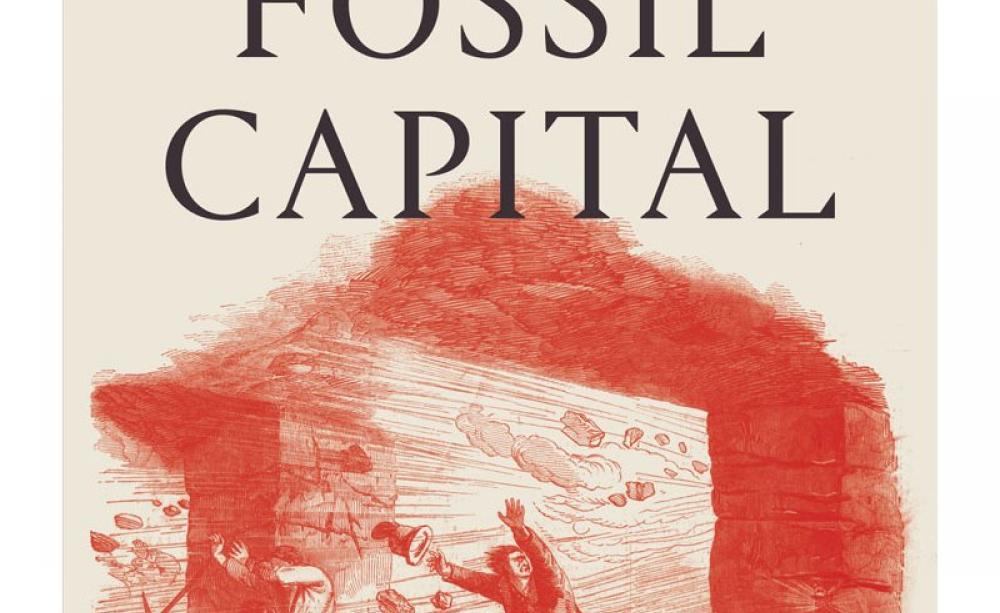
From front cover of ‘Fossil Capital: The Rise of Steam Power and the Roots of Global Warming’ by Andreas Malm (Verso Books).

We all know that coal and steam vanquished over water power in Britain’s – and the world’s – industrial revolution, writes Irma Allen. But as Andreas Malm sets out in his fascinating new book, the deciding factors in that victory were the unconstrained mastery over people and nature that coal provided mill owners. And so the model was set for the fossil age that may only now be coming to an end.

Read the full review: Fossil Capital: the rise of steam power and the roots of global warming

New Article: Claiming Value in a Heterogeneous Solid Waste Configuration in Kampala

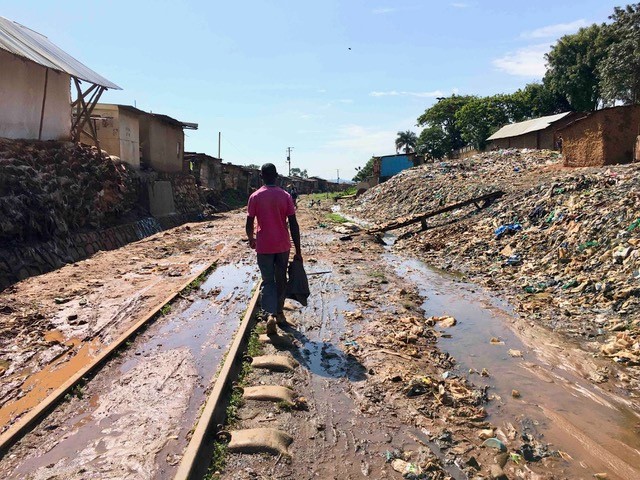
Division and EHL researcher Henrik Ernstson, together with Mary Lawhon, University of Edinburgh and Hakimu Sseviiri, Shuaib Lwasa and Revocatus Twinomuhangib from Makerere University (Urban Action Lab) are published in a forthcoming issue of the scientific journal Urban Geography. In the peer review article “Claiming value in a heterogeneous solid waste configuration in Kampala” they examine recycling in Kampala, the city’s complex waste systems and why little waste moves through it.
Photo: Henrik Ernstson http://www.situatedupe.net/hiccup/hiccup-resources-outputs/

Abstract 

Kampala has a complex set of regulations describing actors, rules and procedures for collection and transportation of waste, and requires waste to be disposed of at the landfill. Yet little of the city’s waste moves through this “formal system”. Building on wider scholarship on urban infrastructure and calls to theorize from southern cities, we examine recycling in Kampala as a heterogeneous infrastructure configuration. Kampala’s lively recycling sector is socially and materially diverse: it is comprised of entrepreneurs, publicprivate partnerships and non-governmental organizations, as well as a range of materials with different properties and value. We articulate how actors assert claims, obtain permissions, build and maintain relationships as they rework flows away from the landfill. We argue that recognizing sociomaterial heterogeneity throughout the waste configuration enables a clearer analysis of contested processes of claiming value from waste. We also demonstrate how these efforts have pressured the state to reconsider the merits of the modern infrastructure ideal as a model for what (good) infrastructure is and ought to be. Various actors assert more heterogeneous alternatives, raising the possibility of alternative modes of infrastructure which might generate better incomes and improve service provision.

This article is a part of the Heterogenous Infrastructure Configurations in Uganda (HICCUP) project, funded by the Swedish Research Council.

Henrik is a long time research fellow of the Environmental Humanities Laboratory and the Division. He is a political ecologist, lecturer at the University of Manchester, world wide resident, honorary associate professor of the University of Cape Town, a postcolonial urbanist and a filmmaker to mention only a few things on a long list of engagements. Keep up with Henrik on Twitter: https://twitter.com/rhizomia

Links

Claiming value in a heterogeneous solid waste configuration in Kampala (open access)

HICCUP project page

Urban Geography

Tell the Story. Trauma as an Environmental Issue. Or, The Personal Is Ecopolitical – YouTube

Enjoy a virtual talk between Marco Armiero and Serenella Iovino from October 2020. This webinar was a part of Serenella’s course: Entangled Emergencies. Theories (and Stories) to Think with the Virus. An Environmental Humanities Approach at the University of North Carolina Chapel Hill.

Serenella is a Professor of Italian Studies and Environmental Humanities, a literary theorist, an ecocritic and a friend of the Division and the EHL, and she has been engaged in several events and projects with us over the years.

Streaming STREAMS: Join the conversation on August 5–7

By Johan Gärdebo and Roberta Biasillo

On August 5–7, we host Streaming STREAMS – a series of online conversations and presentations about the Environmental Humanities (EH). These sessions will function as an introductory event for the upcoming STREAMS-conference (Stockholm, August 3–7, 2021).

The three-day event has the ambition to initiate conversations to be continued, open a space for many other contributions to be hosted during this next months, build a community of academics, artists and activists addressing the environmental crisis to be gathered in real life.

Our Programme

We took up the challenge of envisioning diverse and easy-to-follow formats and adjusting academic and less academic contents to the WWW and we came up with a manifold programme consisting of three sessions per day.

Each day begins with an interview between an early career and a distinguished scholar exploring specific realms of expertise within the EH, namely postcolonial studies, ecocriticism and environmental justice. Then, a hands-on roundtable will give a taste of the selected panels for the conference and present innovative approaches and themes in use. Finally, we will dedicate the conclusive daily session to a self-reflexive and inclusive forum discussion in which an invited speaker will share her/his/their experience in facing every-day scholarly challenges.

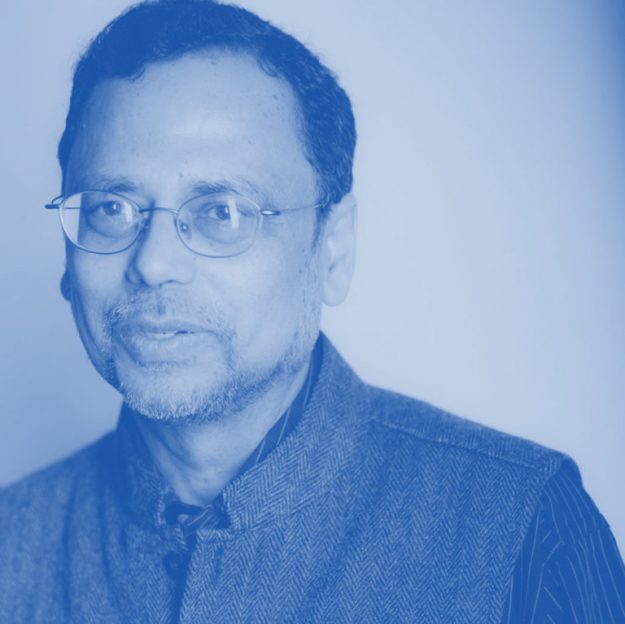
On August 5 we will meet Dipesh Chakrabarty, historian and professor at the University of Chicago. Moving from his wide-ranging scholarship, the interview will explore crucial conceptual knots of the EH and will pay particular attention to potential future developments of the field.

The stream Approaching Time-Things will put the question of time at the forefront, both as analytical lens and object of inquiry: “is time that hard to grasp?” Finally, the forum discussion with Greta Gaard, ecofeminist scholar, will explore narratives of the COVID-19 Pandemic.

Dipesh Chakrabarty

On August 6, James Ogude, literary scholar and Director at the Centre for the Advancement of Scholarship (Pretoria), will join us for an interview on “Ubuntu and the Principle of Co-Agency in African Ecology”.

The stream Feminist Posthumanities will present their trailer “The Posthumanities Hub, submerged at ART LAB GNESTA”.

Our forum discussion will engage with publication venues. Together with Dolly Jørgensen, historian of the environment and technology and co-editor of the open-access journal Environmental Humanities, we will see how journals are part of remaking scholarly fields.

James Ogude

On August 7 Julie Sze, professor of American Studies at the University of California (Davis), will speak about the topic of her most recent book “Environmental Justice in a moment of danger”.

The stream Environmental History of Migration will host a roundtable discussion on “Environments of Italian diaspora”.

Our concluding forum discussion on making academia sustainable will have as guest speakers historian Kathleen Brosnan and political ecologist Felipe Milanez. They will address a variety of challenges under the umbrella of sustainability.

Julie Sze

To join for the live sessions and updates on these and upcoming STREAMS-events, register here.

***

Full programme for Streaming STREAMS, 5–7 August, 2020.

Follow STREAMS on social media (Facebook and Twitter).

STREAMS is an international conference for the Environmental Humanities (EH) that gathers researchers from a wide range of academic disciplines as well as artists, activists and practitioners. EH has grown considerably during the last decade and STREAMS seeks to offer a space in which this experimental and dynamic field can meet, discuss and set out future directions for thinking and acting amidst the ongoing ecological disaster.

STREAMS is hosted by the KTH Environmental Humanities Laboratory (EHL).

Conveners, organisers and participants to STREAMS remain committed to inclusivity with regard to race, ethnicity, gender, gender expression and identity, sexual orientation, and physical abilities in terms topics discussed at their conference.

Teaching the film ONE TABLE TWO ELEPHANTS: A resource for online teaching about postcolonial ecologies and Southern urbanism

by Jacob von Heland and Henrik Ernstson, Co-directors of The Situated Ecologies Platform

We have made the film One Table Two Elephants (84 min, 2018) free for use and remixing, except for commercial purposes (CC-BY-NC). This website on our Situated Ecologies Platform provides a link to the full film as well as educational resources, key references, questions for students and reviews, and notes on cinematic ethnography and our trilogy of films on postcolonial ecologies. The website will be updated continuously with new materials as we ourselves—and hopefully you—share your teaching experiences with the film.

Filmed in Cape Town, One Table Two Elephants provides a textured and nuanced account of knowledge politics in a postcolonial city, which we have found translates well to many other places. It opens up important questions about nature, urbanization, class, race and the living remains of colonialism. The film deliberately does not tell an easy story, because that is now how things are. Instead we trust the audience to engage and make up their minds and feelings, reading it in diverse ways to engage with one another. Many students have found it intriguing and engaging.

We also believe the film can assist in developing ONLINE TEACHING in these times of COVID19. The film will suit the use of a “flipped classroom,” allowing students to watch the whole or parts of the film before class and read one or two texts, which we have suggested. This preparation provides conditions for a rich discussion. However, there are various other ways of using the film in teaching and learning and we hope you will share with us your teaching experience, either through an email to us, or by posting on social media with the following hashtag: #Teaching1T2E .

We especially thank Paul Munro and Jim Igoe for using the film in their courses on Political Ecology and Indigenous Landscapes/Anthropology, respectively. We also like to thank Sachiko Ishihara, Asma Mehan and Ruben Hordijk for engaging critically with the film in their own course work. We have learnt from these scholars and students.

LINK to #Teaching1T2E: http://www.situatedecologies.net/one-table-two-elephants.

About the film: One Table Two Elephants (84 min, CPH:DOX, 2018) is a cinematic ethnography created by Jacob von Heland and Henrik Ernstson that deals with race, nature and knowledge politics in the postcolonial city (Official trailer). The film has been nominated to several prizes and screened at film festivals in Copenhagen, Cape Town, Tirana, Nijmegen and Stockholm.

Accolades:

Scholarly reference:

  • Heland, Jacob von, and Henrik Ernstson. 2018. One Table Two Elephants (84 minutes, cinematic ethnography, Color, HD, Dolby 5:1). World Premiere in Competition at CPH:DOX 2018, March 20. Published by The Situated Ecologies Platform (CC-BY-NC) at this fixed URL: bit.ly/1T2Ethefilm

Visiting the Cosmos: Science Fiction in the Gallery

by Caroline Elgh Klingborg, Curator, Bonniers Konsthall

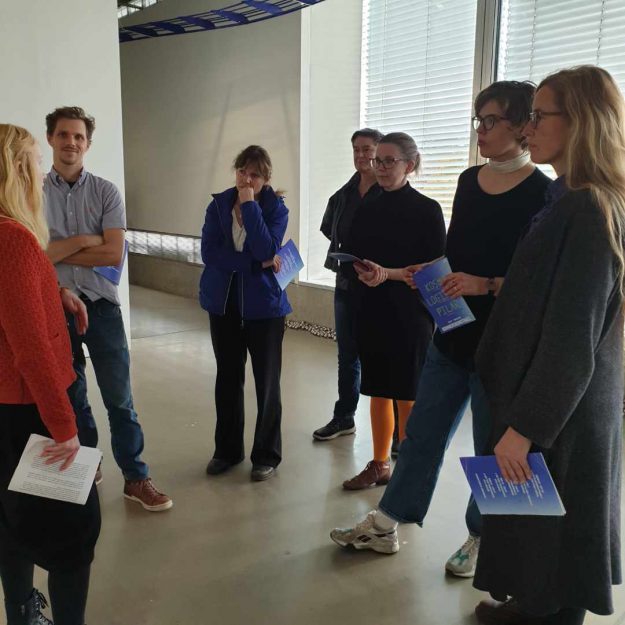
Last fall, I brought a group of researchers and guests from KTH’s Division of History of Science, Technology, and Environment to the exhibit I curated for Bonniers Konsthall, entitled Cosmological Arrows: Journeys through Inner and Outer Space.* Their curiosity in the powers of science fiction and speculative fiction by way of research and teaching (for instance, the course Science Goes Fiction) sparked engagement and conversation, for which I’ve been asked to contribute my thoughts behind the exhibit. As I see it, we are living in a world where we are facing countless ecological, technical, and political challenges. The state of the world is an apparent and important part of the public debate where researchers, activists and other engaged people want to create visibility and change. At the same time, there also seem to be a growing sense of powerlessness, especially among young people, that it might be too late to save our planet. Since we are facing all these challenges together as humans and more-than-humans living on this damaged planet, we need new forms of interdisciplinary knowledge and new forms of collaborations. And here we can turn to the arts.

During recent years, we have seen a growing number of exhibitions and art projects—internationally and in Sweden—that evolve around the state of the world and our present future. Nearby subject areas such as science fiction, space, co-habitation and the more-than-human have interested an increasing number of artists in recent years. Themes like these have been featured in international exhibitions such as Gravity: Imagining the Universe after Einstein at MAXXI in Rome, Is This Tomorrow? at Whitechapel Gallery in London, Tomorrow is the Question at ARoS in Århus, and—not least—May You Live in Interesting Times curated by Ralph Rugoff for the latest Venice Biennale. In Sweden, I need to point at exhibitions such as The non-human Animal at Uppsala Art Museum, Sensing Nature from Within at Moderna Museet in Malmö and Animalesque and Art Across Species and Beings at Bildmuseet in Umeå. It is distinctly clear that visual artists, curators and art institutions feel the need to engage with the rapid technological, ecological and political changes the world is going through—and to rethink the definitions of nature, agency, materiality and what it means to be human.

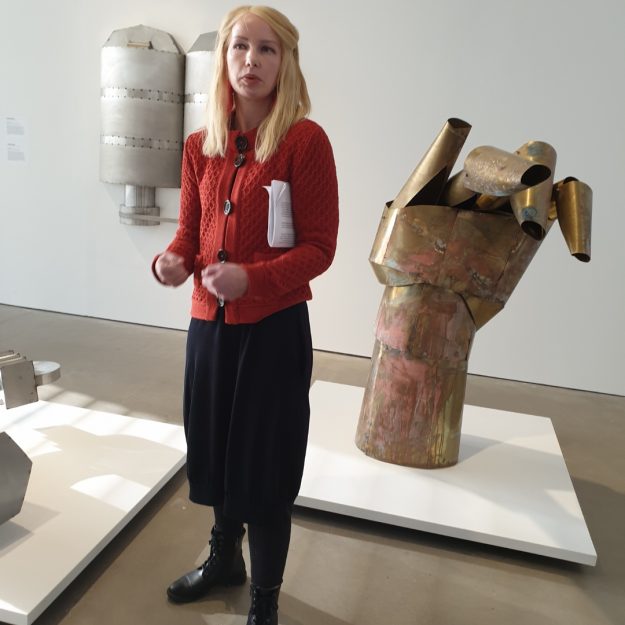
Caroline Elgh Klingborg, curator, of Cosmological Arrows. Photo by Cecilia Åsberg.

Climate researchers like Keri Facer has spoken about the arts as something we will need more of in the present future and that art can teach us about experimental thinking and how to live with some uncertainty. So, from various disciplines, there seem to be an openness and wish for interdisciplinary collaborations to bring forward new perspectives on human and more-than-human forms of co-habitation. Some of these perspectives were brought forward in the exhibition. The exhibition was shown during autumn 2019 and assembled a group of artists—Allora & Calzadilla, Lee Bul, Agnieszka Brzeżańska, Debora Elgeholm, Johannes Heldén, Anna Hoetjes, Jone Kvie, Lawrence Lek, Caroline Mesquita, Brittany Nelson, Lea Porsager, Larissa Sansour, Arseny Zhilyaev and Asya Volodina—who are all interested in science fiction and humanity’s conception of the cosmos. In keeping with our own time, my intention for this exhibition was to highlight how visual artists are using space and the genre of science fiction as an imaginary laboratory that forms the basis for discussions of today’s ethical, moral, existential and political dilemmas.

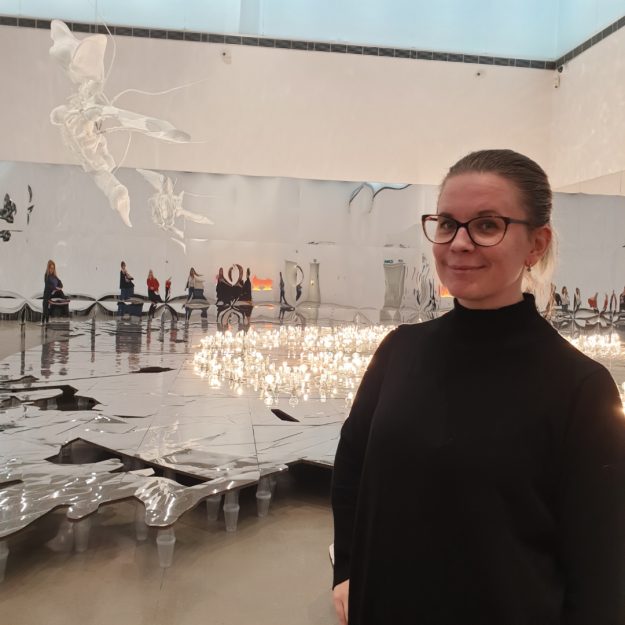
Sofia Jonsson poses with Lee Bul’s, Civitas Solis II, 2014. Photo by Cecilia Åsberg.

Cosmological Arrows showed the connections between contemporary art and science fiction, and how this rather new relationship can contribute to new ways of thinking, being and acting in the world. In the preface to her science fiction novel The Left Hand of Darkness, Ursula K. Le Guin (1929–2018) writes about how she uses science fiction to do leaps of imagination. Le Guin does not believe that her work as an author contributes any kind of evidence-based research into how the future will look (because no divine or visionary prophesies come from science fiction) but instead describes reality and the time in which the book is being written.

This reading was also appropriate for the artworks presented in Cosmological Arrows. The exhibition clearly showed that science fiction does not constitute an escape into another world. Rather the exhibition highlighted and illustrated an intricate interplay between reality and fiction in which science fiction became a tool for testing and conceiving of various historical, contemporary or future scenarios. Even if the works presented were (rather dystopian) portraits of our time—and dealt with our reality on the only planet that is habitable (as far as we know today)—the conceptual worlds that the artists can create with the help of science fiction could perhaps offer us a certain understanding of or preparation for what might await us in the future.

Visiting the exhibit, from left to right: Caroline Elgh Klingborg, Jesse Peterson, Myra Hird, Sabine Höhler, Sofia Jonsson, Silvia Thomackenstein, and Janne Holmstedt. Photo by Cecilia Åsberg.

I am sure we will see more of these perspectives and initiatives within the arts during upcoming years. The genre of science fiction has gained new relevance today and its themes and images bring together artists, film makers, writers and academics—bridging the gap between art, popular culture, activism and academia.

*The exhibition was accompanied by a publication with the same name. The book contains texts by Caroline Elgh Klingborg, Jerry Määttä, Mahan Moalemi, and Cecilia Åsberg, as well as short stories by Aleksandr Bogdanov, Ted Chiang, Karin Tidbeck and Alice B. Sheldon/James Tiptree Jr. and artworks by Agnieszka Brzezanska, Allora & Calzadilla, Anna Hoetjes, Arseny Zhilyaev & Asya Volodina, Brittany Nelson, Caroline Mesquita, Debora Elgeholm, Johannes Heldén, Jone Kvie, Larissa Sansour, Lawrence Lek, Lea Porsager, and Lee Bul.

Author Bio: Caroline Elgh Klingborg is a curator of contemporary art. Her work explores interdisciplinary processes and collaborations across different fields of research. In exhibitions and publications, she has brought forward the meeting between visual arts and fields such as speculative fiction, environment, new materialisms and truth. As a curator at Bonniers Konsthall in Stockholm she has recently curated the group exhibition Cosmological Arrows. Journeys Through Inner and Outer Space and Dora Garcia´s solo exhibition I Always Tell the Truth. Caroline Elgh Klingborg collaborates with The Posthumanities Hub and is also a guest lecturer at Stockholm University´s Curating Program.

Report: Dying at the Margins Workshop

by Jesse D. Peterson and Natashe Demos-Lekker

On September 26-27, the Environmental Humanities Laboratory—along with the Division of History of Science, Technology, and Environment at KTH Royal Institute of Technology—hosted the Dying at the Margins Workshop. Put together by PhD students Jesse D. Peterson (KTH) and Natashe Lemos Dekker (University of Amsterdam), this workshop brought together scholars at various stages of their career and from various backgrounds and disciplines to discuss how contemporary perspectives in environmental humanities and the medical humanities might further research on how dying “bodies”—animal (including human), plant, thing, place—challenge natural, normative, and notions of a “good” death. The workshop had two keynote presentations, along with discussions of participant papers and a creative embroidery workshop.

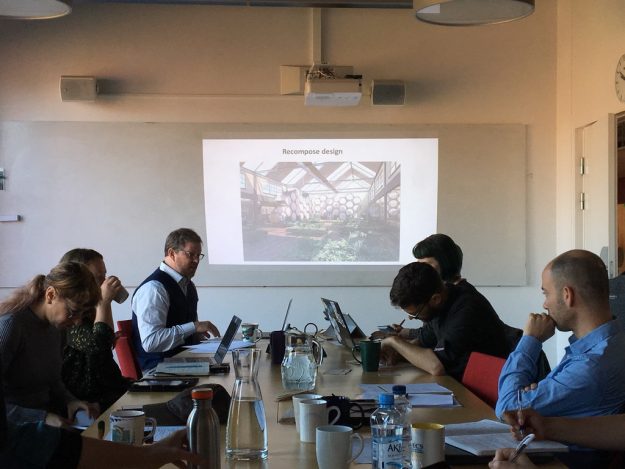
Professor Philip R. Olson presents on human composting

On the first day, Dr. Philip R. Olson (Virginia Tech) presented his work on bodily disposition. Beginning with Roy Scranton’s premise in Learning How to Die in the Anthropocene, he posed the question as to how might the demise of culture impact body care? If the Anthropocene is largely a problem of scale, what challenges and opportunities will face the disposition of human bodies now and into the future? Looking specifically into the practice of “natural organic reduction” (essentially composting human bodies) alongside other disposition technologies—such as alkaline hydrolosis, burial pods, green burial, submersible reef balls, and promession—Olson articulated how these alternative forms of disposition claim to be more environmentally friendly than burial or cremation as well as gentle forms of body recycling. Yet, as he pointed out, individualist norms “die hard,” that is, although a stunning array of new technologies have challenged the social and cultural norms of disposing of a corpse, many end users don’t want to see their loved ones transformed by some kinds of ecological relationships or contaminated by the technologies that process multiple bodies. For instance, what critters and creatures are allowed access to corpses or how do people negotiate the possibility for bodies to be passive rather than active forms of nourishment? As a conclusion, Olson suggested that these issues lead us to consider what kind of species ought we to be, asking us what are the moral virtues to be cultivated and moral vices to shun. He argued that humans not only need a species centered history but a species focused virtue ethics.

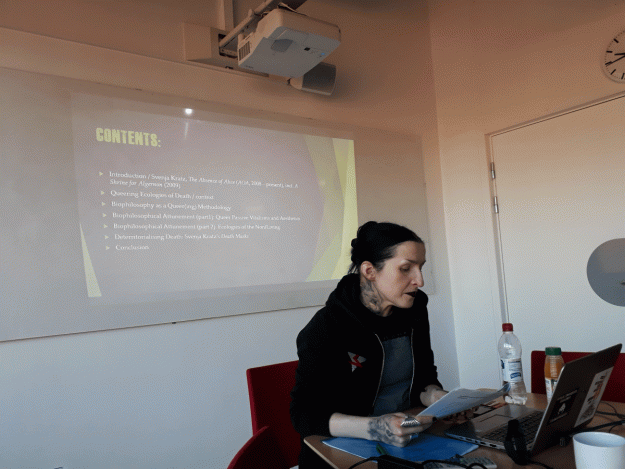
The second day, Dr. Marietta Radomska (University of Helsinki and Linköping University)  spoke to us about the need for “queering” death studies. Responding to calls in queer theory and posthumanism that challenge normative conceptions of the human subject, a queer death studies ought to help reconfigure notions of death and practices related to it that have relied upon such conceptions. In other words, by challenging basic assumptions about dying and death, queering death can lead to producing alternative imaginaries about dying, death, and the dead beyond gender and sexuality. It also provides the means for moving away from “normative ontologies”

Marietta Radomska presents Queer Death Studies

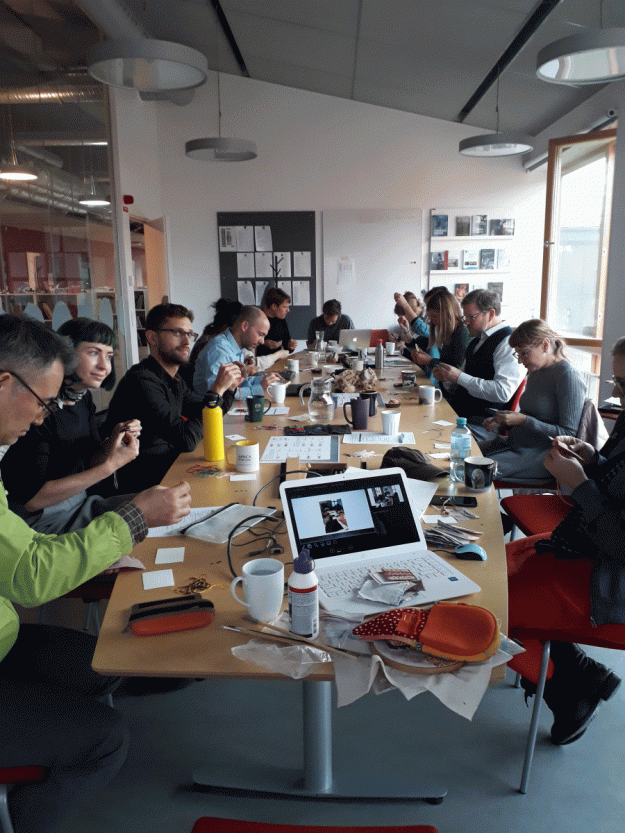
Participants were also treated to an embroidery workshop led by Karina Jarrett (Broderiakademi), who stitched together ways in which fine arts feature in memorial, memory, and creative response to loss and grief. Having been working with residents of Malmberget, a town in northern Sweden currently being dismantled and “moved” to allow for the expansion of the local mine (LKAB malmberget), Jarrett curated a personal exhibition and provided the participants with time to express themselves by embroidering a friendship card. The experience highlighted how there is still very much to be done when facing loss even when there feels like there is nothing left that one can do.

Workshop participants practice their stitching.

Thanks to all the participants for their attendance, energy, and enthusiasm.

Crosscuts Film Festival: In-vision Environmental Humanities

by Sofia Jonsson, festivalgeneral

Den 22-24 november är det dags för Crosscuts att inta Bio Rio i Stockholm igen.

Crosscuts är Stockholms första miljöhumanistiska festival för text och film. Temat för i år är Ruptured Times/Brytpunkter. Genom ​dokumentärfilmer, poesiuppläsning och samtal mellan ledande forskare, filmare och aktivister utforskar vi den brytpunkt där vi befinner oss nu, i en tid av politisk ovisshet, globalisering och klimatkriser.

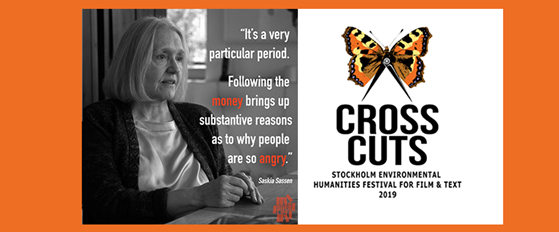
I programmet har vi Saskia Sassen, sociolog och professor vid Columbia University, speciellt inbjuden som hedersgäst för att presentera Fredrik Gertténs omtalade dokumentär Push, där hon även själv medverkar. I en efterföljande panel samtalar Saskia tillsammans med Erik Stenberg, arkitekt och lektor KTH och Marco Armiero, lektor och miljöhistoriker KTH om städers gentrifiering och konsekvenserna av detta. Samtalet modereras av Miyase Christensen, professor i media och kommunikation vid Stockholms universitet.

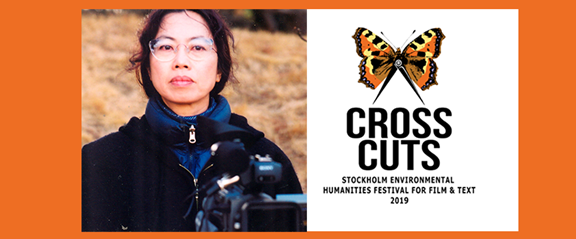
Under söndagen har vi äran att presentera en masterclass i filmskapande med vår andra hedersgäst: författaren och filmskaparen Trinh T. Minh-Ha. Efter masterclassen följer en visning av Minh-has uppmärksammade essäfilm Forgetting Vietnam. Filmen visas tillsammans med ett samtal mellan Minh-ha, Athena Farrokhzad, poet, författare och litteraturkritiker samt Jennifer Hayashida, poet, översättare och artist. Vi bjuder även på poesiuppläsning med Athena och Jennifer.

I programmet finns flera Sverige-premiärer, däribland Grit som visar situationen för lokalbefolkningen i olika byar i Indonesien efter ett jordskalv som begravt stora områden i lera. I dokumentärer får vi följa kampen mellan den drabbade befolkningen och det multinationella företag som kan ha orsakat skalvet med sina borrningar efter naturgas.

Under lördagen visar vi den första dokumentärfilmen som gjorts om den kanske mest inflytelserika, just nu levande, franska filosofen Alain Badoiu. Badiou har gett sig på allt från radikal politik till kärlek och antik filosofi i sina böcker. I filmen talar han själv om sitt liv, sina tankar och sitt verk. Efter visningen följer ett samtal mellan regissören Rohan Kalyan och filosofen Ashley Bohrer, verksam vid University of Notre Dame i USA. Samtalet hålls på engelska.

Festivalen avslutas med premiären av Look Away, en dokumentär med avstamp i Calais där vi får följa och ta del av den verklighet som många människor på flykt upplever. Efter filmen följer ett samtal mellan Roberta Biasillo, forskare på KTH och Fabio Gianfrancesco, flyktingaktivist och kapten på en av de båtar som räddar flyende människor på Medelhavet och Shahram Khosravi professor vid Socialantropologiska Intitutionen på Stockholm Universitetet.

Nytt för i år är sektionen Annals of Crosscuts – en filmgranskningsprocess där dokumentärfilmare från hela världen har skickat in bidrag på temat Ruptured times. En panel av granskare från film-, konst- och forskarvärlden har gjort ett urval av filmer och under festivaldagarna blir det världspremiär för dem. I panelen finns bland annat Kalle Boman, Forum för Visuell Praktik, Issraa El-Kogali, kreatör och filmskapare samt Jan Olsson, professor emeritus i filmvetenskap vid Stockholms universitet.

Varmt välkomna till en helg fylld av spännande dokumentärfilmer och samtal!

***
Fullt program finns på https://www.crosscuts.se och https://www.biorio.se ​
Crosscuts på Facebook: https://www.facebook.com/EHLcrosscuts/
Bio Rio på Facebook: https://www.facebook.com/TheBioRio/

Crosscuts
Crosscuts är en internationell festival för film, konst och forskning inom miljöhumaniora. Varje film visas tillsammans med ett samtal med speciellt inbjudna gäster. Festivalen organiseras i år av KTH Environmental Humanities Laboratory (EHL) i samarbete med den ledande forskningsmiljön vid JMK, Institutionen för mediestudier, Stockholms Universitet och Bio Rio. Crosscuts arrangerades första gången 2018.

EHL: https://www.kth.se/en/abe/inst/philhist/historia/ehl
Forskningsmiljön vid JMK: https://research.ims.su.se/en/environments/1-global-media-studies-and-the-politics-of-mediated-communication

Sagt om Crosscuts:
This Stockholm Environmental Humanities Festival for Film and Text that was held for the first time in the fall of 2018, was an extremely successful and important event for both academic community and the general public. Madina Tlostanova, professor i postcolonial feminism, Linköpings Universitet. Paneldeltagare under Crosscuts 2018.

Vi är väldigt glada och stolta över att få vara samarbetspartner med Crosscuts och att dessa viktiga filmer och samtal kommer att äga rum på vår biograf. Vi befinner oss i en brytpunkt vad gäller klimatet och Bio Rio vill vara med och skapa den förändring som krävs vad gäller vår miljöpåverkan. Jocke Kellekompu, VD Bio Rio
——————————————————————

Kontaktpersoner:
Sofia Jonsson, festivalgeneral, 0739-108787, sofia@crosscuts.se
Jacob von Heland, programansvarig samt chefredaktör för Annals och kontaktperson för Trinh T. Minh-ha, 070-727 24 87, jacob@crosscuts.se
Miyase Christensen, programplanering, ansvarig Stockholms Universitet och kontaktperson för Saskia Sassen, 070-389 20 07, miyase.christensen@ims.su.se

Hemsida av https://www.wrangedesign.se/
Logga av https://carmonamedina.com/​


What if…? Redefining research impact from an environmental humanities perspective.

The following text has been conceived as an environmental humanities critique to research policy regarding what are considered  “research initiatives of excellence”.

Authors: Irma Allen, Jesse Peterson, Daniele Valisena, Anne Gough,
ENHANCE ITN – PhD Students, KTH – Environmental Humanities Laboratory, Division of History of Science, Technology and Environment

What if…? Redefining research impact from an environmental humanities perspective.
What if ….? What if….? What if….?

All researchers want their work to have an impact and are increasingly under pressure to demonstrate it. But what does this mean? At present, research impact is largely defined in relation to dominant neoliberal economic frames. The language of excellence, innovation, development, marketability, knowledge economy, and the building of human capital are cornerstones to how funding agencies measure the value of academic outputs. But is this the best way to define impact? Critique of the research impact agenda by now is widespread, and we think that environmental humanities offers insightful ways to rethink what is meant by impact in radically alternative ways that address specifically environmental concerns.

Environmental Humanities (EH) takes as its starting point the idea that humans and nature are radically inseparable and that humanities subjects (literature, history, philosophy, arts, etc.) have the potential to provide key insights into the ways we live, why we do so, and how we can change. Environmental humanities research provides historical perspectives, situates scientific and technological change in cultural context, addresses ethical problems, interprets and provides new narratives, and works with local communities.

Humanities teaches about the power of words to make worlds. Storytelling as a way to generate alternative narratives is therefore at the heart of environmental humanities practice. This collaborative piece by four people undertaking a PhD in EH is a speculative attempt at what it means to redefine research impact through what we have learnt from doing environmental humanities research. Speculating means here supposing, hypothesising, venturing, or simply, imagining – asking ‘what if….’?. We speculate here from an EH perspective about ‘what if’ research impact was thought differently and how? What kinds of impact do we wish to be making? What do environmental humanities teach us about how we might measure research results, outcomes, and processes differently? Together we propose a story about the kind of research worlds we would like to inhabit.

We take four core concepts that are currently central to how research impact is understood – Mobility, Innovation, Employability, and Economic Growth – and rethink these. Instead, we propose that from an emphasis on mobility we shift to support for inhabited movement, that from a focus on innovation we switch to re-valuing innovative teaching that enhances ecological living, that from a concern with employability we highlight the building of ecological ability, and that from an obsession with economic growth we move towards degrowth as central ways that impact is defined. What if this was at the core of how research impact is measured..?

Employability
From employability to ecological-ability

Proposals for research funding illustrate their impact by describing how they will train researchers so that they be employable. Employability as a concept has become normalized, leading to funding opportunities, research projects, university courses and programs that survive only if they can promise to deliver a path to higher earnings. To meet this criteria, research projects train researchers in skills to capacitate them to work in a variety of academic and non-academic positions.

Employability–as a modified model of the linear career path model–is a reductive vision of a more ecologically-sound life path. By disregarding non-instrumentalist values within humanities scholarship, making researchers employable ignores different forms of training possibilities and opportunities. Satisfying employability as an impact criteria molds the researchers into marketable, tradable, commodities whom are personally responsible for their failures in employment and career. Because markets change, jobs increase or decrease, “employable” researchers can only find success in the terms of the market. In other words, universities bear little responsibility for providing researchers with jobs while they rely more heavily upon non-institutional funds. And, as a virtue of their employability, researchers are often uprooted, traded like sports players, and disincentivized to form lasting, meaningful relationships with local communities. Though a broader imagining of employability could take individual factors, personal circumstances, and external factors into account, employability negates the justification for actively cultivating skills and talents that do not serve the growth of the market economy. Employability serves globalized economic or political values over social or environmental ones.

From an EH perspective, researchers need ecological-ability. Rather than attempting to develop employability as a diverse set of skills that a researcher can pull out of his or her pocket like a swiss army knife or smartphone, funding could foment values and skills that extend outside economic logic to fulfill non-universalized ethical and ecological obligations. Impact could be measured by providing researchers with habits that contribute to the flourishing of lives and worlds, with an eye towards human health and well-being (an EU Environmental Policy objective). Training, therefore, ought to be provide researchers with life skills that enable them to improve the quality of life for themselves and other communities, including animals and environments. Qualities like reflexivity, community engagement, supporting alternative cosmologies, ethical action along with practical skills including gardening, holding an activist rally, foraging and hunting, writing a poem become as meaningful as one’s ability to publish an academic paper, plan a conference, or manage project finances.

Mobility
From mobility culture to inhabited movement

Scholars’ mobility is considered to be one of the key factors in defining the quality of a research project. Internationalization of research, network-building, and human capital exchange all contribute to demonstrating the successfulness of an academic project. For example, in 2012 Swedish funding agency Vinnova launched the “Mobility for Growth” program, whose “overall objective is to support career development for individuals through mobility” (p. 2). Horizon 2020’s funding document underlines that in order to improve Europe’s “attractiveness for researchers […] research projects should encourage them to move between countries, sectors and disciplines to enhance their creativity and innovative potential” (p. 984). EU funded research programs also value the enhancing of mobility among academics as a concrete way of shaping European citizenship. But what kind of European citizenship does this produce? Although it is true that mobility of ideas and researchers has long been a fundamental component in the construction of an international scientific community – both for hard sciences as well as for human sciences – engaging with environmental humanities implies questioning the simplistic equation that mobility = good research and, more specifically, that increased mobility (hypermobility) = positive impact. Moving scholars’ bodies across borders and cultures entails moving and mixing cultures, habits, family and relational ties, ways of dwelling and ways of being together with other people, other environments and different ecologies of life.

Our carbon and ecological footprint should be considered when evaluating the impact of research projects. According to KTH’s Travelling Scientist, “researchers who want to contribute to a more sustainable world are on average emitting two tons of CO2-equivalents per year”. Imagine the increases in carbon usage for researchers required to be mobile. It’s counterintuitive for researchers aiming to reduce a local or global carbon footprint by increasing their own. Being hyper-mobile has its impacts; it boosts international connections — but perhaps at the expense of slower forms of engagement more locally, and also often to the detriment or risk to the researcher’s own wellbeing, sense of place, and capacity to build an ecological life. The very action of continuously moving between one country and another — be it to take part in training activities, perform multi-sited fieldwork, build a network, or participate in international conferences — contradicts basic knowledge about environmental harm.Thus, hyper-mobility cannot be part of any environmentalist agenda.

Environmental humanities research studies and supports experiences, livelihoods and research practices that promote a transnational and translocal sense of place without losing sight of the social and ecological relationships in various communities.

We need to be able to have the possibility to inhabit places as much move in and between spaces as scholars engaged in genuine transformative, environmental humanities work. Inhabiting takes time.

Environmental humanities as a research practice can and should contribute to preventing globalization from displacing de-rooted professionals across the globe, as well as criticizing the neo-liberal project (the flexibilization and causalization of academic laborers on the job market) behind the creation of intellectual placeless reservoirs.

Against economic value-producing and placeless citizenship fostered by hyper-mobility, environmental humanities promote community-based research practices, built around slow mobility, place, as well as human and more-than-human relations. As Ursula Heise framed it, environmental humanities helps retracing the sense of place (2008), while the hyper-mobility that informs many research agendas ends up loosening place-based ties. Trans-locality as an open form of dwelling should be a constituent of both research subjects as well as researchers’ lives. All those characteristics shape a form of ecological citizenship and awareness that should be the core mission of any environmental humanities projects.

Innovation
From Innovation towards valuing innovative teaching inclusive of more-than-human worlds

The need to prove impact through innovation is a standard part of many research grant applications. But ‘innovation’ in this context most often means new products, services or technologies. Innovation can also be measured through publication output. But one area that has the biggest potential to create innovative impact within academic work is grossly undervalued or marginalized – that is, teaching. One reason for its low status in academia may be that teaching is a gendered practice – often treated as ‘women’s work’ because of its deployment of emotional labour and care. We propose that the concept of research innovation expands to include teaching, and innovations in teaching, as a central measure of impact on the kinds of students, or citizens, universities and research influences. ‘Students’ in this case should mean both those within the traditional boundaries of the university, but also, and more critically, those beyond.

Environmental humanities seeks to develop more equitable relationships among human and non-human communities. Rather than technology being the one-bullet answer to societal challenges, pedagogy allows for researchers to actively participate in shaping societal values, relations and responses to change, including building human-non-human engagement and the embedding of persons within an ecological world. Teaching is often the space where students can critique and imagine approaches to ways of living, justice, and environmental crisis, and learn to de-centre the human individual. Teaching changes the innovative product model to one where innovation is internalized in active subjects as students.

In particular, EH rests on the requirement that we participate in the world as we find it through learning and practice. It becomes about being ‘an effort to inhabit the difficult space of simultaneous critique and action’ (Rose, et al. 2012). Thus teaching should be understood ‘as action and the classroom as ‘the field’’ (Tripp, Muzzin, 2005; Hutchins 2012). Innovative teaching points towards the development of practice- and field-based learning particularly within the environmental humanities where experiential learning must be a central component if we are to apply our knowledge towards change.

Growth
From growth to degrowth

Research impact is often defined in relation to its contribution to economic growth measured in GDP. Yet the agenda of environmental humanities is at the very least critical of, if not outright oppositional to, economic growth as an overarching societal goal, since unfettered growth lies at the heart of the environmental crisis, including biodiversity loss, climate change, and resource depletion. So should the value of our research be measured in relation to it? Since, as economist Tim Jackson states, ‘Questioning growth is deemed to be the act of lunatics, idealists and revolutionaries’, such a query is often deemed ridiculous. Particularly for researchers who must comply with the economistic boundaries of grant awarding bodies and funding agencies. Yet taking environmental humanities seriously points to the need to articulate this very question. The concept of ‘degrowth’ is emerging as one of the key modes by which environmental humanities is expressing this call for alternative practices (see Emmett and Nye 2017 and Nelson and Schneider 2018). This should apply to ways that research impact is defined too.

The ‘degrowth’ movement calls for relinquishing ambitions for growth, pursuing instead the aims of a steady-state economy. This is motivated both by the material reality of a drastic slowing-down of global economic growth as a contemporary sustained trend, combined with ecological and social limitations, including the fact that economic growth has increasingly failed to deliver on its promises of improving collective wellbeing, apparent in rising mental health issues, growing social inequality, and mounting ecological disaster. The Research and Degrowth community in Barcelona defines sustainable degrowth as a ‘downscaling of production and consumption that increases human wellbeing and enhances ecological conditions and equity on the planet’. What if research impact was measured in relation to contributing to such a downscaling of growth, producing happier, healthier, more productive and connected people and communities in the process? How would this redefine our research questions, practices and outputs? One of the main outcomes would be a refocus on a more expansive conception of wellbeing as intrinsic to the values of a degrowth economy, and therefore a central measure of our research impact.

The notion of human (and more-than-human) wellbeing is a cornerstone principle of degrowth economics. This is perhaps unsurprising since the degrowth movement has grown in traction alongside ideas of alternative measurements to economic growth, such as the ‘Gross National Happiness Index’, adopted also by the UN’s World Happiness Report. In June 2016, the OECD committed itself ‘to redefine the growth narrative to put people’s well-being at the centre of governments’ efforts’. At least rhetorically, wellbeing seems to be all the rage. This is also the case within the Higher Education sector. In August 2018, the UK Minister for Education, Sam Gymiah, said that the role of the University is no longer simply the ‘training of the mind’ but that promoting and ensuring the mental health and wellbeing of its students should be at the heart of its mission. Despite this focus on wellbeing as core to societal progress, research impact frameworks are yet to catch up. How might we think about research impact to focus on the wellbeing that it generates – from the wellbeing of the researcher themselves to the wellbeing of the organizations, communities, and societies that the researcher is part of – as part of a degrowth agenda? What cascade effects might this have on questions of precarity and the flexibilization of academic labour? Environmental humanities, that places questions of value, relationality, cultural ethos, and quality of life at the centre of its agenda, points urgently towards replacing growth with degrowth as an explicit research impact assessment framework to propel new practices to these ends.

Towards environmental humanities impact…

Our exercise in speculative engagement with the notion of research impact leaves us feeling hopeful and also alert to how things stand today. We recognise that currently we have to work within the boundaries of possibility which we inhabit. But as environmental humanities teaches us – imagination, wondering, posing the ‘what if…?’ question is the beginning of narrating new worlds into being. We look forward to a time where inhabited movement, ecological ability, innovative teaching, and degrowth – with their combined attention to wellbeing, care, relationality, and ethics – are core aspects of how we think about and measure the impacts researchers make on the world.

Occupy Climate Change (OCC!)! 

instead of studying the resilient subjects, we should “identify the actors and processes that produce the need to build resilience in the first place” (ibid.)

Northwest Washington, Washington, United States
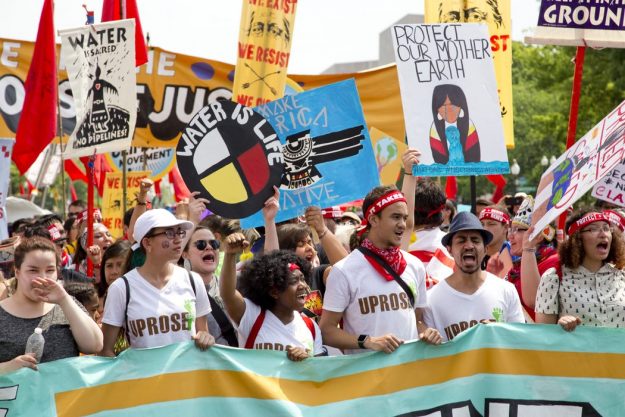
Shot on Pennsylvania Ave near the Capitol. Source: https://unsplash.com/photos/cpAKc-G6lPg

We are happy to announce that the KTH Environmental Humanities Laboratory recently received a positive message from Formas. The project Occupy Climate Change!, proposed by Marco Armiero, is awarded almost 900.000 euros over three years. 

“OCC! explores how urban communities can respond to Loss and Damages by investigating new and insurgent citizenship practices and new types of knowledge. Focusing on the practices and experiments of grassroots organizations across different cases (New York, Rio, Istanbul, Naples, Stockholm), it aims to identify how these diverse, dynamic, self-organised responses to loss undo or embrace damage. This endeavor requires a critical appraisal of the highly contested narratives of societal resilience (Kaika, 2017). As Kaika argues, instead of studying the resilient subjects, we should “identify the actors and processes that produce the need to build resilience in the first place” (ibid.), engaging critically with the material basis reproducing injustice.” Summary taken from the project application, written by Marco Armiero.

To kick off this project a coffee talk together with Doreen Stabinsky is planned for late November this fall. Please visit the lab’s  Facebook page for more news, event updates and interesting articles.