KTH Logo

Crosscuts – Stockholm’s first Environmental Humanities Film Festival Returns

Missing in-depth conversations about important movies? Do you want to know more about Sami culture and history or about resource extraction in the deep sea? Have you ever heard a joik?

On September 1st, Crosscuts – Stockholm’s first environmental humanities film festival – will return! Through documentaries, poetry and conversations between leading researchers, filmmakers, students and artists, we explore different themes. This year we delve into deep sea mining, environmental activism and the green movement and Sami culture and the climate crisis. Everything happens on site at KTH, in Stockholm.

The program offers, among other things, the artistic documentary series What is Deep Sea Mining? (directors: Inhabitants with Margarida Mendes), the Greenpeace film How to change the world (director: Jerry Rothwell) and the acclaimed documentary about Britta Marakatt-Labba Historjá – Stygn för Sapmí (director: Thomas Jackson).

Among the invited panelists are Thomas Jackson, director, Gunhild Rosqvist, professor, Staffan Lindberg, climate journalist at Aftonbladet and Ylva Gustafsson, activist, folk educator and stage artist, who will also perform a joik for us. A joik is a traditional form of song in Sámi music performed by the Sámi people of Sapmi in Northern Europe and it is also one of the oldest vocal traditions in Europe.

During the evening we have with us the ecopoets Evelyn Reilly and Juan Carlos Galeano who will perform their poetry via link, and then participate in a conversation with the audience.

The event is held in English. Participation is free of charge, but the number of seats is limited and therefore advance registration is required.

Full program: https://crosscuts.se/program-2022/

Registration: www.kth.se/form/crosscuts

Welcome to a day full of documentary films, panel discussions and performance!

***

Crosscuts

Crosscuts is an international festival for film, art and research in the environmental humanities. Each film is shown together with a panel discussion with specially invited guests. The festival is organized this year by the KTH Environmental Humanities Laboratory (EHL) in collaboration with Stockholm University. Crosscuts was organized for the first time in 2018.

EHL: https://www.kth.se/philhist/historia/ehl

Twitter: https://twitter.com/KTHEnvHumsLab 

Facebook: https://www.facebook.com/KTH-Environmental-Humanities-Laboratory

About Crosscuts:

Rather than perpetuating the conventional academic mode of compartmentalizing knowledge, separating theory and practice, and adopting a hierarchized and exclusive treatment of the visual and the verbal, your events were made to bring scholars and artists together and to speak to both in the vibrant questions they raised with their researches.

Trinh T. Minh-ha, filmmaker, writer and professor at the University of California Berkeley

Crosscuts comes across as a cutting-edge bridge between academia, the art world, and the public sphere. This is eminently in line with KTH’s best traditions; the school’s motto famously brings together science and art.

Jan Olsson, professor emeritus of Cinema Studies at Stockholm University

This Stockholm Environmental Humanities Festival for Film and Text that was held for the first time in the fall of 2018, was an extremely successful and important event for both academic community and the general public. 

Madina Tlostanova, professor in postcolonial feminism, Linköpings University. 

Coming up: Corinna Röver’s Dissertation Defence

PhD-Colleague Corinna Röver is defending her doctoral thesis on 2 June, 2 p.m. (Stockholm Time) in the division’s Higher Seminar Series. Her dissertation with the title “Making Reindeer. The Negotiation of an Arctic Animal in Modern Swedish Sápmi, 1920-2020” will be discussed with opponent Prof. David Anderson, Chair in “The Anthropology of the North” at the University of Aberdeen, Scotland.

If you are interested in Corinna’s outstanding work, you can join via Zoom and in case that you need technical assistance for joining please contact history[at]abe.kth.se.


Here is the abstract of this valuable contribution:

The Arctic has long been perceived as a static, timeless place of shielded wilderness. This perception extended to the reindeer as both part of the Arctic environment and of traditional Indigenous livelihoods. Physically, the reindeer of Swedish Sápmi looks largely the same today as it did a century ago – an animal ostensibly unaltered and unchanged.

Nevertheless, this thesis argues that the reindeer has undergone a number of fundamental shifts of meaning in Swedish Sápmi over the past century. The dissertation asks how the reindeer’s roles and functions evolved in Swedish Sápmi from ca. 1920 to 2020 and examines how, why and by whom the reindeer has been negotiated. It explores the changing understanding of the reindeer’s role in society, studies emerging idea(l)s and purposes, and considers what mark they left on the animal.

This study is a history of the ideas, discourses and practices that shaped the modern reindeer. It examines ways of understanding and making reindeer. At different points in time, varying combinations of actors have sought to control, shape and re-define this Arctic animal. The meaning attached to it changed as a result, and with it reindeer-related policies. Swedish state policies towards the Sámi and reindeer husbandry have especially deeply impacted the way reindeer were understood and governed. Over the course of a century, policy efforts aimed to control the reindeer’s movements, health, reproduction and death, with varying success. Discourse and associated practices generated multiple versions of the reindeer. In terms of these changing versions, the thesis conceptualizes the reindeer as a changing technology and a socially constructed resource.

Five empirical chapters trace how the reindeer was negotiated, especially between the Swedish state and Sámi herders. They show how the reindeer’s role and purpose has been under repeated negotiation and discuss some of these roles. Restrictive border and grazing policies made the reindeer a trespasser at the turn of the twentieth century. From the 1950s onwards, a modernist improvement project envisioned it as economic resource. In the course of such rationalization efforts, the reindeer became an object of techno-scientific interest. Improvers attempted to transform reindeer into productive, reliable meat machines. These efforts faced a severe setback when the Chernobyl nuclear accident in 1986 contaminated considerable numbers of reindeer, turning it into a toxic animal and a threatened bearer of Sámi culture. In more recent years, we find the reindeer at an intersection of consumer demand for natural foods and Sámi agency. It has become a symbol for claims to self-determination. Sámi champions of food sovereignty and land rights have started to reclaim and promote the reindeer as traditional and wholesome source of food through the Slow Food Sápmi movement.

A closer look at these re-definitions reveals that the reindeer is no timeless, passive backdrop to human action. The reindeer itself has history – it is a historical animal with agency of its own, able to challenge efforts of control. Nevertheless, the different notions of the reindeer materialized into policies and ways of governing not only the reindeer but also their Indigenous herders. The (re)negotiations of what reindeer are or ought to be provide insights into the relationship between representatives of the Swedish state and of Sámi reindeer husbandry, as well as colonial legacies and persistently unequal power relations.


In Swedish:

Arktis har länge uppfattats som en statisk, tidlös och avskild ödemark. Denna uppfattning gäller även renar, som setts som en del av både den arktiska miljön och urfolkens traditionella levnadssätt. Renen i svenska Sápmi ser fysiskt i stort sett likadan ut idag som för hundra år sedan – ett djur som till synes förblev oförändrat genom tiden.

Ändå argumenterar denna avhandling för att renen har genomgått ett antal grundläggande betydelseförskjutningar i svenska Sápmi under det senaste århundradet. Den utforskar den föränderliga förståelsen av renens roll i samhället och den studerar framväxande idéer och syften och hur dessa påverkade djuret. Avhandlingen frågar hur renens roller och funktioner har utvecklats i svenska Sápmi mellan 1920 och 2020 och undersöker hur, varför och av vem renarnas förvandling har genomförts.

Denna studie är en historia som innefattar de idéer, diskurser och metoder som formade den moderna renen. Den undersöker sätt att förstå och “göra” renen som djur men också som inslag i ekonomi och samhälle. Vid olika tillfällen har olika kombinationer av aktörer försökt kontrollera, forma och omdefiniera detta arktiska djur. Som resultat förändrades dess betydelse, och därmed även den politiska styrningen av renen. Särskilt den svenska statliga politiken gentemot samerna och renskötseln har djupt påverkat hur renar förstods och styrdes. Under ett helt århundrade har politiska ansträngningar syftat till att kontrollera renens rörelser, hälsa, reproduktion och död, med varierande framgång. Diskurs och tillhörande praktiker genererade flera versioner av renen. Med tanke på dessa föränderliga versioner konceptualiserar avhandlingen renen som en socialt konstruerad resurs.

Fem empiriska kapitel spårar hur renen förhandlades, speciellt mellan svenska staten och samiska renskötare. Restriktiv gräns- och renbetespolitik gjorde renen till en inkräktare vid 1900- talets början. Från 1950-talet och framåt sågs renen som en ekonomisk resurs i ett statligt modernistikt förbättringsprojekt. Under dessa rationaliseringsinsatser blev renen till ett objekt av teknovetenskapligt intresse. Reformatorer försökte omvandla renar till produktiva, pålitliga köttmaskiner. Dessa ansträngningar mötte ett allvarligt bakslag när kärnkraftsolyckan i Tjernobyl 1986 förorenade ett stort antal renar och gjorde det till ett giftigt djur och en hotad bärare av samisk kultur. På senare år ser vi renarna i skärningen mellan konsumenternas efterfrågan på naturliga livsmedel och samisk agens. Renen har blivit en symbol för anspråk på självbestämmande, där samiska förkämpare för livsmedelssuveränitet och markrättigheter har börjat återta och främja renen som traditionell samisk och hälsosam matkälla genom Slow Food Sápmi-rörelsen.

En närmare granskning av dessa omdefinitioner visar att renen inte är någon tidlös, passiv bakgrund till människornas handlingar. Renen har en egen historia – det är ett historiskt djur med egen agens, som kan utmana kontrollförsök. Ändå omsattes de olika föreställningarna om renen till politik och sätt att styra inte bara renen utan också dess samiska ägare. Att förstå (om)förhandlingarna om vad en ren är eller borde vara ger insikter i förhållandet mellan representanter för den svenska staten och samiska renskötare, liksom förhållandets koloniala arv och kvarvarande ojämna maktförhållanden.

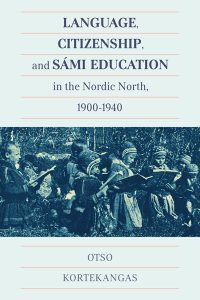
Language, Citizenship, and Sámi Education in the Nordic North

Otso Kortekangas, postdoc at the division, has written a new book. In “Language, Citizenship, and Sámi Education in the Nordic North, 1900-1940” Otso investigates how Sámi people were affected by nation state education doctrines in Finland’s, Norway’s and Sweden’s North.

One important part of the political context in the genesis of this book is the announcement of the Finnish government to form a Truth and Reconciliation Commission in 2019. Its task is to investigate, showcase and discuss injustice and oppression done by the Finnish state towards the Sámi, with the aim of reconciliation and a better future.

Otso presents his book in the following text, first published on McGill-Queen’s University Press’ Blog on 06 May 2021.


The year 2021 will witness the start of the work of a Sámi Truth and Reconciliation Commission (TRC) in Finland. A TRC is already working in Norway, and in Sweden, the planning for a Sámi TRC is under way. The main aim of the TRCs in each country is to review and assess earlier governmental policies targeting the indigenous Sámi population in Norway, Finland and Sweden, make Sámi voices and experiences visible, and to point toward ways forward.

Differently from the Canadian TRC (2008–2015) that focused on indigenous education and residential schools, the Nordic Sámi TRCs will take a comprehensive approach to historical policies targeting the Sámi and, in the case of Norway, the Finnish-speaking Kven minority. However, governmental educational policies will be a very important theme for the commissions to investigate, as assimilation and segregation applied in education is one of the external forces that have molded Sámi culture the most during the 20th century.

As elucidated in my book Language, Citizenship, and Sámi Education in the Nordic North, 1900-1940 (MQUP 2021), different educational actors had different approaches. Sámi education was traditionally organized by the Lutheran churches in each country. The high priority the Lutheran dogma ascribes to the intelligibility of the gospel and Christianity education by large entailed that Sámi language varieties were in use as languages of instruction in many schools with Sámi pupils in the Nordic north. Gradually, the governments of Norway, Sweden, and Finland took over the responsibility for elementary education from the church around the turn of the century 1900. The governmental educational authorities and politicians downgraded the importance of Sámi language in education, as quality of education and the mastering of each country’s majority language became paramount educational aims. In Norway and Finland, assimilation to the majority population was the norm in the governmental elementary schools, with certain exceptions. The nomadic reindeer herding Sámi in Sweden’s mountain regions were de jure separated to their own group, with the obligation to place their children in specific schools. These so called nomad schools were designed after the idealized notion Swedish elementary authorities had on the “true” Sámi way of life and efficient reindeer herding.

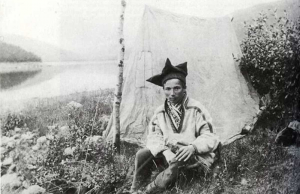
Sámi poet and teacher Pedar Jalvi in 1905. Credit: Armas Launis. Copyright: CC BY SA 4.0.

The educational reforms of the early twentieth century that led, in many individual cases, to the tragic loss of Sámi language, had a brighter side, as well. As in many other instances of minority education, the skills and knowledge Sámi pupils gained in the schools had, at least in some cases, an empowering function. Most of the powerhouses spearheading the early and mid-twentieth century Sámi cultural movements and the Sámi opposition to government policies were teachers, educated at schools and on teachers’ training courses to navigate both the Sámi and the majority culture contexts. These teachers were pioneers of promoting Sámi culture as an active, independent culture that existed alongside and independent of other Nordic cultures and states.

While the TRCs in each country are paramount for the future relations of the Sámi and the majority populations, it is important to keep in mind that the Sámi existed and exist also outside of the frame and borders of each of the three nation states. There is a certain risk of nationalization and further minoritization of the Sámi in Norway, Sweden and Finland if the various Sámi groups are always first and foremost treated as a national minority rather than a transnational population. It is critical that this historical transnational fact, together with the diversity of voices and perspectives within Sámi education, are included in the work of the TRCs in each country. Only by so doing will it be possible to reproduce a rightful picture of historical events as a base for future reconciliation processes.


If you are interested in reading more, check out Otso’s book here.