KTH Logo

The Nobel Prizes that inspire new beginnings

“We don’t have the money, so we have to think.” This quote is attributed to Ernest Rutherford, a New Zealand physicist who won the Nobel Prize in Chemistry in 1908 for his discoveries on radioactivity. I wonder if he would have reconsidered this statement if he had witnessed the current funding crisis in Sweden’s research funding system.

Our own Nobel Prize winner, Hannes Alfvén, who received the physics prize in 1970, was also familiar with the challenges of securing research funding. During a lunch with the then rector of KTH, Göran Borg, it is said that he placed his Nobel medal in front of the rector and said, ‘If the authorities cut funding even further, you can always “stamp” on it.’ (go to the pawn shop).

This story is recounted in Svante Lindqvist’s excellent  book from 2023 about Hannes Alfvén, which provides a fine portrait of the man himself as well as insights into the broader social debate and life at KTH over several decades of the 20^(th) century.

Regardless of the size of the research grants, it is always enjoyable to witness the pride and joy of the Nobel Prize winners when they receive their prizes in solemn and festive ceremonies. There is often a clear link to current research at KTH in physics, chemistry, and technology, where the prize winners have made discoveries that, in some cases, have fundamentally changed our way of life and our societies.

This often involves long-term work, ranging from developing new materials and energy solutions to devising advanced methods of understanding our world. Thanks to patience, perseverance and the courage to rethink things, some of the glory of the world’s foremost scientific prize also spills over to our fantastic researchers in related fields.

If nothing else, it is an incredibly inspiring glimpse of the future.
In this way, the Nobel Prize is not something distant and solemn, but rather an opportunity to demonstrate how research at Swedish universities, including KTH, contributes to new knowledge and technological advances that affect our everyday lives.

Along with the Nobel Prize comes the approach of Lucia celebrations, and eventually Christmas and New Year’s Eve. I hope you all have a wonderful, relaxing holiday and that the celebrations are everything you want them to be.

Merry Christmas and a Happy New Year! See you again in 2026!

Lifelong learning – a boost to skills

Education is a perishable commodity. This is why, during a long professional career, it is necessary to replenish one’s knowledge several times in order to keep up with the latest developments in a particular field of research, where progress is often rapid. One way to achieve this is through continuing professional development, where the alignment of employers’ skill requirements with university programmes has not always been optimal. However, a recent study by Professor Gunnar Karlsson at KTH reveals many opportunities and proposals for aligning needs, supply and demand more effectively.

KTH has a number of courses within its programme that could be opened up to professionals. By rapidly expanding the range of courses on offer, KTH can gain a deeper understanding of the educational needs of the business community and the public sector while simultaneously meeting those needs. In parallel, we can develop a strategic range of courses based on successful research and establish intelligent collaborations with our strategic partners. These are some of the proposals in the report on lifelong learning.

By expanding our range of offerings, we can establish a unique position and gain valuable insights into demand. The solution is to build on our existing course portfolio, providing a broad range of options and great freedom of choice for potential customers. Although it can be difficult for industry to agree on concrete definitions and orders, we have a general idea of what demand looks like. Therefore, we need to create an offer that the market can respond to.

The report’s proposals are powerful and innovative, yet they also utilise our existing strengths. This has now been fully investigated, and I hope that we will soon be able to take the proposals forward to a pilot round in 2026. At the same time, we can start developing more courses based on successful research environments at the forefront of knowledge, for example. We are ready to develop lifelong learning that is both agile and appealing to current employees and to the companies and organisations that want to enhance and develop their skills. I hope that many of our partners in industry and society will want to join us.

In a shifting world, Europe looks to Asia

I have recently returned from an almost two-week-long trip to East Asia, visiting China, South Korea and Japan. During the trip, we visited eleven universities and one research institute, and met with representatives from the Swedish embassies in each country.

All three countries are experiencing significant growth in large-scale, strategic and targeted investments in technical and scientific research. The various analyses showing how universities in Asia, particularly in China, are climbing the rankings and significantly increasing their scientific impact appear to be accurate.

The new, if one may call it that, global world order in which the United States is becoming less and less available for scientific cooperation across the Atlantic and Pacific, the links between Europe and Asia are becoming increasingly important. It is conceivable that, over time, global mobility will change, with an increased flow of students and researchers between Europe and Asia compared to the current situation. The opportunities for scientific cooperation between Asia and Europe will increase given that South Korea, and hopefully Japan soon, will become partners in Horizon Europe.

During parts of the trip, we travelled with representatives from other universities, and I believe I can say that we share the same fundamental analysis of why it is necessary to strengthen ties between our part of the world and our colleagues at Asian universities. Our trip coincided with the visit of the Swedish Foreign Minister to China and South Korea, and the government has also expressed a desire to find ways to collaborate and cooperate.

Of course, I am well aware of the security policy challenges surrounding international cooperation, meaning that every university must approach internationalisation in a responsible way. This is an issue that has become more pressing in recent years, but I would argue that we now have the necessary tools, understanding and culture to address the challenges posed by the new geopolitical situation.

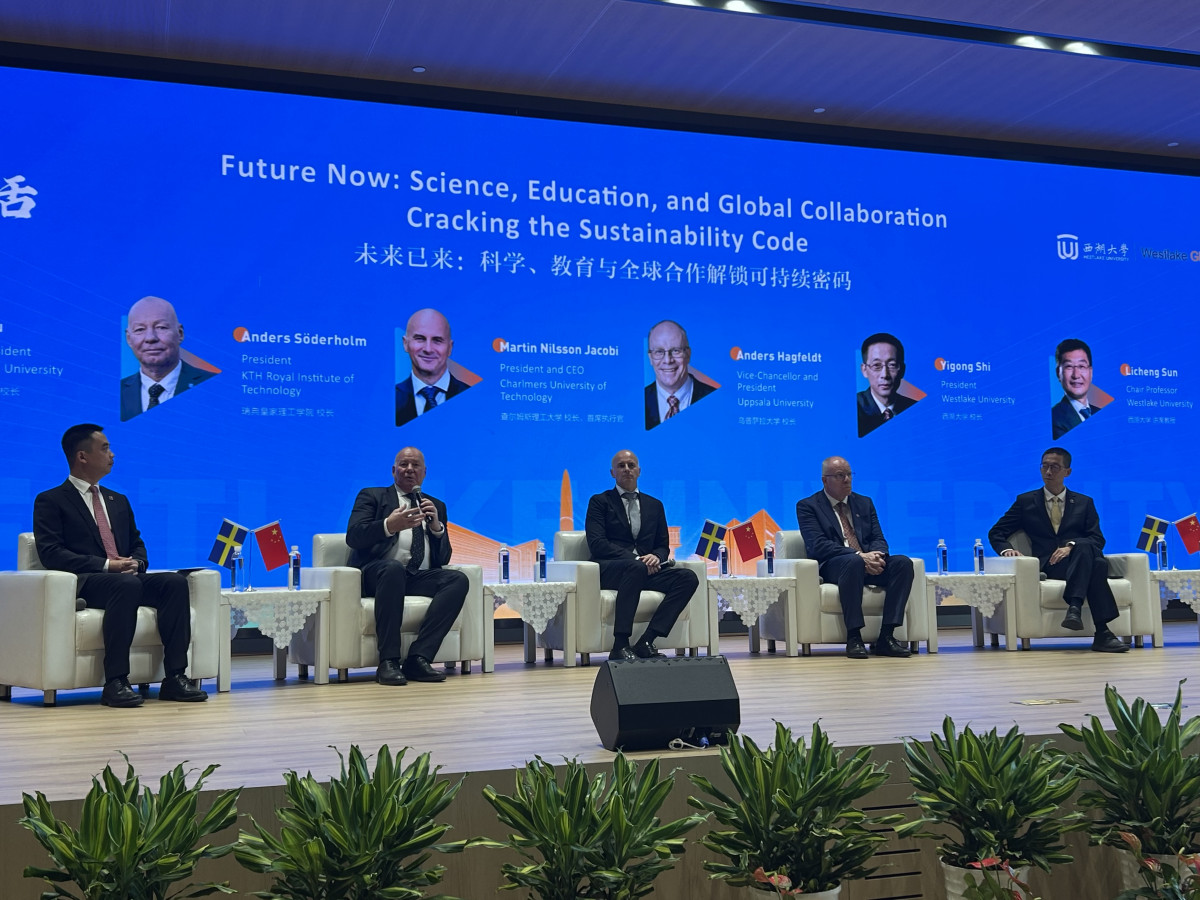
Leadership Roundtable at Westlake University in Hangzhou, Zhejiang Province, China.


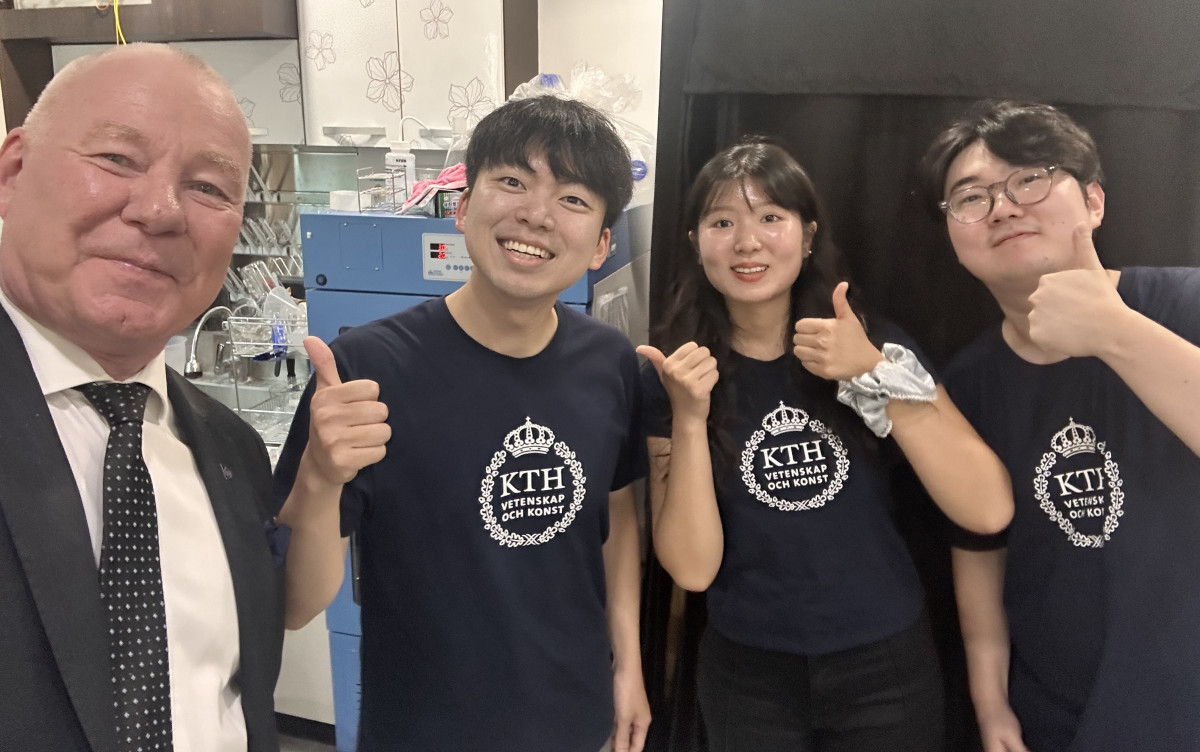
Meeting students in Seoul, South Korea.


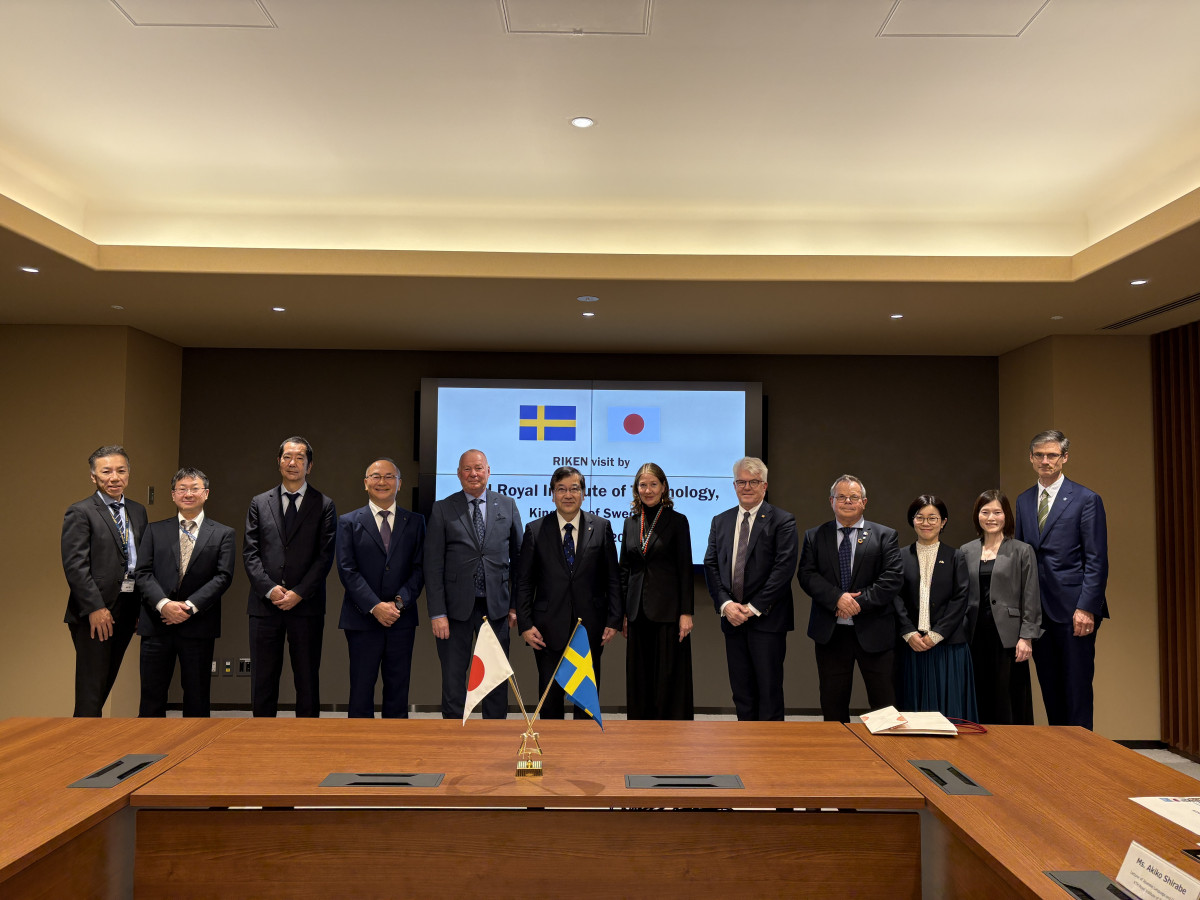
Visiting RIKEN – Japan’s largest research institute, in Tokyo.

On track with campus relocation – KTH prepares for the future

Almost two years ago, the University Board decided that KTH would have three campuses instead of five. The relocation of the operations is now complete, and our campuses in Flemingsberg and near Valhallavägen are busier than ever.

There are just over 2,000 more students at KTH Campus and a little over 200 more employees. The campus environments are becoming denser, a little more intense, and I think many people notice that there are more people moving around in the area. In many ways, this is positive, and our campuses are becoming even more vibrant. Of course, it has also been a challenge to create space for all activities, not least classrooms, while we have a record number of students this autumn. In the coming semesters, the number of students will decrease because of the government’s general cuts in education at universities.

We need to review the number of study places for our students and see how we can best utilise both open spaces and seminar rooms, and how we can create and facilitate so-called maker environments. At the same time, investments are being made on our campuses to build attractive environments for students and staff. We hope that in the future, we will find better ways to share our premises with the nearby universities. As before, cooperation with both the universities and the dominant property owner Akademiska Hus is very important.

Collaboration with our strategic partners in both Södertälje and Kista is developing and remains central to both research and skills provision throughout our region. KTH has also initiated an investment in local learning centres in Norrtälje, Nynäshamn and Södertälje. It looks like this will be a really good initiative, with high demand from students for qualifying education.

Even for the educational programmes that have been relocated, the number of applicants has developed positively or even very positively. The relocation has also provided a basis for a more strategic discussion about KTH’s overall educational portfolio, which has led to some programmes being renewed and changed because of the relocation.

It has been a tight schedule with many adjustments and discussions along the way before the moving boxes were packed and the actual move could be carried out. This would not have been possible without the cooperation of all the good forces involved. I would therefore like to take this opportunity to thank all the staff at the institutions, departments and university administration divisions who contributed to the completion of the relocation project.

KTH is now taking the next step for the future of education, research and collaboration.

It’s a good investment in AI, but don’t forget the universities!

On 22 September, the government’s budget proposal will be presented to Parliament, and as usual, there is a series of announcements in the weeks leading up to its publication. Such news was announced today regarding investments in AI and data for welfare and competitiveness.

An investment that will impact the relationship between universities and their local communities is the AI factory to be built in Linköping, funded by the Swedish Research Council and Vinnova. Investments in an AI workshop for the public sector and a so-called ‘AI sandbox’, where companies and municipalities can test their AI solutions in a safe environment before implementation, are areas where collaboration with universities would be highly beneficial.

The previously presented research and innovation policy bill also involves several major AI-related initiatives, through strategic research areas and investments in clusters of excellence. AI is also likely to play an important role in the upcoming tenth EU framework programme.

Some of the proposals put forward by the AI Commission appear to be realised through the various initiatives that the government has taken or plans to present. This is positive. However, from my perspective, it is important not to forget the need to equip a wide range of professions with the fundamental skill of AI. It is also crucial to facilitate long-term investment in knowledge development and AI research.

AI is undoubtedly part of engineering science in terms of new products and technical solutions, but it is also a means of evolving the most advanced science. The fact that AI is everywhere, of course, presents a challenge when the government wants to make targeted investments, but, as mentioned, the universities must be involved! This benefits everyone.