One of the workshops at the recent Water Scarcity conference at KTH was dedicated to the topic ICT for Water. ICT stands for Information and Communication Technology, and actually encompasses many engineering technologies. Most of us interpret ICT as the integration of technologies that makes it possible to store, transmit, access and process information. The main question of the workshop was how ICT could help today — to achieve sustainable use of water tomorrow?
Short keynote speeches from two large projects helped us to set the state. First, Annika Malm from RISE introduced the Mistra InfraMaint project, with the focus of smart maintenance of infrastructures in general and water infrastructure in particular. Then, Bin Xiao from Ericsson talked about Vinnova iWater, a technology project that aims at demonstrating the use of ICT to build water quality monitoring and early warning systems. The two keynotes already showed that there is a large spectrum of possible challenges and possible technologies that can fall under the umbrella of ICT for Water.
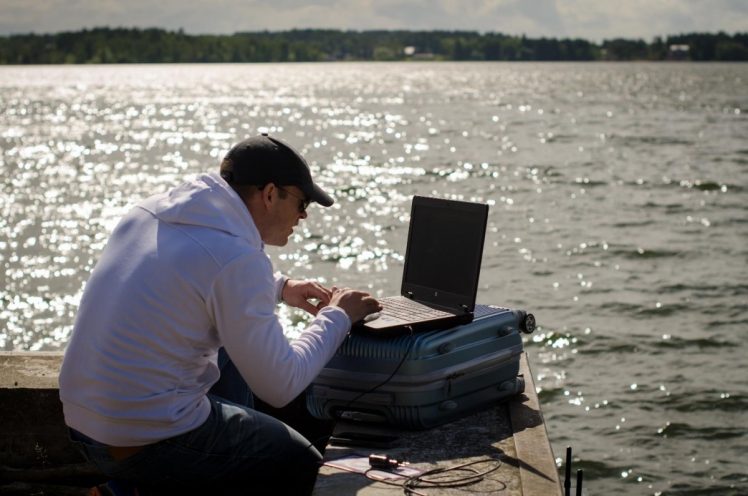
iWater. Photo: Ericsson
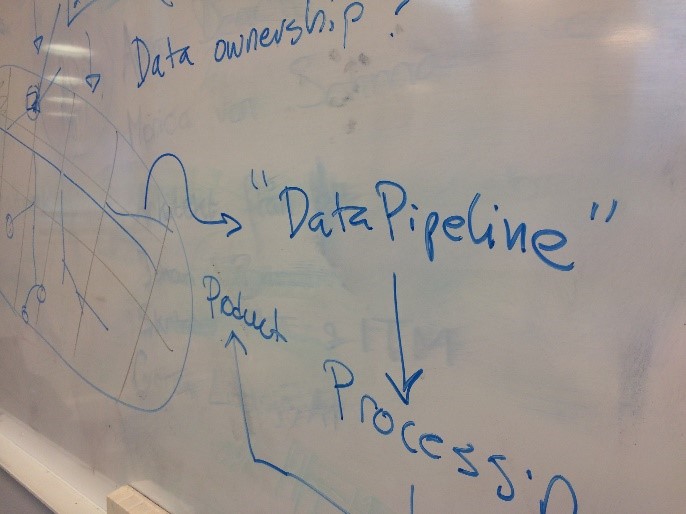
Workshop participants from municipalities and water authorities expressed though their doubts towards the technology push that they experience today, which showed there is a need for knowledge transfer from academia to industry and institutions– to understand the most pressing challenges towards a sustainable use of water, as well as the solutions ICT may provide. Discovering that the term pipeline means something for both communities, helped us on the way.
Privacy preserving data processing – notes from the workshop
We dedicated the rest of the time towards a small backcasting exercise. Backcasting is a planning method that first defines the desirable future, and then progresses backwards to find the first action we need to take to get there. The results of the exercise were indeed surprising for us from the ICT community. While we all can imagine that more measurements, more data analysis and digitalized control of water distribution would help to reach a more sustainable use of water in the future, it turned out that the major role of ICT today would be to establish the conditions for new investments and the availability of data.
As we learned, investments in the water sector in Sweden are sluggish because of the general belief that water comes for free. Even if we ourselves rarely experience it, we still believe and behave as if unlimited amount of clean water would be available in a well just outside our door. Therefore, the first task of ICT is to make the public as well as the policymakers understand the cost of clear water today and in the future, with the help of data driven modeling, prediction and visualization.
Data about water quality and availability however is highly protected, as water is a very important national resource. This may hinder the use of aggregated data from many sources, a necessity of accurate water availability modeling. ICT here can come with an important contribution. Privacy preserving communication, storage, and data analytics techniques were originally designed with individuals as users in mind, who would like to avoid sharing personal information, but still learn from common experiences of a community. The very same solutions could allow the sharing of water quality information, without revealing the location, the time and the exact nature of the measurements.
Even this short workshop demonstrated that pressing need of more discussions between the communities of water experts, and the ICT sector. To facilitate these discussions will be our foremost goal with the digitalization activities of the Water Center.
Förenta nationerna har förklarat perioden 2021 till 2030 som ”The decade of ocean science for sustainable development” Anledningen till det är att utan friska hav så kommer vi inte att få en hållbar framtid för mänskligheten. Våra hav förorenas av plaster, organiska miljögifter och stora mängder näring från land. Våra hav har tagit hand om över 50 % av all den koldioxid som mänsklighet frigjort. Våra hav blir uppvärmda och försurade pga. klimatförändringen och koldioxidutsläppen. Havsekosystemen rubbas pga. miljöproblemen och lokalt av främmande arter som människan flyttar runt med ballastvatten över hela jorden. Samtidigt så finns framtiden och de nya jobben i havsrelaterad verksamhet. Våra landekosystem har nått vad man inom ekologin brukar kalla ”The carrying capacity” det finns väldigt lite bördig jordbruksmark att uppodla eller skogar att hugga ner framöver, bara en art Homo sapiens använder nästan 45 % av landekosystemens primär produktion för att mätta sig själva direkt eller indirekt via våra husdjur. Resten får alla andra landlevande djur leva på, rätt ohållbart eller hur?
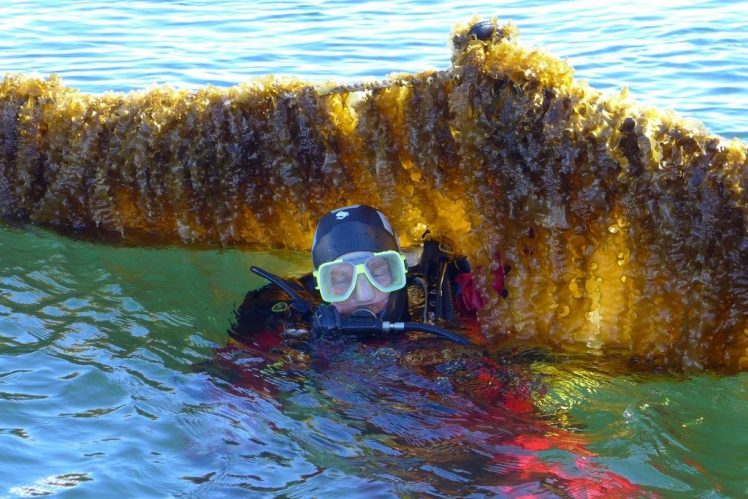
KTH:s egen “havsbonde” Fredrik Gröndahl i sitt rätta element (foto: F. Gröndahl)
Våra världshav täcker 70 % av jordens yta och har ett medeldjup på nästan 4000 m. Denna enorma havskropp vet vi fortfarande väldigt lite om. Vi vet mer om planeten Mars än våra djuphav. Om havet skulle vara ett land så skulle det utgöra världens sjunde största ekonomi. Intäkterna är kopplade till exempelvis fiske, vattenbruk, transporter och inte minst kustnära turism. Vi människor älskar att vara nära havet, titta på det och färdas över det. Men det finns så mycket mer vi kan använda våra hav till i framtiden om vi lär oss att utnyttja dem på ett skonsamt vis utan att förstöra dess livsystem. Jag skulle vilja hävda att en förutsättning för människans överlevnad i framtiden är att vi tar vara på vad haven kan ge. Fisk har sedan länge varit väldigt viktigt som näringskälla för fattiga människor runt vår planet. Tyvärr så har fisk i allt större utsträckning blivit väldigt dyr och fisk kan idag betraktas som lyxvara. Detta är resultatet av ett rovfiske på några få arter av rovfiskar som vi människor uppskattar väldigt mycket som t.ex. tonfisk, torskfiskar, makrill och hajar. En del rovfiskar har vi börjat odla som laxfiskar i Norge och Chile, men för att föda den odlade fisken så har vildfisket gett sig på mindre arter som sillfiskar som mals ner till fiskmjöl och sedan ges till odlingar av lax och på land till kycklingar. Resultatet kraftigt minskade bestånd av fisk i våra hav, nya arter tar över som hummer eller maneter.
Vi blir fler och fler på vår jord och inom en snar framtid måste vi fördubbla vår matproduktion och för att klara detta räcker inte vårt jordbruk, fiske eller odling av rovfiskar till. Vi behöver bli bättre på att få vår näring längre ner i näringskedjan och då hamnar vi i odling av musslor och alger. Att odla i havet är dessutom både klimatsmart och kräver ingen bevattning. Algodlingar kan dessutom bidra till ökad biologisk mångfald och upptag av koldioxid vilket faktiskt förbättrar havsmiljön. I Kina, Korea och Japan har man ägnat sig åt vattenbruk i tusentals år men i europeiska och svenska vatten så har vi bara precis börjat. Det finns en stor möjlighet att skapa hållbara jobb inom vattenbruket under de närmast åren exempelvis på svenska västkusten men möjligen också i Östersjön. Förutom som mat kan alger också användas som foder, energigröda, gödsel och som bas för biobaserat material som plaster, limmer och textiler. Tillsammans utgör våra skogar och våra havsskogar basen för den biobaserade värld som vi måste skapa för att förhindra den klimatpåverkan som drabbar oss pga. det fossilbaserade samhälle som vi lever i idag.
Odling av alger i våra kustvatten kommer att bli väldigt viktiga i framtiden för att leverera stora mängder biomassa till den nya biobaserade industrin som nu är i sin gryning. Algodlingen är också väldigt hållbart och ett gott exempel på cirkulär ekonomi som dessutom kan vara gynnsamt för miljön.
Samtidigt som vi nu börjar bli havsbönder så måste vi också börja värna haven och se till att de mår bra och är friska. Ännu finns det hopp om detta och speciellt haven har en stor förmåga att återhämta sig när en påverkan upphör även om det ibland tar tid. Positiva tecken finns i skyddade havsområden där de stora rovfiskarna börjar återvända efter årtionden av fiskeförbud. En viktig del i detta arbete skulle kunna vara att skapa stora marina reservat i våra världshav. Ett sådant finns redan ner i Antarktis men fler behövs och haven är stora det finns plats både för odling och att skapa internationella marina reservat.
Fredrik Gröndahl
Professor, Institutionen för Hållbar utveckling, miljövetenskap och teknik, KTH
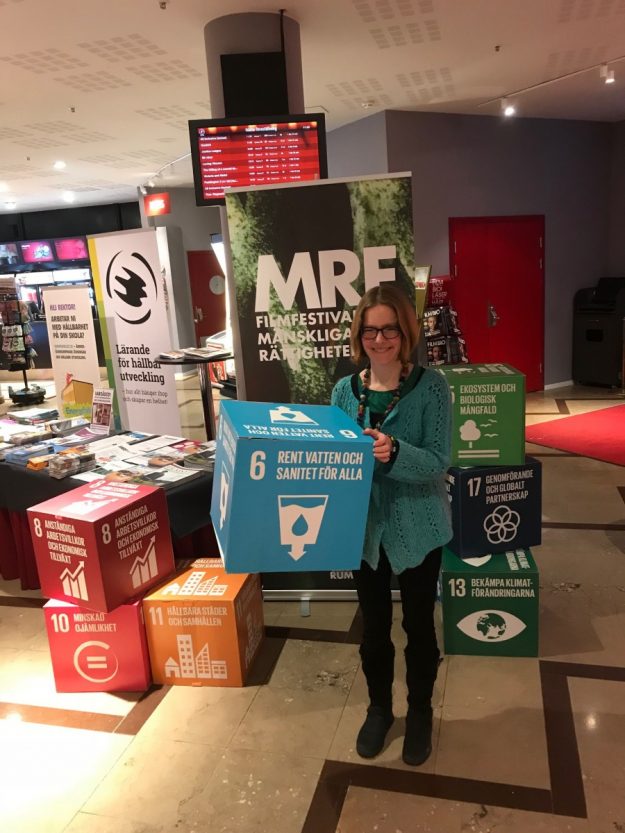
I fjol fick jag tillfället att medverka som samtalsledare på MRF – en filmfestival för mänskliga rättigheter. Filmen ”There will be water” kopplade till det 6:e globala hållbarhetsmålet ”Säkerställa tillgång och hållbar vatten- och sanitetsförvaltning för alla”.
Globalt sett har utvecklingen gått framåt och milleniemålet att halvera antalet utan tillgång till rent vatten uppnåddes i flera länder. Men ca 844 miljoner människor saknar ändå tillgång till rent dricksvatten, och många fler saknar tillgång till de enklaste former av sanitet (toaletter). Det mesta avloppsvatten släpps ut orenat i miljön (WHO & UNICEF, 2017). Utmaningen är stor för att åstadkomma adekvat skydd av både miljö och människors hälsa.
Kvinnor och flickor blir särskilt missgynnade vid avsaknad av rent vatten, sanitet och bristande hygien. Förlorad tid, sjukdomar, och attityder och tabun associerade med mens leder till förlorade skoldagar och slutligen lägre utbildning och förlorade arbetstillfällen.
Dessutom är vatten inte bara en grundläggande förutsättning för mänsklig hälsa och välbefinnande, utan också en förutsättning för jordbruk och energiförsörjning.
Filmen som jag och skoleleverna såg handlade om en forskares till synes enkla men ambitiösa mål att skapa vatten, energi och mat i öknen, genom ett system med solenergi för avsaltning och matodlingar. Ett storslaget ingenjörsprojekt där medverkande kämpade under hård tidspress. Som lyckades… men sedan stötte på problem när finansiärerna drog sig ur. Fallgroparna är många, som eldsjälen i filmen fick erfara.
Utmaningarna inom vatten, sanitet, hygien, mat -och energiförsörjning är stora och komplexa. Även om man tycker sig ha den ultimata tekniska lösningen, kan det brista på grund av faktorer som kanske är svårare att påverka, t.ex. politik, samhällsstrukturer, finansiering, långsiktig hållbarhet, knyckfullt väder och förändrat klimat. Alltså både mänskliga, ekonomiska och miljömässiga faktorer, till synes utanför vår kontroll.
Att mötas och diskutera grundläggande frågor med nyfikna gymnasieungdomar är spännande och angeläget. I dessa dagar av ”fake news” och misstro mot fakta kanske det blir ännu viktigare att lämna de digitala forumen för att mötas i person. Dessutom får man raka och viktiga frågor, som kanske inte kan besvaras i en mening, men som vi alla gott kan fundera på, till exempel:
”Om det är så lätt att rena vatten och det är sån vattenbrist i tex mellanöstern, och om man är orolig över konflikter med brist på vatten som orsak – varför renar man helt enkelt inte vattnet?!”
”Är det inte lätt att bli frustrerad när inget görs?”
Vi har också här i Sverige anledning att fundera på hållbarhetsmålen, och mål 6 i ljuset av mänskliga rättigheter. Vi har människor som lever på samhällets marginaler som är särskilt utsatta och som bl.a. inte har regelbunden tillgång till vatten, sanitet och hygien (Davis & Ryan, 2017).
Dessutom har de tre senaste åren varit ovanligt torra, vilket ledde till vattenbrist på stora håll i Sverige, särskilt vid öar och kustområden. För enskilda brunnsägare, som kanske saknar kunskap och kapacitet att hantera vattenbrist och överhuvudtaget kontrollera eller åtgärda vattnets kvalitet, kan detta vara en stor utmaning, och något det svenska samhället kommer behöva planera för och hantera. I dagsläget saknas t.ex. en helhetlig kunskap baserad på systematiskt insamlade data om vattenkvaliteten hos hushåll med enskilda brunnar (SCB, 2017). Nyligen kom också betänkandet från den statliga utredningen ”Vägar till hållbara vattentjänster” som tittar just på småskaliga VA-lösningar. Utan tvekan kommer små och enskilda anläggningar bli en viktig fråga i Sverige framöver.
Det finns trots allt anledning att leva hoppfullt, att lära och att sträva mot förändring och förbättring. Utvecklingen har globalt sett gått framåt, och långt fler människor har tillgång till grundläggande rättigheter än vid millennieskiftet. Men kanske behöver vi tänka om, vara lyhörda och samarbeta med andra aktörer än de från vår egen bakgrund, ämnesområde, kultur och gärna över generationsgränser för att förverkliga den värld vi vill ha. VI har så oerhört mycket att vinna genom att mötas och lära av varandra.
Ett exempel av utbyte omkring vatten, sanitet, hygien och nutrition hittar ni här: WASHnut, vilket också porträtterats som del av UR skola, riktat mot gymnasieungdomar och förstagångsväljare.
Helfrid Schulte Herbrüggen Vattenexpert på Ecoloop AB, affilierad forskare vid KTH
Algae blooms have been present in the Baltic Sea for a long time, but they have not always been a regular feature in the broader cultural and social imaginations that exist in and around the Baltic Sea Catchment Basin. That people in Sweden know and care about algae blooms today partially stems from the foundation of HELCOM (an intergovernmental organization tasked with protecting the Baltic Sea) in 1974 and the large algae blooms of 1988. Of course, earlier algae blooms have also been important, including blooms from around the 1920s or 30s that caused an illness reportedly known as Haff-sjukan.
To a certain extent, therefore, my research attempts to contextualize or historicize this interest in algae blooms, but it also seeks to understand how people experience, relate to, communicate about, and value algae blooms and their causes and effects. Some research I’ve done up to this point explores how monitoring algae blooms came into being, how monitoring takes place, and in what ways monitoring efforts communicate contamination and disgust. Also, an article that I’ve recently published, “Are Dead Zones Dead?: Environmental Collapse in Popular Media about Eutrophication in Sea-based Systems,” tells a story about how different understandings of algae blooms in the Baltic Sea contribute to alternate ways of conceptualizing the health of the Baltic Sea, in this case, whether as collapsing or collapsed.
It was a pleasure to share some of this work I’ve been doing with colleagues and other scholars for my mid-seminar. Invited discussant, Heather Anne Swanson from Aarhus University detailed her thoughts on my work with algae blooms and my ongoing efforts. She gave me some really good advice along with others in attendance. I learned a lot from everyone who was involved and would be happy if any readers of this blog would like to contribute or share their experiences related to algae blooms with me as well. For example, I’ve had a difficult time finding out detailed information on Haff-sjukan. But, of course, I’d be just as interested in your latest sailing adventure or your own research that relates to eutrophication, algae, or de-oxygenated marine environments (sometimes known as bottendöd or “dead zone”). Please email me if you’d like: jessep@kth.se.
Besides addressing the questions and comments given to me at the seminar, I hope to research differences in the cultural values given to algae and algae blooms and how nutrients become pollution among other issues.
Scholars at KTH research waters and what happens in them in all sorts of ways. I am happy to be part of this diverse group and hope that my research will shed further light on the social and cultural relationships that people develop with algae blooms in the Baltic Sea.
The short homemade video below shows a couple of spotted garden eels in action. You can go visit them yourselves, like I did, at the Aquaria Water Museum in Stockholm (which unfortunately closes down for good during 2018, so hurry!). Garden eels live in colonies of up to thousands of individuals on sandy bottoms in tropical and subtropical waters. They dig a burrow, hide about two thirds of their body (the fish is up to 40 cm long and 14 mm in average diameter) and peek up to catch foods that pass with the current. They apparently stay in the same burrow their whole life (except when mating when they move their burrow closer to a partner’s burrow).
Video: Lina Isacs
The garden eel above is in this text for two reasons: 1) I had no other water-related picture at hand when I sat down to write, 2) the mere thought of it makes me happy. Having thought a while about whether these were good enough reasons, I realized they both might fit for illustrating the topic I’d planned to write about. We’ll see if you think the same.
The bread. Since many years back, I use to start a five-week course that I teach with the following experiment. It aims to make students get some of the main points of the whole course in about 45 minutes:
From a paper bag I pick up a freshly baked bread. I tell the students I’ve bought it the same morning from a local bakery with local ingredients from organic farming, and I pose this question: “What’s the value of this bread?”. The students are not silent for long but start asking immediately what I mean. “Value? What do you mean by value?”, and I use to answer as sweeping as I can and then, instead, I divide the students into three big groups, about 20 in each, and say, “You, over there, are to discuss what you think the bread is worth and decide collectively about its value, and then write the value down on this piece of paper”, which I hand them while continuing. “And you, here in the middle, you too will discuss the value together in your group, but then, without telling anyone else, write down the value yourselves, individually, on this piece of paper, along with your name. And lastly, you, over here, without talking to anybody about it, write down what you think the bread is worth, followed by your name.” To make it more fun I use to say they don’t have to use their true names if they don’t want to, just as long as they remember what name they used, which always seems to appeal to some of the most creative (I’ve had Sten Sture d.ä., Stevie Wonder and a few other celebrities in the classroom).
Then, before handing in the pieces of paper, I tell everyone to return to their seats, and say “Now, this time it’s an auction, where the one with the highest bid has to buy the bread from me, I mean – really”, and ever since the second time I did this experiment I always add that I mean it, for real, “Because, the first time I did this the students thought it was a joke, which it isn’t – you really have to pay the amount you state, if your bid is the highest.” They are then told to write down a value on the same pieces of paper, next to the figure they already have, without talking to each other, and that when they’re done, they are free to leave the room for the upcoming break, while leaving their paper piece to me on their way out. “The winner will be announced after the break.”
A moment of bewilderment (or excitement) then always follows, when the students look around at each other, laugh and fidget for a bit, before taking action, pressed by the 15 min pause looming.
During the pause, I prepare some statistics. In an excel sheet, I write down the bid of those who made a collective choice, make columns with each individual’s bid from the two exercises, and calculate the average from the three types of individual values I now have – the ones from those who made an individual choice after having talked to their group, the ones of those who didn’t talk to anyone before writing down a bid, and the bids from the auction, which includes everyone in the class.
After the break – when it’s unusually easy to get them back in the classroom – I show them the results, focusing on the differences between the four values, before revealing the winner.
Each year, the tendency is the same: the auction’s mean is always the lowest, between 1,5 and 2,5 times as low as the highest, and though not every time, the highest mean is often the bid made collectively.
So what do I want to say with this? I let them buzz in pairs a couple of minutes. Then they easily spot the traditional methodological problems of what environmental economists call “non-market valuation”:
The hypothetical setting makes people overstate the value.
For the collective value case, peer pressure makes people want to seem better than they are, especially if those with the loudest voice are strongly engaged in environmental issues (which most of these students are).
For the individual value cases, norms about that one should act environmentally friendly make you state a higher value than what you’re actually prepared to pay.
There’s a difference between “value”, “worth” and “what you want to or can pay in money”.
Some can’t afford to pay the amount they think the bread is actually worth.
At this point, I use to ask them what type of value the auction value is supposed to imitate, and when I say “the market value”, the discussion takes a bit of a turn, and to be honest I might use to talk a bit too much myself from then on. “The difference between the market price and the higher values you stated, what does it represent? What did you consider then that you didn’t consider during the auction?” If someone mentions “positive externalities” I use to think I’m superfluous, but things like “biodiversity”, “animal welfare”, “emission costs” impress. Some insights, however, needs a bit more time than what we have left of the lecture, and although I don’t think I ever manage not to at least try to, I use to spare the more philosophical reflections to later in the course.
The value of water. So what does this have to do with water? The thing is that I’ve done kind of the same thing in my research, but with “real people” and a real environmental problem. In my PhD project, we met stakeholders from the area called “8 fjords” at the Swedish west coast, where marine water quality has deteriorated severely during the last decades, which is closely linked to the local cod being nearly extinct. The project treats the question of how to describe the value of that which we value in nature, but which is hard to measure in classical value terms (money).
In this project, our case-study participants were first asked to state how much they would like to pay in tax per month to make a water quality improvement come true. They were then given the task to collectively decide about the relative importance of different values, such as future generations’ needs, preservation of species, private property rights, to take a few examples.
To make the story short, we really made an effort to counteract methodological problems like those listed above. Even so, the difference between what people perceive to be “the value” of something and what they include in an amount they are willing to pay was significant. Most importantly, not even their stated willingness to pay fully captured what they perceived as “the value” of the water quality improvement.
As obvious as this may seem to most, existing methods within “conventional” environmental economics nevertheless have problems taking this into account. And to me that is not so strange. How would you describe the value of the priceless, making it visible to decision-makers – consumers included – when evaluating or forecasting the environmental and social impacts of a project, or of a private enterprise?
That’s what I and many other environmental economists currently struggle with. Especially if you tend to be intrigued by the two sides of human nature – the one being lazy to the point of not even daring to search for a relevant photo to include in an article you’re happy to have been asked to write, and the one which is recurrently moved to tears by the mere knowledge that species like the garden eel exist and thrive; even species that you never even get to see.
Lina Isacs
Doctoral Candidate at Water and Environmental Engineering


 Globalt sett har utvecklingen gått framåt och milleniemålet att halvera antalet utan tillgång till rent vatten uppnåddes i flera länder. Men ca 844 miljoner människor saknar ändå tillgång till rent dricksvatten, och många fler saknar tillgång till de enklaste former av sanitet (toaletter). Det mesta avloppsvatten släpps ut orenat i miljön (
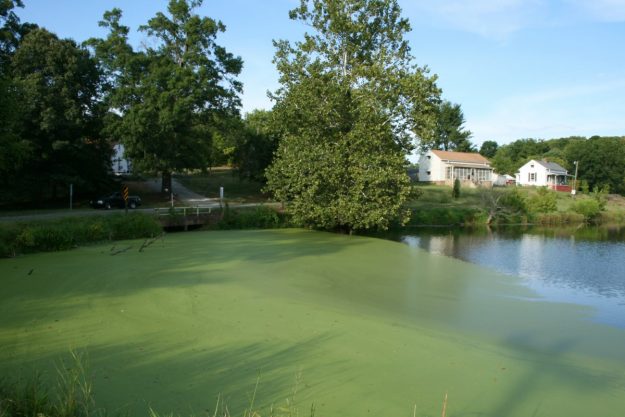 Algae blooms have been present in the Baltic Sea for a long time, but they have not always been a regular feature in the broader cultural and social imaginations that exist in and around the Baltic Sea Catchment Basin. That people in Sweden know and care about algae blooms today partially stems from the foundation of HELCOM (an intergovernmental organization tasked with protecting the Baltic Sea) in 1974 and the large algae blooms of 1988. Of course, earlier algae blooms have also been important, including blooms from around the 1920s or 30s that caused an illness reportedly known as Haff-sjukan.