
40 Years of Macroscopic Quantum Physics – From Bold Ideas to Future Quantum Technologies
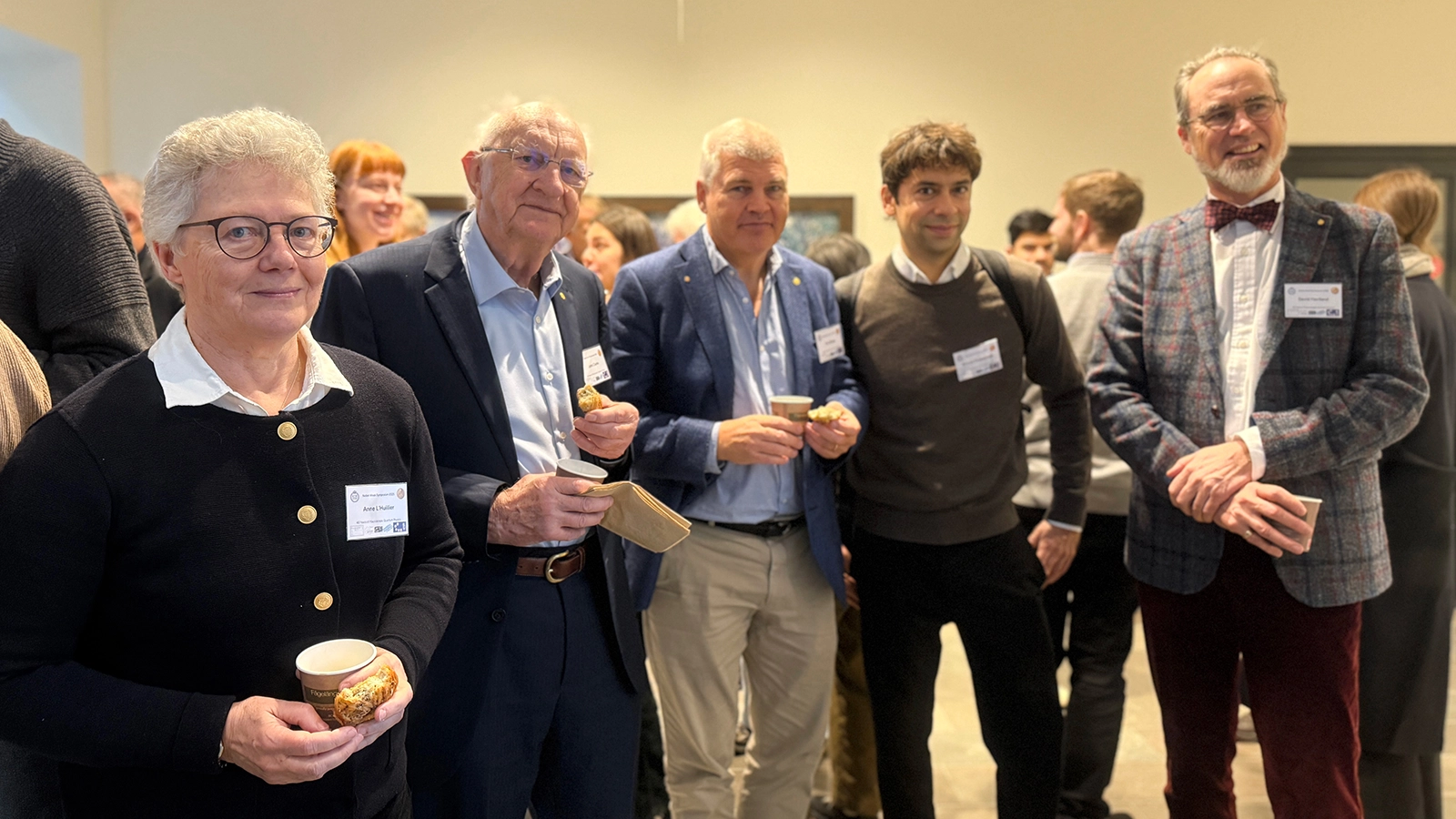
On December 9, “40 Years of Macroscopic Quantum Physics” was held at KTH’s Albanova campus, focusing on this year’s Nobel Prize in Physics. The event highlighted the experiments that, 40 years ago, demonstrated that quantum phenomena can occur in macroscopic systems, a discovery that laid the foundation for today’s quantum technology. Leading researchers from around the world gathered to reflect on key milestones and explore future opportunities. Among the distinguished participants were this year’s Nobel Laureate John Clarke and 2023 Laureate Anne L’Huillier. The program combined historical perspectives with forward-looking visions for a field that has transformed our understanding of quantum physics.
From Intellectual Curiosity to Technological Revolution
In the 1980s, a question sparked debate: Can quantum phenomena occur in macroscopic systems? At the time, most physicists believed the answer was no. But in 1985, groundbreaking experiments provided proof: superconducting circuits can behave like artificial atoms. This breakthrough opened an entirely new research field. John Clarke, one of this year’s Nobel Laureates in Physics who played a pivotal role in these discoveries, attended and shared his perspective on the journey from theory to application.
Today, these quantum circuits are central to emerging quantum technologies and have deepened the understanding of how quantum systems can be designed and controlled. They enable quantum computing, advanced sensing, and secure communication.
Historical Milestones and Future Questions
Discussions revisited key discoveries and innovations that shaped the field, with contributions from pioneers such as Hans Mooij, Daniel Esteve, Steve Girvin, Jack Harris, Rob Schoelkopf, Yasunobu Nakamura, and Andrew Cleland. Moderated by Franco Nori, the sessions highlighted both historical breakthroughs and major questions that remain unanswered. Anne L’Huillier, Nobel Laureate in Physics 2023, was also among the participants, underscoring the international significance of the gathering.
Diversity of Platforms and Future Breakthroughs
The presentations offered a clear picture of how far the field has come since the first experiments conclusively demonstrated macroscopic quantum phenomena in an electrical circuit. Several directions in current research were emphasized, and areas identified where further breakthroughs are needed to accelerate progress. One key insight is the diversity of platforms driving quantum technology forward. From bulk and surface acoustic waves in solids to single microwave photons trapped in the vacuum of high-Q cavities, superconducting circuits cooled in a dilution refrigerator have proven essential for realizing quantum optics in the microwave frequency band.
KTH’s Contribution to the Field
KTH is part of the Wallenberg Centre for Quantum Technology (WACQT), Sweden’s most significant initiative for quantum research, and has hosted several EU-funded projects in this area. Historically, KTH has also contributed to the theoretical foundations of the field: Göran Lindblad, who passed away in 2022, developed models for controlling and measuring quantum states - work that remains central to today’s superconducting quantum circuits.
Inspiring Continued Research
The event demonstrated how far the field has come in 40 years - and how much potential remains to be explored. Through continued collaboration and innovation, the next generation of quantum technology can be shaped.
Text: Jelina Khoo