MSc Sustainable Energy Engineering
The master's programme in Sustainable Energy Engineering provides advanced education in solar energy, power generation, energy utilisation and transformation of energy systems. You gain a multidisciplinary foundation in energy engineering and skills to manage complex energy-related problems with a lifecycle perspective. Graduates lead the development in the energy sector with skills and insights in industrial challenges, leadership, innovation and entrepreneurship.
Sustainable Energy Engineering at KTH
The master's programme in Sustainable Energy Engineering equips you with skills and insights into leadership, industrial challenges, innovation and entrepreneurship in the energy field. The programme provides an atmosphere and learning environment that fosters global responsibilities and sustainable development. Therefore, the emphasis is on addressing energy engineering tasks with due consideration of technical, environmental, and socio-economic issues for applications, especially in Sweden but also worldwide.
The first semester is dedicated to an intensive introductory period with broad-based coursework in energy engineering, including conversion technologies, systems and applications. You will take advanced-level energy engineering courses where you will apply your prerequisite knowledge in thermodynamics, fluid mechanics, and heat transfer through challenge-based problem-solving. Advanced methods are applied to identify, describe, quantify, and solve a range of energy engineering problems. For example, one of our courses allows you to tackle energy challenges for future cities with several interested parties and multiple optimisation criteria. You will work with a real city somewhere in the world to model and simulate energy systems at the district and city levels. In the spring semester of 2025, the project aimed to develop energy systems in the Rwandan capital, Kigali.
For the second semester, you choose one of four profiles for in-depth studies for the rest of the programme.
Energy Supply through Clean Conversion Technologies
The Energy Supply through Clean Conversion Technologies profile focuses on sustainable energy conversion processes and systems for generating and distributing electrical power, district heating and cooling, and water treatment to drinking water quality. The profile also covers turbomachinery development and applications, as well as sustainable energy solutions for transportation. The profile examines how conventional energy systems can be adapted to integrate a growing share of renewable energy sources, including challenges related to electrification, energy storage, cogeneration, transmission and energy system management.
Energy in Buildings and Cities
More than 70 per cent of the world’s population lives in urban areas, making energy systems in buildings and cities increasingly important for economic development, quality of life and environmental sustainability. The Energy in Buildings and Cities profile focuses on the engineering challenges and opportunities associated with current and future urban energy systems. The profile provides knowledge of urban energy systems at both the technology and district/city levels. You develop an understanding of key energy technologies and learn how to analyse, integrate and manage complex energy systems in buildings, districts and cities.
The profile guides you through a comprehensive learning journey in three distinct phases: it initially offers a macro-level overview of energy systems in buildings and cities, then delves deeply into crucial energy technologies, imparting technical-level engineering knowledge. Once you have gained a solid understanding of energy technologies such as heat pumps, district heating, and solar technologies, you return to system analysis and system integration with enhanced proficiency, enabling you to engineer and manage systems more effectively, considering both technical and economic perspectives.
Energy System Analysis
The Energy System Analysis profile focuses on the systems perspective of the sustainable energy transition, where energy technology innovation, planning, and policy are linked to sustainable development. You will learn how to develop quantitative models for analysing energy systems as a basis for strategic investment decisions and policy in the context of the circular economy. Through qualitative analyses, the impact of policies on the transition to a sustainable society is analysed. Central to this profile are the knowledge and skills necessary to contribute to a secure, low-carbon energy sector at the local, national, and international levels, in harmony with the Sustainable Development Goals.
Energy Technology Research
The Energy Technology Research profile is a selective, research-oriented pathway for students with a strong interest in doctoral studies or research-intensive engineering careers. It combines advanced specialisation in an area of sustainable energy engineering with active participation in a research environment at KTH. Through a supervised research apprenticeship, you work closely with researchers, contribute to research activities, and take part in research group meetings, seminars and scientific presentations.
Building on the programme’s training in research methodology, you develop the ability to identify research gaps, formulate research questions, design and conduct research, critically assess evidence and uncertainty, engage in scientific peer review, and communicate research results. You can build on the research apprenticeship in your degree project, progressing from guided participation to conducting research independently.
Courses and teaching methods
Courses are taught by faculty who are actively engaged in research and industry collaboration. Many courses also include guest lecturers from industry who contribute practical perspectives and real-world experience. Examples of external partnerships in 2025-2026 are Svenska Kraftnät, Siemens, Hitachi Energi, Abengoa, NoviOcean, Scania, Stegra, ABB, GKN Aerospace, Ramboll, Eriksson, Afry AB, Torresol Energy, Sweco, Stockholm Exergi, Vattenfall, and the International Energy Agency, Stockholm Resilience Centre and Stockholm Environment Institute. The programme has close links to Swedish companies, utilities and authorities that are leading the development and implementation of sustainable technologies and solutions. Within KTH, our faculty is also engaged in the KTH Climate Action Centre, the KTH Live-in Lab, and the Dig-IT Lab.
Teaching in the programme is student-centred and hands-on, with a strong focus on challenge-driven and project-based learning. You gain experience with professional tools used for energy system modelling, optimisation and simulation, including IDA ICE for building energy simulations, Aspen Plus for process simulation, Pandapower for electricity system analysis and OSeMOSYS for long-term energy system planning.
KTH is a member of Unite, a network of seven top universities in seven European countries. Unite offers virtual and in-person exchange studies in energy technology, allowing students in the programme to take several short term courses where you get to visit the course hosting university for a period of week or so with the Erasmus+ travel scholarship. . These courses will be included in your KTH degree.
The master's programme in Sustainable Energy Engineering is a two-year programme (120 ECTS credits) given in English. Graduates are awarded the degree of Master of Science. The programme is given mainly at KTH Campus in Stockholm by KTH’s School of Industrial Engineering and Management.
Degree project
During the final semester, you complete a degree project for five months. The project is done in an industrial or academic environment (for example, closely connected to research projects at the Department of Energy Technology). During your degree project, you will establish an excellent platform and gain valuable experience and contacts for the career ahead.
The master's programme in Sustainable Energy Engineering is a two-year programme (120 ECTS credits) given in English. Graduates are awarded the degree of Master of Science. The programme is given mainly at KTH Campus in Stockholm by KTH’s School of Industrial Engineering and Management.
Specialise in electric mobility
A transition to more sustainable transportation is an important part of the sustainability challenges. KTH offers a wide variety of courses in the field of electric mobility, spread across different programmes and departments. You can create an electric mobility course package by selecting some of these courses as electives within your programme. As electric mobility represents a key paradigm shift currently taking place in society, adding this profile to your studies could be a valuable enhancement to your CV.
Programme structure and progression
During the first year, all students follow a set of mandatory courses that provide a foundation in energy technology. The courses cover topics such as renewable energy, sustainable energy utilisation, sustainable power generation, energy policy, energy management, project management, the latest developments in sustainable energy technology, and energy systems modelling.
In the second year, you take one mandatory course on applications of artificial intelligence in sustainable energy. In addition, you continue to tailor your studies through electives in areas of interest, for example, industrial decarbonisation, energy technologies for sustainable transport, energy systems for smart cities, and the practical optimisation of energy networks. You can also take a research apprenticeship course.
Courses in the programme
The courses in the programme cover topics such as renewable energy generation and utilisation, energy systems modelling and optimisation, energy policy and management, sustainable transport, industrial decarbonisation, and applications of artificial intelligence in sustainable energy.
Courses in the master's programme in Sustainable Energy Engineering


Future and career
The energy field is an international and dynamic area in which well-trained engineers are in constant demand. Graduates find employment in industry, government agencies and consultancies. The master's programme in Sustainable Energy Engineering is also an excellent starting point for a research career as doctoral candidate either at KTH itself or other European universities.
After completing the programme, you can manage technical problems from a systems perspective, with a holistic view of their life cycle, from concept to specification, development, operation and decommissioning. You will also be confident in characterising an energy challenge, determining the necessary resource consumption and managing processes for problem-solving/realisation. During your studies, you will gain a particularly good understanding of the fact that engineering problems are often complex and sometimes involve conflicting conditions. You will become aware of the responsibilities and ethical standpoints that may arise in connection with various technical, organisational, economic, ecological and societal activities.
Thus, the programme prepares you for immediate engagement in developing and implementing sustainable energy technology, leadership positions in the field, and academic research. The future is bright, and, with properly trained engineers, society will reach sustainability in energy systems. Graduates from the programme can be found, among others, in entrepreneurial companies like Vattenfall and Phoenix Biopower, Stegra, in manufacturing companies like ABB and Scania, and in consulting companies like AFRY, SWECO, Ramboll, WSP, McKinsey & Company, and Alight. Or in energy utilities such as Söder Energi, Vattenfall, EDF, and Ellevio. They can also be found in construction companies such as NCC and Skanska, as well as in organisations such as the Swedish Energy Agency, IRENA, the World Bank, and the International Energy Agency. Graduates can work as, for example, energy systems analysts, sustainable energy consultants, renewable energy project engineers, energy policy advisors, or grid integration engineers.
Many graduates from the programme go on to PhD studies at KTH or Swedish universities such as Chalmers University of Technology, Lund University, Linnaeus University, Mid Sweden University and Dutch universities such as TU Eindhoven and TU Delft.



Sustainable development
Graduates from KTH have the knowledge and tools for moving society in a more sustainable direction, as sustainable development is an integral part of all programmes. Four key sustainable development goals addressed by the master's programme in Sustainable Energy Engineering are:

SDG7 (Affordable and Clean Energy) is addressed in many courses in the programme, such as "Renewable Energy Technology", "Sustainable Power Generation", and "Applied Heat and Power Technology", where technologies and tools for sustainable energy conversion are studied. To address SDG9 (Industry, Innovation and Infrastructure) the programme offers courses such as "Energy System Economics, Modelling and Indicators for Sustainable Energy Development" and "Applications and Transformation in Energy Policy and Climate Agenda". Programme courses that address SDG11 (Sustainable Cities and Communities) include "Energy in the Built Environment", "Energy Demand and Supply Distribution Systems in the Built Environment" and "Energy Systems for Smart Cities". The programme is closely connected with KTH’s Climate Action Centre., with teachers who share their time between working at the Centre and teaching courses within the programme. The programme also offers courses that directly address the circular economy and life cycle assessment, as well as courses focusing on the sustainable use of land, water, and the climate.
Faculty and research
The master's programme in Sustainable Energy Engineering is closely connected to the KTH Department of Energy Technology (EGI). At EGI, the research covers broad areas of energy conversion, electricity generation and energy utilisation, as well as energy systems and policies for implementing sustainable energy solutions. As such, the work aims to contribute to welfare and development through world-class research and education in innovative energy technologies and systems, and promote the energy sector transition towards sustainability.
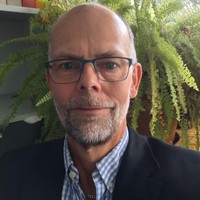
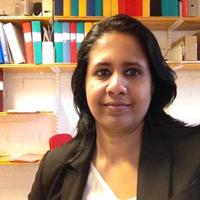
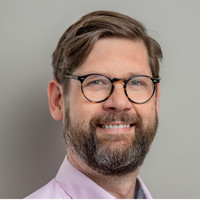
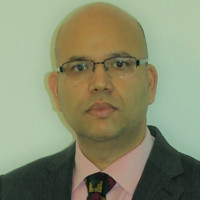
A selection of faculty involved in the programme