
Adithi
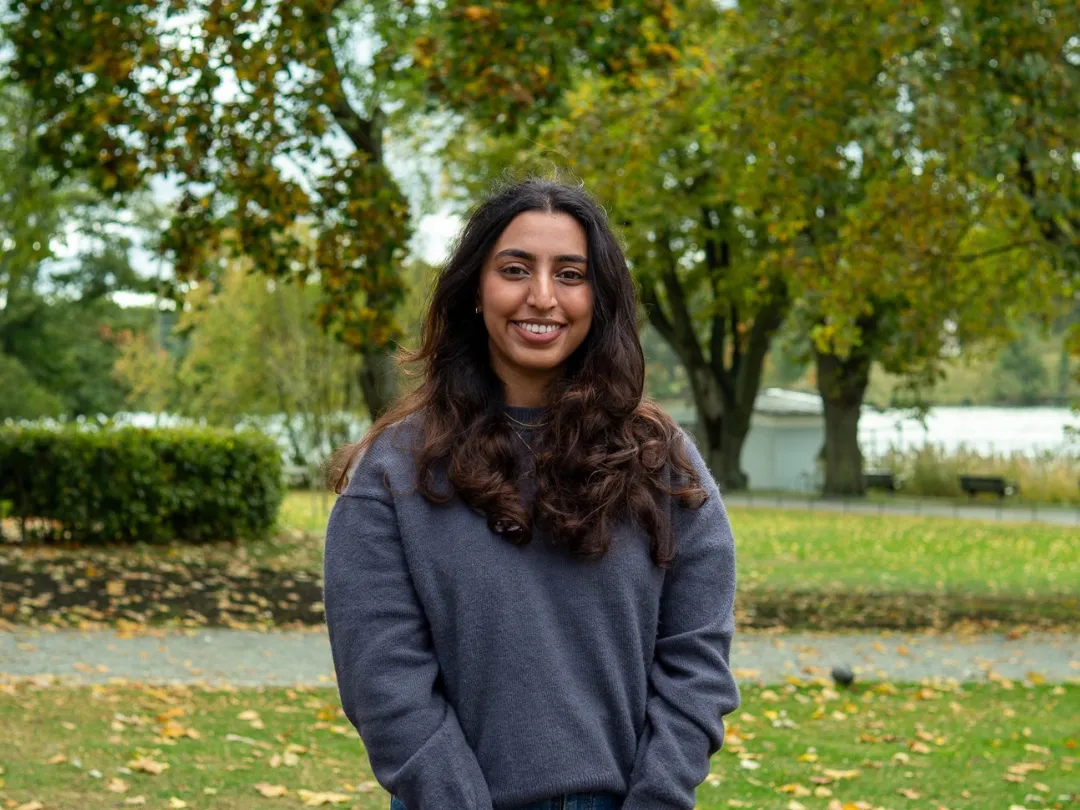
Adithi, from Mysore, India, holds a bachelor’s degree in Industrial and Production Engineering and previously worked at Mercedes-Benz Research & Development. Her experience there sparked an interest in creating sustainable and resilient systems. To explore this further, she is pursuing a master’s in Industrial Management at KTH Royal Institute of Technology, focusing on sustainable supply chains and operations strategy. Outside of academics, Adithi enjoys crocheting, hiking, reading, and meeting people from diverse cultures.
Why did you choose this master’s programme at KTH?
When I was exploring my options, Industrial Management stood out the most because of its holistic approach to education. What really drew me in was how the programme goes beyond just technical knowledge and also helps you develop important life skills, like making difficult decisions, working with diverse groups of people, and learning how organisations function in real life.
One of the best parts of the programme is the flexibility. We’re free to choose electives like supply chain, finance, production, and more, which means we can shape the degree according to our own interests and career goals. Personally, after working for two years, I wanted to build on my technical background with management and strategic skills that are really necessary in today’s world. Industrial Management felt like the perfect way to combine both sides and explore different areas before specialising further.
What are some of your favourite courses so far?
So far, my favourite course has been Operations & Supply Chain Strategy. I found it really insightful because it gave us a glimpse into how top executives think when implementing difficult changes in real companies, especially in such a global and volatile market. It made me realise how much strategy and decision-making go into supply chains beyond just operations. The course also involved a lot of group work and interesting case studies, which made the learning process super engaging and honestly really fun.
Another course I really enjoyed was Artificial Intelligence and Management. I’ve always been interested in learning about law and ethics, so I found the discussions around the legal implications and responsibilities of using AI in companies super fascinating. Since AI is becoming such a big part of every industry, learning how to manage it responsibly, while also understanding both its advantages and limitations, feels like a skill that will be useful no matter what role I work in later on.
How do studies at KTH differ from your previous studies?
I would say it’s super different in a lot of ways. One thing I wasn’t used to initially was the academic structure, where each semester is divided into two study periods. It definitely took some time to adjust to the pace, but I’ve come to appreciate how focused and dynamic it makes the learning experience.
Another major difference is the emphasis on group work. In my previous education, there wasn’t as much collaboration involved, whereas in Industrial Management, almost every course includes group projects. At first it felt challenging, especially because everyone comes from such different academic and cultural backgrounds, but that’s honestly one of the biggest strengths of the programme. You learn how to communicate, adapt, and see problems from multiple perspectives.
I also really like the freedom to choose electives and customise the programme according to my interests. It’s refreshing to have that flexibility and be able to shape your master’s journey in a way that aligns with what you genuinely enjoy and want to pursue in the future.
What do you want to do after graduating?
After I graduate, I’d like to work in supply chain or purchasing, since those are the areas that interest me the most. I’d love to contribute towards helping organisations build more resilient and sustainable supply chains, especially in a world where global disruptions and sustainability challenges are becoming more important than ever.
Ideally, I’d like to work in Sweden or somewhere else in Europe for a few years to gain exposure to European markets and different ways of working. I want to eventually explore opportunities outside Europe and learn how businesses operate globally. Long term, I hope to grow into a leadership role where I can combine strategy, sustainability, and operations.
Outside of work, I’d also love to spend more time mentoring and volunteering for causes related to education and healthcare, because those are areas I really care about and would like to contribute to whenever I can.
What would you like to say to students thinking of choosing KTH for master’s studies?
I’d say go for it! Apart from its strong global reputation and high-quality education, KTH is also a really fun and rewarding place to study. The environment is incredibly diverse and inclusive, and you get to meet people from all over the world with completely different experiences and perspectives.
In true Swedish style, sustainability is naturally integrated into many programmes and discussions, which makes learning here feel very relevant to the real world. I’ve also found the faculty and staff to be very approachable and supportive throughout the experience.
What I like most about KTH is that it challenges you in the right ways. Whether it’s through group work, presentations, projects, or simply adapting to a new culture, you grow a lot both personally and academically. By the end of the programme, I genuinely think you come out not just more knowledgeable, but also more confident, independent, and ready for the future.