Development of ultrasound transparent electrophysiological electrode from cellulose
Description
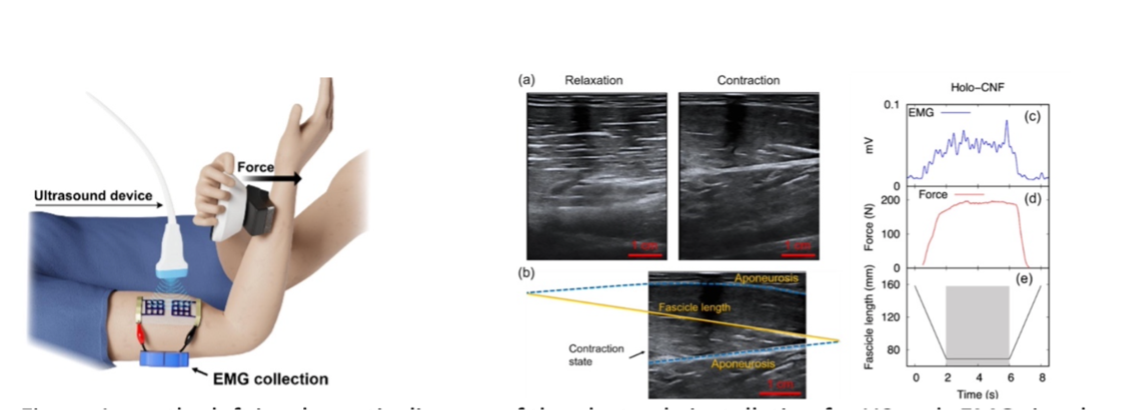
Accurate evaluation of electrophysiological and morphological characteristics of the skeletal muscles is critical to establish a comprehensive assessment of the human neuromusculoskeletal function in vivo. However, current technological challenges lie in unsynchronized and unparallel operation of separate acquisition systems such as surface electromyography (sEMG) and ultrasonography. Key problem is the lack of ultrasound transparency of current electrophysiological electrodes, where ultrasound transparency of both electrode material and the substrate are critical.
Wood based material or cellulosic materials are promising candidates for ultrasound transparent electrode due to its mechanical properties, flexible nature of cellulosic film that could ensure permanent contact with skin, and hydrogel structure that enables high-water content, providing ultrasound coupling between transducer and the skin. Overall, application of the wood-based structures and formulations contribute towards low environmental impact and low CO2 emission.
In this project, the focus is on the acoustic characterisation of a cellulosic ultrasound transparent substrate. Influence of cellulosic fiber structure (e.g. nanocellulose, cellulose pulp fiber, wood veneer) on the ultrasound transparency will be investigated in detail, which will further assist the design of high-performance ultrasound transparent substrate.
Collaborations
- KTH CBH Division of Biomedical Imaging
- KTH CBH Department of Fibre and Polymer Technology (FPT)
- KTH Promobilia MoveAbility Lab
Contact Person