
Jochen Schwenk
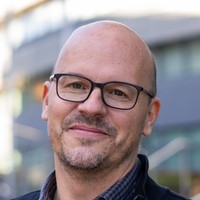
Professor
Details
Researcher
About me
My path into proteomics began with a PhD in Biochemistry at the University of Tübingen, Germany, completed in 2005 with a focus on multiplexed immunoassays. That same year, I joined the Human Protein Atlasproject for my postdoctoral research with Prof. Mathias Uhlén at KTH. In 2010, my research group relocated from AlbaNova to the newly inaugurated SciLifeLab, where I later established the Affinity Proteomics Unit. I was appointed Docent of Translational Proteomics in 2011, became Associate Professor in 2016, and was promoted to Professor in 2020. From 2026, I head the Divison of Biomedicial Proteomics. Throughout, my focus has remained on interdisciplinary proteomics research, alongside supervising PhD and master's students and teaching in the field.
- Professor of Translational Proteomics
- SciLifeLab Group Leader
- Platform Scientific Director for SciLifeLab's Proteomics Platform
- National Reference Group for Data-Driven Life Science (DDLS)at SciLifeLab
- Vice-chair of Docent Committeeat the CBH School
- Chair of HUPO's Human Plasma Proteome Project.
- Bluesky
Circulating proteins in precision medicine
Our research develops and applies innovative approaches for analyzing proteins in bodily fluids, such as blood, as biomarkers of health and disease. We work across the full biomarker pipeline, from sample to clinic:
- Experimental design: optimizing study protocols for robust, reproducible biomarker analysis
- Pre-analytics: investigating factors that influence sample quality and stability
- Microsampling: developing workflows for minimally invasive, self-sampled specimens
- Assay development: creating novel, multiplexed, high-sensitivity assays for protein quantification
- Molecular interactions: studying immune interactions with protein complexes
- Data integration: applying multi-omics and data-driven approaches to uncover complex biological relationships
- Computational proteomics: using data-driven bioinformatics methods to interpret proteomics data
- Translation: converting findings into clinical applications
Our overarching goal is to understand the molecular heterogeneity and individuality underlying human phenotypes in health and disease. Building on a strong track record in interdisciplinary research, we apply these approaches across a range of phenotypes, including cancer, cardiometabolic disorders, autoimmunity, and aging to link molecular signatures to disease.
Group members
- William Lindgren Stauch- PhD student
- Frida Ahlstrand - Industrial PhD student
- Karolina Ristola- Research Engineer
- Leo Dahl- Postdoc
- Annika Bendes- Postdoc
- Marcus Saarinnen- Postdoc
- August Falk Jernbom- Postdoc at Johns Hopkins
Associated PhD students (co-supervisor)
- Szabolcs Simon-Guth - PhD student with Niclas Roxhed
- Thanadol Sutantiwanichkul - PhD student with Fredik Edfors
- Hampus Hagelin- PhD student with Sara Hägg
- Andrea Villanueva Raisman - PhD student with Fredik Edfors
- Malin Müller- PhD student with Marike Gabrielson
One liner
- Analyzing body fluid proteomes for precision medicine
- Developing high-throughput, multiplexed immunoassays
- Discovering and validating circulating protein biomarkers
Profile photo by Jon Lindhe, KTH
Courses
Proteomics (CB2080), teacher, course responsible, examiner