By Gauri Salunkhe & Katarina Larsen
This text was first published on the WaterBlog@KTH on 10 March 2023.
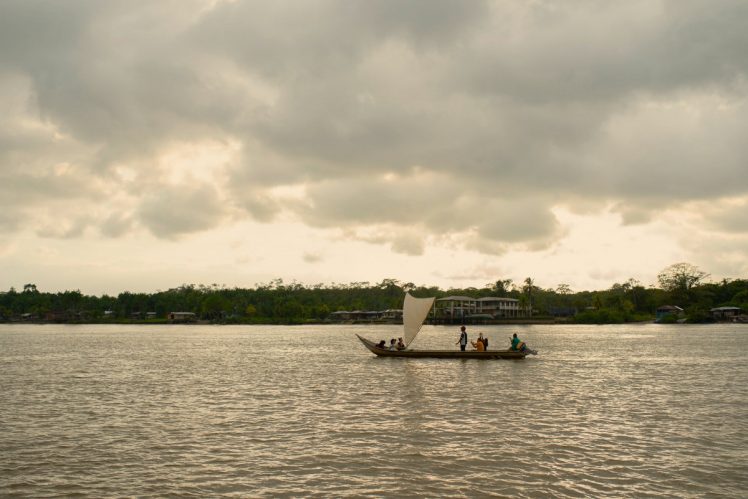
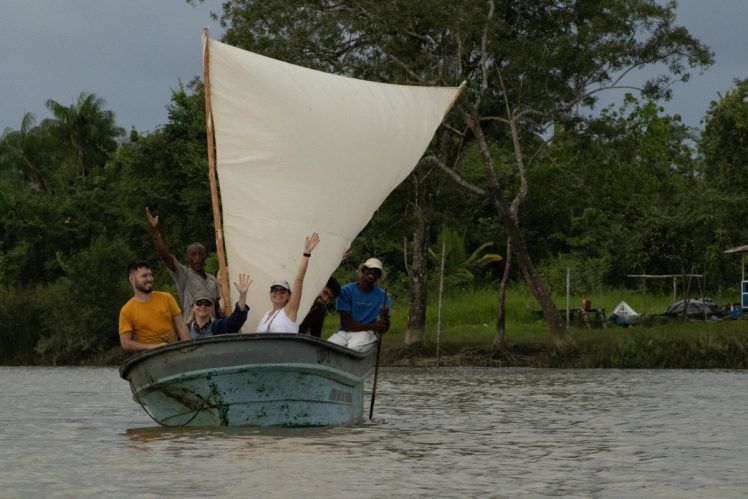
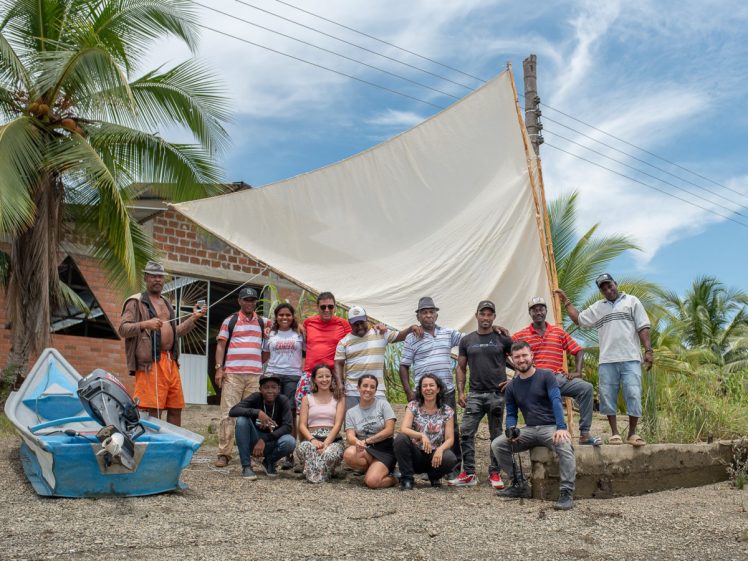
The sun setting on our right in beautiful orange hues, water flowing calmly and gentle breeze on our faces. This was the tranquil atmosphere on Río Guapi on a Saturday evening in early October 2022, as we were travelling down the river in a traditional fishing boat of the Guapiñeros. In the next moment, loud cheering and clapping echoed through the mangroves and houses lining the river. The sail prototype had been unfolded and successfully set up on the boat. The next twenty minutes had everyone brimming with excitement as the fishermen expertly navigated the boat towards the barrio of Puerto Cali, using the sail that the team had built together just hours before, utilising the ancestral knowledge of the fishing community.
Local and ancestral knowledge as a strategy to reach sustainability goals
The use of local knowledge is considered key to achieving the climate strategies and plans, as outlined by Intergovernmental Panel for Climate Change (IPCC) in a recent report (IPCC, 2022). Both the IPCC and the Intergovernmental Platform on Biodiversity and Ecosystem Services (IPBES) emphasise the importance of local and indigenous knowledge in understanding and creating solutions for sustainable futures (Tengö et al., 2021a-b). Moving towards more sustainable futures, in practice, requires a thorough understanding of the local traditions and how concepts of change are used in the local context. The preservation of fishing traditions, sailing and sailmaking are interesting examples. On the one hand, recognizing the value of preserving local ancestral knowledge (related to fishing and sail making), but also recognizing that the older generation wants their children to take steps to improve their future, embarking on studies etc. Thereby wanting a better future, with less hard work that fishing entails, for the next generation. This is one example that we discussed with fishermen in Guapi showing that the involvement of local communities is necessary for getting a better understanding of how local knowledge and cultural traditions are key for understanding how change can come about. In addition to this, also recognizing that the local and global level is interrelated (Larsen et al. 2011) when implementing policy to achieve climate objectives and UN’s sustainable development goals (SDGs). Improving the possibilities to improve (local communities) life situation and increased involvement in economic development is central to the strategy for the regional development of Latin America (Sida 2021, page 9) relating to several SDGs, including SDG12, sustainable production and consumption.
Local knowledge, culture and values are important to be included together with scientific knowledge in the co-production of new solutions and for input to advising policies. This aspect of co-creation in a transdisciplinary team to take advantage of both the traditional knowledge of local communities and scientific knowledge of academics from several different disciplines (including anthropology, environmental history, technology, engineering, and design etc.) is an important methodology of the Pacífico Econavipesca project.
Fishing and boats in the community in Guapi, Colombia
The objective of the project is to develop a sustainable artisanal fishing model that reduces the environmental, social, and economic impacts on the ecosystem in the municipality of Guapi, Cauca, in Colombia. A major challenge is to reduce dependence on fossil fuels for fishing boats and engage in dialogues with the local community about ways to create social entrepreneurship to make fishing activities more sustainable long term. The project involves universities in Colombia with strong commitment and previous experiences with the communities in Guapi. The focus of fieldwork activities is to create room for dialogues and mutual learning rather than importing or imposing certain technology or ways of thinking on any local community. The fieldwork activities where KTH has been involved have been carried out in collaboration with the research teams in Colombia to ensure these aspects and safeguard continued dialogues on how future solutions may look.
Guapi is a municipality on the pacific coast of Colombia. The town and villages here are all situated along Río Guapi, Río Guaji and Río Napi. The rivers are a source of life for these communities as they provide food, water, transportation, etc. In fact, their relationship with water is beyond material provisions. It is their deep connection with the diverse natural environment in the territory, a rich food culture, music and dance that follows the rhythm of the river, and their ancestors that have passed down a great wealth of knowledge. Artisanal fishing is one such knowledge that has been passed down through generations in Guapi. Currently, traditional fishing boats that run on gasoline motors are used to fish out at sea. However, gasoline is very expensive in the region and causes them a great economic burden. This is worsened by increased uncertainty of catching fish with reduced fish populations due to pollution and climate change, causing them to return with little to no fish on many days. Local environmental pollution of the river is also caused by leakages of gasoline. Hence, one of the main objectives is to create more sustainable fishing boats with reduced reliance on gasoline.

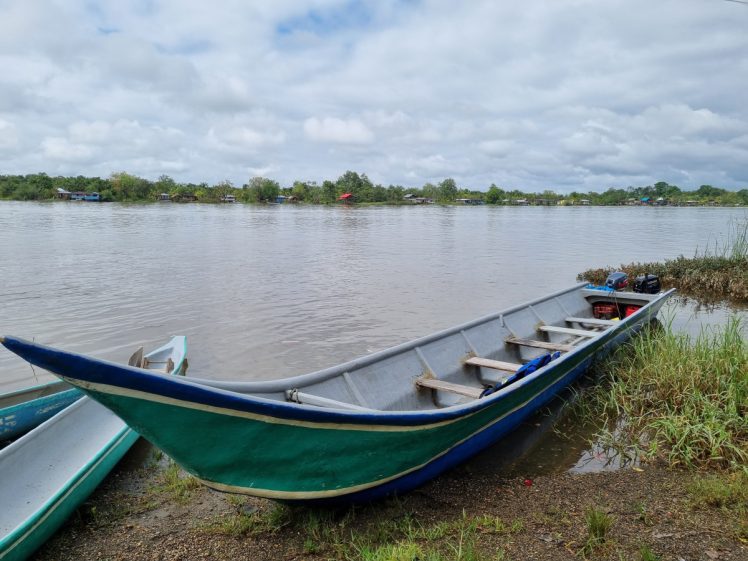
In the initial stages of the project Econavipesca, it became clear that the previous generation of fishermen would sail out to sea with homemade sails. However, with the introduction of modern technology like gasoline motors, this traditional knowledge of sail-making and sailing was forgotten. This was one of the early stages of co-creation, where local knowledge was re-discovered in dialogue with the community. The team then decided to examine possibilities to incorporate these traditional sailing techniques in present-day boats to reduce reliance on gasoline motors.
Co-creation in the focus of KTH fieldwork
In October 2022, the KTH project team embarked on their first field trip, including Gauri Salunkhe, a master’s student in Sustainable Technology at KTH. Gauri would spend three months on a field study in Colombia. This field study focused on understanding community engagement, co-creation strategies and actor interactions to identify challenges and opportunities for the sustainability of the project. She engaged in dialogue with different stakeholders such as academics and community team members to gather data for her field study, using methodologies such as observational studies, interviews, actor-network mapping, co-creative activities, reflective workshops, etc.
Video 1: Interview with Gauri Salunkhe about her field study experience in Colombia (Interview by Sebastián Serna)
This KTH field study began with a deep dive into the community, as Gauri, together with Katarina Larsen, a researcher at KTH, Division of History of Science, Technology and Environment, and Magnus Lindqvist, Senior advisor at the KTH International Relations Office, embarked on the fieldwork in Guapi (30 Sep 2022 – 04 Oct 2022) together with the project team in Colombia. Ask any member of the team about a key moment during this fieldwork, and the moment that would resonate in all the responses would be – “the sailing activity”. This brings us back to the scene at the beginning, on Río Guapi.
The sailing activity is an essential example of co-creation in the Pacífico Econavipesca project. Local knowledge of sail-making and sailing was incorporated with academic knowledge to design and build the sail prototypes. Instead of fieldwork activities solely organised by the academic team, with the community members only as participants, in this case, the community members’ representatives were key to planning and organising the activity. They gathered local resources, people and materials, specified fabrics needed for sails, and identified suitable locations, to build the sail prototypes. Since the traditional sail-making knowledge is only held by some elderly members of the community now, they were also an essential part of designing and building the sail.

Sailing on the river
A key moment for one member of the academic team was while building the sails together with the local community. “At the beginning, they were very protective with some information due to the (historical) projects culture in this part of the country … as they don’t know what people would do with the information”. However, the activity could give space to having an open conversation where everyone felt comfortable sharing their experiences with sailing. Many of them learnt it when they were children but lost touch over the years. Furthermore, it was the fishermen that had the local knowledge about the material, type of knots required, etc., not the academic team, so the fishermen’s active involvement, knowledge and skills were essential for this activity of re-introducing sail-making and testing the sails on the river.
Initially, when we started the fieldwork in Guapi in October, we expected to build the sail prototypes, but not necessarily test them on the river. However, the community members were so enthusiastic to also test the sails on the river! As expressed by one (academic) team member who was organising the activity, “They were so interested in testing the sail, who am I to stop them? Just go for it!”. This experience highlights the importance of not imposing our own views and expectations on the project fieldwork activities but being flexible to carry it out according to the community’s wishes. The organiser of the activity described the smile on a fisherman’s face when navigating the boat like he was a little child again while looking at the sail. It is moments like this that inspire the team to continue working hard to implement new useful ways for co-creation in this project.
Co-creation experiences from dialogues during fieldwork
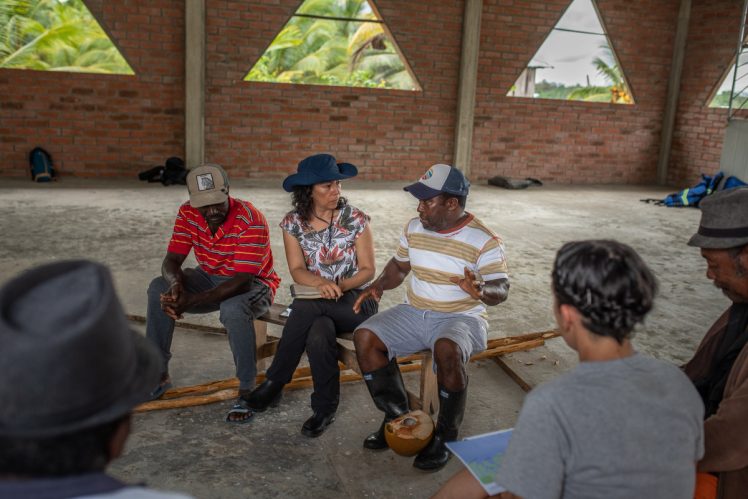
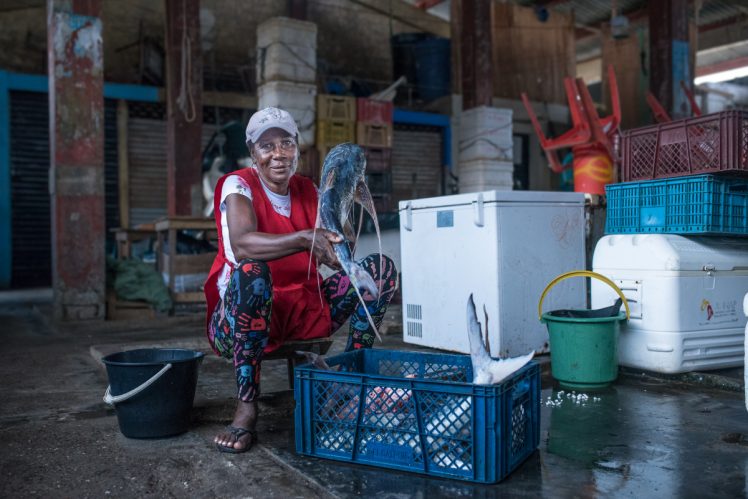
Engaging in co-creative dialogues about future ways of more sustainable living in a fishing community like Guapi goes beyond dialogues with fishing associations. It also means involving different types of members of the community (that are not out on the fishing boats), such as the women (often involved in preparations before and after fishing trips) and younger generations in fishing communities. The young adults will determine the future of how fishing activities will develop in Guapi. It is important to improve the quality of life for fishermen, increase economic gains from fishing and dignify the work of fishermen to retain the artisanal fishing practices among young people in the future. Women are also an important part of the fishing journey who may be invisible at the moment. For example, they carry out preparations for the fishing journey, and process and sell the fish post-fishing. It is important to recognise this and involve them in co-creating solutions.
Some other lessons about transdisciplinary co-creation from this project are the importance of establishing dialogues for discussing terminology used, expectations by community and academic teams, and being open to learning from each other. This is important both within the academic team and across the academic and local community teams. Since participants bring different experiences and perspectives to co-creative learning processes, it is essential to create dialogues that give room for reflection on activities and to also align everyone to work towards a common goal.
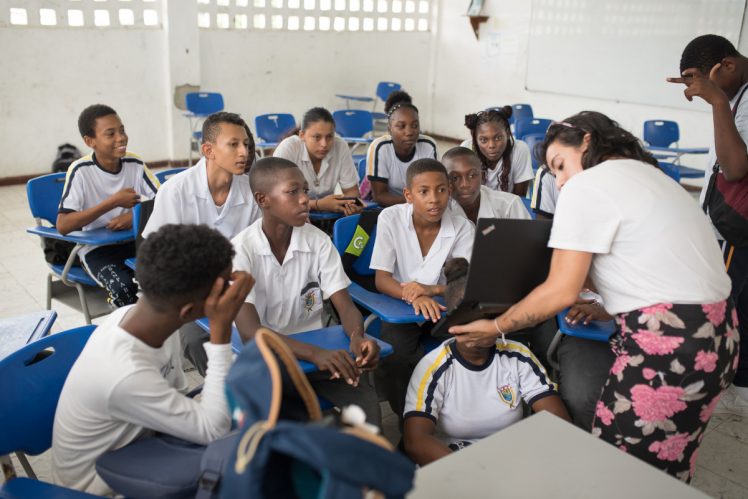
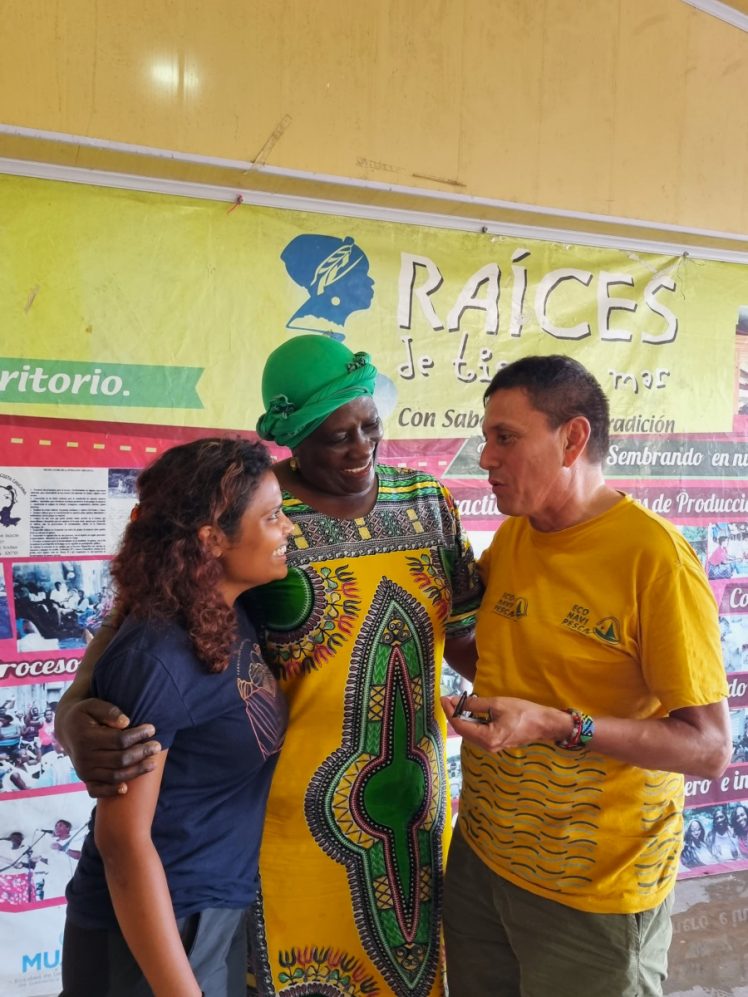
Experiences from the fieldwork in this project highlight that transdisciplinary co-creation is at the core of finding solutions for sustainable development. It has provided concrete examples of the importance of a dialogue-based approach to gathering different types of knowledge, and methods of catalysing participatory action and creating dialogues on future options by involving the community. It is when the community is actively involved and takes initiative, that they would be able to create and maintain solutions for themselves, which is required for long-term sustainability for the communities along the Guapi river.
Participants in the Pacífico Econavipesca project include the fishing associations of Guapi, Colombia, local and regional authorities, and the following academic partners: Universidad Nacional de Colombia (Colombia), Universidad del Cauca (Colombia), KTH Royal Institute of Technology (Sweden), and Lund University (Sweden). The project is funded by the Swedish International Development Cooperation Agency (Sida). We wish to thank all participants in the project for their genuine commitment to the project work and, in particular, the local fishing community representatives for sharing their knowledge, stories and unforgettable experiences on the river of Guapi.
Gauri Salunkhe, MSc-student in Sustainable Technology at KTH
Katarina Larsen, researcher at Div. History of Science, Technology and Environment, KTH
For more information on the project Econavipesca and interviews with KTH participants, follow the links below.
- Econavipesca project description
- Interview with Katarina Larsen, Gauri Salunkhe and a representative from the Swedish International Development Cooperation Agency in Guapi 2023 (English and Spanish)
- Video of experiences during October 2022 fieldwork in Guapi
- Econavipesca Project Universidad Nacional de Colombia blog
- Presentation at KTH Royal Institute of Technology 11th January 2023
- Also check out the WaterBlog’s Linkedin!
Some key references and further reading
Agusdinata, D. B. 2022. The role of universities in SDGs solution co-creation and implementation: a human-centered design and shared-action learning process. Sustainability science. [Online] 17 (4), 1589–1604.
IPCC 2022. Climate Change 2022: Impacts, Adaptation and Vulnerability. Contribution of Working Group II to the Sixth Assessment Report of the Intergovernmental Panel on Climate Change [H.-O. Pörtner, D.C. Roberts, M. Tignor, E.S. Poloczanska, K. Mintenbeck, A. Alegría, M. Craig, S. Langsdorf, S. Löschke, V. Möller, A. Okem, B. Rama (eds.)]. Cambridge University Press. Cambridge University Press, Cambridge, UK and New York, NY, USA, 3056 pp., doi:10.1017/9781009325844.
Larsen, K., Gunnarsson-Östling, U. and Westholm, E. 2011. Environmental scenarios and local-global level of community engagement : Environmental justice, jams, institutions and innovation,” Futures: The journal of policy, planning and futures studies, vol. 43, no. 4, s. 413-423.
Minoi, J.L., et al., 2019. A Participatory Co-creation Model to Drive Community Engagement in Rural Indigenous Schools: A Case Study in Sarawak. The Electronic Journal of e-Learning, 17(3), pp. 173-183, available online at www.ejel.org
Moons, I.; Daems, K.; Van de Velde, L.L.J., 2021. Co-Creation as the Solution to Sustainability Challenges in the Greenhouse Horticultural Industry: The Importance of a Structured Innovation Management Process. Sustainability 2021, 13, 7149. https://doi.org/10.3390/su13137149
Tengö, M. et al. 2021a. Indigenous Futures Thinking: Changing the narrative and re-building based on re-rooting. Workshop report. SwedBio at Stockholm Resilience Centre, Stockholm, Sweden.
Tengö, M. et al. 2021b. Creating Synergies between Citizen Science and Indigenous and Local Knowledge. Bioscience. [Online] 71 (5), 503–518.
Universidad Nacional de Colombia, et al. 2021. Technical Report for the first year of the Agreement. Project Econavipesca Del Pacifico: Ecosistema Para la Navigacion Pesquera Sustentable en el Municipio de Guapi, Cauca.
Sida 2021. Strategiplan för Sveriges regionala utvecklingssamarbete med Latinamerika 2022-2024, Datum: 21-12-13, Environment, climate and sustainable use of natural resources (Stödområde 2: Miljö, klimat och hållbart utnyttjande av naturresurser, page 9) ”Hållbar produktion och konsumtion (SDG12), men även SDG 3,5, 8 och 16, är viktiga för omställningen till grön/cirkulär ekonomi, som också måste ge fattiga och utsatta människor bättre möjligheter att förbättra sin livssituation och en ökad delaktighet i den ekonomiska utvecklingen.”


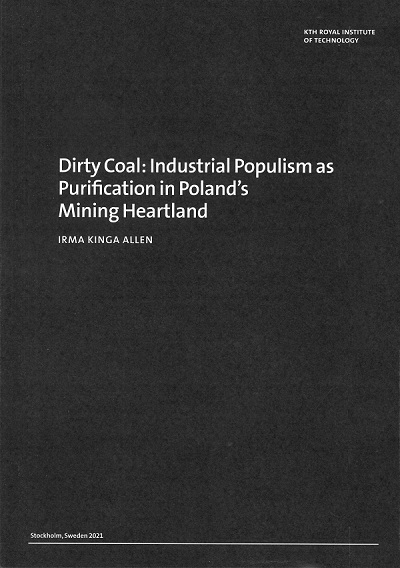 In the second half of the 2010s, far-right populist parties gained increasing power and influenceacross Europe, and around the world. Core to their ethnonationalist, anti-elite agenda, and theiremotive politics, has often been a defense of fossil fuels, threatening action to address the climatecrisis and raising the spectre of fascism. Increasingly-perceived-as-‘dirty’ coal, the raw material thatmade the industrial modern world order possible and contributed most to its mountingcontradictions, has acquired a special status in contemporary far-right ideology. What is theemotional intersection between them at a time of far-reaching economic, environmental and energyinstability and change, when coal has not only been losing its material value and its symbolic link tomodernity, but is increasingly widely deemed immoral too?
 I hope I am not taking advantage of my position as the president of our society to write what might seem to be a quite personal text. Feminist practices and scholarship have taught me that the personal is never only personal but also political. In my own work I have always blended – someone less sympathetic would say mixed up – the personal, the scientific and the political, convinced, as I am, that we know the world not only through concepts and words but also through emotions and political passions. So, please bear with me in my perhaps inappropriate trespassing of those various realms.