KTH Logo

Make the Baltic Sea happy again
Make the Baltic Sea happy again

“I have met both goodtemplars and tee-totallers, but no one has refused the traditional fish schnapps. That’s the most absurd thing I’ve heard in my entire life; to skip the fish schnapps. When fish is the only food you get here in the archipelago!”

The quote above is from the book Roslagsberättelser by Swedish author and artist Albert Engström, published in 1942. Eighty years ago, fish was the only food available in the Baltic Sea archipelago. Today, the only fish to be found in the archipelago comes by refrigerated truck from Gothenburg. Engström worried that his beloved “rospiggar”, his fishermen and skippers, customs officers and smugglers, would disappear from the archipelago. But the fish disappearing, that was probably unimaginable eighty years ago.

We are many who can share childhood memories from the coast, from fishing excursions and sailing trips. We all agree that there has been a sharp deterioration in our marine ecosystems during our own lifetime. So the question is; can we live sustainably around the Baltic Sea?

The Baltic Sea is special. Basically, it consists of a depression in the Phenobaltic bedrock shield that arose 400 million years ago when Scandinavia collided with Greenland. But what we call the Baltic Sea today is much younger, just a few thousand years old. When the ice sheet began to melt about 14,000 years ago, the Baltic Sea first became a lake full of meltwater. Then, when the surface of the world’s oceans rose, it became a saltwater bay. Due to post-glacial landrise, the connection with the Oceans narrowed and the Baltic Sea has been brackish for the past 3,000 years. It is thus a very young – therefore fragile – ecosystem. A couple of thousand years is not much for species to adapt and thrive.

One species that thrives is homo sapiens. Today, we are around 85 million people in the Baltic Sea catchment area. We live in 14 countries and speak different languages. We have different economics and policies, and different relations to the Baltic Sea. Of course, collaborating can be difficult and the Baltic Sea was for a long time a perfect example of the “tragedy of the commons”, with over-fishing and garbage dumping. We now also know that climate change will increase runoff and thus inflow of harmful substances, while development pressure increases along coastal areas.

What matters is what we can do about it. KTH has started the Baltic Tech Initiative to seek concrete and scalable solutions to three key challenges.

  1. Reduce the impact of humans. For example, with constructed wetlands we can reduce the load from watercourses, where 95% of the phosphorus supply and 70% of the nitrogen today come. The electrification of transport by sea is another area KTH wants to speed up.
  2. Deal with old environmental sins. The amount of nutrient inflow has decreased sharply since the 1980s, but large amounts of phosphorus remain in the sediments. Phosphorus is a finite resource needed for food production and KTH is now testing whether it is possible to recover phosphorus from sediments in the Baltic Sea and utilize it on land again.
  3. A data revolution in the oceans. We are on the doorstep of a new era. For thousands of years we have managed the oceans in exactly the same way we managed our terrestrial lands as hunters and gatherers. We have enjoyed a predator’s life at the top of the food chain. If we are to manage the oceans sustainably, and cultivate our food, energy and our industrial raw materials, then knowledge is going to be absolutely crucial. A data revolution in the oceans is around the corner and the instrumentation of marine environments has started. The sea is our next space race, and we do not want to make that journey blindfolded.

KTH is just one of many actors and by collaborating with others we can achieve more. KTH can not do everything. But we will do everything we can. Do you want to join us on that voyage?


David Nilsson

Director, WaterCentre@KTH

Scientific Coordinator of KTH Baltic Tech Initiative


This text is an edited and shortened version of David Nilsson’s speech at the KTH Baltic Tech launch on 1 December, 2021.  


On pikes and potatoes

On the island Utö in Stockholm’s southern archipelago they grow pikes and potatoes next to each other. You don’t believe me? Go see for yourself!

In the beginning of September I returned to this wonderful spot, along with some 50 academics, entrepreneurs, investors and environmentalists. The occasion that brought us here was the first Baltic Sea WaterTalks; a meeting of diverse professionals in search of practical solutions for challenges in the Baltic Sea.

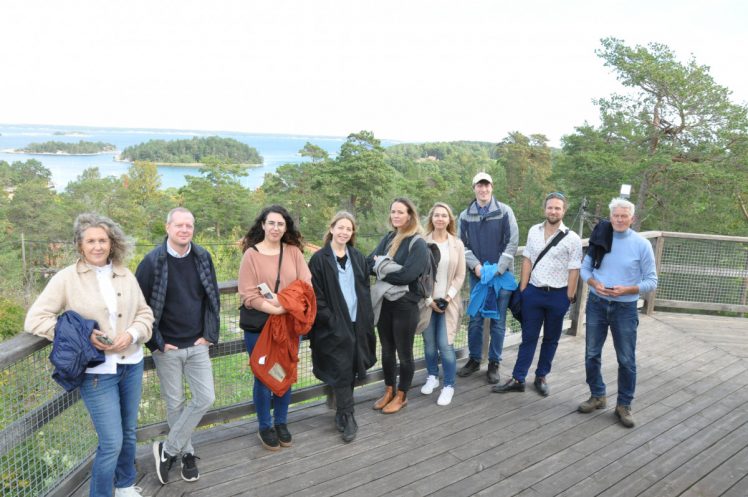
KTH researchers visiting Utö’s famous windmill

People on the island of Utö have always depended on what nature gives, in one way or the other. While this might be said for all of humanity, it is never more obvious than on an island at sea. Already from the 12th century, it was the iron ore on the island that brought prosperity. After the mining was abandoned in the 19th century, all the trees were cut down to supply timber to the growing city of Stockholm. But fish was plenty and by the early 1900s, there were some 70 fishing boats stationed on Utö. Now there is only one part-time fisherman left. Instead, the island has become a popular tourism destination thanks to its unique nature, its heritage and birdlife. Yet again, nature provides the basis for local livelihood. But how do we make life in the archipelago sustainable after centuries of predatory resource extraction?

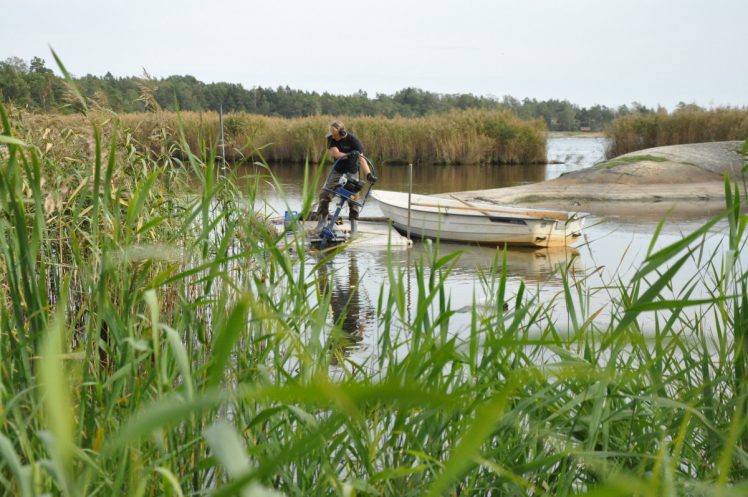
This is where the pikes and the potatoes come in. Initiativ Utö, a local NGO and also the host of the WaterTalks, has started to build “pike factories”. In these constructed wetlands and estuaries they aim to both restore the fishing stock and reduce nutrient loads. Nutrients in the run-off and sediments are collected through mechanical and biological methods and the estuaries are breeding places for pike. The pikes restore some balance in the local marine ecosystems and attracts sports fishers. The recovered nutrient is used in local small-scale farming, and seems to be particularly good for potatoes.

Restoration work in the estuary

Currently, two research groups from KTH are actively doing research on the pike factory wetlands. A team led by Guna Rajarao Kuttuva looks into monitoring techniques and optimisation of the wetland. Another team led by Zeynep Cetecioglu Gurol is investigating the potential of phosporous “mining” from the estuary sediments, where valuable phosphorous could be extracted as a commercial product. Research and innovation like theirs moves us towards “closing the loop” for food production on a whole new scale. Could the polluted seas become a source for valuable and scarce nutrients? Can we move towards a balance with nature and stop exhausting nature’s resources one after the other?

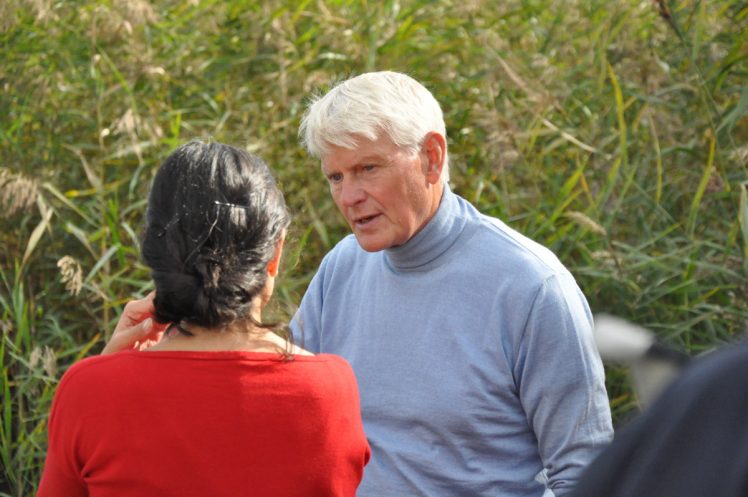
Thomas Hjelm of Initiativ Utö talking to Zeynep Cetecioglu Gurol in the wetlands

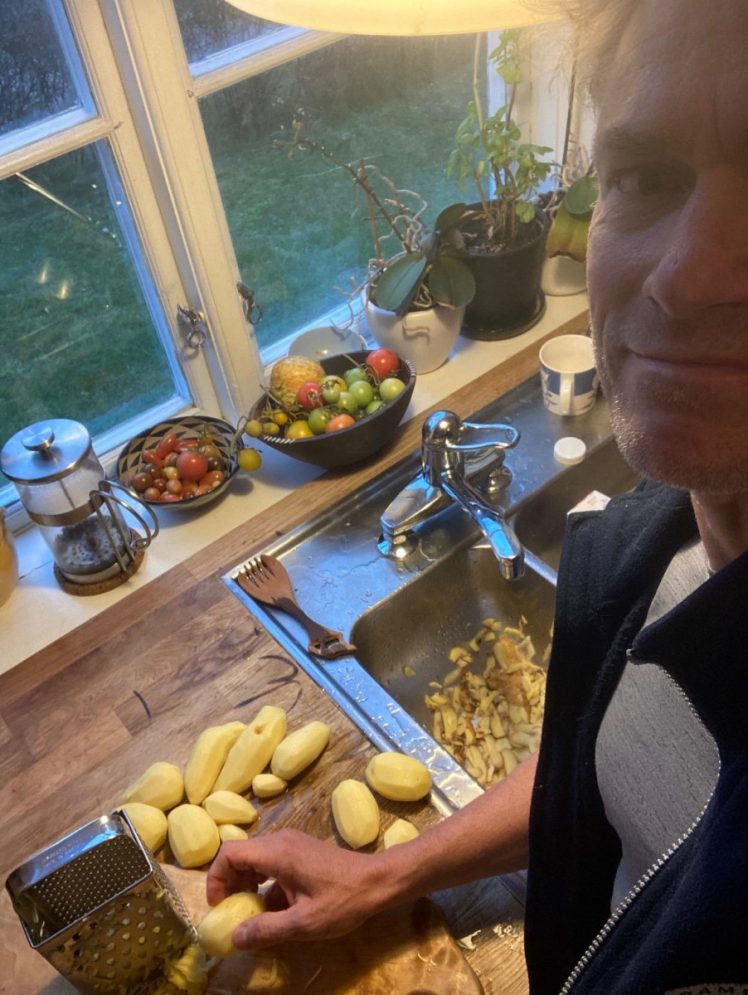
And most importantly, what to do with the potatoes? For my part, I prefer the Swedish traditional dish “raggmunk”, a type of potato pancake. I can tell you that the Utö potatoes grown on sludge from the pike factory, are particularly well suited for raggmunk. Bon appétit!

Oooh those raggmunks!

Utö-Raggmunkar

10 Utö potatoes

3 eggs

2 dl flour

4 dl milk

1 teaspoon salt


Grate potatoes coarsely

Mix egg, flour, salt and milk and add grated potatoes

Form small “beefs” into saucepan and fry on medium-high, rich with butter

Serve with lingonberries


Le chef at work – grating away in the kitchen

A Water Conference in spite of Corona

The WaterCentre@KTH has already existed for four years. Wow, time flies! To mark the ending of our first mandate period, we had decided to organise a water conference showcasing research, water innovation and collaboration at KTH. That was before the new Corona pandemic struck…


Already back in January this year we drew up plans for a Conference in December.  We – the “core team” at the WaterCentre – wanted to have a full science and innovation event, with lots of interaction, parallel sessions with paper presentations, partners dialogues, workshops, complete with dinner party and late-night dancing afterwards!

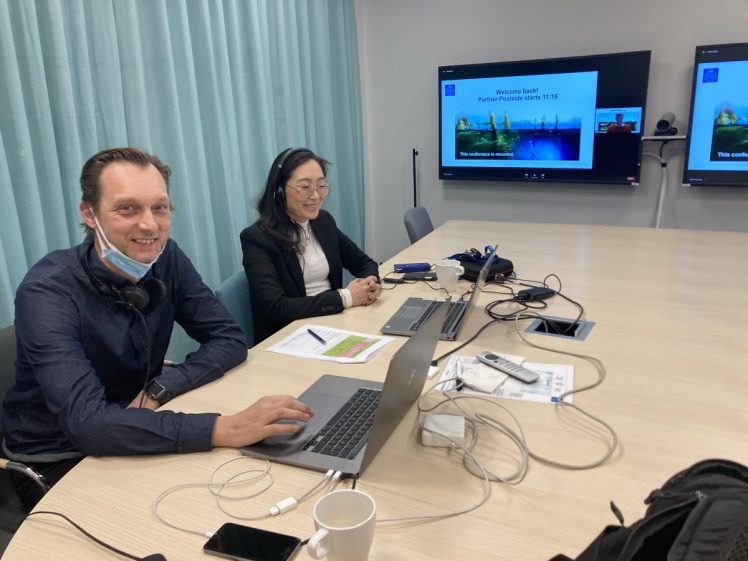
The “control room” with technician Daniel Persson and Coordinator Lisa-Mee Swartz

We all know what happened after that. Yet, for the entire spring we still believed that the virus would have receded by December. By May we had booked venues at KTH Campus, secured our international Key Note speaker, and invited for papers. But this virus wasn’t easily dealt with and after summer we realized the fact of the matters; if we wanted to make a conference it had to be digital. As if there weren’t enough digital meetings already…

Now we can look back at a successful conference although in a format quite different from what we had envisaged. Within just three hours we learnt and interacted across disciplines and across professional fields all from the comfort of our desks (or sofas and armchairs).

After the nice words of welcome by our Vice President Annika Stensson Trigell, we all enjoyed a remarkable Key Note address by Prof. Dr. Janet Hering, the Director of one of the world’s leading water research institutes, EAWAG in Switzerland. Janet stressed that science is not enough if we are to meet the global goals on sustainable development and therefore, we need to make our research “actionable”. The following Q&A also revealed that while many researchers want their results to have an impact in society, a majority also need more support from their organisations in doing that.

The ensuing Science Fountain showered the participants with water knowledge. In three parallel sessions, 22 KTH researchers delivered speed talks in areas spanning from decentralised hypochlorite production and Artifical Intelligence, via algae-cultivation, to arts and history. Yet – all about water! All presentations here.

Research coordinator Timos Karpouzoglou during the Science Fountain

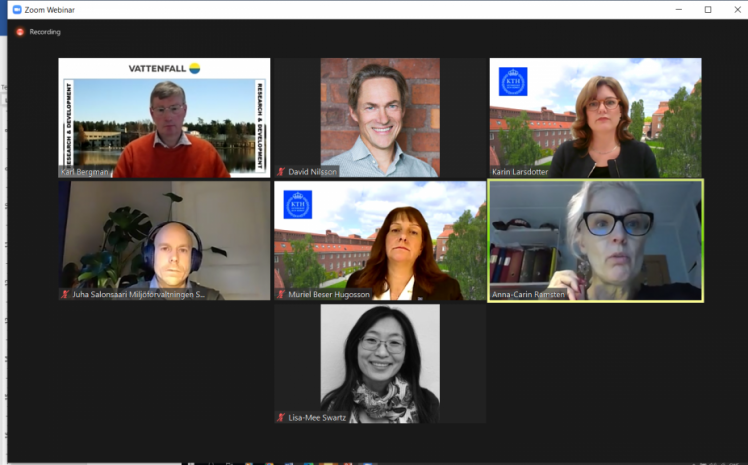
Science is not enough – as we heard from Janet Hering – and the final part of our conference we devoted to a discussion on “How to make collaboration meaningful”. Much thanks to a skillful moderation by our colleague Karin Larsdotter, it was a fantastic display of what is required to make collaboration between academia and societal partners work.

To start with, a partnership has to be a two-way relationship and academic actors need to listen more attentively. As Karl Bergman – head of R&D at the energy company Vattenfall – put it: “You often invite us to be part of new R&D projects. But why don’t you ask us more often what our problems are?” At the same time, industrial actors might want to push universities to produce engineers tailor-made for their needs. But it is more important that we give our students robust knowledge for the entire job market, said Muriel Beser Hugosson, head of the School of Architecture and Built Environment at KTH. Juha Salonsaari from the Environmental Department  at City of Stockholm, stressed that a multitude of interaction arenas and a wide network really are keys for starting successful collaborations. In fact, argued Anna-Carin Ramsten from the government agency Vinnova, informal meeting points are often under-estimated in collaboration. Maybe we just need “go and take a fika with someone”.

A lively conversation – over the net!

The entire conversation – which was very lively despite none of the panelists sitting in the same room – can soon be found on the WaterCentre webpage, along with the recording of all the sessions, and the Key Note. Presentation slides are also downloadable from the web.

On the whole, we had an intense and very fruitful conference.  Our sincere thanks goes to all the participants, and all the speakers, for joining us in the water. We can all agree that we miss the physical meetings. But digital interaction also has its qualities, and we are rapidly getting better at it!


As for the party: well, who knows – it might still happen. Meanwhile, please enjoy this brand new report for the WaterCentre@KTH 2017-2020. I promise, it is a small carnival in itself!

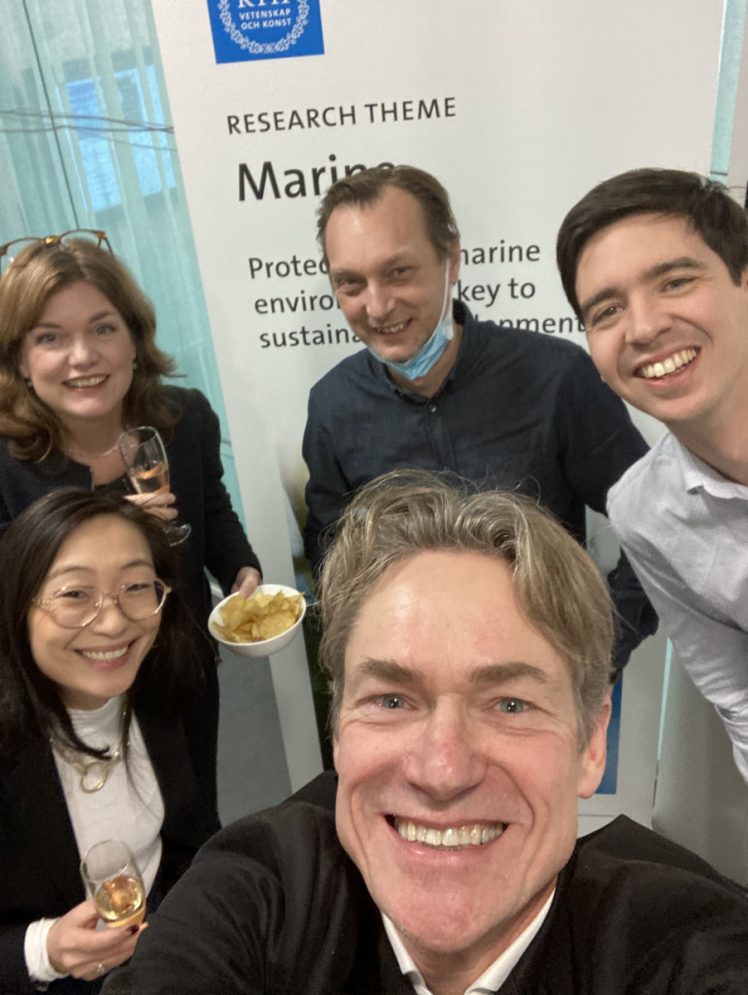
Miniature party afterwards, with 2 metres distance. Almost.

When the shit hits the front page: Corona in the sewers

It already goes without saying: 2020 is like no other year. Across the globe we have hid in our homes for months. Social distancing has become an art form and an ideal, something to excel in, rather than the dubious expression of the lone hermit. As we gradually come into the ‘new’ normal we will surely start counting our losses, but there will also be time to reflect back. In this blog post I want to share some insights from our work on monitoring the pandemic through wastewater. In short, how to assess public health based on massive sampling and analysis of human shit. And what we can learn from this unusual spring.

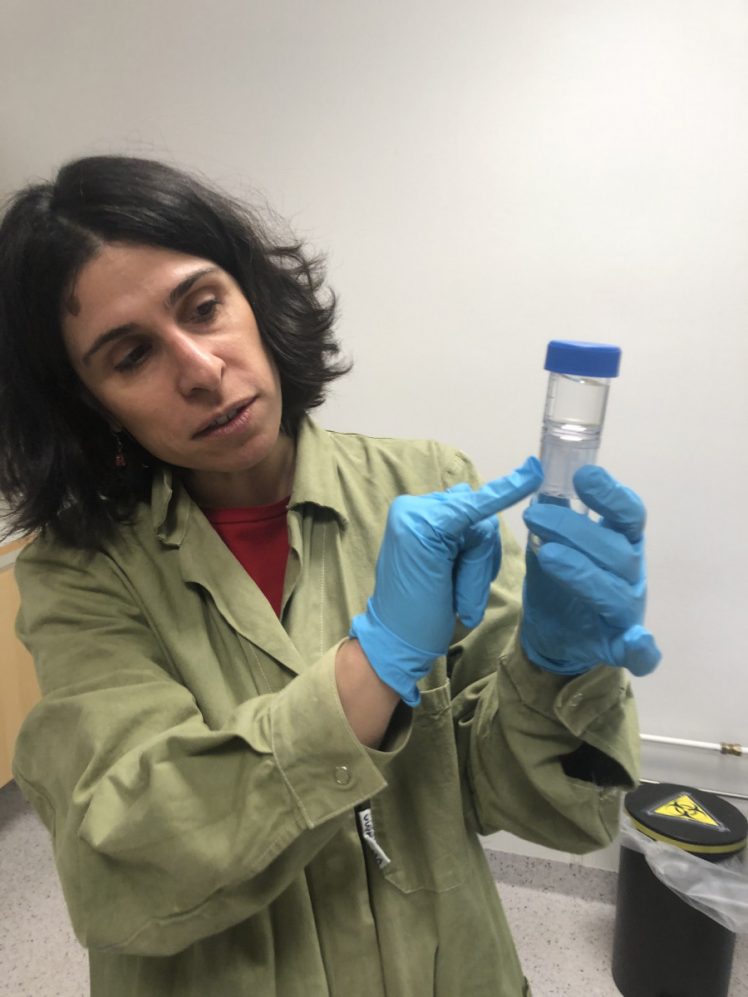
Dr. Zeynep Cetecioglu Gurol , the project leader, in her lab at Chemical Engineering showing a COVID-19 sample from Henriksdal WWTP

As the Corona virus started spreading globally in the beginning of the year, a number of Chinese scientists reported that the SARS-CoV-2, popularly known as “the new Corona virus”, could be found in patients’ stool (faeces). By March, preliminary results from the Netherlands showed that the virus could also be detected in wastewater. Following a webcast seminar on March 25, a group of researchers at KTH decided to quickly put together a team to try and do something similar: to monitor the COVID-19 pandemic through the wastewater in Stockholm.  Within five days we had mobilised a core team of six researchers representing four different departments at KTH: Zeynep Cetecioglu Gurol from Chemical Engineering; Prosun Bhattacharya and Tahmidul Islam from SEED; Cecilia Williams from Protein Sciences and Anders Andersson from Gene Technology, plus myself from the WaterCentre. We were joined by staff from Stockholm Water and Waste Company, Värmdö municipality and Käppala Wastewater Treatment Plan.

The media caught wind of it when we started sampling wastewater in Stockholm by April 6. Via broadcasting and the press it spread in no time and a news article in Dagens Nyheter from mid-April got close to 200,000 clicks within a day. A few weeks later, when we released the first preliminary results concluding that indeed, we could detect Corona in Stockholm’s wastewater, there was more media hype, with reports in major TV news and radio shows. Even popular shows like P3 Morgonpasset took it up, with reporters giggling about poop in prime time. The shit had really hit the front page!

So what’s this research really about, and how can it generate such tremendous interest? In short, we sample wastewater from three Waste Water Treatment Plants (WWTP) which cover about 1.7 million people in the Stockholm region. Using so called qPCR technique we can measure the content of RNA (the genetic code) from the virus which gives a good indication of the virus prevalence in the whole population. The first advantage is that you can assess the overall public health situation without testing millions of people. Every day, millions of people are providing “test samples” through their faeces. So by analysing samples from only three sites, we will be able to assess the spread of the virus in the whole population in Stockholm. The second advantage is that it only takes a few hours for the wastewater to be transported from the toilet to our sampling point at the WWTP. Patient-based testing, on the contrary, can take weeks from infection to a positive test at the hospital. Therefore, Wastewater Based Epidemiology (WBE) can be used for early warning and a recent study at Yale has demonstrated that public health administrations can get at least a week’s notice using this method.

Of course there are many challenges and uncertainties still. As I am writing this, the KTH team is optimising our protocol for the analysis method which is necessary before moving to scale, and before we can actually make the kind of predictions which the Yale team did recently. The protocol has to be both specific and generic: it must be tailored for the type of sampling we are doing and for the available lab resources we have, at the same time it must be compatible with other researchers’ work, both nationally and internationally.  Keeping up with the international developments in this area is virtually a full time job, as the frontline is advancing at a staggering pace. We also face a myriad of day-to-day challenges, like making scarce consumables last, juggling with over-burdened lab facilities and cold storage spaces, or just explaining to our colleagues what we are doing… So far this rapid response has been largely self-funded by the participating researchers, and PhD students, post-docs and senior staff are doing an amazing job, working over time on voluntary basis. Just because this has to be done. The pandemic is here now and we cannot wait for time consuming application processes.

So what can we learn already now from this unusual experience? First, social networks are key. The research community has the ability to rise to the challenge – we just put together a team and started working – but people have to know each other, at least a little. Having a WaterCentre actually had helped us building these contacts before the outbreak. Second, the current research financing structures are quite useless for crisis situations. With so much being locked into externally funded long-term programmes and projects there’s basically no flexibility to rapidly respond to a challenge like COVID , nor to seize opportunities as they arise. Again, the fact that we had some un-allocated funding within the WaterCentre made it possible to start working immediately.  Third, this could be the dawn of a new more open innovation and research paradigm. Ever since the first releases of scientific reports – many from China – about the Corona virus the academic community has embraced openness and principles of sharing, for example of protocols. Using data-sharing hubs and initiatives at EU-level we see that we can advance knowledge at a much faster pace than if we each jealously protect our information.

After the pandemic, we are going to face other crises, induced by climate change, global economic re-structuring and geopolitical struggles. Hopefully we will retain at least some of this challenge-driven approach and our collaborative spirit. We are going to need it.


On-property water and heat recovery: saviour or saboteur?

If recovery of water and heat becomes a standard technology, does it mean a net benefit or cost to society? Who will be the losers, and who will be winners? In the project “SEQWENS” coordinated by WaterCentre@KTH we are looking at exactly this.


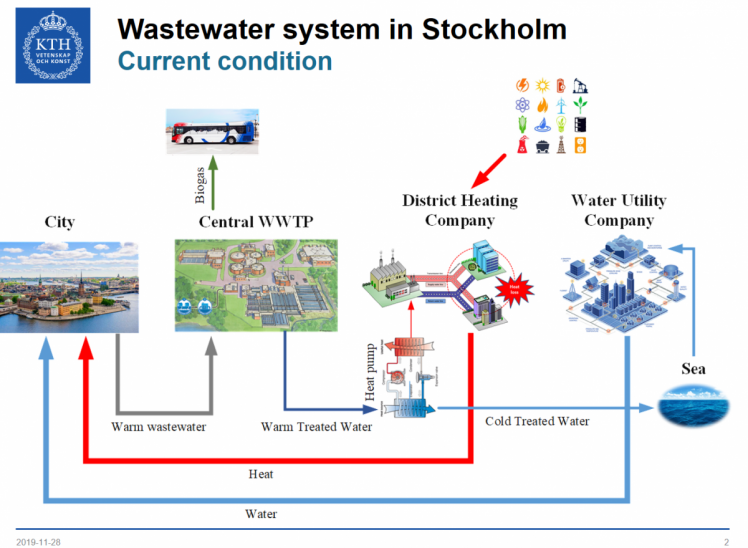
Throughout cities in Europe and the US, the heat in our buildings is distributed by district heating. Over 90% of multi-household properties in Sweden are connected. The property companies buy heat from the district heating grid to warm up cold water (which typically is between 4-15 degrees Celsius), to produce hot water for cleaning, washing, etc. After all, few people enjoy taking a shower in 4 degrees. After use, the hot water is released to the sewerage network leading to a wastewater treatment plant. There it is purified from environmentally harmful pollutants, while the heat is extracted using heat pumps and fed back to the district heating grid.

Fig.1 A system description of water, wastewater and heat circulation today in Stockholm region. (Courtesy of Farzin Golzar.)

As property owners and developers now seek to reduce their energy consumption in pursuit of efficiency targets and GHG emission reduction, they increasingly install technologies for recovering heat from the wastewater on the property. Some also experiment with re-use of the hot water itself, by adding a small-scale treatment stage. Energy for hot water is a substantial share of the total energy consumption. There is energy – and therefore money – to save on wastewater heat recovery.

But what happens to the district heating system then, when less energy is in circulation? Around 800 GWh is extracted annually from the sewage treatment plants by Stockholm Exergi AB, the district heating company covering the Stockholm region. That is no small amount of energy. Moreover, the wastewater released from buildings with heat recovery is going to be colder. Potentially this can cause trouble downstream for the wastewater plant, whose treatment processes will be negatively affected if the incoming water is too cold. So what seems like a great idea for the property owners could be a loss for the district heating company and the wastewater company, both with municipal ownership. If recovery of water and heat becomes a standard technology, does it mean a net benefit or cost to society? Who will be the losers, and who stand to gain from such a development? In the project “SEQWENS” (Sustainability and EQuality of Water and ENergy Systems during actor-driven disruptive innovation) which is financed by FORMAS, we are looking at these questions during 2019-2021.

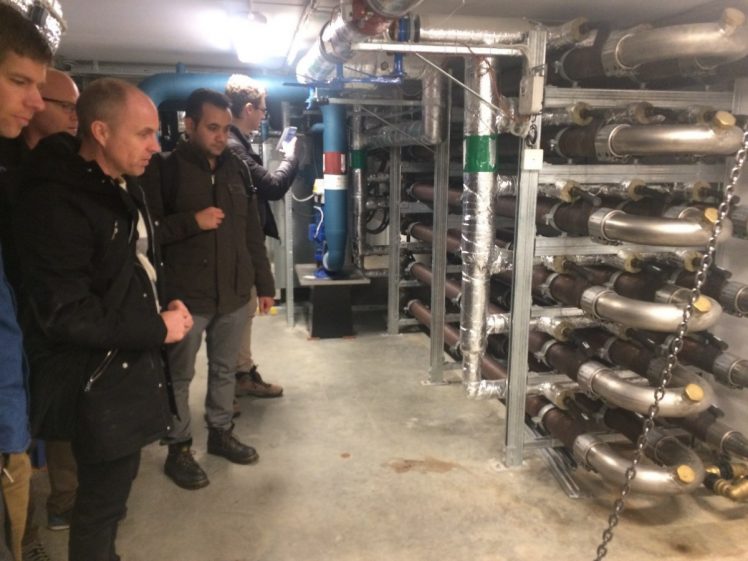
On 28 November we organised a Reference Group meeting at KTH where we presented preliminary results from our case studies, and discussed the various scenarios we intend to analyse, with representatives from real estate and property, water and heat industry. Dr. Jörgen Wallin, KTH Energy technology, presented the findings from four analyses of existing heat recovery in Stockholm. They represent both commercial and residential houses, and different types of technologies (heat exchangers, with or without heat pump). The test results show that the performance differs substantially depending on the design and operational conditions. One configuration recovers over 40% of the heat available in the wastewater. Regarding the share of recovered heat compared to the total water heating demand, figures over 20% were common.


Fig 2. Reference group visits the heat exchange installation at KTH Live-in-Lab and Einar Mattsson AB property, one of the case studies (KTH Rocks). Photo: David Nilsson

We can confidently say there are substantial energy savings to be made for the property owner, although we are yet to make the economic analysis of these case studies. As one of the property owners put it; the tariff of the district heating service is critical for any investment decision into recovery technology. And from the system-level point of view, the overall outcome of individual actors’ strategies still needs to be assessed. Is the new technology a saviour or saboteur for sustainable development in society? Or just something in between?

In the coming year, the project will focus more on the analysis of actor strategies, and a case study on organisational innovation in Värmdö municipality. We will also start building scenarios that can be evaluated using a conceptual model for heat and water circulation in Stockholm. This work is led by Dr. Timos Karpouzoglou in cooperation with Dr. Farzin Golzar, both KTH, and Associate Professor Pär Blomkvist from Mälardalen Högskola. If your are interested in following our project, please get in touch with the WaterCentre administrator Lisa-Mee Swartz (lmswartz@kth.se) or just visit our project webpage every now and then.

To be continued!


David Nilsson

Director, WaterCentre@KTH