KTH Logo

Transdisciplinary co-creation on the river in search for more sustainable futures – fieldwork experiences with local fishing communities in Colombia

Gauri Salunkhe & Katarina Larsen

The sun setting on our right in beautiful orange hues, water flowing calmly and gentle breeze on our faces. This was the tranquil atmosphere on Río Guapi on a Saturday evening in early October 2022, as we were travelling down the river in a traditional fishing boat of the Guapiñeros. In the next moment, loud cheering and clapping echoed through the mangroves and houses lining the river. The sail prototype had been unfolded and successfully set up on the boat. The next twenty minutes had everyone brimming with excitement as the fishermen expertly navigated the boat towards the barrio of Puerto Cali, using the sail that the team had built together just hours before, utilising the ancestral knowledge of the fishing community.
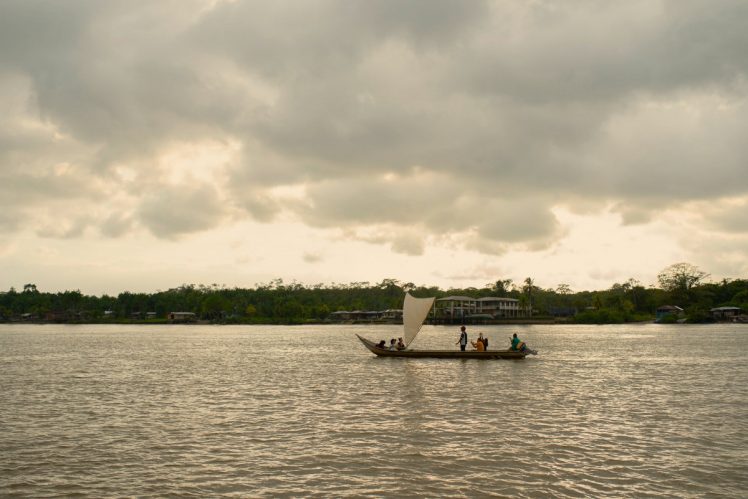
sailing boat on a river
Image 1: Econavipesca team sailing down Río Guapi (Photo by Jose Miguel Vecino)

Local and ancestral knowledge as a strategy to reach sustainability goals

The use of local knowledge is considered key to achieving the climate strategies and plans, as outlined by Intergovernmental Panel for Climate Change (IPCC) in a recent report (IPCC, 2022). Both the IPCC and the Intergovernmental Platform on Biodiversity and Ecosystem Services (IPBES) emphasise the importance of local and indigenous knowledge in understanding and creating solutions for sustainable futures (Tengö et al., 2021a-b). Moving towards more sustainable futures, in practice, requires a thorough understanding of the local traditions and how concepts of change are used in the local context. The preservation of fishing traditions, sailing and sailmaking are interesting examples. On the one hand, recognizing the value of preserving local ancestral knowledge (related to fishing and sail making), but also recognizing that the older generation wants their children to take steps to improve their future, embarking on studies etc. Thereby wanting a better future, with less hard work that fishing entails, for the next generation. This is one example that we discussed with fishermen in Guapi showing that the involvement of local communities is necessary for getting a better understanding of how local knowledge and cultural traditions are key for understanding how change can come about. In addition to this, also recognizing that the local and global level is interrelated (Larsen et al. 2011) when implementing policy to achieve climate objectives and UN’s sustainable development goals (SDGs). Improving the possibilities to improve (local communities) life situation and increased involvement in economic development is central to the strategy for the regional development of Latin America (Sida 2021, page 9) relating to several SDGs, including SDG12, sustainable production and consumption.

Local knowledge, culture and values are important to be included together with scientific knowledge in the co-production of new solutions and for input to advising policies.  This aspect of co-creation in a transdisciplinary team to take advantage of both the traditional knowledge of local communities and scientific knowledge of academics from several different disciplines (including anthropology, environmental history, technology, engineering, and design etc.) is an important methodology of the Pacífico Econavipesca project.

Fishing and boats in the community in Guapi, Colombia

The objective of the project is to develop a sustainable artisanal fishing model that reduces the environmental, social, and economic impacts on the ecosystem in the municipality of Guapi, Cauca, in Colombia.  A major challenge is to reduce dependence on fossil fuels for fishing boats and engage in dialogues with the local community about ways to create social entrepreneurship to make fishing activities more sustainable long term. The project involves universities in Colombia with strong commitment and previous experiences with the communities in Guapi. The focus of fieldwork activities is to create room for dialogues and mutual learning rather than importing or imposing certain technology or ways of thinking on any local community. The fieldwork activities where KTH has been involved have been carried out in collaboration with the research teams in Colombia to ensure these aspects and safeguard continued dialogues on how future solutions may look.

Guapi is a municipality on the pacific coast of Colombia. The town and villages here are all situated along Río Guapi, Río Guaji and Río Napi. The rivers are a source of life for these communities as they provide food, water, transportation, etc. In fact, their relationship with water is beyond material provisions. It is their deep connection with the diverse natural environment in the territory, a rich food culture, music and dance that follows the rhythm of the river, and their ancestors that have passed down a great wealth of knowledge. Artisanal fishing is one such knowledge that has been passed down through generations in Guapi. Currently, traditional fishing boats that run on gasoline motors are used to fish out at sea. However, gasoline is very expensive in the region and causes them a great economic burden. This is worsened by increased uncertainty of catching fish with reduced fish populations due to pollution and climate change, causing them to return with little to no fish on many days. Local environmental pollution of the river is also caused by leakages of gasoline. Hence, one of the main objectives is to create more sustainable fishing boats with reduced reliance on gasoline.

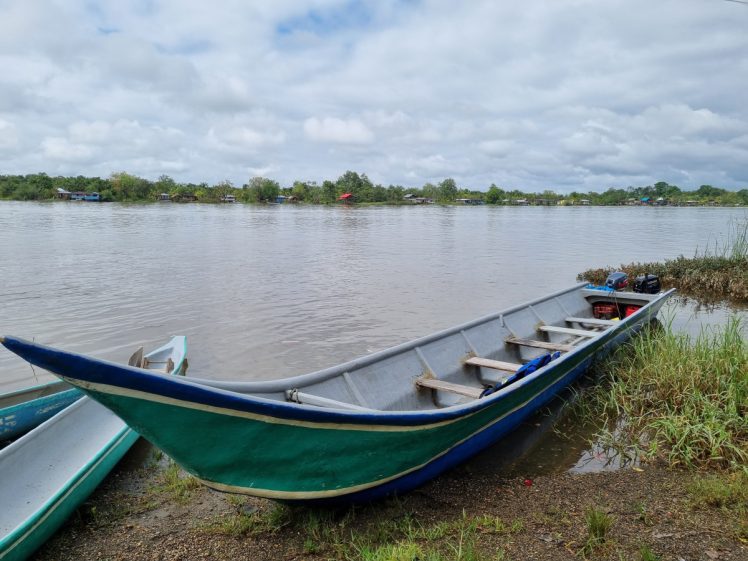
buildings next to a river
Image 2: Municipality of Guapi located along Río Guapi (Photo by Gauri Salunkhe)
fishing boat with combustion engines next to a river
Image 3: Traditional fishing boat with gasoline motor used for fishing (Photo by Gauri Salunkhe)
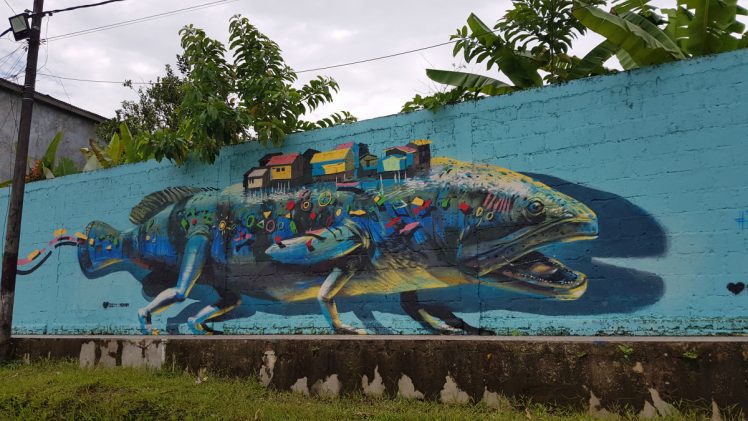
mural painting depicting a fish human hybrid animal with houses on it's back
Image 4: Mural in Guapi that depicts their dependence on the river and fishing activities (Photo by Gauri Salunkhe)

In the initial stages of the project Econavipesca, it became clear that the previous generation of fishermen would sail out to sea with homemade sails. However, with the introduction of modern technology like gasoline motors, this traditional knowledge of sail-making and sailing was forgotten. This was one of the early stages of co-creation, where local knowledge was re-discovered in dialogue with the community. The team then decided to examine possibilities to incorporate these traditional sailing techniques in present-day boats to reduce reliance on gasoline motors.

Co-creation in the focus of KTH fieldwork

In October 2022, the KTH project team embarked on their first field trip, including Gauri Salunkhe, a master’s student in Sustainable Technology at KTH. Gauri would spend three months on a field study in Colombia. This field study focused on understanding community engagement, co-creation strategies and actor interactions to identify challenges and opportunities for the sustainability of the project. She engaged in dialogue with different stakeholders such as academics and community team members to gather data for her field study, using methodologies such as observational studies, interviews, actor-network mapping, co-creative activities, reflective workshops, etc.

https://play.kth.se/media/Video+1_Interview+with+Gauri+Salunkhe+about+her+field+study+experience+in+Colombia/0_0e288viv

Video 1: Interview with Gauri Salunkhe about her field study experience in Colombia (Interview by Sebastián Serna)

This KTH field study began with a deep dive into the community, as Gauri, together with Katarina Larsen, a researcher at KTH, Division of History of Science, Technology and Environment, and Magnus Lindqvist, Senior advisor at the KTH International Relations Office, embarked on the fieldwork in Guapi (30 Sep 2022 – 04 Oct 2022) together with the project team in Colombia. Ask any member of the team about a key moment during this fieldwork, and the moment that would resonate in all the responses would be – “the sailing activity”. This brings us back to the scene at the beginning, on Río Guapi.

The sailing activity is an essential example of co-creation in the Pacífico Econavipesca project. Local knowledge of sail-making and sailing was incorporated with academic knowledge to design and build the sail prototypes. Instead of fieldwork activities solely organised by the academic team, with the community members only as participants, in this case, the community members’ representatives were key to planning and organising the activity. They gathered local resources, people and materials, specified fabrics needed for sails, and identified suitable locations, to build the sail prototypes. Since the traditional sail-making knowledge is only held by some elderly members of the community now, they were also an essential part of designing and building the sail.

a group of people holding a sheet of fabric in a large room with brick walls
Image 5: Academic and community team members of Econavipesca Project building the sail prototype together (Photo by Gauri Salunkhe)

Sailing on the river

A key moment for one member of the academic team was while building the sails together with the local community. “At the beginning, they were very protective with some information due to the (historical) projects culture in this part of the country … as they don’t know what people would do with the information”. However, the activity could give space to having an open conversation where everyone felt comfortable sharing their experiences with sailing. Many of them learnt it when they were children but lost touch over the years. Furthermore, it was the fishermen that had the local knowledge about the material, type of knots required, etc., not the academic team, so the fishermen’s active involvement, knowledge and skills were essential for this activity of re-introducing sail-making and testing the sails on the river.
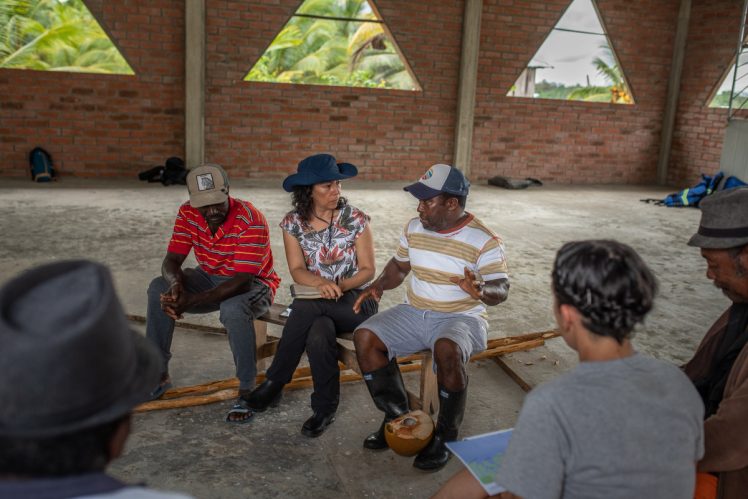
a group of people talking in a big room
Image 6: Guapi fishermen sharing their sailing experiences with the academic team (Photo by Jose Miguel Vecino)

Initially, when we started the fieldwork in Guapi in October, we expected to build the sail prototypes, but not necessarily test them on the river. However, the community members were so enthusiastic to also test the sails on the river! As expressed by one (academic) team member who was organising the activity, “They were so interested in testing the sail, who am I to stop them? Just go for it!”. This experience highlights the importance of not imposing our own views and expectations on the project fieldwork activities but being flexible to carry it out according to the community’s wishes. The organiser of the activity described the smile on a fisherman’s face when navigating the boat like he was a little child again while looking at the sail. It is moments like this that inspire the team to continue working hard to implement new useful ways for co-creation in this project.
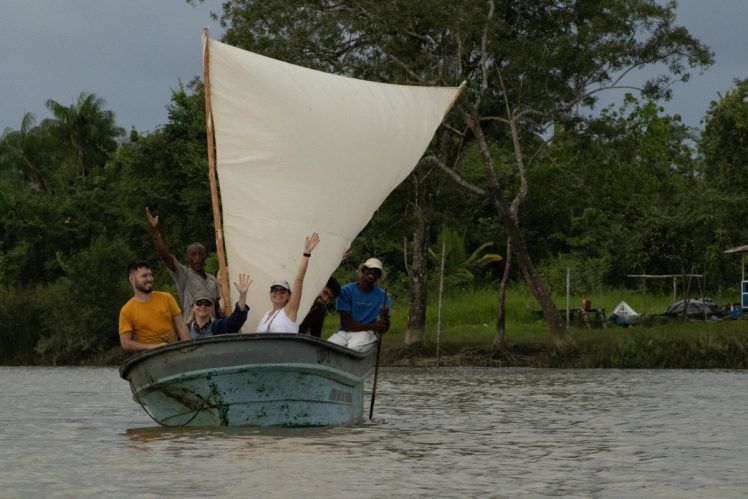
a group of people in a sailing boat
Image 7: The Econavipesca team is all smiles as the sail prototype is successfully used to navigate down the river (Photo by Sebastián Serna)

Co-creation experiences from dialogues during fieldwork

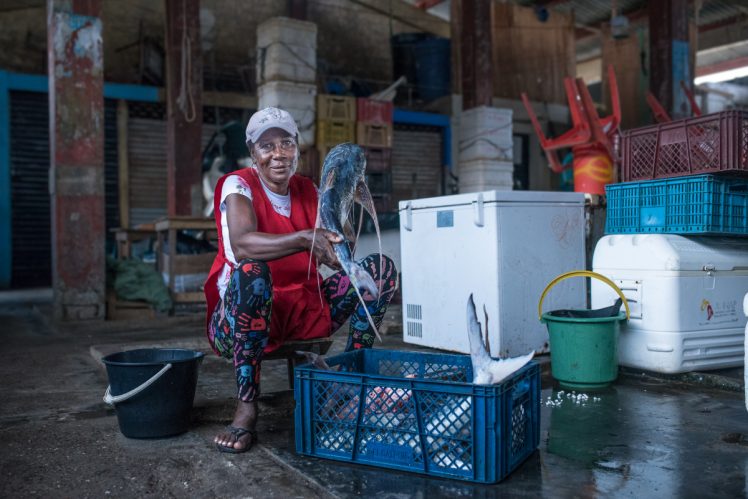
Engaging in co-creative dialogues about future ways of more sustainable living in a fishing community like Guapi goes beyond dialogues with fishing associations. It also means involving different types of members of the community (that are not out on the fishing boats), such as the women (often involved in preparations before and after fishing trips) and younger generations in fishing communities. The young adults will determine the future of how fishing activities will develop in Guapi. It is important to improve the quality of life for fishermen, increase economic gains from fishing and dignify the work of fishermen to retain the artisanal fishing practices among young people in the future. Women are also an important part of the fishing journey who may be invisible at the moment. For example, they carry out preparations for the fishing journey, and process and sell the fish post-fishing. It is important to recognise this and involve them in co-creating solutions.

Some other lessons about transdisciplinary co-creation from this project are the importance of establishing dialogues for discussing terminology used, expectations by community and academic teams, and being open to learning from each other. This is important both within the academic team and across the academic and local community teams. Since participants bring different experiences and perspectives to co-creative learning processes, it is essential to create dialogues that give room for reflection on activities and to also align everyone to work towards a common goal.
students in a classroom
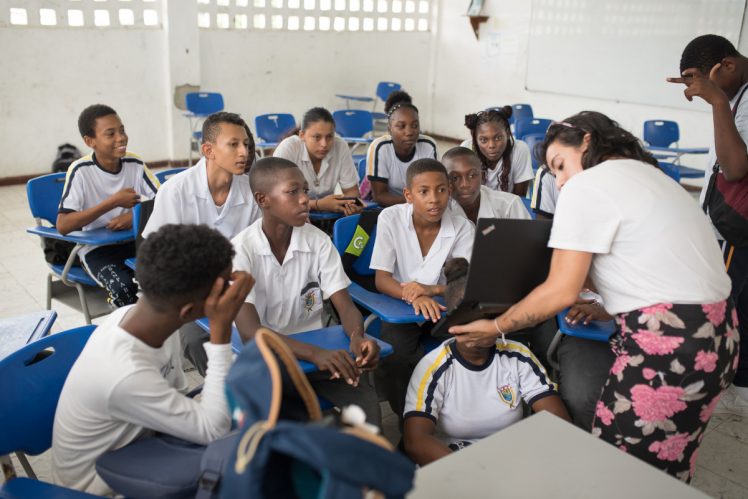
Image 8: Activities with students in Guapi about artisanal fishing during previous fieldwork (Photo by Jose Miguel Vecino)
three persons in colourful clothes standing talking
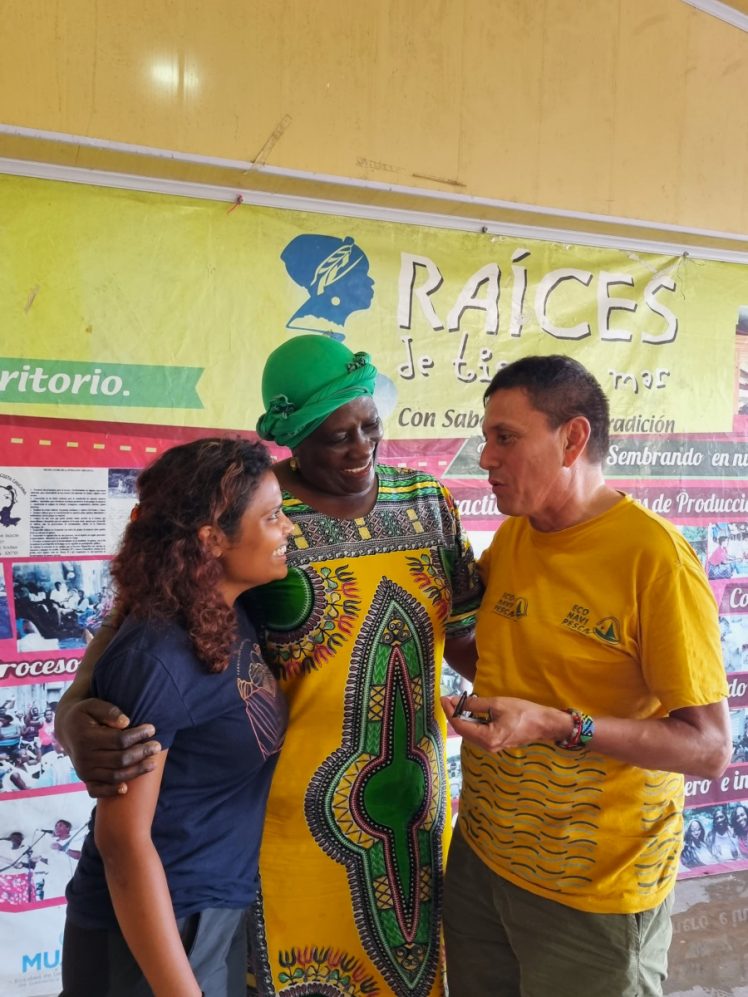
Image 9: Dialogues with women leaders in Guapi (Photo by Katarina Larsen)
A woman sitting down holding a big fish
Image 10: Women in Guapi processing fish to be sold (Photo by Jose Miguel Vecino)

Experiences from the fieldwork in this project highlight that transdisciplinary co-creation is at the core of finding solutions for sustainable development. It has provided concrete examples of the importance of a dialogue-based approach to gathering different types of knowledge, and methods of catalysing participatory action and creating dialogues on future options by involving the community. It is when the community is actively involved and takes initiative, that they would be able to create and maintain solutions for themselves, which is required for long-term sustainability for the communities along the Guapi river.

Participants in the Pacífico Econavipesca project include the fishing associations of Guapi, Colombia, local and regional authorities, and the following academic partners: Universidad Nacional de Colombia (Colombia), Universidad del Cauca (Colombia), KTH Royal Institute of Technology (Sweden), and Lund University (Sweden). The project is funded by the Swedish International Development Cooperation Agency (Sida). We wish to thank all participants in the project for their genuine commitment to the project work and, in particular, the local fishing community representatives for sharing their knowledge, stories and unforgettable experiences on the river of Guapi.
a group of people standing in front of a sail, next to a boat
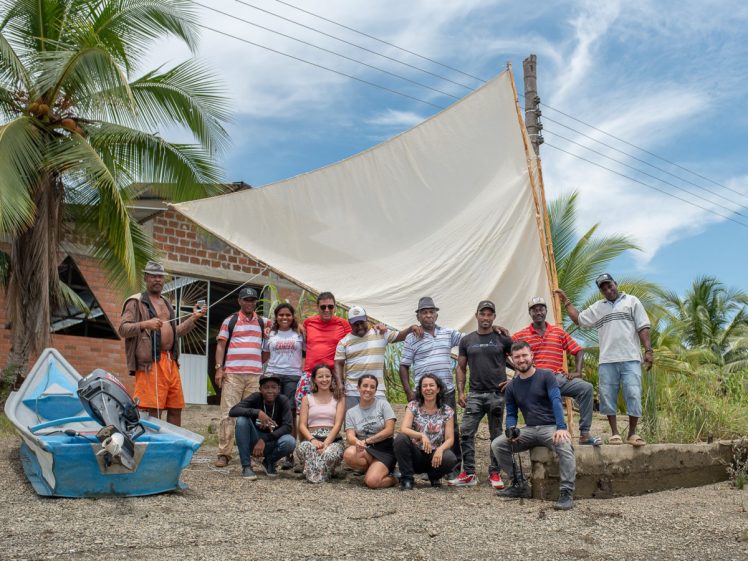
Image 11: Academic and community team of Econavipesca with the completed sail prototype (Photo by Julian Hernández)

Gauri Salunkhe, MSc-student in Sustainable Technology at KTH

Katarina Larsen, researcher at Div. History of Science, Technology and Environment, KTH


For more information on the project Econavipesca and interviews with KTH participants, follow the links below.

Some key references and further reading

Agusdinata, D. B. 2022. The role of universities in SDGs solution co-creation and implementation: a human-centered design and shared-action learning process. Sustainability science. [Online] 17 (4), 1589–1604.

IPCC 2022. Climate Change 2022: Impacts, Adaptation and Vulnerability. Contribution of Working Group II to the Sixth Assessment Report of the Intergovernmental Panel on Climate Change [H.-O. Pörtner, D.C. Roberts, M. Tignor, E.S. Poloczanska, K. Mintenbeck, A. Alegría, M. Craig, S. Langsdorf, S. Löschke, V. Möller, A. Okem, B. Rama (eds.)]. Cambridge University Press. Cambridge University Press, Cambridge, UK and New York, NY, USA, 3056 pp., doi:10.1017/9781009325844.

Larsen, K., Gunnarsson-Östling, U. and  Westholm, E. 2011. Environmental scenarios and local-global level of community engagement : Environmental justice, jams, institutions and innovation,” Futures: The journal of policy, planning and futures studies, vol. 43, no. 4, s. 413-423.

Minoi, J.L., et al., 2019. A Participatory Co-creation Model to Drive Community Engagement in Rural Indigenous Schools: A Case Study in Sarawak. The Electronic Journal of e-Learning, 17(3), pp. 173-183, available online at www.ejel.org

Moons, I.; Daems, K.; Van de Velde, L.L.J., 2021. Co-Creation as the Solution to Sustainability Challenges in the Greenhouse Horticultural Industry: The Importance of a Structured Innovation Management Process. Sustainability 2021, 13, 7149. https://doi.org/10.3390/su13137149

Tengö, M. et al. 2021a. Indigenous Futures Thinking: Changing the narrative and re-building based on re-rooting. Workshop report. SwedBio at Stockholm Resilience Centre, Stockholm, Sweden.

Tengö, M. et al. 2021b. Creating Synergies between Citizen Science and Indigenous and Local Knowledge. Bioscience. [Online] 71 (5), 503–518.

Universidad Nacional de Colombia, et al. 2021. Technical Report for the first year of the Agreement. Project Econavipesca Del Pacifico: Ecosistema Para la Navigacion Pesquera Sustentable en el Municipio de Guapi, Cauca.

Sida 2021. Strategiplan för Sveriges regionala utvecklingssamarbete med Latinamerika 2022-2024, Datum: 21-12-13, Environment, climate and sustainable use of natural resources (Stödområde 2: Miljö, klimat och hållbart utnyttjande av naturresurser, page 9) ”Hållbar produktion och konsumtion (SDG12), men även SDG 3,5, 8 och 16, är viktiga för omställningen till grön/cirkulär ekonomi, som också måste ge fattiga och utsatta människor bättre möjligheter att förbättra sin livssituation och en ökad delaktighet i den ekonomiska utvecklingen.”

New urban waterfront solutions for resilient Stockholm

How can we combine key issues like, re-use of historical buildings, respect present social identity, urban planning, economic goals, reconciling conflict, and sustainability?

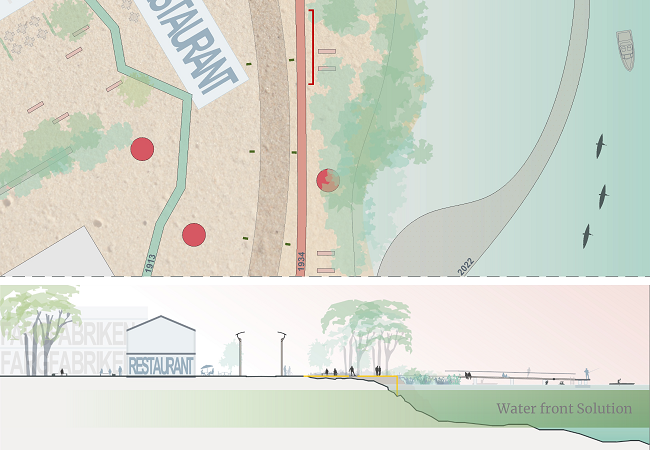
Urban waterfronts as complex bioregions by nature and also socio-economical hubs by their history, provide a real challenge for planning institutions. The European Union SOS Climate Waterfronts project[1] is aimed at the development of innovative and sustainable strategies for solving present situations, while helping to plan future resilient and adaptive waterfronts. The project allowed a multi and cultural disciplinary team to visit KTH Royal Institute of Technology in Stockholm. For a month of intensive work we did a lot of transdisciplinary thinking and designing around the urban waterfront redevelopment of the Stockholm area called Lövholmen.

At EU level, an urban agenda[2] has been drawn up to attain sustainable urban development, with a special focus on climate change issues. A cohesive policy is to lay the groundwork for sustainable, innovative and economically strong development for the cities of Europe. The approach to sustainable urban waterfront redevelopment differs from locale to locale, but literature on urban waterfront developments show some general challenges and key issues that were embedded in our plans.

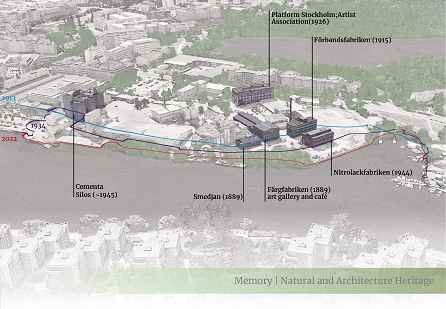
Nowadays the land and buildings of Lövholmen[3] are shared by private and public ownership. The area is characterized by an interesting industrial setting, under an ongoing transformation to host creative activities, like Färgfabriken art center[4], Platform Stockholm, Concrete Art Gallery & Academy AB. The area is also characterized by a large and continuous waterfront, connecting Gröndal housing area and new Liljeholmskajen development. This provides us with  a very effective transport systems network. At last, there is an enormous natural potential in close proximity to Trekanten lake water and surrounding woods. But also great economic values are at stake: builders want to demolish and build new. Recent residents and many others interested in urban planning, want to proceed more cautiously and take advantage of several of the unique buildings.

In our Vision[5], Lövholmen must be transformed into a gathering place with attractive destinations for all people in Stockholm focusing on the connection between nature and arts and so becoming a mending of memory and nature.  Besides an artistic and green neighborhood, it needs to be economically sustainable as well. Therefore the area must facilitate unexpected collaborations with return to investment potential, thus paving the way for Lövholmen’s future.

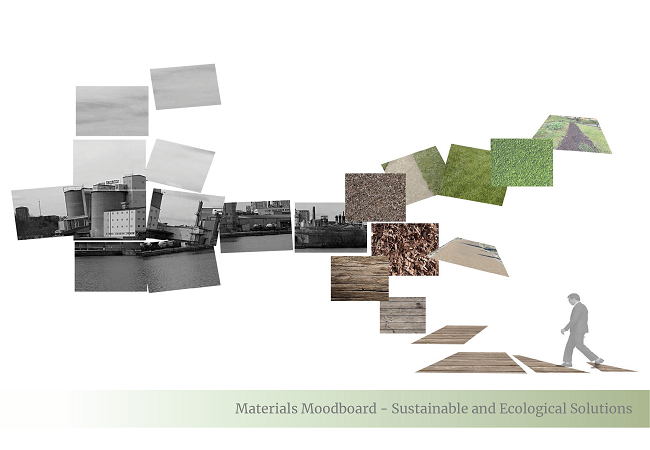
By creating a business plan where producers and investors share in business revenues, both economically driven stakeholders as well as artists, may work in the same direction sharing the same interests. This way, Lövholmen has the potential of becoming an experimental hub for art, business, technology and resilience. Considering the area redevelopment as ‘a cultural and resilient hub’, innovative techniques provide chances to work with companies and universities as trial projects, potentially reducing costs. This could be especially effective when it comes to decontamination of the soil or in the use of materials. The field lab role brings attention and a reputation for the area, creating interest for forward-thinking businesses to settle down.

[1] http://sosclimatewaterfront.eu/sos/project
[2] Urban Agenda: https://ec.europa.eu/regional_policy/sources/docgener/brochure/urban_agenda_eu_en.pdf
[3] http://7mostendangered.eu/sites/industrial-area-of-lovholmen-stockholm-sweden/
[4] https://archello.com/project/fargfabriken-art-museum


Contact and more information

Team contact:
Magdalena Rembeza, PhD, Faculty of Architecture, Gdańsk University of Technology (GUT)


KTH contact:
Katarina Larsen, KTH Royal Institute of Technology


Team members:
Ana Neiva, PhD, Faculty of Architecture of the University of Porto (FAUP)
Magdalena Rembeza, PhD, Faculty of Architecture, Gdańsk University of Technology (GUT)
Metha Bregman, drs/Msc, Behavioral scientist, CPONH, the Netherlands


SOS Climate Waterfront project https://www.kth.se/philhist/historia/forskning/environmental-histor/sos-climate-waterfront-1.1037673
SOS Climate waterfront project in CORDIS
https://cordis.europa.eu/project/id/823901


[5] The vision for Lövholmen  was created by the whole team: Ana Neiva, Magdalena Rembeza, Metha Bregman, Elena Paudice, Nils Brattgard, Shea Nee Chew


First steps towards defending my work on the history of the nuclear Rhine River

There are a few significant stages in the life of a PhD candidate. The first one is the presentation of the pro memorandum, where the PhD student presents their plan for their thesis in front of the division. This is supposed to happen within the first year and is seen as a first step towards defending one’s one ideas and theories, but it is also important to take in criticism and suggestions by colleagues. The next step then happens after half of the PhD time is over. This is called midseminar in Swedish and here the PhD candidate also has an opponent. The opponent is usually a senior researcher from outside of the division, who gets to read the candidate’s work thoroughly and then presents the work for the PhD and afterwards enters into a qualified discussion with the student. Here, it is still possible to turn the PhD student’s work around and to suggest major changes, different theories or more content, which has been neglected so far. Approximately one year before the defence, the final seminar takes place, again with a different opponent. Significant changes should not be suggested and this seminar can be seen as the dress rehearsal of the defence.

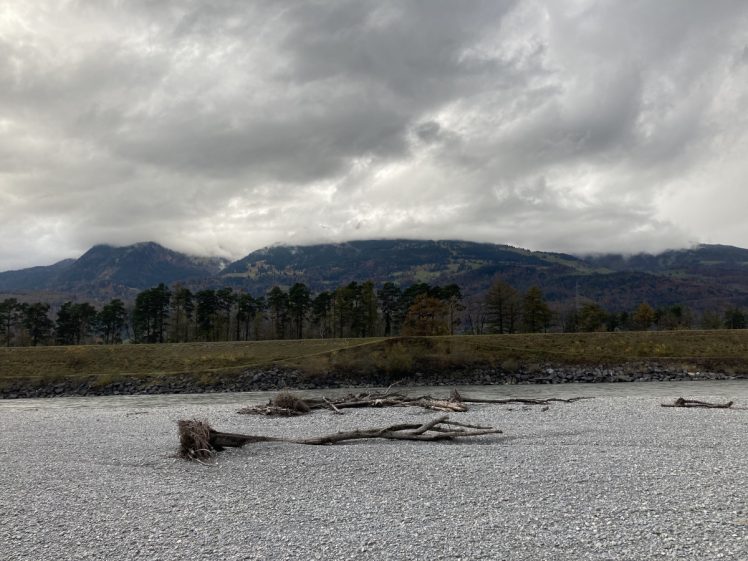
Alpine Rhine on the border between Liechtenstein and Switzerland

In September 2021 my midseminar took place with Itay Fischhendler as opponent. Itay is professor and chair of the Department of Geography at Hebrew University in Jerusalem. Even though I am writing my thesis in the interspace of history of technology and environmental history, also known as envirotech studies, I decided together with my first supervisor Per Högselius, that it would be best to get input and comments on my work from a researcher outside of the field.

Several reasons spoke in favour of this decision: 1. My work is generally not traditionally historical, as I argue for the use of social science theories in history. 2. Itay as a geographer and expert in transboundary conflicts seemed to be an excellent choice to comment on my research on historical transboundary conflicts along the Rhine River. 3. With my background in social anthropology, I am aiming at writing a history of the nuclear Rhine from the 1950s until today.

Itay and I discussed two of my articles and the introduction of my thesis, also known as kappa. The first article deals with a 41 year-long conflict on drinking water quality around the Karlsruhe Nuclear Research Centre. This is unfortunately a very common conflict and has been a fear of people close to nuclear sites ever since. My second article is about thermal pollution from nuclear power plants. This again is a fear from people since the planning days of nuclear power, but this seems to have fallen more and more into oblivion due to the major accidents of Chernobyl and Fukushima. With my work, I would like to bring these risks more into the centre of the debate again, especially in times of climate change and the discussion around nuclear power being part of the solution of tackling a heating climate.

Overall, I was very content with the outcome of the midseminar. Itay’s comments were on point as he emphasised the weaknesses of my work, but also gave encouraging feedback which motivated me to continue my research. According to him, going to the root cause of the problem by digging in archives, helps with identifying what the actual cause of a conflict is. History assists in finding solutions for the future. He also confirmed my theory that thermal pollution is indeed a neglected risk and needs to be studied more thoroughly even today. My job now is to frame my deep case studies with theory and to structure it in a way that even people without deep knowledge of the case can understand the issue.


Alicia Gutting

PhD candidate in the ERC-project Nuclearwaters, Division of History of Science, Technology and Environment, KTH Royal Institute of Technology

Drought or low water availability as an historical preparedness problem

Drought and the lack of access to clean water constitute serious threats to human and natural wellbeing in many places of the world. Over the last century, drought has faded from quotidian life in many parts of Scandinavia and northern Europe. However, experiences of extreme weather in recent years have advanced a new awareness and preparedness agenda. Issues concerning water use and availability are now among the priorities of risk management, climate change adaptation, and preparedness efforts.
Sweden’s weather was fairly stable for much of the 20th century. The problems of drought were usually regarded as difficulties affecting local agriculture and drinking water supplies. In addition, concerns related to the climate and weather were commonly overshadowed by threats linked to the politics of the Cold War. In the 1990s, crisis management interventions were formulated around weather-related contingencies. Among other things, scenarios for dealing with flooding were being worked out.

The drought and the subsequent forest fires during the summer of 2018 ushered in a new discussion about Swedish preparedness against drought. The historical aspects of what was usually referred to as the extreme weather were highlighted by the fact that the drought and the subsequent forest fires were described as the worst in “modern times”. The abstract notion of long-term and large-scale global climate change was made concrete and meaningful here and now, as it were, in contrast to being viewed as a potential disaster happening in the future and mainly affecting other parts of the world.

Drought as preparedness problems is multi-facetted. Public agents, policy makers, and researchers underscore the large amount of work that needs to be done, the importance of facilitating a much-needed collaboration between different stakeholders and a holistic view of the issues at hand. The formulation of preparedness problems involves a kind of battle over the narrative of which threats are most serious, how they have developed, what may happen in the future, and necessary activities.

History is a fundamental component of the efforts of upholding vigilance against threats that may or may not materialize in the near or distant future. Learning from past events is crucial. However, while historical narratives help societies understand, manage, and cope with present vulnerabilities and challenges, it is impossible to devise effective preparedness measures based exclusively on historical experiences. In an era of climate change, the scale and speed of natural events have the potential of reversing understandings of historical development and build a foundation for a reformed narrative of Swedish readiness.

A historical perspective on drought as a contingency problem includes but also goes beyond mapping and analyzing past episodes of low water availability. It also brings light on the human subjectivities, relationships, and forms of governance that have emerged in response to previous occurrences. Focusing on people, it brings into focus the efforts to cope with uncertainty rather than the historical development of specific technologies for turning potential dangers into controllable and calculable risk.

This contrasts with a narrative about the ever-increasing safety and certainty of modern society. Rather than illuminating the many ways in which science and technology have improved the protection of human and non-human life, health, and vitality, other actors and issues come to the fore. Through studying actors that have taken the existential concerns of low water availability as their primary concern, it is possible to contribute new understandings of drought as an historical preparedness problem.

This may contribute new perspectives on the present, a kind of genealogy of uncertainty. In this perspective, “unpreparedness” against drought is not merely seen as an inability or inadequacy of certain institutions or technical instruments. It highlights a lack of historical narratives that can give meaning to what is currently happening and relate contemporary problems to a longer history of how society has functioned in difficult circumstances. It may help to inform the kind of coping strategies needed to deal with a volatile relationship between humans and water, or lack thereof.

Fredrik Bertilsson, historian, working as researcher at the Division of History of Science, Technology and the Environment, KTH. His project “Beyond ‘unprepared’: Towards an integrative expertise of drought” is funded by FORMAS during 2022-2025.

Wetlands implemented for treatment of stormwater on Utö

The Baltic Sea is surrounded by a huge drainage area, due to the many rivers flowing into the Baltic Sea. Nutrients and toxic pollutants originating from human activities end up in the marine environment. Stormwater management is an increasingly important issue in society due to urbanisation and increasing volumes of rainfall due to climate change. These challenges force the Baltic regions to develop stormwater treatment solutions that can clean stormwater effectively and ensure standard water quality and management in real time.

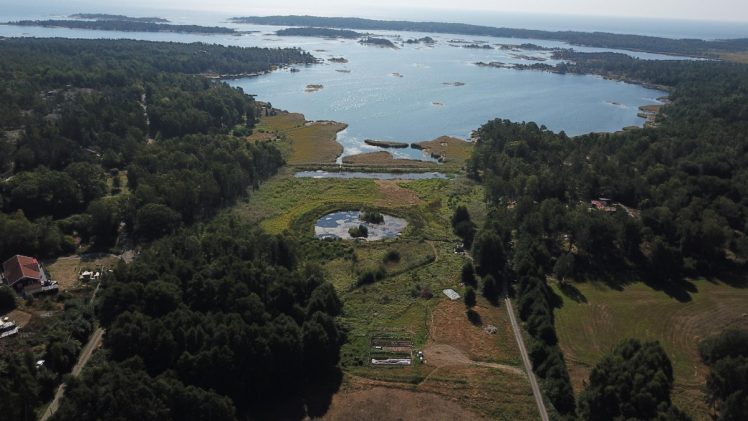
The first constructed wetland at Utö, with the two pools and the bay clearly visible.

Our group at KTH, together with our Baltic partners in the CleanStormWater project in Riga, Viimsi and Turku, are designing and testing new treatment systems, assess stormwater management solutions, develop e-monitoring systems for real time water quality management as well as establish centralised and decentralised stormwater solutions. Different stormwater treatment solutions and also e-monitoring systems will be developed, tested and/or implemented. Compared to manually collected samples, e-monitoring gives continuous information of physical parameters such as flow rate, turbidity, electrical conductivity and suspended solids. This not only helps municipalities to better monitor their stormwater quality and intervene rapidly when necessary, but also helps to identify the best technical solutions in the development stage. Since different geological, utilisation and/or urban situations will require different solutions, the project will use different sites around the Baltic Sea and evaluate different technological solutions including sedimentation, ponds, separators and bioretention systems.

KTH will collaborate with Initiative Utö on their study sites on the island of Utö. In Utö, two wetlands designed for stormwater treatment have recently been constructed (see figure 1), while a third one will be constructed to clean the stormwater from the Utö military-firing range in the near future. The wetland has an inflow from two ditches which combine in a sedimentation pond which has a circulation time of 48 hours during normal operations, the sedimentation pond is also the home of a number of crayfish. From there the stormwater is led to the wetland area, where plants treat the water. Then the water enters a pool where more substances can sediment. In this pool young peach and pike live and can grow so they will not be eaten by the three-spined stickleback which dominates the Baltic Sea. Lastly, the water is released to the Baltic Sea in a bay called Södra Fladen. The wetland is designed to decrease the amount of nutrients and heavy metals flowing into the Södra Fladen and by extension the Baltic Sea. By releasing more fully grown peach and pike to the Södra Fladen, the diversity of predatory fishes in the Baltic Sea have the ability to be restored.

Understanding the efficiency of the constructed wetland system for stormwater treatment needs careful evaluation of the water quality over a longer period of time. At these sites samples are taken from the inlet water, the process and the outlet water to evaluate the treatment efficiency. More specifically nutrients, heavy metals, PAH:s and oil are analysed in the samples. The CleanStormWater project is currently ongoing. Results from this project will give more insight to wetlands’ ability to treat stormwater and other properties such as habitat for wildlife, which can be implemented in other wetlands around the Baltic Sea. In addition, a better understanding of the implementation of e-monitoring in stormwater treatments, can promote the usage of similar systems in other treatment sites around the Baltic Sea.

Tobias Karlsson
Research Engineer, KTH


KTH Baltic Tech Initiative project (in Swedish)

Interreg CB project Cleanstormwater