
KTH researchers awarded IEEE fellow
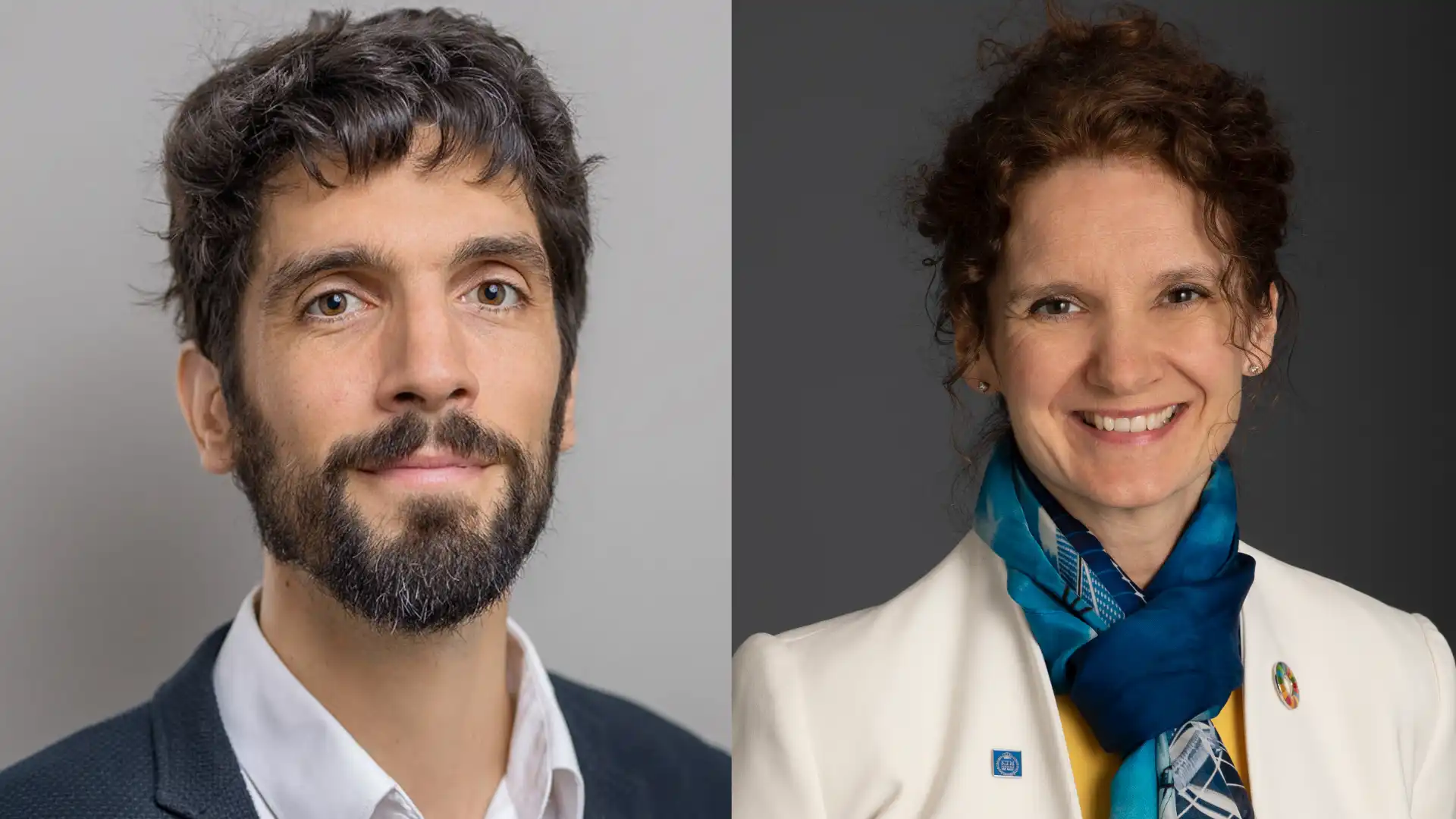
Lina Bertling Tjernberg, Professor of Electrical Power Systems at EECS, and Martin Monperrus, Professor of Software Engineering, have been named IEEE Fellows Class 2026. Lina Bertling Tjernberg receives the award for her contributions to predictive maintenance models for power system reliability, and Martin Monperrus receives the award for his groundbreaking use of machine learning in code assistance and program repair, which affects millions of developers.
The IEEE Fellow programme was established back in 1912. IEEE is the world's largest technical organisation promoting advanced technology. An IEEE Fellow is an award reserved for selected IEEE members whose extraordinary achievements in one of IEEE's areas of interest are considered worthy of this prestigious promotion. The recipients of the
IEEE Fellow Class 2026
Lina Bertling Tjernberg, professor of electrical power systems, receives the award for her contribution to predictive maintenance models for power system reliability. Martin Monperrus, Professor of Software Engineering, is also receiving the award for his groundbreaking use of machine learning in code assistance and program repair, which affects millions of developers. Both are active at the School of Electrical Engineering and Computer Science at KTH.

Receiving the IEEE Fellow Class of 2026 award is a recognition of one's research achievements. It is significant when applying for funding, as well as important for KTH and the research it conducts. An IEEE Fellow is the IEEE's highest membership grade, awarded to a select number of individuals each year. The award is presented to researchers who have made significant and long-term contributions to their technical field and have had a clear international impact. Being named an IEEE Fellow means that one's work has been assessed and recognised by leading experts around the world.
What does this award mean to you?
"Ever since I began my research studies as a doctoral student at KTH in 1997, I have had the privilege of working in a research environment with role models and supervisors who are IEEE Fellows and world-renowned in our field of electrical power systems research. I had an international supervisor from Manchester, Professor Ron Allan, a legend in the field of electrical power systems and reliability analysis. At KTH, my primary supervisor was Professor Göran Andersson. They were both highly involved in international expert networks in electrical power engineering, such as the IEEE and, in particular, the Power & Energy Society. I am very honoured and delighted to receive this award. It is a mark of scientific quality, showing that the research has been significant," says Lina Bertling Tjernberg.
"It's a symbolic recognition of years of hard work with great collaborators. It's also a signal that in research, the choice of problems you're working on is essential. Some problems might be really hard to investigate and difficult to publish because of their novelty, but they are the ones with high impact potential in the long term.", says Martin Monperrus.
What impact do you think this will have on your research and on you as a professor?
"In science, it is important to be persistent and able to focus; otherwise, it is not possible to make an impact with your research. Receiving this recognition in my primary area of scientific focus provides me with the support I need to continue my research in this area. The award increases international visibility and strengthens opportunities for new collaborations, both academically and industrially. It can also help attract talented doctoral students and research funding. As a professor, I also view it as a responsibility to continue conducting high-quality research, contributing to the field's development, and serving as a role model and mentor for younger researchers," says Lina Bertling Tjernberg.
"This will facilitate two key vectors of research: grant application and top student recruitment. Good funding and good students are a solid foundation for research," says Martin Monperrus.
Head of School Ann Lantz at the School of Electrical Engineering and Computer Science congratulates both Lina Betling Tjernberg and Martin Monperrus.
"These awards are something that KTH in general, and EECS in particular, should be very proud of. The fact that three EECS researchers received the award this spring, and now two more, confirms that our research is of a very high international standard," she says.
Read more: KTH researchers awarded IEEE fellowships