MSc Sustainable Digitalisation
The master's programme in Sustainable Digitalisation will give you the skills to lead complex processes and use digitalisation to support a regenerative transformation towards a sustainable society. You will strengthen your abilities in critical thinking, communication, co-creation, organisational leadership and integrated problem-solving. Graduates are experts with career opportunities in both the private and public sector.
Sustainable Digitalisation at KTH
The master’s programme in Sustainable Digitalisation prepares you to tackle today’s major sustainability challenges by using digital technologies in strategic and impactful ways. Digitalisation is a powerful driver of societal change. It offers the potential to build resilience for a complex and uncertain future, but it can also be problematic if it speeds up unsustainable trends. You gain a deep understanding of global issues and learn how digitalisation can support the transition to a sustainable and just society.
These skills are increasingly important as the world faces interconnected crises that pose serious risks to life on Earth. Many of these are wicked problems, with no simple technical solutions. That is why the programme goes beyond technical problem-solving: it trains you to become a leader in navigating complex change processes and driving long-term, systemic transformation.
The programme will teach you both technical aspects of sustainable digital technologies and organisational skills required to navigate complexity and uncertainty. You will develop leadership skills and key competencies such as systems thinking, communication, self-awareness, visioning, co-creation, organisational leadership and integrated problem-solving. Courses will also engage with emerging topics such as permacomputing, regenerative design, more-than-human worlds, post-colonialism and the tension between economic growth and ecological sustainability.
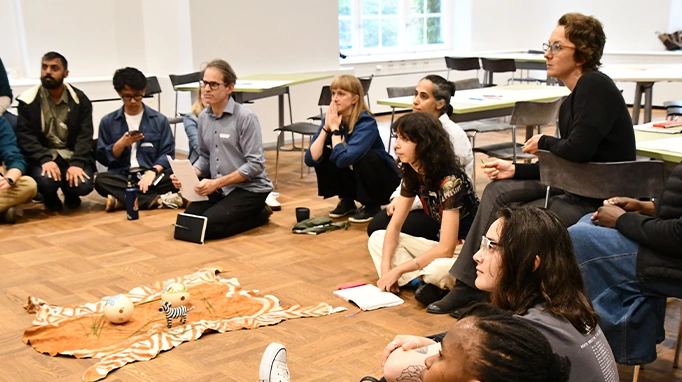
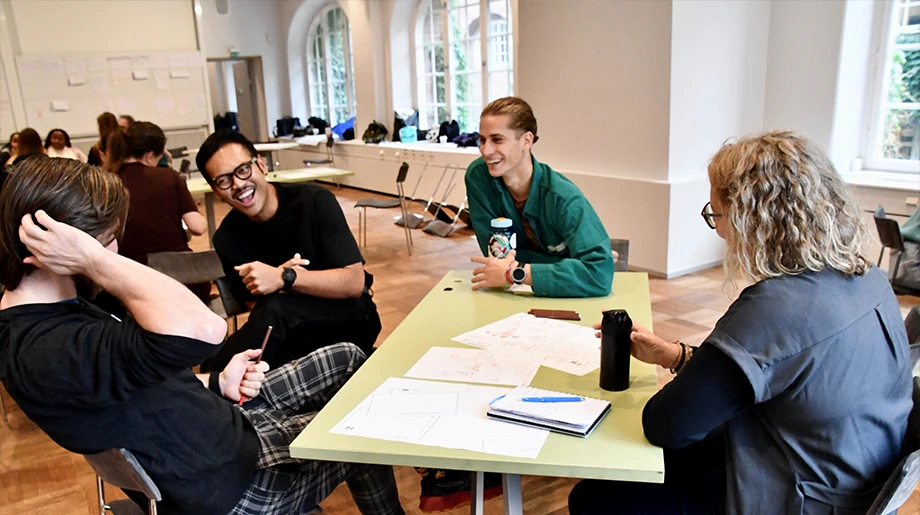
Students in the programme come from a variety of academic and cultural backgrounds, creating a rich environment for collaboration and exchange of perspectives. A distinctive feature of the programme is its emphasis on deliberative, co-creative and collaborative learning. Students are active participants who take shared responsibility for their own and each other's learning. This prepares you to work across disciplines, navigate complexity and lead change in diverse professional settings.
By studying Sustainable Digitalisation at KTH, you will join a leading European university with strong expertise in sustainability and digital technologies. Located in Stockholm, a global hub for innovation and sustainability, the programme benefits from close connections to cutting-edge research, industry and public-sector organisations. The programme offers a distinctive combination of sustainability, digitalisation and leadership, preparing graduates to contribute to societal transformation in a rapidly evolving field.
Programme structure and progression
During the first year, you build a foundation in both sustainable digitalisation and leadership, through mandatory courses in sustainability, digitalisation, leadership, research methods and life cycle assessment. You can also choose elective courses in either adjacent areas such as ecological economics, environmental management, global development, political ecology, or more technical courses in, for example, AI or programming. Throughout the programme, a programme-integrating course provides opportunities for reflection, exchange of experiences and the development of key competencies related to sustainable digitalisation and leadership.
During the third semester, you tackle real-world sustainability challenges in a challenge-driven project course, building partnerships with industry and other relevant organisations. Alongside the project course, you continue to deepen your expertise through elective courses. The programme concludes with a degree project carried out during the final semester in an academic or industrial environment.
Courses in the programme
The courses in the programme cover topics such as sustainable digitalisation, sustainable and critical approaches to technology development, ecological and social sustainability, sustainable development, strategic leadership, organisational leadership, co-creation methods, life cycle assessment, systems analysis and perspectives, complexity studies and sustainable infrastructure.
Courses for the master's programme in Sustainable Digitalisation


Future and career
Digital technologies are a vital part of modern society’s infrastructure. While it’s important to reduce their material use, energy consumption, and carbon footprint, their greatest potential lies in enabling sustainability across other sectors. From energy and transport to agriculture and public services, digital solutions can drive meaningful change. Building sustainable societies requires strong capabilities to lead digital transformation in ways that support ecological, social, and economic sustainability. This master’s programme prepares you to be part of that transformation, equipping you not just with technical knowledge but also with the mindset to lead change. As a result, graduates are well-positioned for exciting career opportunities in both the private and public sectors.
There is growing interest in Sustainable Digitalisation from industry and society, including, for example computer and design consultancies, the gaming industry, public authorities. Many large Swedish and international companies explicitly support the shift to a fossil-free society, and this interest is expected to grow in the coming years.. These companies include Ericsson, Telia, Spotify, IKEA, Scania, Skanska, Alfa Laval, Google, Microsoft, Oracle and British Telecom. The Swedish IT industry sees itself as an essential partner in this development. The industry trade organisation Digitalization Consultants and its 24 member organisations (for example, Knowit, Semcon and Softronic) highlight the need for employees who understand climate and sustainability issues. The programme also has many connections to cutting-edge research at KTH and elsewhere, opening opportunities to pursue doctoral studies at KTH or other universities worldwide.
Sustainable development
Graduates from KTH have the knowledge and tools for moving society in a more sustainable direction, as sustainable development is an integral part of all programmes. The three key sustainable development goals addressed by the master's programme in Sustainable Digitalisation are:


As digitalisation is a force in all parts of societal transformation, it has the potential to contribute to most of the SDGs. Students will, throughout the programme:
- Learn about developing digital tools to analyse and visualise greenhouse gases and other relevant metrics to raise awareness, plan mitigation actions and give early warnings supporting SDG 13.
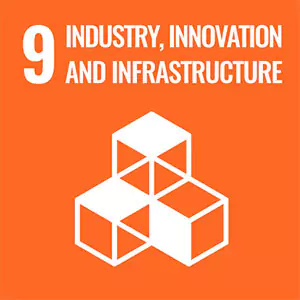
- Learn about the life cycle assessment (LCA) of computer systems and services, thereby contributing to SDG 9 by supporting the development of more resilient and sustainable infrastructure accessible by all.
- Learn about and work with IT and media technology companies to formulate how they can adopt more sustainable practices in their core business, thereby contributing to SDG 12.
Faculty and research
The master’s programme in Sustainable Digitalisation is given by the School of Electrical Engineering and Computer Science, which conducts research and education in electrical engineering, computer science, and information and communication technology. The programme is mainly led and coordinated by faculty belonging to the Division of Media Technology and Interaction Design, where a world leading research group, Sustainable Futures Lab, have given courses and conducted research in the intersection of ICT and sustainability for more than a decade. The department has access to several research and teaching facilities where students and researchers can work on work-related and private projects. For example, the Division of Media Technology and Interaction Design manages four engaging research environments: Multisensory Studio, MIDDLA, Haptic Lab and KTH's R1 Reactor hall .
The school of Architecture and the Built Environment and its Department of Sustainable Development, Environmental Science and Engineering (SEED) provides a mandatory course in life cycle assessment. SEED gathers a broad range of interdisciplinary expertise to conduct research that covers a wide field within environmental, engineering and sustainability issues.
Faculty involved in the programme