
Othiniel
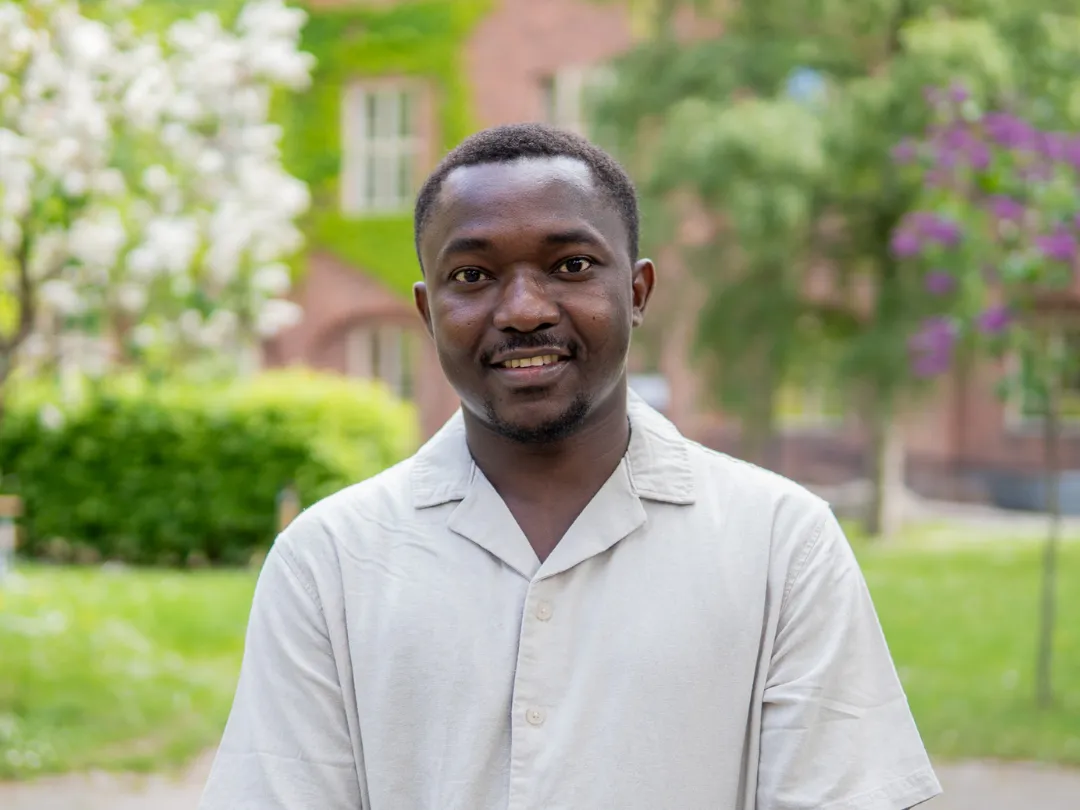
Othiniel from Uganda holds a bachelor's degree in Quantity Surveying from Makerere University and is currently pursuing a master's in Real Estate and Construction Management at KTH Royal Institute of Technology, supported by the Swedish Institute Scholarship 2025. He enjoys football, music, and movies, and serves as Alumni Relations Coordinator for the KTH Africa Students’ Community, connecting students with alumni and industry professionals.
Why did you choose this master’s programme at KTH?
Coming from a background in Quantity Surveying, I wanted a programme that would deepen my understanding of both the technical and economic dimensions of the built environment. The MSc in Real Estate and Construction Management at KTH was a perfect fit. It sits at the intersection of construction, property valuation, project management, and urban development, which aligns exactly with where I want to take my career. KTH’s strong industry connections and its reputation as one of Europe’s leading technical universities made it the clear choice. The fact that it is in Stockholm, a city renowned for its innovation and sustainability, was a bonus.
What are the best aspects of your programme?
The diversity of the programme is what I love most. It covers everything from property law and valuation to construction economics and sustainability, giving you a broad perspective on the built environment. In the programme, many of the students are international, which means you are constantly learning not just from your professors but from your classmates’ different experiences and backgrounds. The teaching style also encourages critical thinking and real-world application, which is refreshing compared to more traditional approaches.
How do studies at KTH differ from your previous studies?
The shift was significant but exciting. My undergraduate studies at Makerere University in Uganda were more lecture-based and exam-driven. At KTH, there is a much stronger emphasis on independent thinking, group projects, and applying theory to real situations. The workload is demanding, but the academic support from professors is excellent. They are very approachable and genuinely invested in your success. I also found that KTH places a strong emphasis on sustainability and innovation, which has broadened my perspective as a professional.
How is student life in Stockholm?
Stockholm impressed me from day one - it's safe, clean, and remarkably well planned. Residential areas have shops, green spaces, and public transport all within walking distance, and the metro, buses, and trains reliably connect every corner of the city. It's also almost entirely cashless, which makes daily life surprisingly convenient.
The natural beauty of the city is in a league of its own. The city is surrounded by forests, lakes, and waterways, and you can go from a busy campus to a quiet nature trail in minutes. Winters are cold but cosy in that distinctly Scandinavian way, and the summers are magical - long days, golden light, and a city that truly comes alive. Between THS Student Union events, the social scene, and nature all around, there's never a dull moment.
What would you like to say to students thinking of choosing KTH for master’s studies?
Go for it; you will not regret it! KTH offers world-class education in a city that is one of the most livable in the world. The academic challenges will shape you into a more well-rounded professional. My advice is to come with an open mind, connect with your fellow students early, and make the most of the opportunities KTH offers, from career fairs to student clubs and industry events. And if you are worried about the language barrier, do not be; English is widely spoken, and you will pick up some Swedish along the way, too.