KTH Logo

Beyond Unprepared and Sustainability’s Formative Moment – Formas’ Grants Two New Projects

Division researchers Fredrik Bertilsson and Eric Paglia recieved funding for four years each in the Formas Annual Open Call 2021 – Research projects for early-career researchers. In 2022 the Division looks forward to two new projects: one on humanistic expertice and knowledge and one that question the earlier periodization of the sustainability narrative.

Summary Beyond “unprepared”: Towards an integrative expertise of drought
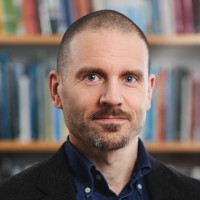
Profilbild av Fredrik Bertilsson

The overarching hypothesis of this project is that the understanding of preparedness is fundamentally transformed in the era of Anthropocene. In Sweden, recent events such as the corona pandemic and the extreme weather in 2018 have pointed out insufficiencies in public readiness. This project explores drought in Sweden, which until recently was a marginal problem on the national agenda but is now a priority of the Swedish government. Both public agents and researchers call for collaboration an “integrative expertise” that combine the expert knowledge of natural sciences, social science and the humanities to advance public preparedness. However, the potential of humanistic expertise and knowledge is under-researched. The potential of humanistic knowledge becomes relevant in new contexts where problems and potential solutions fall outside the domain of previously dominating expertise. The aim of this project is to contribute to the expertise for increasing public preparedness. The purpose of the project is to study: the identification of Swedish “unpreparedness” in relation to the drought in Sweden in 2018, the historical processes behind this present unpreparedness, and the formation of future experts focusing on the significance of humanistic expertise. The project provides a novel and timely assessment of integrative expertise of drought. It engages with actors in the public sector, NGOs, academic research, and arts and culture

Summary Sustainability’s Formative Moment: The Birth of the Boundaries Narrative and the Rise of the ‘Human Environment’
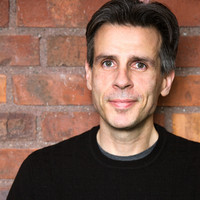
Profile picture of Eric Paglia

This project examines the emergence of the “Boundaries narrative” between 1968-1974 in connection with the 1972 UN Conference on the Human Environment. “The environment” as a problem was well known, but in 1968 there were no international political institutions for managing it. Neither developing countries nor the business community had an interest in imposing restrictions for the environment’s sake. In this struggle between scientifically and ideologically motivated demands for restraint, and economically and politically motivated demands for continued expansion, the idea emerged that growth and environment could be reconciled—what would later be called sustainable development. We will study in detail the interplay of different expert cultures, from governments via constellations of scientists, to smaller groups that could include executives, researchers, diplomats, activists, economists and others. We are particularly interested in three key individuals and their networks: Canadian businessman Maurice Strong, economist Barbara Ward and MIT management professor Carroll Wilson. We will both question the earlier periodization of the sustainability narrative, and develop a new understanding of its scientific and political basis. The project is of potentially great importance for the narrative’s legitimacy in a time of mounting conspiracy theories, when the world could at the same time be on a path towards decisive transformation through the implementation of Agenda 2030.


Open Access to Knowledge, Fear, and Conscience: Reasons to Stop Flying Because of Climate Change

Division professor Nina Wormbs researches along with Maria Wolrath Söderberg from Södertörn University, in the project Understanding justification of climate change nonaction. The project runs 2019-2021 and is financed by The Swedish foundation for humanities and social sciences, Riksbankens Jubileumsfond. This June Nina and Marie published the article Knowledge, Fear, and Conscience: Reasons to Stop Flying Because of Climate Change in Urban Planning. Find the link to full text and read the abstract below.

Photo by Marcus Zymmer on Unsplash

Link to Publishers full text.

Link to Understanding justification of climate change nonaction project page 

Abstract

Much research on the societal consequences of climate change has focused on inaction, seeking to explain why societies and individuals do not change according to experts’ recommendations. In this qualitative study, we instead consider people who have changed their behaviour for the sake of the climate: They have stopped travelling by air. We first asked them to elaborate their rationales for the behaviour change. Then, using topos theory to find thought structures, we analysed their 673 open-text answers. Several themes emerged, which together can be regarded as a process of change. Increased knowledge, primarily narrated as a process by which latent knowledge was transformed into insight, through experience or emotional distress, was important. Contrary to certain claims in the literature, fear stimulated change of behaviour for many in this group. Climate change was framed as a moral issue, requiring acts of conscience. Children were invoked as educators and moral guides. Role models and a supportive social context played an important part. Alternatives to flying were brought forward as a motive to refrain from flying. Only a few mentioned shame as momentous. Instead, stopping travelling by air invoked a feeling of agency and responsibility, and could also result in a positive sensation.

Keywords:  arguments; children; climate change; flight shame; inner deliberation; knowledge-action gap; stop flying; topos
Published:   9 June 2021

Ten Stockholm Archipelago Lectures

The Stockholm Archipelago Lectures are part of the public activities of the KTH Environmental Humanities Laboratory and have been since 2012. It was initiated as an event that marks the presence of the EHL at the KTH Campus. This Monday we look forward to our 10th lecture by looking back in time, finishing off with the announcement of this year’s keynote speaker.

In September 2012 the historian and geographer David Lowenthal visited the Division to give a series of talks. They were entitled the Archipelago Lectures, referring in part to the Stockholm Archipelago, but also to David’s career long professional and personal interest in islands, in the Caribbean, the Mediterranean, in the Isle of Man where he had a summer house, and elsewhere. (From: Sverker Sörlin in “Defining Humanities – Division of History of Science, Technology and Environment, KTHReport 2017-2018)

The Archipelago lecture was the first major public event of the KTH Environmental Humanities Lab and has become an annual institution every fall. In the early years the lectures were held at the KTH Campus, but for the 2018 lecture with Amitav Gosh on “The Great Uprooting: Migration and Movement in the Age of Climate Change” we moved to central Stockholm and Kulturhuset Stadsteatern. The event was announced in one of Sweden’s largest morning papers, Dagens Nyheter, and attracted our biggest audience so far. A little over 100 people came to listen to Amitav Gosh.

In 2019 the Archipelago Lecture was organized in collaboration with the workers educational associations ABF and the independent opinion group Arenagruppen. “What should socialism mean in the 21st century? An ecofeminist view” with Nancy Fraiser attracted over 200 people, who came to ABF to listen. The lecture was filmed and also streamed online for the first time without us knowing that this would soon be our new normal. Former EHL researcher Roberta Biasillo writes in the Biennial report “Integrative Humanities from the years 2019 in and 2020” Nancy Fraser “engaged with the audience and with us well beyond the time of the talk – we all sat and stood together, we ate next to each other and shook our hands. One year later, on 25 November 2020, we found ourselves online and it was no coincidence that the talk was on ideas and practices of care, repair, and restitution as ways to ensure just living conditions on Earth.”

In the first year of the pandemic we went online and welcomed Achille Mbembe as our Archipelago keynote speaker. From his home in South Africa he gave the lecture “Reflections on Planetary Habitability”. This became one of the EHL’s and the Division’s most visited single events so far, with over 500 people streaming it in real time.

This year we are happy to announce Kathryn Yusoff as our keynote speaker. Kathryn is a professor of inhuman geography at Queen Mary University of London. She is the author of the acclaimed book “A billion black anthropocenes or none“. So, mark your calendars and check your connection – because on December 1 at 4.30 PM CET we are ready to go online again for the next Archipelago lecture.


Lectures from the past

September 9, 2012
“Reflections on the Environmental Humanities”
David Lowenthal, Professor Emeritus of Geography, University College London

September 11, 2013
“The Meltdown of a High Arctic Hunting Community”
Kirsten Hastrup, Professor of Anthropology, University of Copenhagen

October 9, 2014
“Environmental Racism as State-Sanctioned Violence”
Laura Pulido, Professor of American Studies and EthnicityUniversity of Southern California

November 2, 2015
“The humanities and global change research: relationships necessary, absent and possible”
Noel Castree, Professor of Geography, University of Manchester, England, and the University of Wollongong, Australia

October 27, 2016
“AlterLife in the Aftermath of Industrial Chemicals”
Michelle Murphy, Professor of History and Women and Gender Studies, University of Toronto

October 5, 2017
“Connecting Dots in Toms River and Beyond”
Dan Fagin, award-winning author, and Professor of science journalism,  New York University

September 26, 2018
“The Great Uprooting: Migration and Movement in the Age of Climate Change”
Amitav Ghosh, award-winning writer of historical fiction and non-fiction

October 7, 2019
“What should socialism mean in the 21st century? An ecofeminist view”
Nancy Fraiser, Professor, The New School for Social Research, New York

November 25, 2020
“Reflections on Planetary Habitability”
Achille Mbembe, Professor in History and Politics, University of the Witwatersrand, Johannesburg


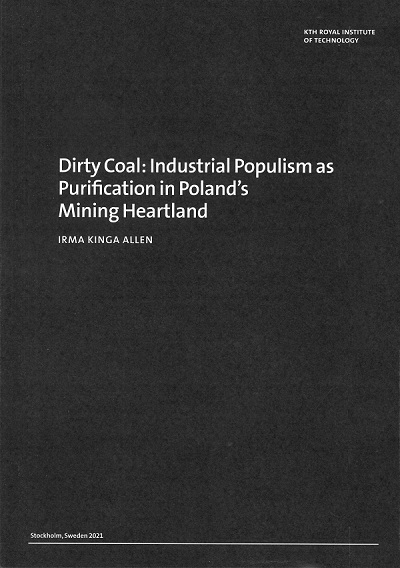
Defence Coming up: Dirty coal – Industrial Populism as Purification in Poland’s Mining Heartland

Friday October 1, it is time for Irma Allen to defend her thesis Dirty coal – Industrial populism as purification in Poland’s mining heartland. The defence is open for the public by registration, and will happen on zoom. Find link to registration below, as well as the thesis abstract!

Time: Fri 2021-10-01 16.00
Subject area: History of Science, Technology and Environment
Doctoral student: Irma Allen , Historiska studier av teknik, vetenskap och miljö
Opponent: Professor Christopher Hann, Max Planck Institute for Social Anthropology
Supervisor: Professor Sverker Sörlin, Historiska studier av teknik, vetenskap och miljö; Associate Professor Sabine Höhler, Historiska studier av teknik, vetenskap och miljö

Register for defence

Abstract

In the second half of the 2010s, far-right populist parties gained increasing power and influenceacross Europe, and around the world. Core to their ethnonationalist, anti-elite agenda, and theiremotive politics, has often been a defense of fossil fuels, threatening action to address the climatecrisis and raising the spectre of fascism. Increasingly-perceived-as-‘dirty’ coal, the raw material thatmade the industrial modern world order possible and contributed most to its mountingcontradictions, has acquired a special status in contemporary far-right ideology. What is theemotional intersection between them at a time of far-reaching economic, environmental and energyinstability and change, when coal has not only been losing its material value and its symbolic link tomodernity, but is increasingly widely deemed immoral too?

To date, studies of far-right populism have largely overlooked how energy and environmentalchange feature in their present rise. This reflects how these issues have been largely treated astechnical matters, and therefore relegated to the domain of scientific expertise, rather thanrecognized as inherently social, cultural and political concerns. Tending to adopt a macro-levelapproach, far-right studies have also not yet fully addressed the historically, geographically, andculturally-situated reasons for this success, particularly among the (white, male) industrial workingclass.From a bottom-up, ethnographic perspective, the role of intersectional (class-based,occupational, gendered, racialized regional and national) ecologically-positioned embodiedsubjectivities and identities and their emotional lived experience remains to be considered.

This PhD thesis, set within the concerns of a transdisciplinary environmental and energy humanitiesframework, addresses this lacunae in the context of Poland; the most coal-dependent country in theEuropean Union where a pro-coal platform unexpectedly helped the far-right populist party Lawand Justice (Prawo i Sprawiedliwość) into majority government in 2015. It is primarily based on ayears’ ethnographic research conducted in 2017 with both residents and particularly coal miners andtheir families in a minescape in Upper Silesia, the nation’s, and one of Europe’s, last remainingmining heartlands. Adopting a postcolonial postsocialist perspective, and drawing on rare empiricaldata from participant observation and qualitative interviews, the thesis explores the politics ofincreasingly ‘dirty’ coal expressed in localized conflicts over air pollution, domestic heating, andthe meaning of work, dignity, respectable personhood, the economy and community, setting themwithin their historical context. The rapidly shifting material and symbolic meaning of coal withinthe context of Silesia’s long-standing troubled history is particularly studied in light of Europeanintegration, a post-industrial, neoliberal, ‘green’-cosmopolitan project that links East and West in anunequal relationship. The naming of coal and its way of life as increasingly ‘dirty’ in newlystigmatizing senses from ‘outside’, is found to be experienced by the mining community as an eliteimposedprocess of ecological dispossession. This generates a toxic intersectionally-andecologically-mediated shame in the bodies of those that particularly labour intimately with itsmaterial touch; a shame that resonates with what this thesis terms industrial populist politics and itsemotive charge as a felt common sense. In the postsocialist context of the marginalization anddevaluation of industrial working-class lives, and pervasive and normalized orientalist classismexperienced as an attack on one’s ecologically-enmeshed Silesian-Polishness, the relational longingfor a sense of a purified home, that can cleanse dirt’s discomforting and shame-inducing stigmas inoverlapping economic, social, cultural and environmental terms by refusing and reversing itsdesignation, is proposed as lying at the heart of industrial populism’s visceral draw.

urn.kb.se/resolve?urn=urn:nbn:se:kth:diva-301741

A new PhD at the division

Life moves on, a new term has started and we as a division are very glad to welcome our new PhD-student Erik Ljungberg, who works in the History of Media and Environment with a focus on AI and autonomous systems. We have asked him a few questions to introduce himself and you can read his answers below.


Profile picture of Erik Ljungberg


Given that you had to switch countries for your new position, how was your transition to KTH?

I have to say that KTH has made the transition very easy. With the opportunity to get an apartment within a short space of time through KTH Relocation, making the jump from Oslo to Stockholm has been pretty effortless. Although shifting COVID restrictions have made the process a little unpredictable at times.


Could you please tell us a bit about yourself and the topics you are working on, especially within your PhD?

I am a historian of knowledge and started at KTH as a PhD student in August. I am more or less associated with the Mediated Planet project, which looks at how data gathering practices, data access and data ownership shape environmental perception and politics. Though my project is also a bit freer to go in different, but related directions.  I have backgrounds in both history of knowledge, which was the discipline I wrote my M.A. thesis in at the University of Oslo, and cultural anthropology, which I did a second B.A. in while doing my masters. Specifically my M.A. thesis looked at the advent of phenology, or in other words the measurement of rhythms of nature, in British natural science in the 18th-century. Phenology is a fascinating endeavor to study from a history of knowledge perspective because the possibility of mapping seasonal variations among plants and animals only really came into being once there was a knowledge infrastructure capable of gathering and processing big amounts of data. Basically you had to make daily observations over several years. Particular ways of handling paper were really at the center of this process. But you also needed ways to structure the recorded data in purely visual terms in order to streamline the process of recording and reading data. So one of the things I highlighted in my research was the importance of the table as the condition of possibility for this kind of knowledge production, stressing the fact that knowledge is simultaneously material and cognitive.

My PhD project will maintain this media theoretical focus on how knowledge emerges through being circulated through socio-material infrastructures, but focuses instead on the role of AI and autonomous systems in environmental understanding. It is exceedingly likely that AI and autonomous systems will fundamentally change the way that human society monitors, models, and manages the Earth’s natural systems. What is interesting to me is placing this development within a longer history of shifting Earth-human relationships wherein mediation plays a crucial role. As the environment becomes increasingly dataified, a central question also revolves around usage and access to data. This becomes especially salient once the issue of monetization comes into the picture. Who should capitalize on the use of data that is public, free, and ubiquitous? Questions such as these are important to address as big tech companies currently stand a fair chance of developing a hegemony of expertise when it comes to these issues.


What is coming up right now? What do you aim for in the near future in terms of research, (side-)projects, or public outreach?

Right now I am making an outline of my project, and also simply trying to get an overview of the field, or several fields actually, that I will be working in. Otherwise, I have a couple of things on the agenda. I am working on a paper for the Nordical Journal for Eighteenth-Century Studies, and I had a paper accepted for one of the panels at the upcoming 4S conference. Also, I hope to have a blog up and running in the next months which can serve as a kind of outlet for some of the developments that are unfolding so rapidly within the field of AI and the environment.


Starting during the pandemic is challenging, although we all hope that regular work routines can be resumed during this term. What kind of impact has Covid-19 had on your work?

Actually I got a scholarship to go to London and spend time in the archives, but that proved unfeasable during the pandemic. Certainly my M.A. thesis suffered from this. On the other hand, since a lot of workshops and conferences have gone digital, it has been possible for me to take part in discussions that I never would have been able to if I had to fly. Hopefully the landscape of post-COVID academia will include a lot less flying, while still acknowledging our need to interact face-to-face.

*

Thank you, and “Välkommen!” Erik, it is good to have you with us!


PhD-Defence on Friday

On this Friday, 20 August 2021, at 4pm Stockholm Time PhD-Candidate Dmitry V. Arzyutov will defend his dissertation with the title “Reassembling the Environmental Archives of the Cold War”. Dima’s opponent is Assistant Professor Bathsheba Demuth from Brown University in Providence, USA (State of Rhode Island). We are looking forward together with his supervisors Peder Roberts (Stavanger), Per Högselius (KTH) and Julia Lajus (St. Petersburg) to this major event in our division’s PhD-education.

If you want to join check out the official announcement including the Zoom-link here.

AbstractProfile picture of Dmitry Arzyutov

To what extent the environmental history of the Arctic can move beyond the divide between Indigenous peoples and newcomers or vernacular and academic ways of knowing? The present dissertation answers this question by developing the notion of an environmental archive. Such an archive does not have particular reference to a given place but rather it refers to the complex network that marks the relations between paper documents and human and non-human agencies as they are able to work together and stabilise the conceptualisation of a variety of environmental objects. The author thus argues that the environment does not only contain information about the past but just like any paper (or audio and video) archive is able to produce it through the relational nature of human-environment interactions. Through the analysis of five case studies from the Russian North, the reader is invited to go through various forms of environmental archives which in turn embrace histories of a number of disciplines such as palaeontology, biology, anthropology, and medicine. Every case or a “layer” is presented here as a contact zone where Indigenous and academic forms of knowledge are not opposed to each other but, on the contrary, are able to interact and consequently affect the global discussions about the Russian Arctic. This transnational context is pivotal for all the cases discussed in the dissertation. Moreover, by putting the Cold War with its tensions between two superpowers at the chronological center of the present work, the author aims to reveal the multidimensionality of in situ interactions with, for instance, the paleontological remains or the traces of all-terrain vehicles and their involvement into broader science transnational cooperations and competitions. As a result, the heterogeneous archives allow us to reconsider the environmental history of the Russian North and the wider Arctic and open a new avenue for future research transcending the geopolitical and epistemic borders of knowledge production.

Abstract på svenska

I vilken grad kan en miljhöhistorisk analys av Arktis undvika klyftan mellan ursprungsfolk och nykomlingar, samt mellan folkliga och akademiska form för vetenskap? Avhandlingen svarar på denna fråga genom att utveckla begreppet ”miljöarkiv.” Ett sådant arkiv hänvisar inte till en särskild plats, men heller till et komplex nätverk som samlar ihop förhållande mellan dokument i papper och båda mänskliga och icke-mänskliga aktörskap. Tillsammans stabiliserar och konceptualiserer de ett antal miljöobjekten. Författaren argumenterar därför att miljö omfattar inte bara information om förtiden men liksom andra form för arkiv (antingen papper-baserat eller elektronisk) kan reproducera förtiden genom att belysa interaktioner mellan människor och natur. Genom fem case studier från det nordliga Ryssland bjudas läsaren på en tur av fem olika miljöarkiv som omfattar olika disciplinära traditioner, t. ex. paleontologi, biolog, antropologi, och medicin. Varje case eller ”lager” presenteras här som kontaktzon var ursprungliga och akademiska form för vetenskap inte nödvändigtvis står i opposition, men tvärtom påverkar varandra, och därmed får inflytelse över diskussioner om det ryska Arktis även på global nivå. Denna transnationella kontext är avgörande för alla cases i avhandlingen. Genom att sätta det kalla kriget i analysens centrum (kronologisk sett), med fokus på spänningarna mellan stormakterna, hoppas författaren att belysa de flerdimensionella interaktionerna mellan t. ex. paleontologiska fynd och spår från bandfordon och hur dessa interaktioner var kopplad till bredare frågor kring multinationella samarbete och konkurrens. En så heterogen uppfattning av arkivet öppnar för nye perspektiv på miljöhistorien av båda det ryska Arktis och Arktis set i sin helhet, samt öppna för nya forskningsfrågor som överskrider nuvarande geopolitiske och epistemologiska gränser innanför kunskapsproduktion.


Good luck, Dima!


STREAMS coming up this week!

This week the Environmental Humanities Laboratory at the division is hosting the long-awaited STREAMS-Conference (STREAMS-Transformative Environmental Humanities) digitally in Stockholm.


We are delighted that despite all the problems the organising committee had encountered during the Covid-19-pandemic the conference can finally take place – albeit only in a virtual format. The team has put together a very differentiated programme, encompassing a vast array of presentations, films, artwork, keynotes, roundtables and networking events. Scholars of Environmental Humanities, Energy History, Climate Change and the Anthropocene will meet artists, activists (e.g. from Extinction Rebellion Sweden) and editors on the new Streams EventsAIR Virtual Platform to facilitate a great networking experience despite the challenges of the new home-office-normality. The keynote-speakers are among others: Jürgen Renn, Adeline Johns-Putra, Michelle Bastian, Julie Sze, James Ogude and Dipesh Chakrabarty.

Adam Wickberg and Johan Gärdebo introducing the concept of “Environing Media”

How has the relation between humans and Earth developed over the centuries? How have colonial and capitalist agendas operated globally, while the view of the planetary environment was shaped by the media?

Wickberg and Gärdebo see this relation as a “profound renegotiation” which continuously is reshaped, but which definitely encountered a “fundamental shift” after 1500 with the acceleration of human globalisation. The concept of environing media shall contribute to the scientific understanding of the role of media as a mediator to how the world is being seen on the basis of an ever-increasing collection of data in an age of digitisation. This can be used to understand the internal and ideological mechanics of colonial empires in a historical perspective. It also allows to understand today’s discourses on international flow of commodities and the movements of people on the background of the influence of modern mass media.

Check out this innovative approach in the journal Humanities!

Our New Post-Doc in Energy History: Marta Musso Investigating Resource Exploitation and Possibilities for Digital Archives

Covid-19 profoundly changes the way we work. What luckily has not changed, is that new people join us at the division. Marta has recently taken up the position of a post-doc, while we are mostly working from home. Thus we asked her the following questions to introduce Marta’s work, show potential for collaboration and to get to know her a little bit better.

A picture of Marta Musso, smiling warmly and friendly, open curly brown hair, glasses

Could you please tell us about yourself and the fields you are working on?

My name is Marta Musso and I am the new post-doc in energy history at the department, working together with Per Högselius. My research follows two main strands: the first one is linked to energy policy history, and it focusses on the international economic policy of resource exploitation, and the relations between state and enterprises in negotiations for resource exploitation in the post-colonial years. The second strand of research refers to the development of digital archives, and the usage of digital-born documents on behalf of historians. I am involved in preservation projects to allow historians to make the best out of digitisation and digital technologies, such as Archives Portal Europe (www.archivesportaleurope.net). At the same time, I am an advocate of digital preservation, particularly for what concerns energy archives. Currently I am the president of Eogan, the network of energy archives.

What do you work on right now? Do you feel an impact by the current pandemic on your work?

My current research project at KTH is an extension of my PhD, which focussed on the development of the Algerian oil industry and on the nationalisation of oil resources in the post-colonial years. I am now looking at the claims of the G-77 and OPEC countries in particular with regards to the international commodity market in the years leading to and following the 1973 oil crisis. Luckily so far I have found a lot of material online (thumbs up to the UN archives which have a very good digitisation strategy!), and I have much material from my PhD years that I did not get to properly study (particular from the OPEC archives). However, I would like to also visit the OECD archives in Paris and not only are they closed, but on their website they state clearly that they do not do digitisation on demand. Hopefully the situation will change between now and Autumn 2021. Other than that, it is bad that I cannot get to meet my new colleagues and get a better feeling of the spirit of the department; on the other hand, there are a lot of interesting things happening online and I don’t feel like I am missing out. As a matter of fact, having a toddler in the house, some things are easier to do online than in person, so I also appreciate the good side of this difficult situation.

What do you aim for in the near future in terms of research, projects, or public outreach?

I hope to have a book manuscript by end of 2021, and 2/3 papers out in the meantime. I also really like to engage in public history projects, and I would like to be more involved in making documentaries or to communicate my research in other ways than academic papers – but it is difficult to find the time and the opportunities! I also hope that my research could be of interest to current energy policies, particularly with regards to international coordination in the fight against climate change. One of the aims of my current research is to show how many lost opportunities there were in the 1970s to develop a more balance global economy

In the very near future, I am presenting a volume I have recently co-edited, which is being published by the Journal of Energy History as open access, on the 11th December, at 2pm. (Registration here)

Video presentation of Marta’s project

Thank you Marta. It is great to have you and your expertise with us!

Marco Armiero and Cecilia Åsberg Respond to the World Scientists’ Warning to Humanity

Both EHL director Marco Armiero and Division guest professor Cecilia Åsberg was published in the 2020 summer issue of Ecocene: Cappadocia Journal of Environmental Humanities. Ecocene is a digital, open-access, peer-reviewed, international, and transdisciplinary journal of the Environmental Humanities.The June issue of the journal wrapped sixteen articles from different authors under the title Environmental Humanists Respond to the World. Read the abstracts and find links to the open access articles below.

Abstracts

Beyond Nonpartisan Discourses: Radical Knowledge for Extreme Times
by Marco Armiero

The majority of scientists agree on climate change and on the most daunting environmental problems humans are facing today. Moved by a commendable desire to contribute to the solution of these problems, several scientists have decided to speak up, telling the scientific truth about climate change to decision-makers and the public. Although appreciating the commitment to intervene in the public arena, I discuss some limits of these interventions. I argue that stating the reality of climate change does not prescribe any specific solution and sometimes it seems faint in distributing responsibilities. I ask whether unveiling/knowing the truth can be enough to foster radical transformations. Can knowledge move people towards transformative actions if power relationships do not change?Various environmental justice controversies prove that even when science is certain—and this is rarely the case in that kind of controversies—knowing might be not enough in the face of power structures preventing free choices and radical changes. In the end of my article, I state that it is fair to recognize that scientists have done their parts, and it is now up to social movements to foster the radical changes in power relationships that are needed for transforming societies.

Keywords: Politicization, scientific consensus, radical transformations, truth, environmental justice

Visit the Environment & Society Portal to download and read to full article: Beyond Nonpartisan Discourses: Radical Knowledge for Extreme Times” | Environment & Society Portal


A Sea Change in the Environmental Humanities
by Cecilia Åsberg

As we are living through a transformative response to a viral pandemic, this think piece suggests a reimagining of the environmental humanities in the open-ended inventories of feminist posthumanities and the low trophic registers of the oceanic. Sea farming of low trophic species such as seaweeds and bivalves is still underexplored option for the mitigation of climate change and diminishing species diversity in the warming oceans of the world. The affordances of low trophic mariculture for coastal life and for contributing to society’s transition into climate aware practices of eating, socializing and thinking is here considered, and showcased as an example of the practical uses of feminist environmental posthumanities.

Keywords: feminist environmental humanities, feminist posthumanities, oceanic studies, low trophic theory

Visit the Environment & Society Portal to download and read to full article: “A Sea Change in the Environmental Humanities” | Environment & Society Portal


Full list to the open access articles in the Ecocene June issue
Ecocene Volume 1/ Issue 1/June 2020