KTH Logo

Upcoming Final seminar: Streams, Steams, and Steels: A History of Nuclear and Non-Nuclear Risk Governance (1850-1990)

A warm welcome to another upcoming final seminar at the division!

Doctoral Student: Siegfried Evens, Doctoral Student, Division of History of Science, Technology and Environment
Supervisor: Per Högselius, Kati Lindström, Anna Storm
Opponent: Markku Lehtonen, Social Scientist, University Pompeu Fabra in Barcelona

Time: Tuesday 2023-06-13 13.15 – 15.00

Location: Big seminar room, Teknikringen 74D (floor 5), Division of History of Science

Language: English


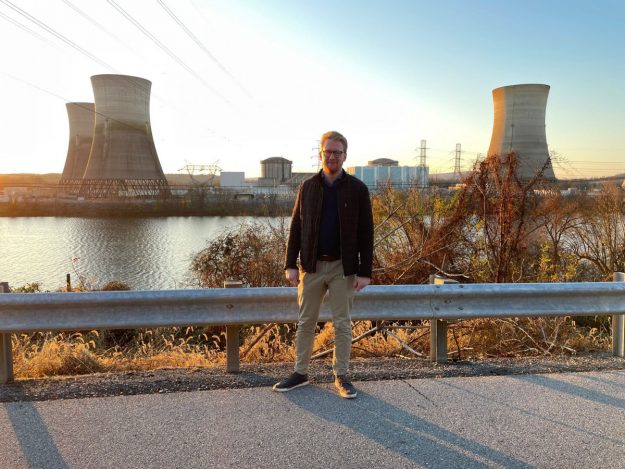
Siegfried Evens in front of the Three Mile Island Nuclear Power Plant in the USA.

Teaser

That is why this dissertation will focus on exactly that: the water that runs through our nuclear power plants. Water is so important and obvious to the safety of so many power plants not only nuclear ones that it barely goes unnoticed. Indeed, the history of nuclear power contains a striking paradox. Water is the key to a normal functioning nuclear power plant and to preventing nuclear accidents. Yet, up until now, the history of water is largely absent from the history of nuclear power, and especially nuclear risk. In contrast, there is a longstanding scholarly tradition of studying nuclear fission and radioactivity.

But this dissertation is about more than just water. By focussing on water streams for the analysis of nuclear safety, other relevant elements open up as well. While water streams are essential, there is no nuclear power plant in the world that generates electricity because of it. Electricity is generated because of the steam caused by the boiling of that water. The generation of steam is coupled to the science and engineering practice of thermalhydraulics a field with a long and important history, dating back to the early days of industrialisation and mechanical engineering.

As I will show, much engineering and political effort in the nuclear sector and outside of it has been devoted to the management of pressure and temperature in steam equipment, such as boilers and pipes. All of this was essential to prevent the pressure from mounting too high, causing catastrophic explosions. In turn, the management of all this water and steam is also very reliant on the material that this equipment is made of. And that material is steel. A very robust material, steel is wellequipped to
withstand the tremendous pressures and temperatures necessary to generate power. However, as
with almost any material, it can decay, crack, brittle, and break. A major theme in this dissertation will therefore be the continued effort to improve and regulate steel and the work of metallurgists and material engineers in doing so. Streams, steams, and steels; that is in many ways the essence of
this dissertation.

Excerpt from Siegfried’s final seminar text, pp. 12-13.


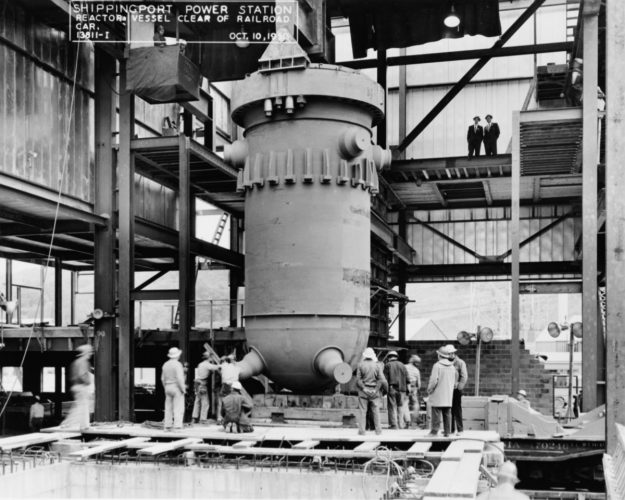
A pressure vessel at Shippingport Nuclear Power Station in the USA.

Breathing Swiss air – A research stay at the University of Bern

Text: Alicia Gutting, doctoral student at the Division

The fun thing about writing a PhD thesis on the nuclear Rhine in Sweden is that it is actually necessary for me to visit the nuclear sites on the Rhine as well as local archives. My three supervisors and I therefore decided that it would be an enriching experience to spend some time at the Section of Economic, Social and Environmental History of the History Department at the University of Bern. In this rather fast-paced academic world, I wanted to get the most out of my stay as well as get to know fellow historians in Bern. Therefore, a three months visit from the beginning of October until the end of December sounded suitable. Having all the archives and the nuclear sites at my doorstep was also a major motivation to stay a little bit longer. 

 My plan was to use the time to focus on finishing two articles. Both these articles deal partially with the Swiss nuclear development as well as cooling water negotiations between Switzerland and Germany and the accompanying risks. I dreamt of being in Switzerland, taking the good air of Bern in and the articles would magically write themselves. This clearly did not happen. However, through a presentation of my work at the history department I received valuable input from Swiss colleagues. Some critical, which I very much appreciated, but mostly very positive and insightful. The discussion showed me that I am on the right track and that my work is still a research desideratum, even in Switzerland. 

The second-last week of my stay in Switzerland was the absolute highlight of the whole three months. My main supervisor Per Högselius took the time to visit me for five days. We started with a day at the state archive in Aarau, where we looked at maps of the Beznau nuclear power plant. Beznau, built in 1969, is an especially interesting case as it is the first Swiss nuclear power plant. It is also the oldest operative nuclear power plant up until today. Apart from that it uses a freshwater cooling system and therefore does not cool the water down with the help of cooling towers. Per and I could take a close look at the significantly warmer water that was led back into the considerably small river Aare. 

The NPP Beznau and one of its cooling water outlets 

Before we visited Beznau, we went to see the newest nuclear power plant Leibstadt, built in 1984. When we just got out of the car, Per received a call from a journalist from the Swedish newspaper Dagens Nyheter. His expertise was requested on the Swedish nuclear power plant Ringhals and the current electricity prices in Sweden. This turned our field trip into a much more current issue than we had originally anticipated. 

Per on the phone while looking at Leibstadt’s cooling tower

On our last day we went to see the Mühleberg nuclear power plant, which was decommissioned in 2019. Mühleberg was built from 1967-1971 also without a cooling tower. For builders of nuclear power plants this was the last chance to build without a cooling tower as Switzerland made them compulsory in 1971. What is also interesting is that Mühleberg is located above Lake Biel and the planners roughly calculated with the lake being able to diffuse the warm cooling water. The hope was that Mühleberg’s cooling water would not interfere with the cooling capacity of the Aare further downstream. 

Mühleberg NPP with the hydro power plant Mühleberg upstream, which secured the cooling water supply

Apart from looking at nuclear power plants and maps of the area, Per and I had also the chance to present our work during a workshop on the nuclear renaissance by the Research Network Sustainable Future at the University of Basel. During the workshop different researchers from all kind of fields presented their findings on nuclear power and its potential future. We got to hear about the ethical side of nuclear power, in what way nuclear power plants are megaprojects and about the entanglement of the industry with the military concerning nuclear in the UK. With our presentation on the risk of warming rivers in a warming climate, we rounded up the theoretical discussions from the morning with case studies from the Rhine, the Elbe and the Danube. 

Nuclear Power in Times of Climate Change and the Water Risks Around It – Environmental History Now

Alicia Gutting is one of three doctoral students, active in the ERC-project Nuclearwaters at the Division and supervised by prof. Per Högselius. In the thesis „The Nuclear Rhine“ she is researching transnational nuclear risk perception in Austria, Switzerland, France and Germany from the 1960s to 2018. In November the Environmental History Now blog published a text by Alicia on nuclear power, climate change and water risks focusing geographically on the Rhine river. Read an extract below, and get the link to the full text.
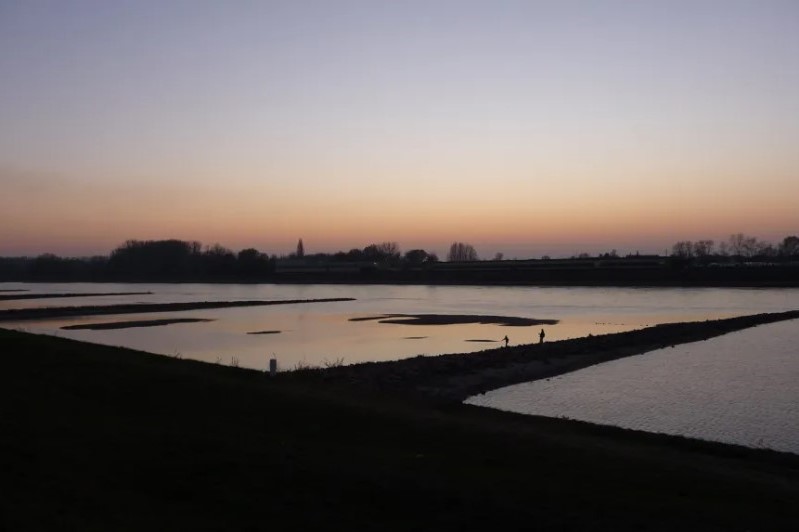
Low water levels at sunset, Upper Rhine in Karlsruhe Maxau (2018, next to the Rhine bridge between Baden-Württemberg and Rhineland-Palatinate). Photo by Alicia Gutting.

When I decided to write my PhD thesis on the history of the nuclear Rhine in the summer of 2018, the front pages of the newspapers were dominated by news of the record summer and that several nuclear power plants on the Rhine had to be shut down. Headlines focused on the topics of the low water level of the Rhine and to what extent the use of cooling water can affect flora and fauna, but also the danger posed by a lack of cooling water for the operation of nuclear power plants. By then, I had already planned to take a closer look at the effects of heat waves on the operation of nuclear power plants. In the course of my research, I found out that while heat waves are a problem, the thermal load on water bodies caused by the recirculation of cooling water is an equally pressing issue.

The Rhine River basin is, in relation to its flow per watershed, the most thermally polluted river basin globally mainly due to nuclear power plants. Thermoelectric power plants such as coal and nuclear power plants are major drivers of thermal pollution. Even though the European Union has set a limit of three degrees Celsius, the limit is exceeded by five degrees Celsius every year. The majority of thermal excess heat comes from nuclear and coal power plants that were built in the 1970s and 1980s.[1]

At the end of the 1960s, a planning boom began in the countries along the Rhine. Switzerland was one of the countries that wanted to roll out nuclear power in a big way and even slowly turned away from its role as the pioneer of hydropower. In addition, Germany and France also wanted to use the water resources of the Rhine for cooling purposes, which quickly led to conflicts on the fair distribution of cooling water. Switzerland, France, Germany, and the Netherlands planned to build roughly around twenty-five nuclear power plants in the Rhine River basin (including the Aare and the Moselle), which would have made the Rhine one of the most nuclearized river basins in the world.[2] Especially problematic was that energy companies were tempted to build nuclear power plants without external cooling systems as experts deemed the water resources of the Rhine to be sufficient.

In Germany, nuclear accidents hardly played a role in the early risk perception of the 1950s, 60s, and 70s. This is because the broad public knowledge about the extreme effects of a nuclear accident was almost non-existent. Instead, the focus was on the immediate effects of nuclear power plants that were unavoidable during operation, such as thermal pollution of water bodies. It was also in these early years that water management authorities were the most vocal administrative opponents of nuclear energy. Political supporters of nuclear energy tried to counteract the opposition by handing over water competences to the Federal Ministry of Atomic Energy. However, this decision did not lead to the desired decrease in criticism. In the 1970s, criticism regarding water became even louder when it came to the thermal pollution of the Rhine and the Weser.[3]

Source: Nuclear Power in Times of Climate Change and the Water Risks Around It – Environmental History Now.

What will happen to the Ågesta Nuclear Power Plant?

Our colleague Anna Storm (now professor of technology and social change at Linköping University) has been involved in an intellectual exchange with the state-owned power company Vattenfall about the future of Ågesta Nuclear Power Plant in the context of its decommissioning in the magazine NyTeknik.

In Anna’s first article from 28 July 2022, she displays her consternation by the fact that Sweden’s first nuclear power plant (1963-1974) was already being dismantled, disregarding demands for making this cultural heritage of modern Sweden accessible to a wider audience via the cooperation with musea and heritage scholars. Especially in the case of the iconic control room, Anna objected to the practice of the company.

Five days later, on 02 August, Melker Drottz, the acting head of decommissioning of Ågestaverket from Vattenfall, published a response to Anna in the same magazine. In his eyes, Vattenfall did simply, what they were legally obliged to do. Since the control room, among other facilities, would be an irradiated environment, he objected to Anna’s wishes for creating a cultural venue from this heritage site. Furthermore, he pointed to the various other ways, Vattenfall would contribute to the memory of the Ågesta plant.

One day later, on 03 August, Anna responded by stating that future generations also need the actual sites as witnesses of their cultural history. In her understanding, photographs and oral stories will not be enough.

Photo of Anna Storm
Anna Storm

Here are full citations for this exchange:

Storm, Anna: “Ågestaverket – en unik kärnkraftsanläggning slängd i containrar”, in: NyTeknik, 2022-07-28, https://www.nyteknik.se/opinion/agestaverket-en-unik-karnkraftsanlaggning-slangd-i-containrar-7035908 [2022-08-09].

Drottz, Melker (operativ chef för nedmontering och rivning av Ågestaverket, Vattenfall): Replik “Vi är skyldiga att montera ned Ågestaverket”, in: NyTeknik, 2022-08-02, https://www.nyteknik.se/opinion/vi-ar-skyldiga-att-montera-ned-agestaverket-7035985 [2022-08-09].

Storm, Anna: Slutreplik “Det hade varit möjligt att behålla kontrollrummet från Ågestaverket”, in: NyTeknik, https://www.nyteknik.se/opinion/det-hade-varit-mojligt-att-behalla-kontrollrummet-fran-agestaverket-7036016 [2022-08-09].

NUCLEARWATERS Seminar: Ecological entanglements, nuclear ruptures, and the affective intimacies of Bishnoi resistance

The Nuclearwaters project is hosting the third seminar in its Nuclearwaters Seminar Series this term. This time we have the pleasure of welcoming Sonali Huria, who is going to be speaking about the relationship of the Bishnoi community with water in nuclear India.

Time: Fri 2022-04-08 13.15 – 15.00

Video link: https://kth-se.zoom.us/j/67164895000

Language: English

Lecturer: Sonali Huria, associated scholar, Science, Technology and Gender Studies, FAU, Erlangen-Nürnberg

Ecological entanglements, nuclear ruptures, and the affective intimacies of Bishnoi resistance

For the Bishnoi, among the earliest eco-conservationist communities in the Indian subcontinent, encounters with the atom have been encounters of colossal ruptures. Their histories, geographies, religious intimacies, and more-than-human worlds have collided with India’s nuclear trajectories at two distinct sites – first, in the arid deserts of Pokharan, Rajasthan where India conducted its atomic tests, forcing the Bishnoi into the ranks of the Global Hibakusha (Jacobs 2022), and, more recently, in Fatehabad, Haryana where the Indian government is setting up a massive 2,800MWe nuclear plant comprising four ‘indigenous’ CANDU-type Pressurised Heavy Water Reactors of 700 MWe each.

While to the Bishnoi, water represents a vital element in the multispecies assemblage in which the human, nonhuman, and the divine all come together in an entangled relational ecology of reverence, kinship, nurturing, ethics, and reciprocity, the proposed nuclear plant, to be set up over the Fatehabad branch of the Bhakra Canal, the lifeline of this predominantly agricultural region, threatens to usurp and drain away its dense material embeddedness within the Bishnoi ecology.

This presentation will seek to tease out such multiple layers of material embeddedness of water within Bishnoi lifeworlds, in the contestation between the Indian state, besotted with the nuclear age, and the intimacies of ecological subjects committed to protecting their sacred material worlds, and, to bring these entangled flows from the nuclearized Bishnoi heartland to the Nuclear Waters seminar. (Visit the Nuclear Waters project page)

Reference

Jacobs, Robert A. (2022). Nuclear Bodies: The Global Hibakusha. Yale University Press

Dr Sonali Huria is the 2020-21 Fellow, Takagi Fund for Citizen Science, Japan and an associated scholar, Science, Technology and Gender Studies, FAU, Erlangen-Nürnberg. She has worked for over a decade in the field of human rights research, teaching, advocacy, and investigation at India’s National Human Rights Commission, and completed her PhD in 2020 from Jamia Millia Islamia University, New Delhi. Her doctoral research involved an exploration of the encounters of grassroots movements in India with the technopolitical trajectories of and imaginaries surrounding India’s nuclear modernity, and the brutalities unleashed by the postcolonial nuclear obsessions of the world’s largest democracy. She has written extensively on the political, social, environmental, and human rights concerns surrounding India’s nuclear sector for news portals, magazines, and newspapers in South Asia and beyond. She also co-edits DiaNuke.org, a popular resource space on nuclear disarmament and nuclear energy issues.

Melina Antonia Buns joins the Division!

Nuclear-historical research at KTH is expanding! We are happy to announce that Melina Antonia Buns has joined us as a visiting post-doc researcher, based on a collaboration between NUCLEARWATERS, KTH’s Division of History of Science, Technology and Environment and The Greenhouse at the University of Stavanger. Melina was recently awarded a major research grant from the Norwegian Research Council, which will enable her to spend two years at KTH. The grant is linked to her project “Nuclear Nordics: Radioactive Waste Spatialities, Materialities and Societies in the Nordic Region, 1960s-1980s”. Read more about this exciting research endeavor at the website of the Norwegian Research Council.

Melina Antonia Buns at her new KTH office

Melina holds a BA in history, art history and Scandinavian studies from the University of Vienna, an MA in International and Global History and a PhD in history from the University of Oslo. In June 2021 she successfully defended her thesis “Green Internationalists: Nordic Environmental Cooperation, 1967-1988”. At KTH she will make use of her expertise in Nordic environmental history while moving into the nuclear-historical field.

Melina will present her research project “Nuclear Nordics” in the NUCLEARWATERS seminar series very soon. The seminar was originally scheduled for 26 January, but has been postponed. We will soon be back with a new date and time.

This text was originally published by Per Högselius on nuclearwaters.eu on 21 January 2022.

Exploring nuclear Germany

This text was first published by Per Högselius on the Nuclearwaters-Blog on 3 December 2021.

Exploring nuclear Germany

As the most recent wave of the corona pandemic rolls in over Europe, it seems that much of the past summer and autumn was a narrow window of opportunity for international travel. I now feel happy that I managed to make use of that window.

Profile picture of Per Högselius

In late September I went to Regensburg to participate in a conference on infrastructures in East and Southeast Europe (see my separate blogpost on that). After the conference, I stayed on in Bavaria for a couple of days. I rented a car and a bike and went to take a close look at the water supply arrangements for three German nuclear power plants and the nuclearized landscapes that have emerged as a result of nuclear construction there from the 1960s to the 1980s.

Gundremmingen is the only German nuclear power plant situated directly on the Danube. It started to be built already in 1962 and was one of Germany’s first nuclear power plants. There was a fierce debate during construction about possible contamination of the region’s drinking water. Less known is that plant construction demanded a complex reengineering of the Danube, which was dammed upstreams and also a few kilometres downstream to create a reliable and regular water flow for cooling the reactors. This generated an artificial water reservoir, the shores of which, as I was able to experience directly, are nowadays still very popular places for various leisure activities. Nuclear hydraulic engineers also built a canal to divert Danube water to the nuclear plant. The early pioneering reactor at Gundremmingen was shut down long ago. However, the plant was expanded through the addition of two much more powerful reactors: one boiling water reactor (seen to the left in one of the pictures below) and one pressurized water reactor (seen to the right), which today makes the plant area look very diverse. The pressurized water reactor was closed in 2017. The boiling water reactor, supported by one cooling tower, is still in operation, but like all remaining German NPPs, its days are numbered.

The Isar nuclear power plant is named after the Danube tributary on which it was built. Here, too, nuclear construction was intimately linked to other hydraulic projects aimed at “taming” the river. The Isar was dammed and equipped with hydroelectric turbines (see the image to the upper left), which now still contribute to the safety of the nuclear station, because they ensure that electricity will always be available locally even in the case of a regional power failure. This made it unnecessary for the nuclear operators to invest in emergency diesel generators. The Isar plant was originally designed for one boiling water reactor only, for which a less powerful and very compact type of cooling towers were built (lower left, to the right of the reactor building); these were used only when the Isar’s water flow was insufficient. The high-rise cooling tower that can be seen across much of Bavaria was constructed only when a further reactor, of the pressurized water type, was added later on (right). The boiling water reactor was shut down immediately after the 2011 Fukushima disaster. The pressurized water reactor is supposedly still in operation, but apparently not on the day of my visit, judging by the lack of “smoke” (water vapour) from the cooling tower.

The Grafenrheinfeld NPP is also in Bavaria, but further north, in Lower Franconia, where the inhabitants usually don’t think of themselves as “Bavarians”. This cultural divide largely coincides with the physical drainage divide between the Rhine and the Danube river basins. Hence this nuclear station, which is no longer in operation (having been shut down in 2015), is situated not in the Danube basin, but on the Main, the Rhine’s most important tributary. When construction started in 1974 the Main was already a suitable river for cooling water supplies. This was because Germany had invested enormously in the 1950s and 1960s in making the Main navigable all the way up to Bamberg, taming the river and regularizing its water flow with the help of no fewer than 34 weirs and locks. The river is now part of a system that interconnects the Rhine and Danube river basins, the centrepiece of which is the Rhein-Main-Danube Canal.

A month later I returned to Germany. I first spent a few days at the German Federal Archives in Koblenz, which turned out to be a treasure trove for nuclear-historical research. I then went up (or rather down) to northern Germany and the Lower Elbe region. There I went to see how the Stade, Brokdorf and Brunsbüttel nuclear power plants (of which only Brokdorf is still in operation, but only until the end of this year) were integrated into this North Sea estuary. In contrast to the plants erected along the Danube, Isar and Main further south, the main challenge here seemed to be flood (rather than water scarcity) management. The Lower Elbe region is historically very much a marshland and all nuclear – indeed, all industrial – projects are dependent on a reliable drainage infrastructure. Like in the Netherlands, that infrastructure is critically dependent on large pumps for lifting water, in this case into the Elbe (see the image below, far left). The nuclear stations along the Lower Elbe also made use of a pre-nuclear infrastructure of earthen dikes, which are typically 5 meters tall (upper and lower right). These have always formed the centerpiece of nuclear flood protection and hence they can be regarded as components in the nuclear safety system. However, after the 1999 flooding of the Blayais NPP in France, a plant that is located in an estuary very similar to that of the Elbe, German regulatory authorities started looking into the deeper history of flooding events in the North Sea and how new such events might potentially cause havoc to the Lower Elbe NPPs: would they be able to cope with an event on a par with the famous Storegga slide, which is believed to have caused a huge tsunami throughout the North Sea region back in 6200 BC?

Isar Nuclear Power Plant 2021, by Per Högselius

In early 2022 I will publish an article in Technology & Culture which discusses, in further depth, some of the above-mentioned issues relating to nuclearized landscapes, water scarcity management, flood protection, the complex interplay between nuclear and non-nuclear hydraulic construction. Have a look in our list of publications.


When Research Interests Mix

The WaterCentre@KTH is a hub of expertise in water research at our university. Its director and longstanding researcher at our division, David Nilsson, is working together with several scholars from the fields of EKV Kraft- & Värmeteknologi, Vatten- och Miljöteknik, Industriell Bioteknologi, Resursåtervinning, and Hållbarhet, Utvärd och Styrning. Furthermore, it cooperates with Stockholm Vatten och Avfall. Partners of the centre are ivl – Svenska Miljöinstitutet, Stockholms Stad, Stockholm Environment Institute and Värmdö Kommun. Multiple researchers at our division are also involved in the centre’s work or have been in the past, such as the Water Centre’s Research Coordinator Timos Karpouzoglou.

Water is crucial not only for the survival of living organisms, but also for many industrial purposes. It is here that the research interests of the Water Centre converges with ongoing projects at our division. Since the research project Nuclear Waters tries to put water at the centre of its historical nuclear studies, common interests occur frequently. The following is a repost from a text published on the Water Centre’s Blog, highlighting one example where both interests came together.

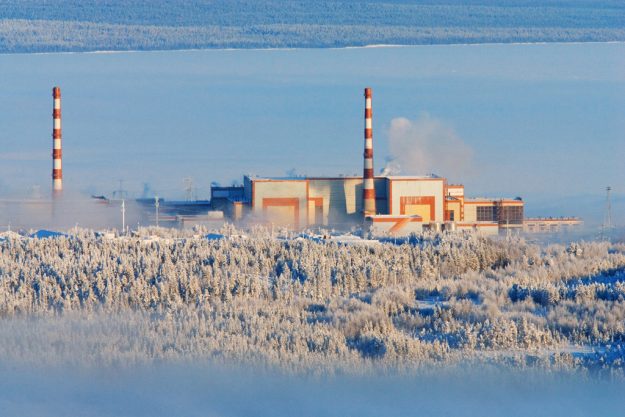
Kola Nuclear Power Plant at Lake Imandra, above the Arctic circle. RIAN Archive, Licence CC BY-SA 3.0.

Repost from the WaterBlog@KTH

Why Water Matters for Nuclear Power

We tend to associate nuclear power plants with many different things: smoking cooling towers, Homer Simpson-like operators, or dramatic TV series like HBO’s Chernobyl. But something people generally do not associate nuclear power plants with are massive amounts of water. Still, water is at the centre of nuclear power’s historical development, contemporary challenges, and further future.

The connection between water and generating nuclear power goes back to the Industrial Revolution, when steam technologies such as boilers and steam generators were used to heat up water, turn that water into steam, and use the energy of that steam to generate power. However, this led to many steam explosions with deadly casualties. Countries like the U.S., France and Sweden enforced safety rules, which stipulated how the boilers had to be designed and what the allowed pressures and temperatures were.

In the 1950s, more and more countries saw the potential of using nuclear technologies to generate power. With its Atoms for Peace-program, the U.S. took the lead and promoted the reactor type they developed: the light water reactor. This reactor type uses normal water as a coolant and had its origins in both naval propulsion and fossil fuel power generation. This continuity thus made water-cooled reactors a relatively simple way of rolling out nuclear power fast.

The safety in nuclear power plants was therefore determined by the control of water and the understanding of thermal-hydraulic phenomena, such as transients and steam explosions. The pressure vessels, steam generators, valves, pipes, tubes, and pumps of nuclear power plants suddenly became subjected to the steam regulations of the Industrial age. This created new risks since these codes and regulations did not consider radiation. One of the codes that underwent revision was the Boiler and Pressure Vessel Code of the American Society of Mechanical Engineers (ASME). The Code started travelling and was, for instance, almost directly implemented in all Swedish nuclear power plants. Gradually but surely, nuclear safety regulations in the West became more ‘nuclear’ as the intersection between water, steam, steel, and radiation became better understood and nuclear accidents, such as Three Mile Island, pushed governments for more safety legislation.

For the USSR water was equally crucial along all steps of the nuclear lifespan, such as mining, fuel element production, exploitation, and the storage of spent nuclear fuel and radioactive waste. In general, all nuclear power plants were placed next to either a river, a lake or the coast – the latter being an exception. The most common source of coolant was river water. Interestingly, those rivers usually had to be previously ameliorated and often artificial water reservoirs were created.

A specific setup was used for so-called energy complexes, a special form of nuclear-hydrotechnical combine. They embodied the combination of nuclear and hydro power, agricultural irrigation, and fish cultivation in one location. Furthermore, constructing them meant to manipulate water bodies with newly created dams. In this way an energy complex was created to procure valuable synergies through the multiple usage and partial recycling of water.

Finding the right location was crucial for an envisioned energy complex. It needed to be a location with sufficient water supply, with suitable ground conditions, without earthquake or flood dangers. In addition, the complex needed to be within reasonable distance towards a (potential) industrial settlement to provide this population centre with electricity. Safe and ample water supply had to be considered during site selection and was one of the essential criteria for their construction. If there was not enough water, the complex could not be built.

A leading institute for the creation of energy complexes was Gidroproekt (Hydroproject). As the name suggests, Gidroproekt was a Soviet hydraulic research, design and construction agency. By joining its hydraulic expertise with newly introduced nuclear engineering, this institute was the very place where knowledge transfer between these two prestigious engineering communities took place. Here, the water-focused perspective prevailed and embedded nuclear technology into hydro-ameliorated aquatic systems. It promised prestige as well as quick results – and Gidroproekt readily delivered.

In sum, both in the East and the West, water played a crucial role in the development of nuclear power. In the West, knowledge about water was essential for developing nuclear safety practices. In the East, water was seen as a crucial resource, for powering energy complexes in the struggle for building a Communist state. Nuclear’s reliance on water meant that nuclear power plants and energy complexes were meeting places of different long-standing traditions and communities. Given the large number of water-cooled reactors in the world today, and including those under construction, it is fair to say that this crucial connection is there to stay.

By Achim Klüppelberg & Siegfried Evens
Doctoral students at the division for History of Science, Technology and the Environment, within the research project Nuclear Waters.

The Politics of Nuclear Waste: An Interview with Andrei Stsiapanau*

by Alicia Gutting, PhD student

Nuclear energy is a highly debated field and depending on the societal context usually either embraced or fully rejected. From an outsider position it sometimes seems as if there was no in between: you are either pro- or anti-nuclear. This does not solely apply to times of active nuclear energy generation, but it also affects the future and finding solutions for safe storage of nuclear waste. In today’s interview with Andrei Stsiapanau we will hear more about the nuclear debate in the former Soviet Union. Andrei is a guest in our Nuclearwaters project since January 2020 and he is a scholarship holder of the Swedish Institute Visby Scholarship Program for Senior Researchers. He researches how nuclear energy is being socially and politically debated in Russia, Belarus and Lithuania and he is especially interested in the politics of nuclear waste in Russia, Lithuania and Sweden.

Alicia Gutting: Andrei, could you please let us know what you have been working on in the past months?

Andrei Stsiapanau: During the last months I have been working on the nuclear waste management issues in Russia as well as in Lithuania and Sweden. When more and more nuclear facilities throughout the world enter the stage of decommissioning, it is becoming particularly urgent to find sustainable solutions to the issue of nuclear waste. The list of possible technical solutions for spent nuclear fuel and other types of waste include deep geological disposal after reprocessing (favoured in France, Japan, and UK); direct deep geological disposal (favoured in Belgium, Sweden, Finland, Germany, USA and Czech Republic); surface long-term storage (favoured in the Netherlands, Italy and Spain). Each of these solutions translates into different ways on how to communicate, classify and govern nuclear waste in a particular country.

My research is focusing on how nuclear waste issues are communicated in various techno-political contexts. While studying how nuclear waste issues are being negotiated with communities in Russia, I discovered that natural resources like clay are used within nuclear waste discourses to mitigate the risk of potential radioactive contamination. It was my starting point to investigate how natural resources are used in various discourses about nuclear waste to make it less dangerous and harmful for people and environments. In the cases of Lithuania and Sweden, I am investigating how, through awareness and information campaigns, risks associated with nuclear waste are mediated and mitigated to transform the hazardous nuclear objects into manageable waste.

AG: What role does clay play?

AS: According to numerous researches on the role of the natural barrier in the nuclear waste disposal system, clay as well as crystalline rock are considered as a retardation medium for radionuclides migration. The multi barrier protection within nuclear waste technology illustrates how natural barriers or the geology of the disposal site will retard or mediate for both fluid flow and radionuclides migration in case of the engineering layer decay. This kind of technical vision of the disposal process promotes the natural protection layer as a reliable tool for absorption and immobilization of radioactivity. Geological and chemical studies of clay rock in various sites in the United States, France, Belgium, Canada and Russia show that clay has a number of absorption properties valuable for immobilization of the radioactive elements in the geomedia in case of the technical barrier decay. Thus, clay has become employed as a part of the nuclear waste management process. It represents a tool for absorption, immobilization and confinement of radioactivity. Including clay in the whole process of the nuclear decommission and decontamination makes it possible to reconsider the role of natural resources and materials in nuclear waste technologies and multi-barrier protection discourses.

AG: Are there differences in the Swedish and the Lithuanian (political) approach?

AS: Nuclear waste management systems in Sweden and Lithuania are developing in the context of decommissioning and nuclear phase out but following different trajectories and guidelines. The final repository for short-lived radioactive waste located at Forsmark in the municipality of Östhammar started operating in 1988. Lithuania is only now entering the phase of the construction of the landfill repositories for low and medium radioactive waste, and the construction of the geological disposal is programmed for after 2045. The Swedish approach represents an advanced example of nuclear waste management, based on the long-term experience of scientific research, transparent decision-making and continued reliance on public opinion and participation. Some connections in sharing nuclear waste management technology and experience exist between these two Baltic Sea countries. The Swedish nuclear waste authority, SKB, has been involved in the assessment of the existing nuclear waste facilities at the Ignalina NPP site in Lithuania since the 1990s. Swedish nuclear research and governance institutions continue to contribute to the transfer of knowledge and expertise in nuclear waste management taking part in numerous joint international research projects (BEACON; EURAD).

AG: What role does environmentalism play in the debate?

AS: As the two countries are at different stages of implementation of nuclear waste programs, it illustrates different levels of public engagement in the site selection process and environmental impact assessment of the radioactive waste disposals. In Sweden environmental issues are at the core of the public debate and concerns about the nuclear waste management program and are involving various actors, from local communities to International NGOs and leading national media outlets. In Lithuania environmental issues are less questioned, site selection is not contested and public participation is limited to local communities of the nuclear site with scarce media coverage. I suppose this situation will change with the start of a public discussion about the site selection for geological disposal of high radioactive waste and SNF and its environmental impact assessment. This debate will expand nuclear waste issues to the national scale. Considering environmentalism not only as participatory but also as scholarly concern, at the moment there are relatively few studies in environmental humanities and history about the uses of the natural resources in nuclear waste confinement and its impact on social and natural landscapes.

AG: Do people in the two countries differ in their risk perception?

AS: Different levels of public engagement in the nuclear decision-making illustrates different public opinion dynamics as well as public perception of nuclear risks. In Sweden due to the nuclear phase-out decision in 1980 and to the high impact of environmental movements, critical voices are prevailing the publicity concerning nuclear waste. In Lithuania the nuclear energy use became public only in the 1990s after the reestablishment of the independence and were associated mostly with Chernobyl disaster risks and anti-communist, sovereignty claims. During the transition period, the use of nuclear energy was considered as necessary for the economic and social developments of the country; political personnel, nuclear engineers and Lithuanian citizens embraced the energy produced by the Ignalina NPP as a national resource. The referendums about nuclear energy uses in Lithuania in 2008 and 2012 after the start of the decommissioning of the Ignalina NPP showed a rather radical change from pro- to anti-nuclear attitudes challenging the plan to construct a new NPP in the country.

*This interview originally appeared on the Nuclear Waters project website.

Why everyone should watch HBO’s “Chernobyl”

By: Achim Klüppelberg, Siegfried Evens, and Johan Gärdebo (Read in Russian: Клюппельберг, Ахим – Эвенс, Зигфрид – Гердебо, Иоган – Чернобыль)

25 meters below Stockholm’s solid bedrock, HBO’s Chernobyl is being screened inside a decommissioned reactor for nuclear weapons. It is dark, a little bit chilly, and the atmosphere is tense. The thrilling music ends, the screen goes black, and the crowd spontaneously starts applauding. Afterwards, the reactor hall became a place of discussion. Can we learn from this show? We, three nuclear historians, think we can. Even more so, we all should. Roughly 451 civil nuclear reactors are online world-wide and 54 are in construction. This concerns everybody.
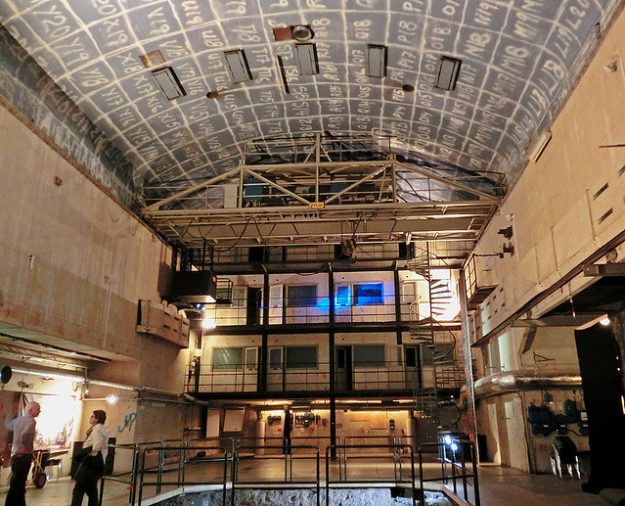
Displays R1 Reaktor Hallen

Drama or reality?

Let’s be clear about one thing: Chernobyl is a cinematographical masterpiece. Yet, apart from the brilliant acting, production, and music, the merits for the show’s success might ultimately go to reality itself. The show depicts everything; from the apocalyptic specifics of the nuclear disaster to the everyday life in former state-socialist countries. And in the end, even the best screenwriters in the world could not have been able to invent such a tragic and unbelievable story like the Chernobyl disaster.

That being said, entertaining historical fiction does not necessarily mean ‘correct’ historical drama. Is the series realistic? Craig Mazin, the writer of the series, has done a lot of research on the catastrophe. His bibliography provides a sufficient overview of the ever-growing state of the art on Chernobyl. Many of the scenes also correspond to real testimonies.

Yet, the series is and remains a dramatisation of real events. Some characters are made up and act as compilations of different real-life actors. The character of Ulana Khomyuk, for instance, embodies and symbolises a whole army of scientists that travelled to the exclusion zone and surrounding areas. The trial scenes also did not happen in the way depicted. Neither Legasov nor Shcherbina were there, and they certainly did not give heroic, truth-revealing speeches there.

The series’ creators are conscious and honest about these dramatisations. Not only in the podcast, but also in the final scene of the final episode, they reveal honestly how they altered history for dramaturgical effects. But maybe the question of correctness of historical drama is not relevant. The question is rather whether the Chernobyl catastrophe is represented correctly. Or to be more specific, whether the analysis of the disaster is correct.

Unfortunately, the answer is: yes.

What is it about?

The main message of the Chernobyl series seems to be that the catastrophe was a human disaster. It was not only caused by defective technology or operator’s mistakes, but by society, politics and technocratic culture. Hence, Chernobyl was entrenched in the deeper societal structures and safety culture of the Soviet Union.

This renders the show’s message the same as the message we, as historians of (nuclear) technology, try to convey every day: technology is human. Both its benefits and flaws are created by humans and their organisations. And this, in turn, creates risks to human beings.

Managing nuclear risks is then not solved by mere “technofixes.” An extra pipe or another safety procedure may be necessary, but are in themselves not sufficient. If we want to prevent nuclear catastrophes in those plants, we have to look at the human beings operating them. We have to look at how they think, behave and perceive things. We have to look at how they organise, interact, and share information. The causes of nuclear accidents do not stop at the gated fence of a nuclear power plant. If we really want to understand a nuclear accident, we have to look at society in all its facets.

“What is the cost of lies?”

It is both the first and the last sentence in the series, articulated by Valery Legasov on his audiotapes in the series. “The cost of lies” is also Craig Mazin’s explanation for the Chernobyl catastrophe. When people start lying, when transparency is lacking, and when the political system hinders the prevention of risks, then catastrophes happen. Mazin also indicated multiple times that it was not his intention to tell an anti-Soviet story nor an anti-nuclear story. He simply wanted to show the specific contexts in which huge catastrophes happen. And those contexts are profoundly human.

A useful show?

Pro-nuclear voices have already criticised the HBO series. It would overdramatise the accident and overemphasise the dangers of radiation. However, their arguments do not seem to be sound. Furthermore, downplaying the seriousness of Chernobyl or radiation does not help pro-nuclear voices in any way. In fact, every proponent of nuclear energy should talk about the tragic events at Chernobyl and be utmost open about it. It is the demonstration of what happens when a powerful and promising technology gets mismanaged. If there is a lasting future for nuclear energy, then its experts need to speak about, even promote, also the legacy of its mishaps. That’s why we should all talk about Chernobyl.

However, anti-nuclear voices have also taken the opportunity to refer to the series as an argument against nuclear power. Even if Chernobyl shows the enormous risks that nuclear technologies entail, generalising the Soviet situation for the entire world would not be correct. Indeed, the Soviet-bashing claim that accidents like Chernobyl can only occur in state-socialist countries has become redundant after Fukushima-Daiichi in 2011. Once again, it became clear that the social, cultural and political contexts constitute as the true causes of a nuclear accident.

In fact, every national nuclear programme is different, with different safety cultures and contexts but also common characteristics, such as secrecy, dual-use possibilities and a sense of being at the helm of technological progress. A lot of safety standards are now produced on an international level, but countries can still decide on how they implement them. Nuclear accidents can happen and have happened elsewhere as well, also in the West. Why? Because, again, nuclear accidents are protracted by humans. And humans do not only live in the Soviet Union or Japan.

The verdict

Chernobyl is a series that everyone should watch. It teaches us the strong connection between technologies and humans and how that connection can backfire in the form of a catastrophe. It’s a series that teaches us not to make the same mistakes as in 1986.

In fact, it teaches us that Chernobyl is not yet finished. If our discussions in the reactor hall in Sweden have taught us one thing, then it is that the story of Chernobyl is still incomplete. There are still so many things that are unclear or left for debate. Yet, although incomplete, it remains a powerful story. And a story that has been told by HBO in a powerful way.