KTH Logo

Drought or low water availability as an historical preparedness problem

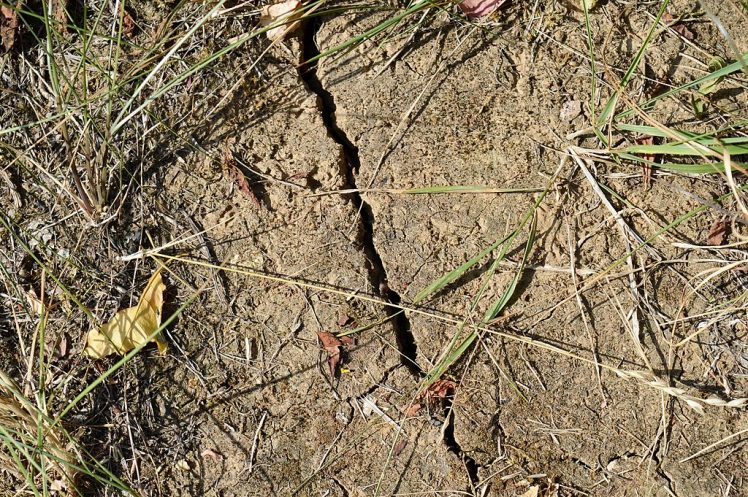
Drought and the lack of access to clean water constitute serious threats to human and natural wellbeing in many places of the world. Over the last century, drought has faded from quotidian life in many parts of Scandinavia and northern Europe. However, experiences of extreme weather in recent years have advanced a new awareness and preparedness agenda. Issues concerning water use and availability are now among the priorities of risk management, climate change adaptation, and preparedness efforts.

Sweden’s weather was fairly stable for much of the 20th century. The problems of drought were usually regarded as difficulties affecting local agriculture and drinking water supplies. In addition, concerns related to the climate and weather were commonly overshadowed by threats linked to the politics of the Cold War. In the 1990s, crisis management interventions were formulated around weather-related contingencies. Among other things, scenarios for dealing with flooding were being worked out.

The drought and the subsequent forest fires during the summer of 2018 ushered in a new discussion about Swedish preparedness against drought. The historical aspects of what was usually referred to as the extreme weather were highlighted by the fact that the drought and the subsequent forest fires were described as the worst in “modern times”. The abstract notion of long-term and large-scale global climate change was made concrete and meaningful here and now, as it were, in contrast to being viewed as a potential disaster happening in the future and mainly affecting other parts of the world.

Drought as preparedness problems is multi-facetted. Public agents, policy makers, and researchers underscore the large amount of work that needs to be done, the importance of facilitating a much-needed collaboration between different stakeholders and a holistic view of the issues at hand. The formulation of preparedness problems involves a kind of battle over the narrative of which threats are most serious, how they have developed, what may happen in the future, and necessary activities.

History is a fundamental component of the efforts of upholding vigilance against threats that may or may not materialize in the near or distant future. Learning from past events is crucial. However, while historical narratives help societies understand, manage, and cope with present vulnerabilities and challenges, it is impossible to devise effective preparedness measures based exclusively on historical experiences. In an era of climate change, the scale and speed of natural events have the potential of reversing understandings of historical development and build a foundation for a reformed narrative of Swedish readiness.

A historical perspective on drought as a contingency problem includes but also goes beyond mapping and analyzing past episodes of low water availability. It also brings light on the human subjectivities, relationships, and forms of governance that have emerged in response to previous occurrences. Focusing on people, it brings into focus the efforts to cope with uncertainty rather than the historical development of specific technologies for turning potential dangers into controllable and calculable risk.

This contrasts with a narrative about the ever-increasing safety and certainty of modern society. Rather than illuminating the many ways in which science and technology have improved the protection of human and non-human life, health, and vitality, other actors and issues come to the fore. Through studying actors that have taken the existential concerns of low water availability as their primary concern, it is possible to contribute new understandings of drought as an historical preparedness problem.

This may contribute new perspectives on the present, a kind of genealogy of uncertainty. In this perspective, “unpreparedness” against drought is not merely seen as an inability or inadequacy of certain institutions or technical instruments. It highlights a lack of historical narratives that can give meaning to what is currently happening and relate contemporary problems to a longer history of how society has functioned in difficult circumstances. It may help to inform the kind of coping strategies needed to deal with a volatile relationship between humans and water, or lack thereof.

Fredrik Bertilsson, historian, working as researcher at the Division of History of Science, Technology and the Environment, KTH. His project “Beyond ‘unprepared’: Towards an integrative expertise of drought” is funded by FORMAS during 2022-2025.

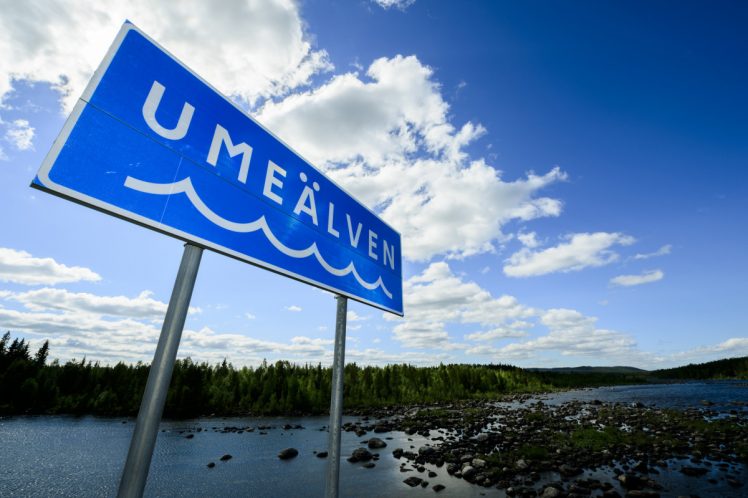
How do we make the most of Swedish rivers for hydropower and ecosystems?


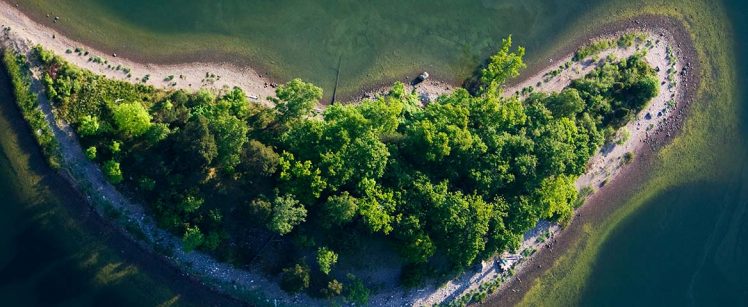
Photo by: Mattias Klum (MKTG) and Stockholm Environment Institute

On the 1st of February, this year, the biggest governance overhaul of Swedish hydropower in a century entered a new phase of implementation. This occurred when the first owners of hydropower installations, in 17 river basins, sent in permit review documents to the Land and Environmental Court, as part of the implementation of the National Plan of Hydropower Permit Review (NAP). Over the coming 20 years, all Swedish hydropower owners that signed up to the NAP (virtually all owners have done so) are required to apply for new hydropower permits that include modern environmental provisions. The overall aim of the process is to provide the maximum possible benefit to the aquatic environment and a nationally effective supply of hydropower electricity.

There is no doubt that hydropower is an important energy resource. Apart from being renewable, it is also valuable in that it provides high flexibility to the electric system which makes it fundamental for Sweden’s efforts to decarbonize. Hydropower production, however, deteriorates the connectivity of rivers – the movement and exchange of water, energy, material and species within the river system and surrounding landscape – to the significant detriment of the aquatic environment and biodiversity. When water is used for hydropower production, it loses most of the characteristics that support river connectivity. When trying to understand the essences of this national permit review process, one useful perspective is thus to view it as a national exercise of reallocating water between the, largely competing, requirements of the electric system and riverine ecosystems. Water reallocation is a governance process that includes a multitude of stakeholders that range from hydropower owners, local residents, Sámi representatives to environmental NGOs.

The governance challenges are thus significant, which means that more efficient, equitable and resilient solutions, even if identified, might not be possible to implement. In an attempt, to provide structure for analyzing and understanding the type of processes which the national permit review entails, we propose a framework of water reallocation in highly modified rivers in a recently published peer review article. The framework builds on insights from social-hydrological systems research, adaptive governance research and water reallocation research, and we test it on Sweden in a pre- and post- 2019 analysis. 2019 becomes a significant year in our analysis since this is the year the governance overhaul of hydropower formally started in the country. Based on our analysis we find that there has been an increase in adaptive capacity, understood as the capacity to reallocate water, but that this is linked mainly to water reallocation that will occur in smaller rivers and tributaries with small scale hydropower production. Rivers with large scale hydropower production are set to enjoy limited water reallocation, or we may even see increased allocation of water towards hydropower in the coming years, in the interest of increasing hydropower’s flexibility contribution to the electric system.

In this first round of implementation of the NAP, the involved basins and hydropower installations are small, but exhibit shifting character and importance. They include the mini station in Ihreån, the only hydropower installation on Gotland, to 18 hydropower installations in Rönne Å, Skåne, where the municipality of Klippan has bought and will decommission the three largest hydropower stations in the basin. As with all significant societal changes, there are varying and, at times, opposed opinions of these developments, which are reflected in the active debate that took place in the biggest Swedish newspaper at the start of this process.

Although our framework will not be able to solve all trade-offs and conflicting interests, it does provide a basis on which to analyze and understand this process and compare Sweden’s efforts in an EU setting. This is the case since the framework is broad enough to be of general interest yet sufficiently specific to provide clarity of analysis and a possibility for the cross-case analysis of various countries, with high hydropower production. We identify the EU’s top hydropower producing countries (including Sweden, France, Spain and Finland) of special interest for comparative analysis since they are all subject to the same EU directives requiring water reallocation to improve riverine ecosystem functioning while increasing the share of renewable energy. In this line, we have applied for funding with collaborating universities across Europe to continue this work.

We hope to be able to share good news and update you on these developments in coming blog posts!

Peter M. Rudberg, researcher at GeoViable
Timos Karpouzoglou, researcher, Division of History of Science, Technology and Environment, KTH Royal Institute of Technology

Make the Baltic Sea happy again

Make the Baltic Sea happy again

“I have met both goodtemplars and tee-totallers, but no one has refused the traditional fish schnapps. That’s the most absurd thing I’ve heard in my entire life; to skip the fish schnapps. When fish is the only food you get here in the archipelago!”

The quote above is from the book Roslagsberättelser by Swedish author and artist Albert Engström, published in 1942. Eighty years ago, fish was the only food available in the Baltic Sea archipelago. Today, the only fish to be found in the archipelago comes by refrigerated truck from Gothenburg. Engström worried that his beloved “rospiggar”, his fishermen and skippers, customs officers and smugglers, would disappear from the archipelago. But the fish disappearing, that was probably unimaginable eighty years ago.

We are many who can share childhood memories from the coast, from fishing excursions and sailing trips. We all agree that there has been a sharp deterioration in our marine ecosystems during our own lifetime. So the question is; can we live sustainably around the Baltic Sea?

The Baltic Sea is special. Basically, it consists of a depression in the Phenobaltic bedrock shield that arose 400 million years ago when Scandinavia collided with Greenland. But what we call the Baltic Sea today is much younger, just a few thousand years old. When the ice sheet began to melt about 14,000 years ago, the Baltic Sea first became a lake full of meltwater. Then, when the surface of the world’s oceans rose, it became a saltwater bay. Due to post-glacial landrise, the connection with the Oceans narrowed and the Baltic Sea has been brackish for the past 3,000 years. It is thus a very young – therefore fragile – ecosystem. A couple of thousand years is not much for species to adapt and thrive.

One species that thrives is homo sapiens. Today, we are around 85 million people in the Baltic Sea catchment area. We live in 14 countries and speak different languages. We have different economics and policies, and different relations to the Baltic Sea. Of course, collaborating can be difficult and the Baltic Sea was for a long time a perfect example of the “tragedy of the commons”, with over-fishing and garbage dumping. We now also know that climate change will increase runoff and thus inflow of harmful substances, while development pressure increases along coastal areas.

What matters is what we can do about it. KTH has started the Baltic Tech Initiative to seek concrete and scalable solutions to three key challenges.

  1. Reduce the impact of humans. For example, with constructed wetlands we can reduce the load from watercourses, where 95% of the phosphorus supply and 70% of the nitrogen today come. The electrification of transport by sea is another area KTH wants to speed up.
  2. Deal with old environmental sins. The amount of nutrient inflow has decreased sharply since the 1980s, but large amounts of phosphorus remain in the sediments. Phosphorus is a finite resource needed for food production and KTH is now testing whether it is possible to recover phosphorus from sediments in the Baltic Sea and utilize it on land again.
  3. A data revolution in the oceans. We are on the doorstep of a new era. For thousands of years we have managed the oceans in exactly the same way we managed our terrestrial lands as hunters and gatherers. We have enjoyed a predator’s life at the top of the food chain. If we are to manage the oceans sustainably, and cultivate our food, energy and our industrial raw materials, then knowledge is going to be absolutely crucial. A data revolution in the oceans is around the corner and the instrumentation of marine environments has started. The sea is our next space race, and we do not want to make that journey blindfolded.

KTH is just one of many actors and by collaborating with others we can achieve more. KTH can not do everything. But we will do everything we can. Do you want to join us on that voyage?


David Nilsson

Director, WaterCentre@KTH

Scientific Coordinator of KTH Baltic Tech Initiative


This text is an edited and shortened version of David Nilsson’s speech at the KTH Baltic Tech launch on 1 December, 2021.  


Wetlands implemented for treatment of stormwater on Utö

The Baltic Sea is surrounded by a huge drainage area, due to the many rivers flowing into the Baltic Sea. Nutrients and toxic pollutants originating from human activities end up in the marine environment. Stormwater management is an increasingly important issue in society due to urbanisation and increasing volumes of rainfall due to climate change. These challenges force the Baltic regions to develop stormwater treatment solutions that can clean stormwater effectively and ensure standard water quality and management in real time.

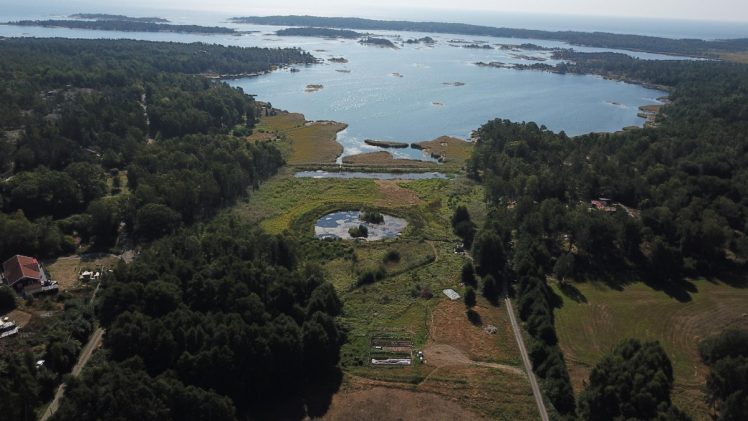
The first constructed wetland at Utö, with the two pools and the bay clearly visible.

Our group at KTH, together with our Baltic partners in the CleanStormWater project in Riga, Viimsi and Turku, are designing and testing new treatment systems, assess stormwater management solutions, develop e-monitoring systems for real time water quality management as well as establish centralised and decentralised stormwater solutions. Different stormwater treatment solutions and also e-monitoring systems will be developed, tested and/or implemented. Compared to manually collected samples, e-monitoring gives continuous information of physical parameters such as flow rate, turbidity, electrical conductivity and suspended solids. This not only helps municipalities to better monitor their stormwater quality and intervene rapidly when necessary, but also helps to identify the best technical solutions in the development stage. Since different geological, utilisation and/or urban situations will require different solutions, the project will use different sites around the Baltic Sea and evaluate different technological solutions including sedimentation, ponds, separators and bioretention systems.

KTH will collaborate with Initiative Utö on their study sites on the island of Utö. In Utö, two wetlands designed for stormwater treatment have recently been constructed (see figure 1), while a third one will be constructed to clean the stormwater from the Utö military-firing range in the near future. The wetland has an inflow from two ditches which combine in a sedimentation pond which has a circulation time of 48 hours during normal operations, the sedimentation pond is also the home of a number of crayfish. From there the stormwater is led to the wetland area, where plants treat the water. Then the water enters a pool where more substances can sediment. In this pool young peach and pike live and can grow so they will not be eaten by the three-spined stickleback which dominates the Baltic Sea. Lastly, the water is released to the Baltic Sea in a bay called Södra Fladen. The wetland is designed to decrease the amount of nutrients and heavy metals flowing into the Södra Fladen and by extension the Baltic Sea. By releasing more fully grown peach and pike to the Södra Fladen, the diversity of predatory fishes in the Baltic Sea have the ability to be restored.

Understanding the efficiency of the constructed wetland system for stormwater treatment needs careful evaluation of the water quality over a longer period of time. At these sites samples are taken from the inlet water, the process and the outlet water to evaluate the treatment efficiency. More specifically nutrients, heavy metals, PAH:s and oil are analysed in the samples. The CleanStormWater project is currently ongoing. Results from this project will give more insight to wetlands’ ability to treat stormwater and other properties such as habitat for wildlife, which can be implemented in other wetlands around the Baltic Sea. In addition, a better understanding of the implementation of e-monitoring in stormwater treatments, can promote the usage of similar systems in other treatment sites around the Baltic Sea.

Tobias Karlsson
Research Engineer, KTH


KTH Baltic Tech Initiative project (in Swedish)

Interreg CB project Cleanstormwater

How You Can Support Innovation by Spreading Inspiration

How many people do you think live in water-scarce areas? A wild chatter erupts in the classroom as the elementary-school students start debating my question. A hundred thousand! says a student. More, I say. A million? More! Two billion? Yes! A proud smile emerges on the face of the student who got the right answer. Then, a heavy atmosphere rapidly descends on the group as they intuitively begin to realize what it means. That day, the students gained deeper fundamental insights into the importance of water. That day, I visited as part of an event called ForskarFredag (Researchers’ Night).


Photo by Ben Libberton

Before visiting the class, I asked a talented coworker how I could inspire the students. He confidently exclaimed: Talk about something they are interested in! And so I started interacting with the students to find what made them engaged. The answer surprised me. One time I said: Talk to the person next to you, how do you think we can make drinkable water from seawater? Again, wild chatter ensued. Whenever I let the students discuss amongst themselves, the floodgates to inspiration would open. Filtering? Heat the water? Use local resources? And when I let them ask freely about our research, the questions went on and on in a steady stream. After 20 minutes of being flooded with questions, I had to stop answering because we were running out of time. The experience taught me that lots of young people share a deep common interest. An interest in science.

Another day, I happily visited a group of older students from all over the world. They were young people who had not yet started working as researchers, and they had joined in a competition for the best innovations in water technology (Stockholm Junior Water Prize). There, a young man from India told me: Where I grew up you cannot drink tap water because of all the contaminations. Actually, many of us work with water to change this. Looking at his friend, he continued: We have worked for a year on developing a technique called capacitive deionization to help with cleaning water. As I looked around the crowded room, I suddenly began to realize how much hard work people put in. They had insights about water, they were deeply interested science, and they passionately drove innovations.

A while back, researchers at KTH started a company based on the same capacitive-deionization technology. While small at first, their hard work rapidly expanded the company and lots of people can now enjoy the purified water that they are producing. Recently, the company made the list of top 41 startups in Sweden focusing on environmental technology. Their example clearly showed me how much we can achieve through hard work in water technologies. Now is the time when years of valuable fundamental research are finding their way to the larger society.

The end ties back to the beginning. Looking at these successes, I saw the company’s progress would not have been possible unless someone had first noticed how important water is and used their passion for science. And so, it starts with you and me. We could attend big events like ForskarFredag and the water competition. Or, you could simply start a conversation about water with a young person you know. Whenever we spread the knowledge and tap into young people’s interest in science, we are all building the solid foundations of a better tomorrow.

Johan Nordstrand
Doctoral Student at KTH


The ForskarFredag event will be held again in 2022 and researchers are encouraged to join. I would also like to extend my gratitude to all the teachers who invited researchers to their classes and got the students engaged. The event would not have been possible without you and I hope even more teachers are joining the event next year. More information: https://forskarfredag.se/

Information about the competition (Organized by SIWI, hosted visit to KTH by WaterCentre@KTH): https://www.kth.se/en/aktuellt/nyheter/an-international-vip-visit-from-young-innovators-focuses-on-water-1.920985

The company: https://stockholmwater.com/

More information about me: https://www.kth.se/profile/johanno3