
When assessment becomes digital
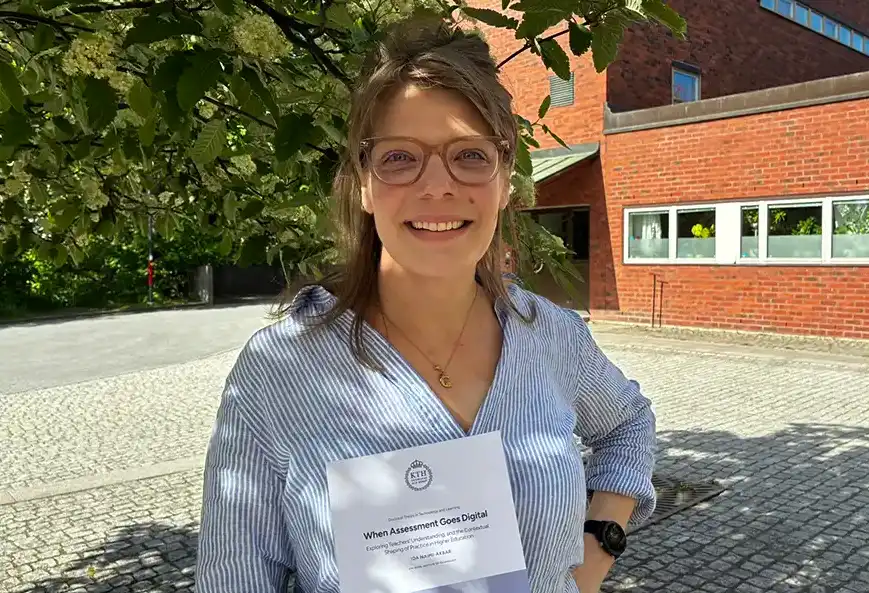
Ida Naimi-Akbar’s doctoral thesis explores how engineering teachers understand digital assessment. Digitalisation does not automatically lead to change - it depends on the teacher’s perspective and expectations of the institution. Rapid digital transition due to pandemic followed by the emergence of AI have had a significant impact on the field.
The doctoral thesis examines how teachers in technical higher education understand the digitalisation of assessment and what norms around digitalization exist at technical universities. It is based on the idea that digitalisation is a pedagogical practice in which the teacher’s perspective, contextual norms, and values are crucial in determining whether digitalisation leads to the expected change.
The study shows that teachers have different views on digitalisation - some see it as an opportunity for pedagogical transformation, while others primarily see it as new tools for existing ways of working. This affects how digitalisation is implemented.
A central conclusion is that real change requires a student-centered approach in which students are seen as co-creators in the assessment process. In addition, the “right way” to work with digital assessment is shaped by both institutional and collegial norms.
Both opportunities and risks
A major societal challenge is adapting to a more digitalised education system. Digitalisation entails both opportunities and risks and affects how education is conducted.
"My research shows that the outcomes of digitalization largely depend on teachers’ approaches, but also on institutional and collegial norms. Therefore, we need to problematize the idea of digitalization as an automatic improvement and instead analyze it based on pedagogical principles", Ida says.
Digitalization requires pedagogical leadership
"For digitalisation to support pedagogical development, teachers’ professional competence and pedagogical judgment need to be at the center. Teachers must have the space to shape assessment based on their subject and their view of learning.
When assessment is seen as part of students’ learning process and teachers are given room to act, the opportunities increase to develop more meaningful digital assessment practices."
From the pandemic to AI
"It is challenging to study a field that is changing very rapidly. During my doctoral studies, we have seen the rapid digital transition during the pandemic and later how AI has begun to influence perspectives on examination and assessment.
Because technology is constantly evolving, it has been important to focus on how teachers think and talk about digitalization, rather than on specific tools", Ida concludes.
Link to When Assessment Goes Digital