
SuMoth CHALLENGE – When theory meets speed, sustainability, and real innovation
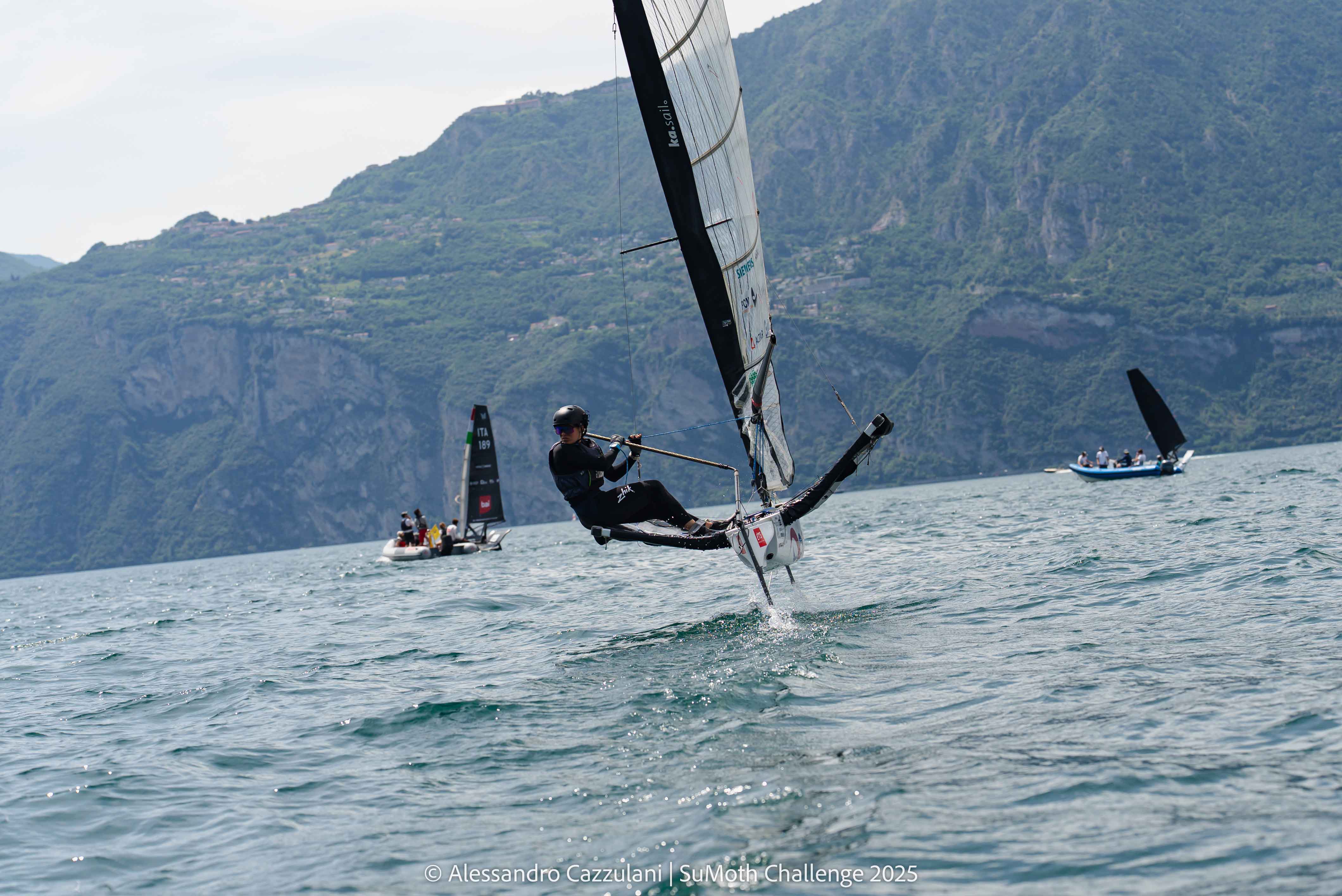
How can advanced engineering theory take the step out of the classroom and become real innovation? In the SuMoth Challenge, students get the answer the moment their own foiling sailboats rise out of the water. Throughout the course, they test everything, from the first sketches to the first sailing trials on the lake, showing how sustainability, speed, and engineering can grow hand in hand when knowledge becomes something they build, measure, and experience together.
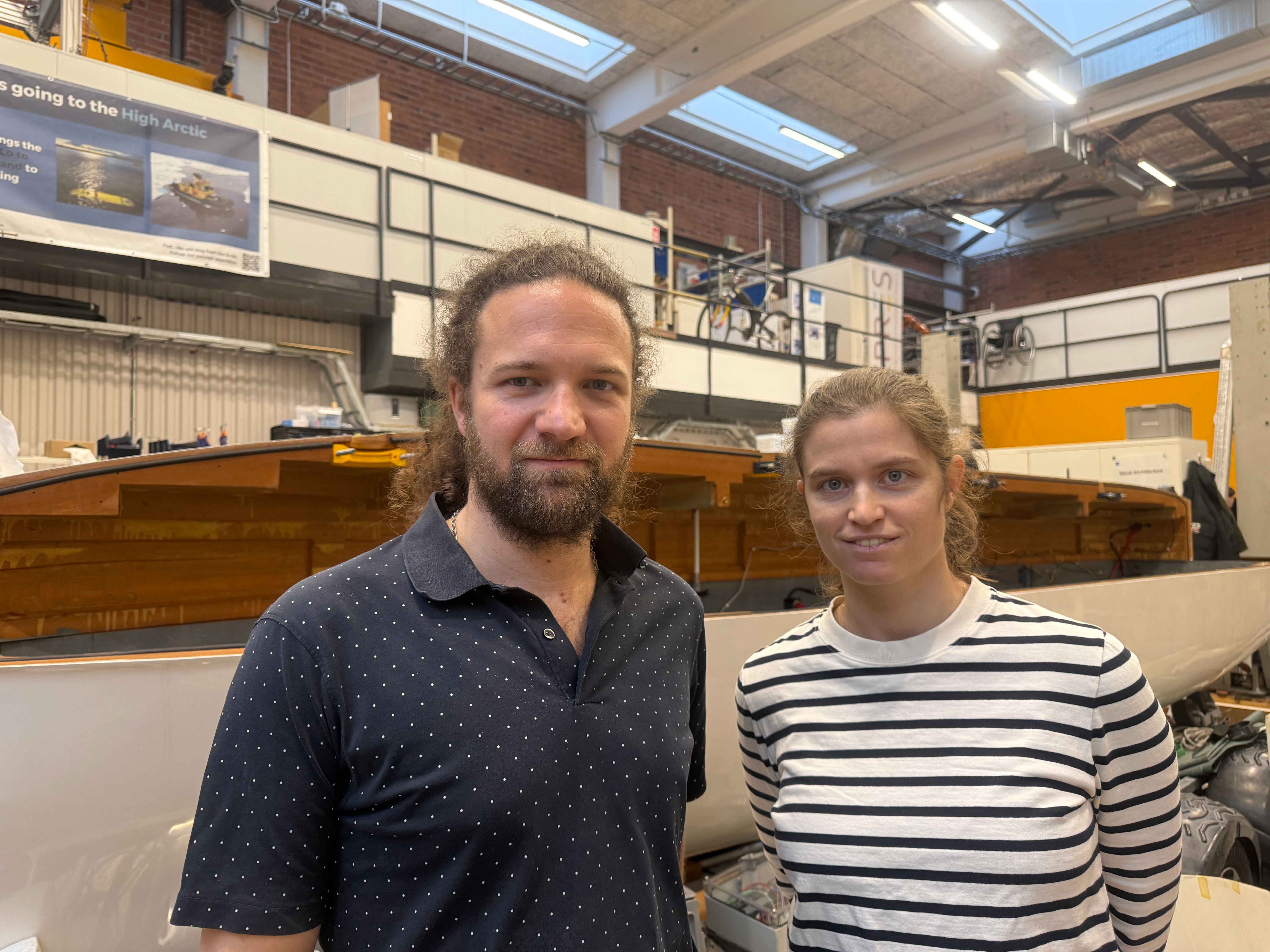
Two of the key people involved in the project are Laura Marimon Giovanetti and Ulysse Dhomé, both part of the Marine Systems research group at KTH’s Department of Engineering Mechanics. Both of them are active in teaching and course development and use the SuMoth Challenge as a central platform for project-based learning.
“I began working with SuMoth already in 2020, when I joined the competition jury from its very first edition,” says Marimon Giovanetti. “Over the years, I’ve come to know the project in depth, and now, together with Ulysse Dhomé and Raffaello Mariani, I am taking over the teaching in the course. Jakob Kuttenkeuler and Stefan Hallström, who have taught it for a long time, remain as examiners, but we lead the daily teaching and take the work forward into its next phase.”
The SuMoth Challenge is built on a clear vision: to let classroom‑based theory meet real innovation. The students work step by step, from concept and design, through construction, to on‑water testing. It’s not just the final result that matters, but the entire process.
“This is not a traditional student competition,” says Dhomé. “The SuMoth Challenge creates exactly the bridge we want between theory and practice. It is a complete engineering journey. The students must understand mechanics, materials, structural strength, hydrodynamics, and manufacturing while also taking responsibility for sustainability, creativity, and quality.”
The boats are evaluated not only on performance and speed but also on engineering quality, innovative solutions, and sustainable material choices. This makes the SuMoth Challenge particularly relevant at a time when the engineering profession is changing.
“Sustainability is not an add‑on; it is part of the construction itself,” adds Marimon Giovanetti. She is an external consultant for the course, deeply involved in the project since its start in 2020, and serves as the link between the education, the competition, and the international research community around it.
“What makes SuMoth so pedagogically strong is that sustainability is not treated as a separate component,” she explains. “Students must consider materials, manufacturing processes, and environmental impact from the start, otherwise the overall system simply doesn’t work.”
Marimon Giovanetti’s background in ship design, foiling boats, and sustainable maritime technology shapes the structure of the course. With experience from the America’s Cup, the groundbreaking Oceanbird project, and collaborations with the Swedish Olympic Committee, she sees the SuMoth Challenge as a natural continuation of research where theory, sport, and sustainability meet.

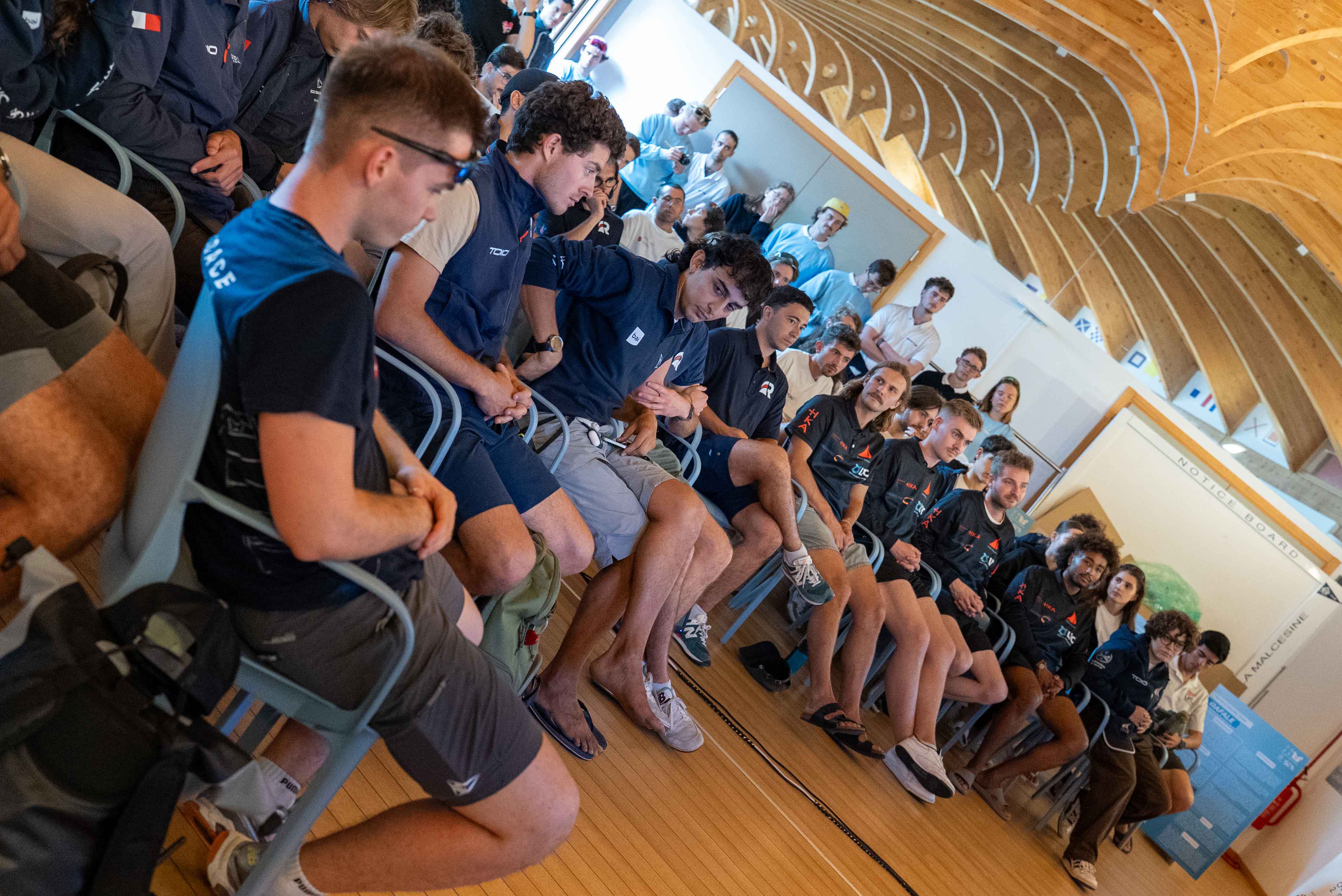
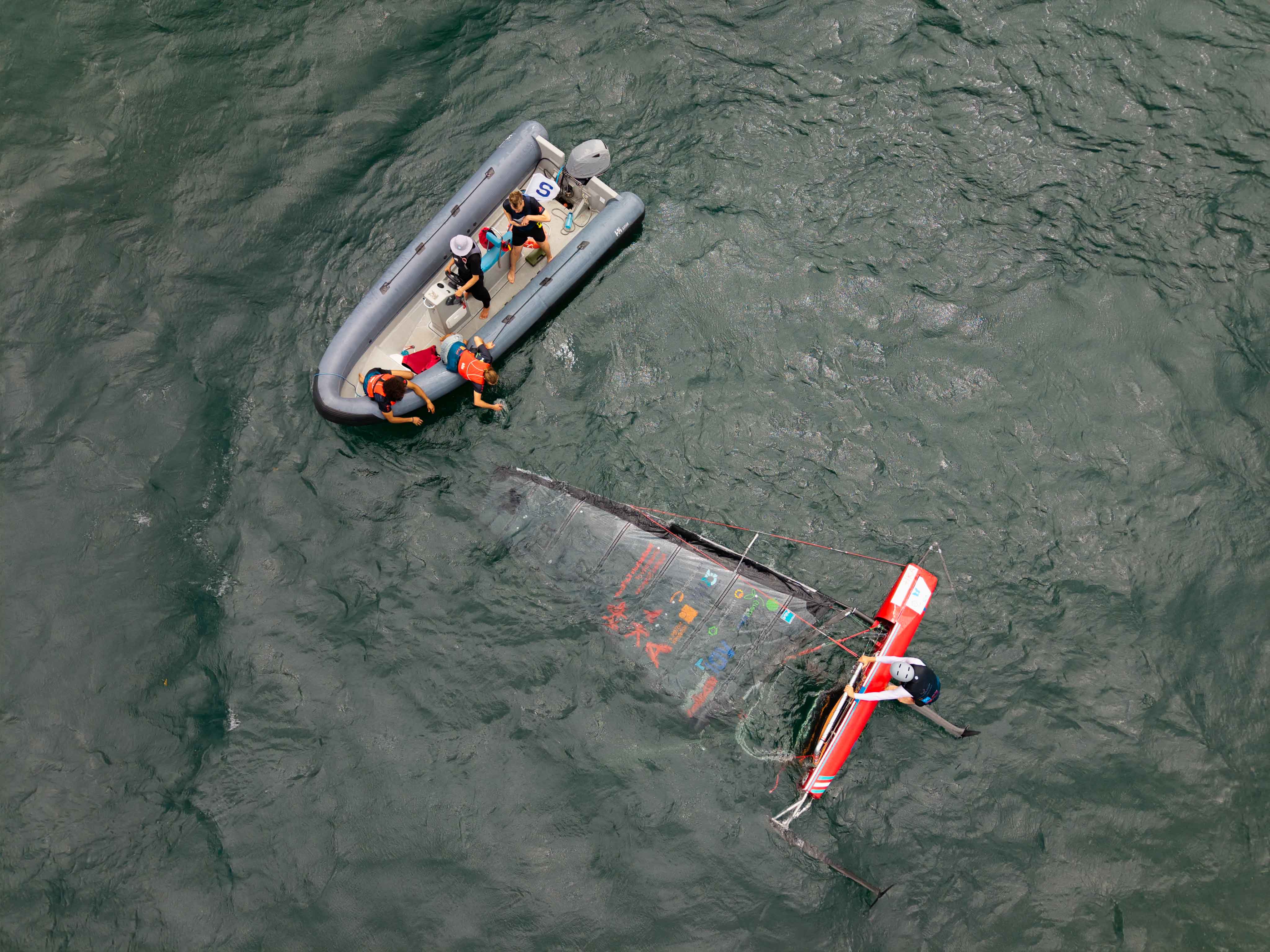
A learning environment that reflects reality
For students, SuMoth Challenge is much more than a typical course project.
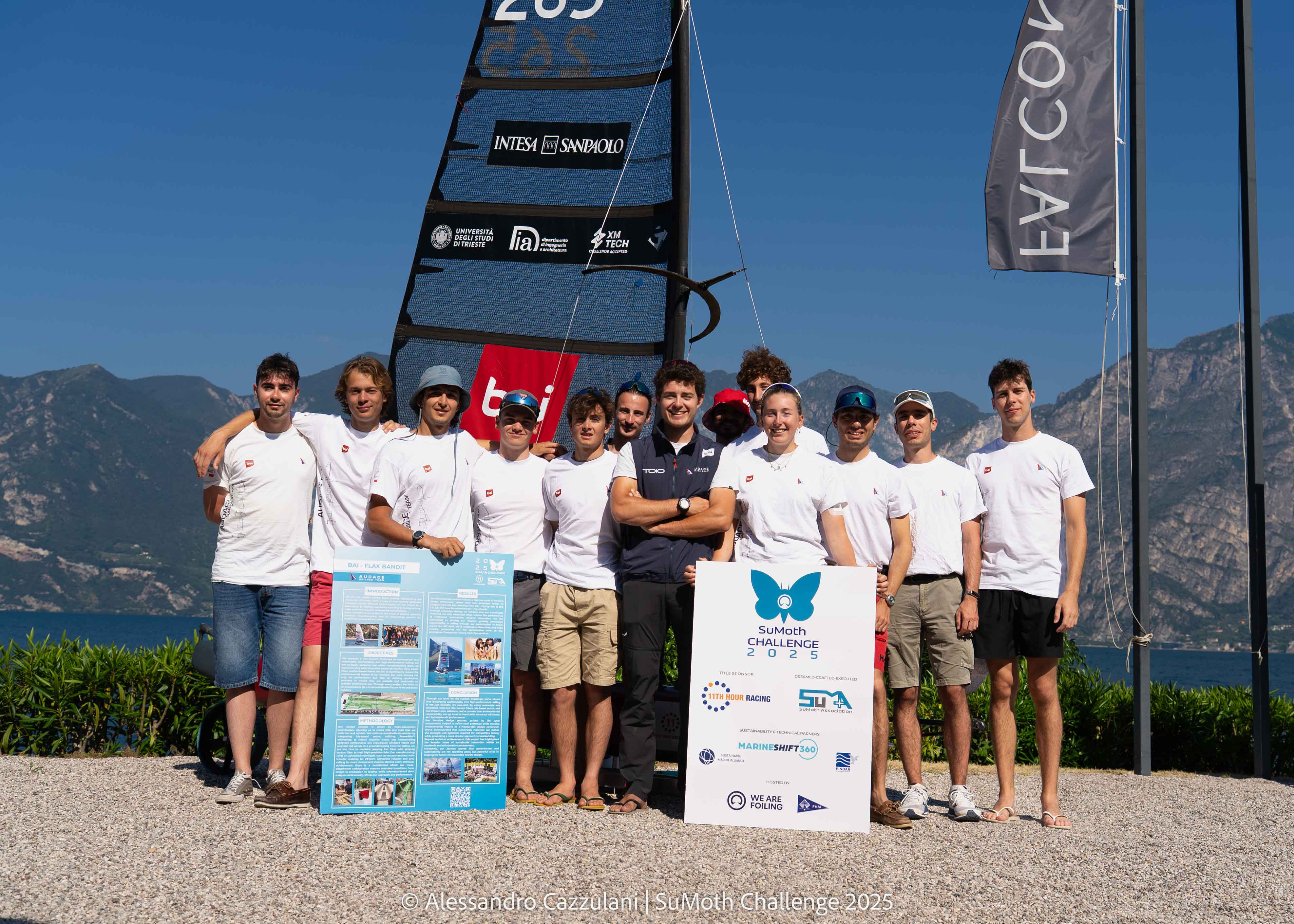
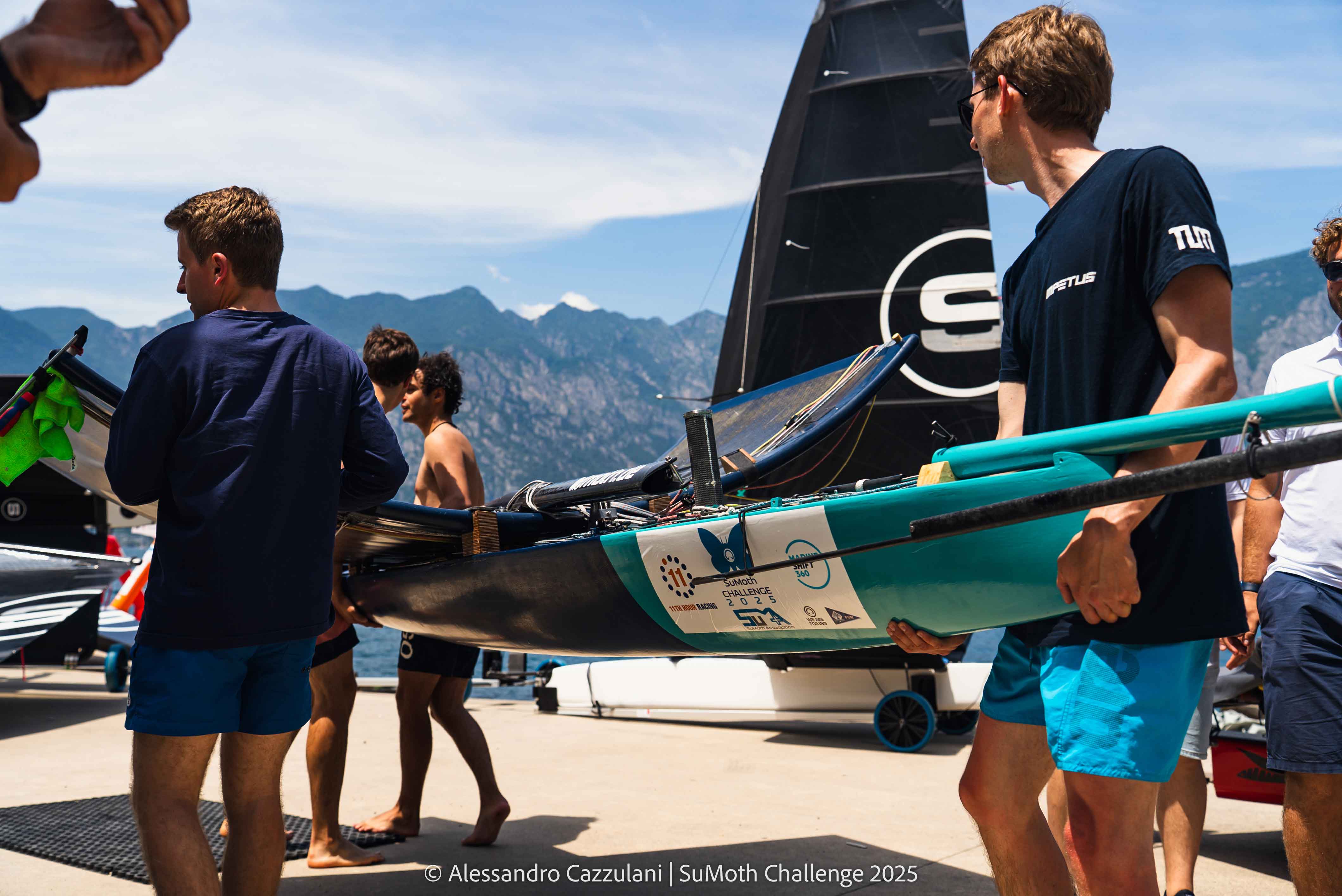
“They work in multidisciplinary teams, make decisions with real consequences, and asess their solutions under realistic conditions,” says Dhomé. “It provides deep understanding that is difficult to achieve in traditional courses.”
Dhomé’s background combines advanced engineering with a strong interest in how theory is translated into practical marine innovation. As a teacher and course developer, he works closely with the students and sees the project as an ideal way for them to move from classroom calculations to real‑world testing on the water.
Students train:
- problem‑solving in complex engineering systems
- cross‑disciplinary collaboration
- creative and critical thinking
- technical communication and documentation
Many of the former participants have gone on to research, industrial projects, or even founded their own companies focusing on sustainable marine technologies, solutions used internationally today, including in the Ocean Race.
Benefits for teachers and researchers
For teaching staff, the project offers clear pedagogical advantages.
“It’s an incredibly rewarding teaching environment,” says Marimon Giovanetti. “We get engaged students who ask advanced questions and want to understand why the theory works the way it does.”
The project gives teachers opportunities to:
- work with authentic cases in teaching
- create research‑related projects and publications
- identify future thesis students and PhD candidates
Through a collaboration with the Journal of Sailing Technology, students are also encouraged to write scientific articles and conference papers, something that is rare at the bachelor’s and master’s level.
“For students with academic ambitions, this is a huge advantage,” says Dhomé. “They learn early how research is actually communicated.”
A platform for inclusion and the engineers of the future
SuMoth Challenge also has a clear inclusion goal. By actively encouraging diversity, the project aims to reduce gender disparities within marine technology.
“I often tell young women to study what they truly love,” adds Marimon Giovanetti. “Engineering today is about integrating technology and sustainability. It’s both socially important and incredibly exciting.”
Engineering education of the future
SuMoth Challenge has become more than a project, it has become a way of thinking about education.
“We’re not replacing courses,” Dhomé concludes. “But we can connect them to real challenges. When theory gets a clear context, something happens to both motivation and learning.”
Although the team is entirely student‑run, it is firmly anchored in KTH’s academic environment. The students have access to workshops, laboratories, and computational resources, as well as supervision from relevant departments. The core members are enrolled in the master’s courses Naval Design and Lightweight Structures. In this way, the project functions as a practical extension of KTH’s research and education in composite materials, sustainable design, and marine technology.
KTH is not the organiser of the competition but serves as an important academic and infrastructural base for Sweden’s participation in the SuMoth Challenge.
In the meeting between speed, physics, and sustainability, the next generation of engineers is shaped, with the SuMoth Challenge serving as both classroom and laboratory.
Text: Jelina Khoo