KTH Logo

Watch now! The Less Selfish Gene – Forest Altruism, Neoliberalism, and the Tree of Life

Did you miss Rob Nixon and the Archipelago Lecture on November 10th? No worries! The recording is now up and can be watched below, with or without subtitles.

Abstract

Why have millions of readers and viewers become magnetized by the hitherto arcane field of plant communication? Since the great recession of 2008, we have witnessed an upsurge in public science writing that has popularized research into forest sentience, forest suffering and the forest as collective intelligence.

This talk roots the current appeal of forest communication in a widespread discontent with neoliberalism’s antipathy to cooperative ways of being. Nixon argues that the science of forest dynamics offers a counter-narrative of flourishing, an allegory for what George Monbiot has called “private sufficiency and public wealth.

About Rob Nixon

Rob Nixon is the Barron Family Professor in Environment and Humanities at Princeton University. His books include, most recently, Slow Violence and the Environmentalism of the Poor. Nixon is currently completing a book entitled Blood at the Root. Environmental Martyrs and the Defense of Life.

Nixon writes frequently for the New York Times. His writing has also appeared in The New Yorker, Atlantic Monthly, The Guardian, The Nation, London Review of Books, The Village Voice, Aeon, Orion, Critical Inquiry and elsewhere.

Environmental justice struggles in the global South are central to Nixon’s work. He is a particularly fascinated by the animating role that artists can play in relation to social movements.

Nuclear Power in Times of Climate Change and the Water Risks Around It – Environmental History Now

Alicia Gutting is one of three doctoral students, active in the ERC-project Nuclearwaters at the Division and supervised by prof. Per Högselius. In the thesis „The Nuclear Rhine“ she is researching transnational nuclear risk perception in Austria, Switzerland, France and Germany from the 1960s to 2018. In November the Environmental History Now blog published a text by Alicia on nuclear power, climate change and water risks focusing geographically on the Rhine river. Read an extract below, and get the link to the full text.
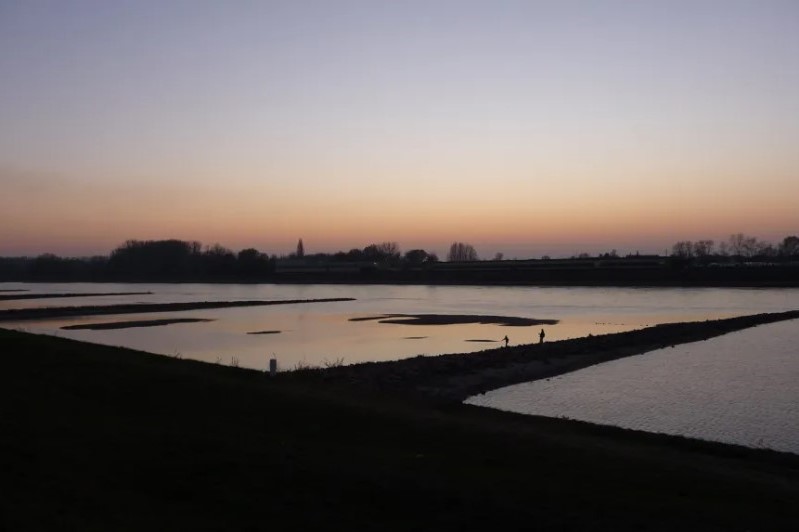
Low water levels at sunset, Upper Rhine in Karlsruhe Maxau (2018, next to the Rhine bridge between Baden-Württemberg and Rhineland-Palatinate). Photo by Alicia Gutting.

When I decided to write my PhD thesis on the history of the nuclear Rhine in the summer of 2018, the front pages of the newspapers were dominated by news of the record summer and that several nuclear power plants on the Rhine had to be shut down. Headlines focused on the topics of the low water level of the Rhine and to what extent the use of cooling water can affect flora and fauna, but also the danger posed by a lack of cooling water for the operation of nuclear power plants. By then, I had already planned to take a closer look at the effects of heat waves on the operation of nuclear power plants. In the course of my research, I found out that while heat waves are a problem, the thermal load on water bodies caused by the recirculation of cooling water is an equally pressing issue.

The Rhine River basin is, in relation to its flow per watershed, the most thermally polluted river basin globally mainly due to nuclear power plants. Thermoelectric power plants such as coal and nuclear power plants are major drivers of thermal pollution. Even though the European Union has set a limit of three degrees Celsius, the limit is exceeded by five degrees Celsius every year. The majority of thermal excess heat comes from nuclear and coal power plants that were built in the 1970s and 1980s.[1]

At the end of the 1960s, a planning boom began in the countries along the Rhine. Switzerland was one of the countries that wanted to roll out nuclear power in a big way and even slowly turned away from its role as the pioneer of hydropower. In addition, Germany and France also wanted to use the water resources of the Rhine for cooling purposes, which quickly led to conflicts on the fair distribution of cooling water. Switzerland, France, Germany, and the Netherlands planned to build roughly around twenty-five nuclear power plants in the Rhine River basin (including the Aare and the Moselle), which would have made the Rhine one of the most nuclearized river basins in the world.[2] Especially problematic was that energy companies were tempted to build nuclear power plants without external cooling systems as experts deemed the water resources of the Rhine to be sufficient.

In Germany, nuclear accidents hardly played a role in the early risk perception of the 1950s, 60s, and 70s. This is because the broad public knowledge about the extreme effects of a nuclear accident was almost non-existent. Instead, the focus was on the immediate effects of nuclear power plants that were unavoidable during operation, such as thermal pollution of water bodies. It was also in these early years that water management authorities were the most vocal administrative opponents of nuclear energy. Political supporters of nuclear energy tried to counteract the opposition by handing over water competences to the Federal Ministry of Atomic Energy. However, this decision did not lead to the desired decrease in criticism. In the 1970s, criticism regarding water became even louder when it came to the thermal pollution of the Rhine and the Weser.[3]

Source: Nuclear Power in Times of Climate Change and the Water Risks Around It – Environmental History Now.

The rise and fall of the Nord Stream pipeline: a brief history (part 2: the fall)

This is a short history stroll, from our very own professor of history of technology Per Högselius.  If you missed part one, you can read it in last weeks blog post here: The rise and fall of the Nord Stream pipeline: a brief history (part 1: the rise)
The rise and fall of the Nord Stream pipeline: a brief history (part 2: the fall) 🧵

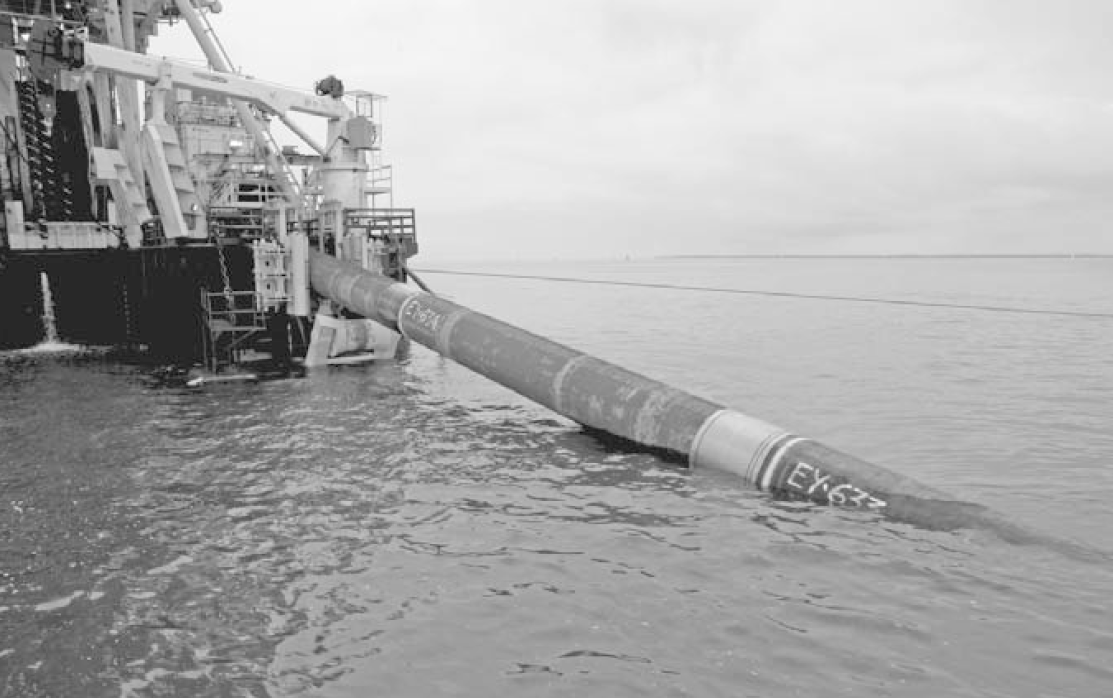
In summer 2011 laying of the first Nord Stream 1 pipe was completed. Italian pipe-laying vessels did the job. The second of the two Nord Stream 1 pipes followed a year later.

Image
After Nord Stream 1’s inauguration the debate about it lost momentum for some time. The pipeline apparently operated smoothly. 
The debate resurfaced in June 2015, when Gazprom and five European energy companies announced their agreement to build Nord Stream 2. The deal was very controversial due to Russia’s 2014 annexation of Crimea and support to separatist military forces in Donetsk and Luhansk.Image
A bad omen for the future came in early November 2015, when an unmanned underwater vehicle was found on the Baltic Sea floor, off the Swedish island of Öland, just next to one of the two Nord Stream I pipes. It was loaded with explosives. 
The Swedish Armed Forces later confirmed that it was a Swedish military vehicle. It had gone astray during a military exercise held elsewhere in the Baltic Sea several months earlier. This was in the midst of the European refugee crisis and the event didn’t make many headlines. 
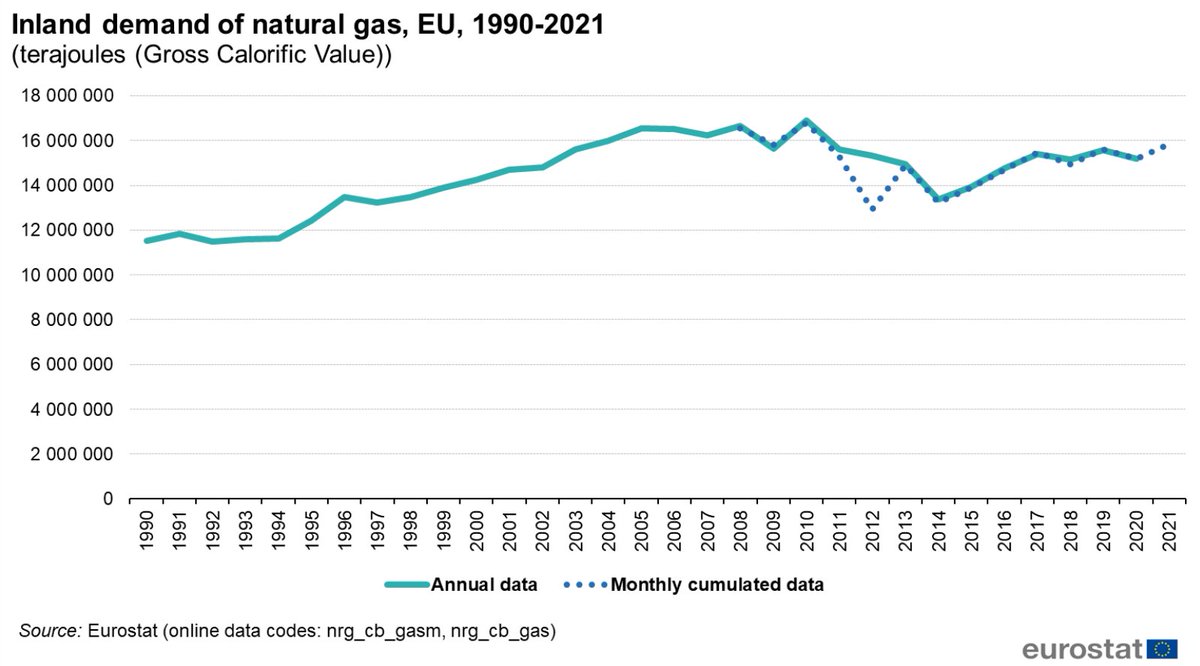
There was a fierce debate about whether Nord Stream 2 was actually needed. Critics noted EU gas demand, after half a century of rapid growth, had reached a plateau level and even seemed to be set for decline. No future growth in demand was expected. So why build a new pipeline?Image
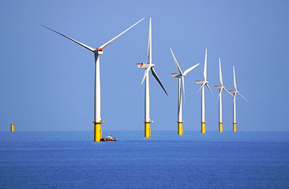
Proponents of Nord Stream countered by pointing out that natural gas had a key role to play in the European energy transition: Russian or not, natural gas was a flexible source of electricity that could compensate for irregularities in wind and solar electricity production.Image
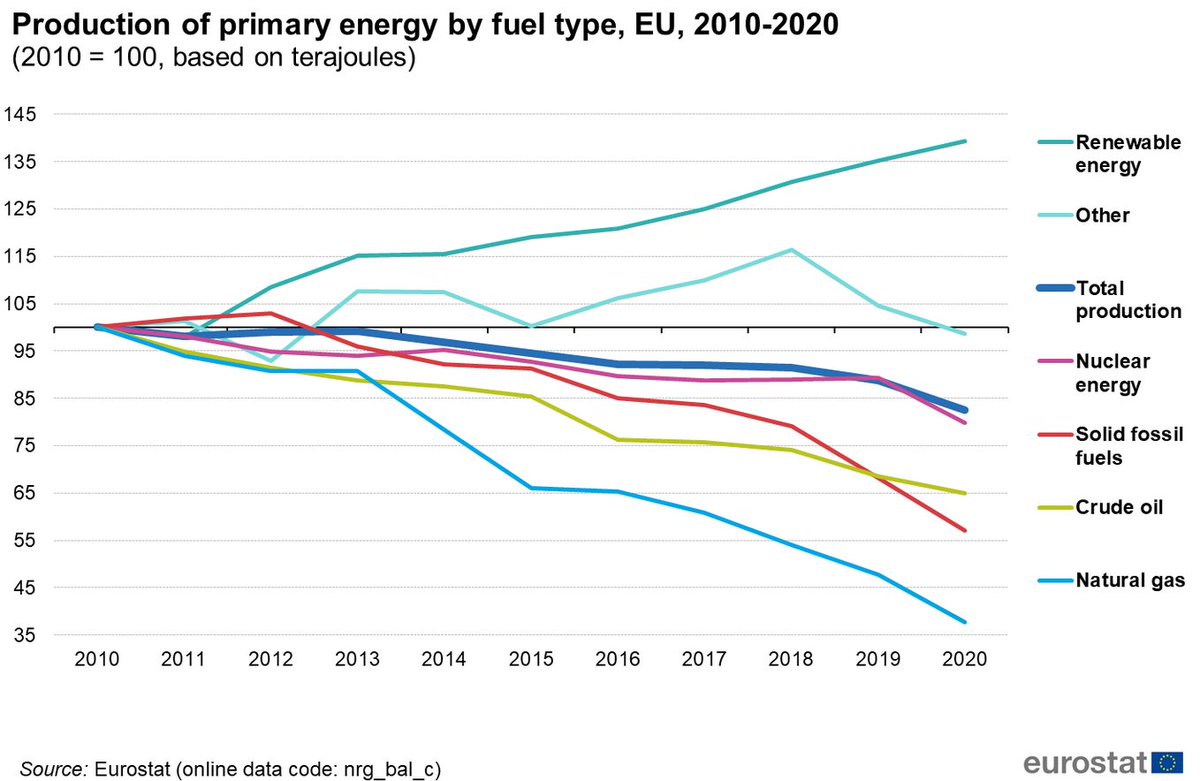
Proponents of Nord Stream 2 also pointed to another critical trend: internal West European gas production was declining helplessly, especially in the Netherlands. Internal EU production collapsed during the 2010s, falling by nearly two-thirds (!). Who would cover the deficit?Image
The EU Commission’s answer was: “Let the market decide!” Since Russia offered the cheapest gas, its exports increased massively in the increasingly liberalized EU gas market. Russia’s share of EU imports climbed from 31% in 2010 to 40% in 2016 and then stayed on that level. 
Over time, this growing Russian dominance made EU agencies and national governments increasingly suspicious (while gas companies remained happy). The EU commission changed its mind about Nord Stream 2. 
There were also critics on the other side of the Atlantic. Already the Obama administration lobbied against Nord Stream 2. This served two purposes: preventing Russian geopolitical influence in NATO member states and boosting US shale gas exports to Europe. 
In the meantime preparations for laying Nord Stream 2 started. Several Swedish coastal municipalities wished to become involved in the project logistics. The Swedish Foreign Ministry sought to prevent them, but in vain.
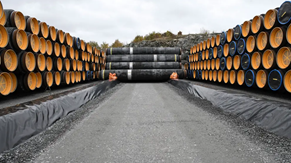
Starting in October 2017, 52,000 Nord Stream 2 pipes were brought to the port of Karlshamn in southern Sweden, for temporary storage. This meant a welcome additional source of income for the Swedes. In 2018 the pipes started to be lowered into the Baltic Sea.
Image
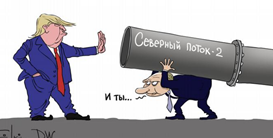
Then, Donald Trump stepped up the drama by imposing sanctions on companies that were involved in planning and constructing Nord Stream 2.
Cartoon by Sergey Elkin, DW
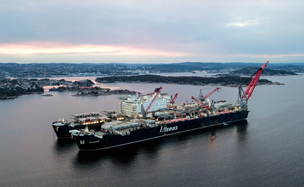
in December 2019 Allseas, a pipelaying company contracted by Nord Stream 2, gave in to US pressure. It abandoned the project, pulled out its vessel and moved it to Kristiansand in southern Norway.
Image
This could not stop the project. It merely delayed it. Nord Stream 2 contracted a Russian pipelaying vessel and completed construction in September 2021. An intense struggle followed: should the pipeline be allowed to become operational or not? 
Completion of Nord Stream 2 coincided with federal elections in Germany, which brought to power not only the Social Democrats, but also the Liberals and the Greens, which were much more critical to Russian gas than Angela Merkel’s resigning government. 
The decisive blow to the project came with Germany’s decision to suspend certification of the pipeline on 22 February 2022, as a punishment on Russia for recognizing Donetsk and Luhansk as independent republics. 
Two days later, Russia launched a full-scale military assault on the rest of Ukraine, including Kiev. Nord Stream 2 filed for bankruptcy already on 1 March 2022. 
In June the gas flows along Nord Stream 1 were reduced by 60% “due to renovation work” and in July it was totally shut down for maintenance. EU governments started to prepare for a winter without Russian gas. 
A turbine from one of the compressor stations was sent to Canada for technical overhaul, enabled by an exception from the sanctions. After 10 days this turbine was back in operation and the gas flow resumed, though only at the previous 40% level. 
A week later the flow was reduced again to a mere 20% due to “technical problems” with one of the turbines. Shortly afterwards, on 31 August, the pipeline was fully closed due to “repair works” and more “technical problems” (Gazprom cited an oil leak in one of the turbines). 
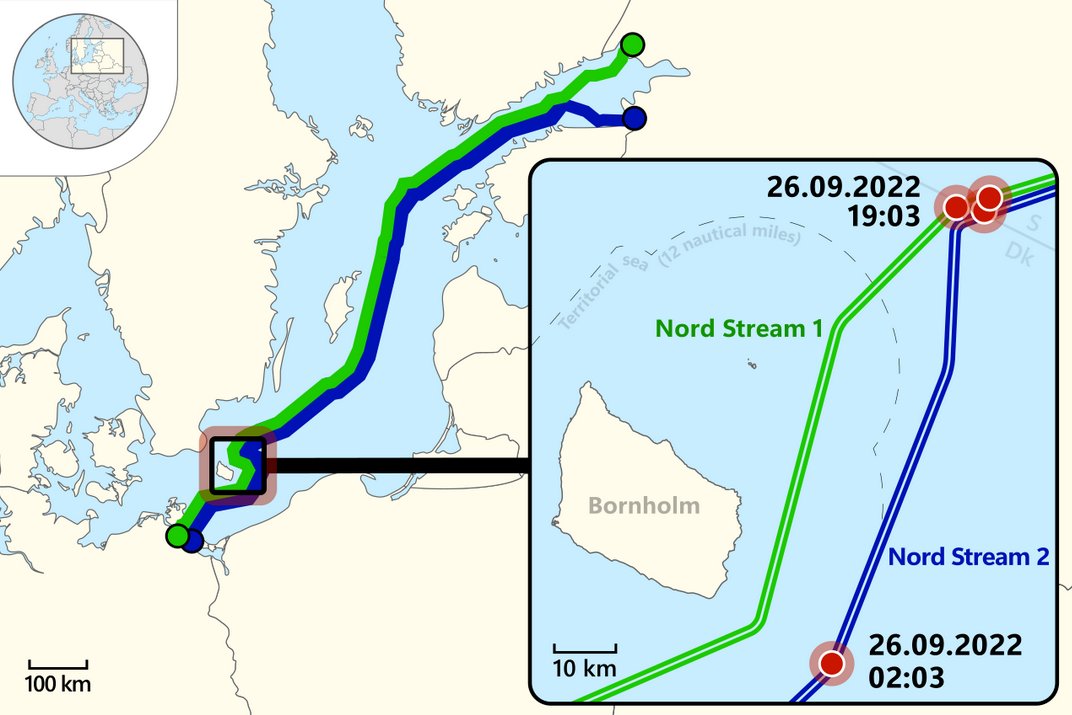
Then, on 26 September, several leaks in all four subsea pipelines were found in the Danish and Swedish economic zones. It quickly became clear that it was a result of violent sabotage. It remains to be seen whether Nord Stream 1 and 2 will ever go into operation again.Image

• • •

The rise and fall of the Nord Stream pipeline: a brief history (part 1: the rise)

The Division has a tradition of being active in social media, and especially on Twitter. Several from our faculty and researchers tweets opinions, about research, publications and other news of interest. Just recently Per Högselius, professor of history of technology, contributed to the general level of knowledge at Twitter with two threads on the rise and fall of the Nord Stream piplien. The first is published below as a full text. Enjoy!
The rise and fall of the Nord Stream pipeline: a brief history (part 1: the rise)🧵 
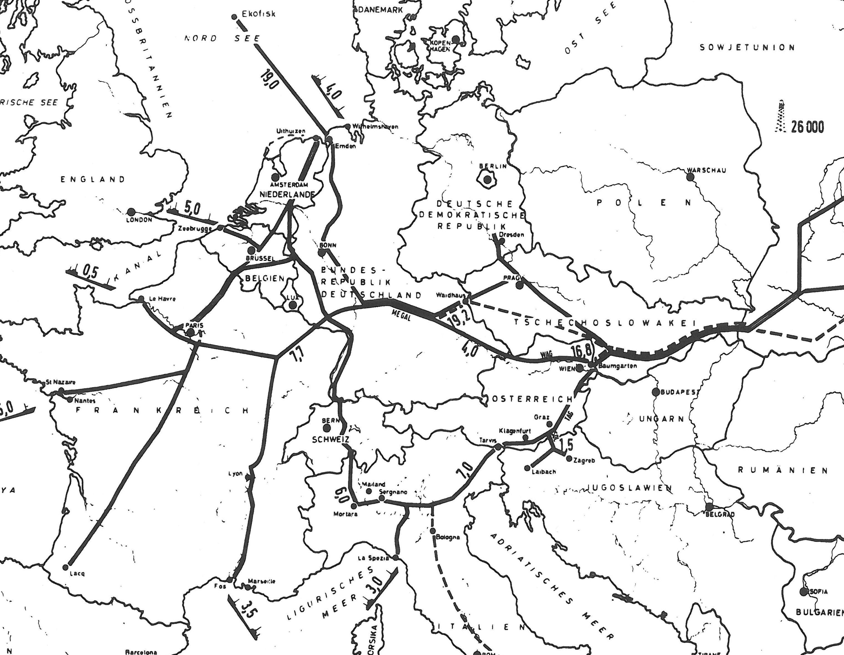
During the Cold War all Soviet gas exports to continental Western Europe took the route through a narrow corridor in Ukraine and Czechoslovakia. Of the capitalist countries, only Finland received Soviet gas through a separate pipeline.Image
However, both Europe and Moscow early on eyed the need for diversification of the routes. There were plans to build a pipeline through Poland and East Germany, which made perfect geographical sense. But politically, Poland was regarded as unreliable after the 1981 events there.Image
In the 1970s and 1980s Swedish gas visionaries negotiated with Moscow about extending the Finnish pipeline to eastern Sweden. But Sweden’s low electricity prices made gas unattractive. Today, Stockholm remains the only EU capital that is not connected to the European gas grid.
After the collapse of communism emerging Russia-Ukraine conflicts led to renewed interest in alternative supply routes. From October 1992 Gazprom disrupted flows to Ukraine. Ukraine, facing a debt crisis, was accused of stealing gas reserved for West European customers. 
Major new pipeline capacities were taken into operation through Belarus and Poland, with EU support, in the late 1990s. But Russia viewed Belarus as a troublesome partner. In February 2004 Gazprom cut deliveries to Belarus, which had proven unable to pay for its gas. 
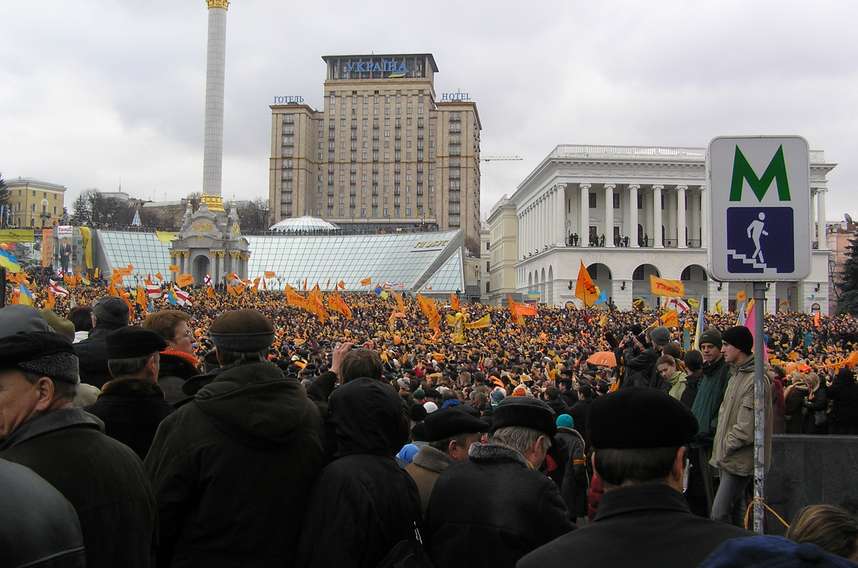
Then came Ukraine’s Orange Revolution in winter 2004-2005. Gazprom and the Kremlin, along with the Germans, concluded that the time had now finally come to build the Baltic Sea pipeline, which would once and for all serve to make the gas trade independent of Belarus and Ukraine.Image
A Baltic Sea pipeline was of interest to Britain, too, which from the early 1990s became interested in Russian gas imports. Eastern Sweden, though, continued to be less fascinated by the prospects of Russian gas. Hence the Baltic Sea pipeline would have to circumvent Sweden. 
In the 1990s and early 2000s there were different possible route under discussions, notably

1. From Kaliningrad to Denmark and Britain (found feasible in a 1992 study)
2. From Finland to Germany (found feasible in a 1997 study)
3. Directly from the St. Petersburg area to Germany

Gazprom and Finland’s Neste set up a joint venture called North Transgas to explore option #2. But eventually option #3 won out, because why bother to include Finland when you could do without such a small, insignificant, but potentially problematic transit country? 
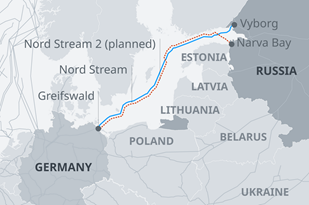
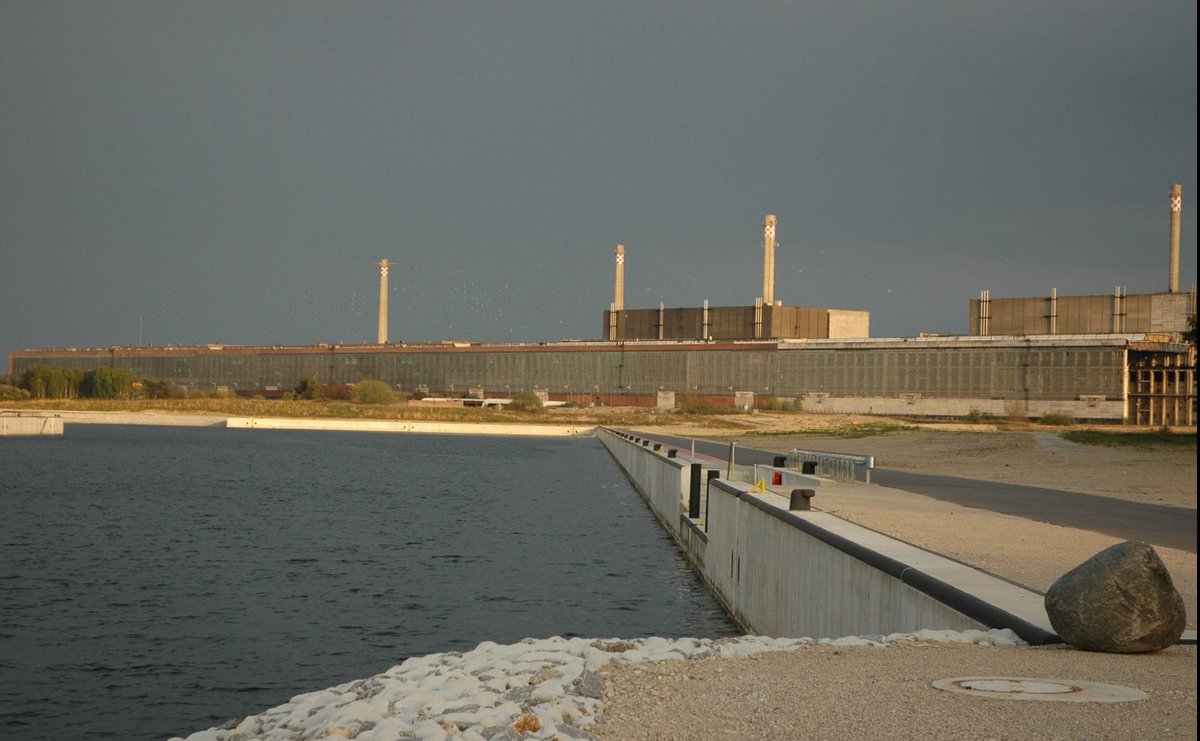
Greifswald/Lubmin in northeastern Germany was eyed as a perfect landing point. A huge old nuclear power complex was being shut down there following Germany’s reunification, and investors hoped to use the infrastructure at the site by replacing nuclear with gas power plants.Image
Britain hoped to become part of that system, through an extension of the pipelines through Germany and the Netherlands and onwards across the North Sea. In 2003 the UK and Russia signed a “bilateral energy pact”, part of which was devoted to this plan. 
In September 2005 Gazprom (51%), Ruhrgas (24.5%) and BASF/Wintershall (24.5%) set up the North European Gas Pipeline Co. (NEGP). It was renamed Nord Stream AG in 2007. Subsequently further shareholders joined cheerfully joined the effort. 
The Central Europeans didn’t like the project. Poland’s foreign minister Radoslaw Sikorski acidly dubbed the project “the Molotov-Ribbentrip Pipeline”. The Scandinavians pointed to the environmental risks. 
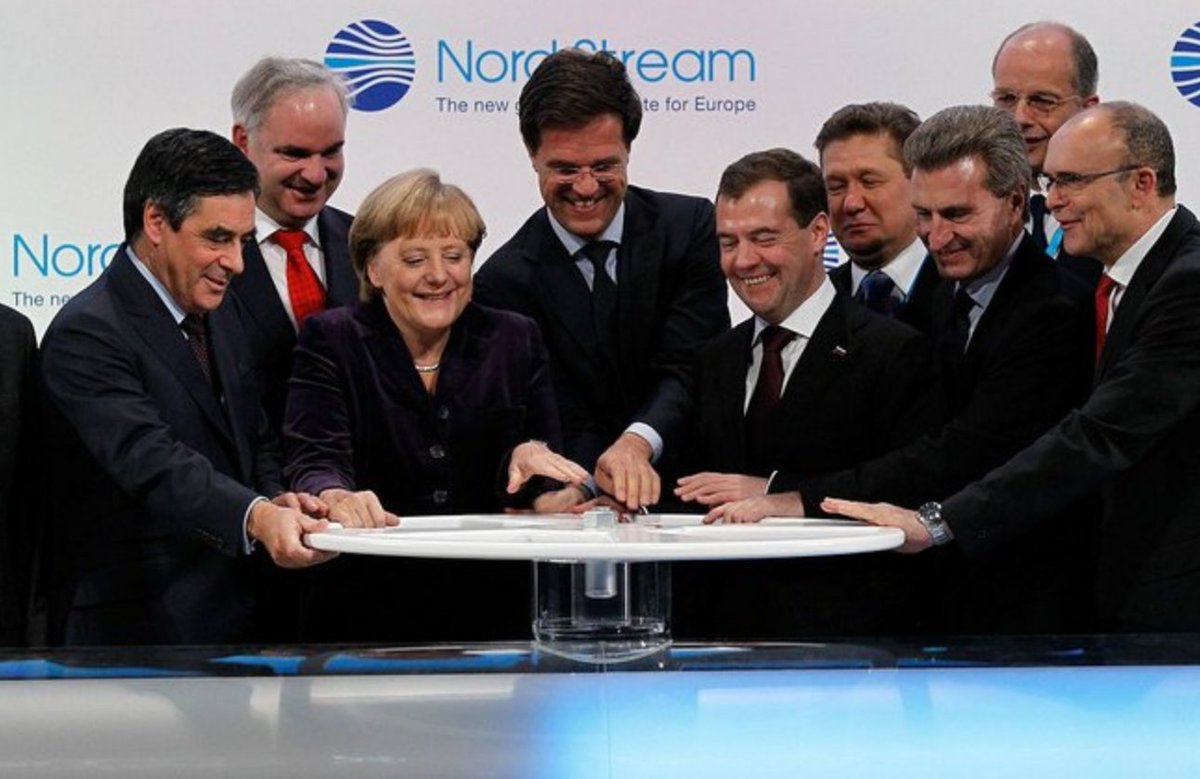
The other European leaders gathered in Lubmin on 8 November 2011 to ceremoniously and very happily inaugurate the system.Image

• • •

Stay tuned for the second thread, published as a full text next Monday (October 24)!

New article: Out of steam? A social science and humanities research agenda for geothermal energy

Andreas Roos, researcher at the Division and the EHL, active in the Harnessing the heat below our feets project, newly published an open access article together with Rozanne C. Spijkerboera, Ethemcan Turhana, Marco Billi, SofiaVargas-Payera, Jose Opazo and Marco Armiero in the paper Energy Research & Social Science. Read the abstarct below and follow the link for full text.
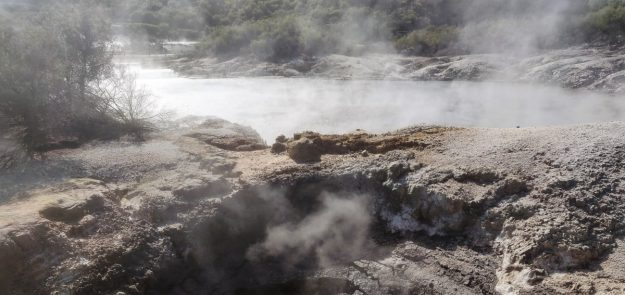
Photo by Punyashree Venkatram on Unsplash

Abstract

The potential of geothermal energy for energy transition is increasingly recognized by governments around the world. Whether geothermal energy is a sustainable source of heat and/or electricity depends on how it is deployed in specific contexts. Therefore, it is striking that there is only limited attention to geothermal energy from a social science and humanities (SSH) perspective. Geothermal energy is largely conceptualized as a technological and/or geological issue in both science and practice. This perspective article aims to go beyond such conceptualizations by positioning social science research as an important lens to explore the promises and pitfalls of geothermal energy. We first provide an overview of the current state of geothermal energy as a decarbonization strategy. Second, we move on to review the existing literature. This review shows that studies that do address geothermal energy from an SSH perspective tend to be of a descriptive nature and lack analytical diversity. Third, we discuss three complementary theoretical approaches that are used in the social sciences to observe and address other forms of energy and energy transition. We believe that socio-technical assemblages, systems, and imaginaries can provide fruitful analytical lenses to study the promises, pitfalls and spatialization of geothermal energy. We conclude the paper with a research agenda and call for further engagement with this topic in SSH research, with attention to specificities of global South and North contexts.

Keywords

Assemblage
Socio-technical systems
Imaginaries
Infrastructures
Narratives
Geothermal

Read the full article, open access: Out of steam? A social science and humanities research agenda for geothermal energy

Crosscuts – Stockholm’s first Environmental Humanities Film Festival Returns

Missing in-depth conversations about important movies? Do you want to know more about Sami culture and history or about resource extraction in the deep sea? Have you ever heard a joik?

On September 1st, Crosscuts – Stockholm’s first environmental humanities film festival – will return! Through documentaries, poetry and conversations between leading researchers, filmmakers, students and artists, we explore different themes. This year we delve into deep sea mining, environmental activism and the green movement and Sami culture and the climate crisis. Everything happens on site at KTH, in Stockholm.

The program offers, among other things, the artistic documentary series What is Deep Sea Mining? (directors: Inhabitants with Margarida Mendes), the Greenpeace film How to change the world (director: Jerry Rothwell) and the acclaimed documentary about Britta Marakatt-Labba Historjá – Stygn för Sapmí (director: Thomas Jackson).

Among the invited panelists are Thomas Jackson, director, Gunhild Rosqvist, professor, Staffan Lindberg, climate journalist at Aftonbladet and Ylva Gustafsson, activist, folk educator and stage artist, who will also perform a joik for us. A joik is a traditional form of song in Sámi music performed by the Sámi people of Sapmi in Northern Europe and it is also one of the oldest vocal traditions in Europe.

During the evening we have with us the ecopoets Evelyn Reilly and Juan Carlos Galeano who will perform their poetry via link, and then participate in a conversation with the audience.

The event is held in English. Participation is free of charge, but the number of seats is limited and therefore advance registration is required.

Full program: https://crosscuts.se/program-2022/

Registration: www.kth.se/form/crosscuts

Welcome to a day full of documentary films, panel discussions and performance!

***

Crosscuts

Crosscuts is an international festival for film, art and research in the environmental humanities. Each film is shown together with a panel discussion with specially invited guests. The festival is organized this year by the KTH Environmental Humanities Laboratory (EHL) in collaboration with Stockholm University. Crosscuts was organized for the first time in 2018.

EHL: https://www.kth.se/philhist/historia/ehl

Twitter: https://twitter.com/KTHEnvHumsLab 

Facebook: https://www.facebook.com/KTH-Environmental-Humanities-Laboratory

About Crosscuts:

Rather than perpetuating the conventional academic mode of compartmentalizing knowledge, separating theory and practice, and adopting a hierarchized and exclusive treatment of the visual and the verbal, your events were made to bring scholars and artists together and to speak to both in the vibrant questions they raised with their researches.

Trinh T. Minh-ha, filmmaker, writer and professor at the University of California Berkeley

Crosscuts comes across as a cutting-edge bridge between academia, the art world, and the public sphere. This is eminently in line with KTH’s best traditions; the school’s motto famously brings together science and art.

Jan Olsson, professor emeritus of Cinema Studies at Stockholm University

This Stockholm Environmental Humanities Festival for Film and Text that was held for the first time in the fall of 2018, was an extremely successful and important event for both academic community and the general public. 

Madina Tlostanova, professor in postcolonial feminism, Linköpings University. 

What is Deep Sea Mining?

What is Deep Sea Mining? will start up the festival this year. The five episodes are screened at a brownbag seminar and followed by a discussion lead by the Divison’s Tirza Myer. In the panel we have Robert Blasiak, researcher at the Stockholm Resilience Centre (focuses on the sustainable management of ocean resources, and ocean stewardship) and Staffan Lindberg, author and journalist at Swedish paper Aftonbladet (focuses on foreign and climate news).

The What is Deep Sea Mining? project was developed in collaboration with Margarida Mendes, curator, educator and activist from Lisbon, Portugal. Margardia is a founding member of Oceano Livre, the environmental movement against deep sea mining. She is dedicated to understand how a shifting climate impacts society’s capacity for imagination. We will also show a recording of Margarida during this event.

Go here for the full program with more information on this session and to register: https://crosscuts.se/program-2022/ 

To Durham by train

Text by Nina Wormbs

I received an invitation to go to Durham university to speak at a conference and engage with PhD students. I immediately considered it, but I also let my host know that having me over would probably cost more, as taking the train is more costly these days. And I like to take the train. The offer remained and I said yes.

Come spring and planning, I postponed this for too long. Perhaps due to the war, perhaps because of workload. It worked fine in the end, but in hindsight I would most likely have chosen a slightly different route back home.

Photo by Nina Wormbs

Stockholm – Durham is rather long. I discarded ferries early on since I now know – through an earlier mistake – know that they are not good from a CO2 perspective. I also decided not to sleep on the train. The reason was mainly Covid and the lack of flexibility if you want to have your own compartment. Thus I was left with travelling during the day and stopping on the way. Since I have family in Lund, that was a natural place for my first night.

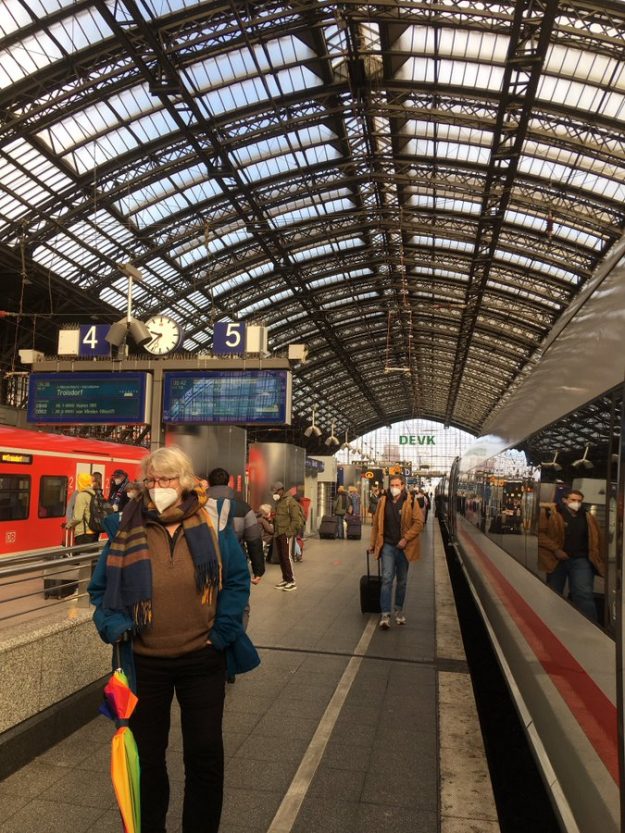
Köln. Photo by Nina Wormbs

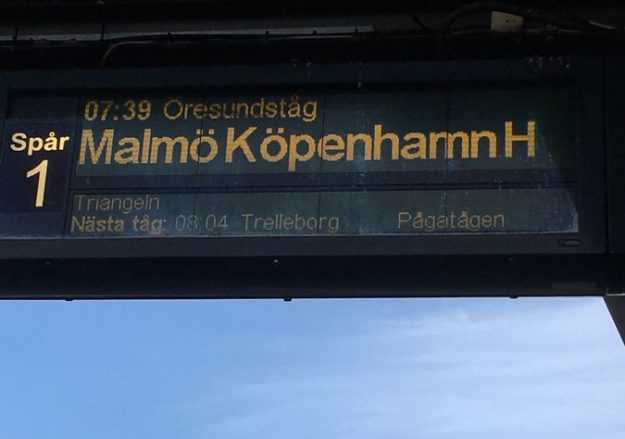
That allowed me to make an early start on the travel across Germany for Köln. The trip had four legs: I changed trains in Copenhagen, Fredericia and Hamburg. This went smooth and without incidents. I arrived in Köln and had time for a long walk in the city and then dinner with a friend who also hosted me for the night. Great stop.

Next day I took the high-speed train to Brussels and then the Eurostar to London St Pancras. This gave me ample time in the afternoon and night in London and also the possibility for a long walk the next morning. Lovely as they say.

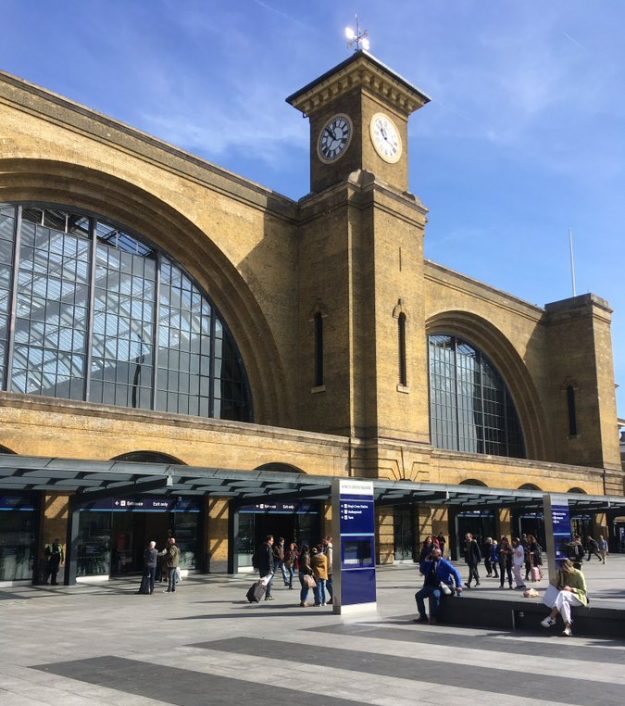
The train for Durham left from King’s Cross which is next to St Pancras. This train was also without incident and I arrived less than three hours later in a magnificent city. The river Wear makes a loop around a hill on which the old town with its castle and world heritage cathedral is built. It is to a high degree a university town, with most of the campus south of the inner city.

The conference and PhD spring school lasted four days and I left on the fifth. When I got around to make reservations, options were few due to Easter, and I ended up taking the Eurostar to Paris. That was a late train to start with, which also became delayed. Still, I managed to walk around and smell Paris before I went to sleep in a tiny little room on La Fayette.

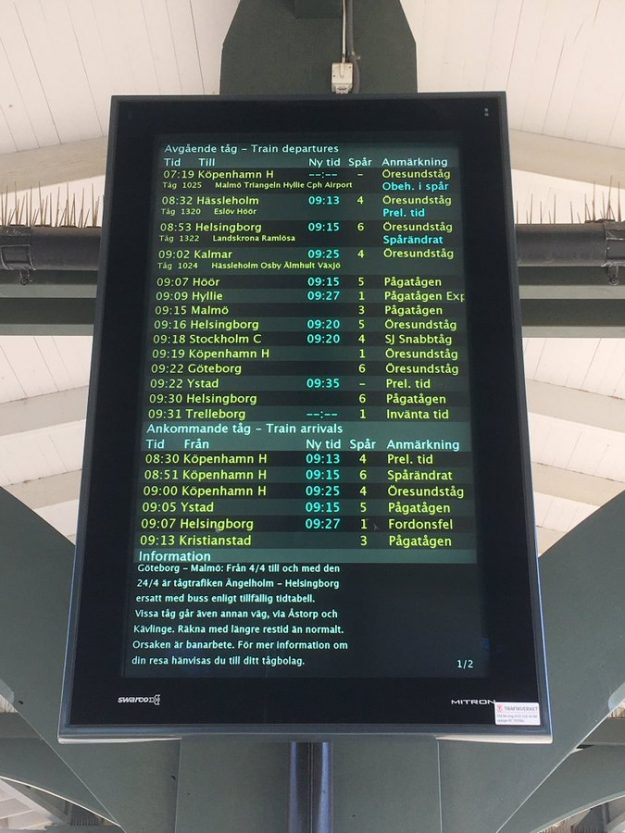
Easter Saturday started with a high-speed train to Köln via Brussels. No worries. In Köln I had time to buy lunch and walk a bit around the cathedral which is just outside of the station. However, the train to Hamburg turned out to be delayed and I could have missed my connection. The train waited, however, which was a relief. Normally the trip between Copenhagen and Lund is effortless, but during Easter construction work was undertaken and I had to take the bus between the airport and Hyllie. In the end it did not take longer actually, but was slightly more inconvenient. I was rather tired when I put my head on the pillow, after that 15 hour journey. I stayed on in Lund and eventually managed the last leg to Stockholm.

With this many trips, an interrail mobile pass is the cheapest option. The app mostly worked well and a mobile pass is really useful as it also has search functions, Q&A, community and is flexible. I made reservations on all trains, also those where I did not need to.

Stockholm – Durham can perhaps be done in two days. But it would be tough and you are vulnerable to delays. I only had two delays and only one was serious. With more travel days the risk diminishes of unexpected major changes to your itinerary.

And mobility becomes more travel and less transport.

AI and Environment Seminar: Smart Forests with Jennifer Gabry

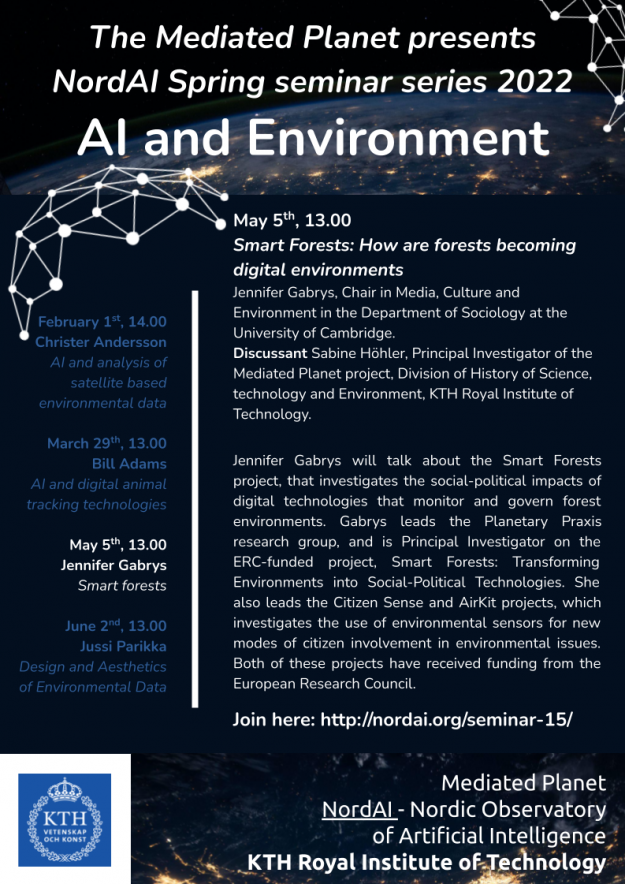
The 2022 NordAI spring seminars on AI and environment is curated by Adam Wickberg and Tirza Meyer from the Mediated Planet Research Group at KTH. The series feature contributions from leading scholars working with AI at the interface between the human and non-human world, exploring the question of what constitutes the environment through the lens of artificial intelligence. The seminars are held online, and are open to everyone.

Smart forests

May 5th, 14.0o, Jennifer Gabrys, Chair in Media, Culture, and Environment in the Department of Sociology at the University of Cambridge.

Discussant Sabine Höhler, Principal Investigator of the Mediated Planet project, Division of History of Science, technology and Environment, KTH Royal Institute of Technology.

About
Jennifer Gabrys will talk about the Smart Forests project, that investigates the social-political impacts of digital technologies that monitor and govern forest environments. Gabrys leads the Planetary Praxis research group, and is Principal Investigator on the ERC-funded project, Smart Forests: Transforming Environments into Social-Political Technologies. She also leads the Citizen Sense and AirKit projects, which investigates the use of environmental sensors for new modes of citizen involvement in environmental issues. Both of these projects have received funding from the European Research Council.

Join here: http://nordai.org/seminar-15/

Read more: http://www.smartforests.net/

NUCLEARWATERS Seminar: Ecological entanglements, nuclear ruptures, and the affective intimacies of Bishnoi resistance

The Nuclearwaters project is hosting the third seminar in its Nuclearwaters Seminar Series this term. This time we have the pleasure of welcoming Sonali Huria, who is going to be speaking about the relationship of the Bishnoi community with water in nuclear India.

Time: Fri 2022-04-08 13.15 – 15.00

Video link: https://kth-se.zoom.us/j/67164895000

Language: English

Lecturer: Sonali Huria, associated scholar, Science, Technology and Gender Studies, FAU, Erlangen-Nürnberg

Ecological entanglements, nuclear ruptures, and the affective intimacies of Bishnoi resistance

For the Bishnoi, among the earliest eco-conservationist communities in the Indian subcontinent, encounters with the atom have been encounters of colossal ruptures. Their histories, geographies, religious intimacies, and more-than-human worlds have collided with India’s nuclear trajectories at two distinct sites – first, in the arid deserts of Pokharan, Rajasthan where India conducted its atomic tests, forcing the Bishnoi into the ranks of the Global Hibakusha (Jacobs 2022), and, more recently, in Fatehabad, Haryana where the Indian government is setting up a massive 2,800MWe nuclear plant comprising four ‘indigenous’ CANDU-type Pressurised Heavy Water Reactors of 700 MWe each.

While to the Bishnoi, water represents a vital element in the multispecies assemblage in which the human, nonhuman, and the divine all come together in an entangled relational ecology of reverence, kinship, nurturing, ethics, and reciprocity, the proposed nuclear plant, to be set up over the Fatehabad branch of the Bhakra Canal, the lifeline of this predominantly agricultural region, threatens to usurp and drain away its dense material embeddedness within the Bishnoi ecology.

This presentation will seek to tease out such multiple layers of material embeddedness of water within Bishnoi lifeworlds, in the contestation between the Indian state, besotted with the nuclear age, and the intimacies of ecological subjects committed to protecting their sacred material worlds, and, to bring these entangled flows from the nuclearized Bishnoi heartland to the Nuclear Waters seminar. (Visit the Nuclear Waters project page)

Reference

Jacobs, Robert A. (2022). Nuclear Bodies: The Global Hibakusha. Yale University Press

Dr Sonali Huria is the 2020-21 Fellow, Takagi Fund for Citizen Science, Japan and an associated scholar, Science, Technology and Gender Studies, FAU, Erlangen-Nürnberg. She has worked for over a decade in the field of human rights research, teaching, advocacy, and investigation at India’s National Human Rights Commission, and completed her PhD in 2020 from Jamia Millia Islamia University, New Delhi. Her doctoral research involved an exploration of the encounters of grassroots movements in India with the technopolitical trajectories of and imaginaries surrounding India’s nuclear modernity, and the brutalities unleashed by the postcolonial nuclear obsessions of the world’s largest democracy. She has written extensively on the political, social, environmental, and human rights concerns surrounding India’s nuclear sector for news portals, magazines, and newspapers in South Asia and beyond. She also co-edits DiaNuke.org, a popular resource space on nuclear disarmament and nuclear energy issues.