KTH Logo

Defence Coming up: Dirty coal – Industrial Populism as Purification in Poland’s Mining Heartland

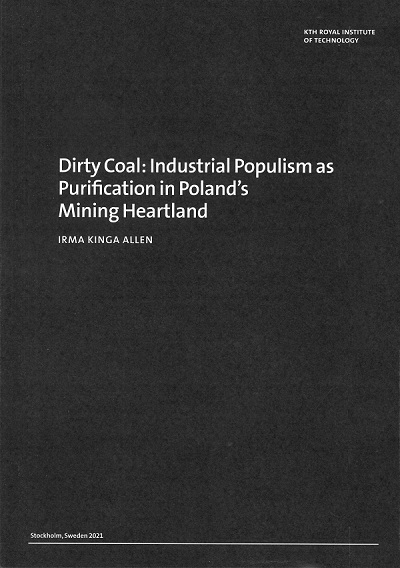
Friday October 1, it is time for Irma Allen to defend her thesis Dirty coal – Industrial populism as purification in Poland’s mining heartland. The defence is open for the public by registration, and will happen on zoom. Find link to registration below, as well as the thesis abstract!

Time: Fri 2021-10-01 16.00
Subject area: History of Science, Technology and Environment
Doctoral student: Irma Allen , Historiska studier av teknik, vetenskap och miljö
Opponent: Professor Christopher Hann, Max Planck Institute for Social Anthropology
Supervisor: Professor Sverker Sörlin, Historiska studier av teknik, vetenskap och miljö; Associate Professor Sabine Höhler, Historiska studier av teknik, vetenskap och miljö

Register for defence

Abstract

In the second half of the 2010s, far-right populist parties gained increasing power and influenceacross Europe, and around the world. Core to their ethnonationalist, anti-elite agenda, and theiremotive politics, has often been a defense of fossil fuels, threatening action to address the climatecrisis and raising the spectre of fascism. Increasingly-perceived-as-‘dirty’ coal, the raw material thatmade the industrial modern world order possible and contributed most to its mountingcontradictions, has acquired a special status in contemporary far-right ideology. What is theemotional intersection between them at a time of far-reaching economic, environmental and energyinstability and change, when coal has not only been losing its material value and its symbolic link tomodernity, but is increasingly widely deemed immoral too?

To date, studies of far-right populism have largely overlooked how energy and environmentalchange feature in their present rise. This reflects how these issues have been largely treated astechnical matters, and therefore relegated to the domain of scientific expertise, rather thanrecognized as inherently social, cultural and political concerns. Tending to adopt a macro-levelapproach, far-right studies have also not yet fully addressed the historically, geographically, andculturally-situated reasons for this success, particularly among the (white, male) industrial workingclass.From a bottom-up, ethnographic perspective, the role of intersectional (class-based,occupational, gendered, racialized regional and national) ecologically-positioned embodiedsubjectivities and identities and their emotional lived experience remains to be considered.

This PhD thesis, set within the concerns of a transdisciplinary environmental and energy humanitiesframework, addresses this lacunae in the context of Poland; the most coal-dependent country in theEuropean Union where a pro-coal platform unexpectedly helped the far-right populist party Lawand Justice (Prawo i Sprawiedliwość) into majority government in 2015. It is primarily based on ayears’ ethnographic research conducted in 2017 with both residents and particularly coal miners andtheir families in a minescape in Upper Silesia, the nation’s, and one of Europe’s, last remainingmining heartlands. Adopting a postcolonial postsocialist perspective, and drawing on rare empiricaldata from participant observation and qualitative interviews, the thesis explores the politics ofincreasingly ‘dirty’ coal expressed in localized conflicts over air pollution, domestic heating, andthe meaning of work, dignity, respectable personhood, the economy and community, setting themwithin their historical context. The rapidly shifting material and symbolic meaning of coal withinthe context of Silesia’s long-standing troubled history is particularly studied in light of Europeanintegration, a post-industrial, neoliberal, ‘green’-cosmopolitan project that links East and West in anunequal relationship. The naming of coal and its way of life as increasingly ‘dirty’ in newlystigmatizing senses from ‘outside’, is found to be experienced by the mining community as an eliteimposedprocess of ecological dispossession. This generates a toxic intersectionally-andecologically-mediated shame in the bodies of those that particularly labour intimately with itsmaterial touch; a shame that resonates with what this thesis terms industrial populist politics and itsemotive charge as a felt common sense. In the postsocialist context of the marginalization anddevaluation of industrial working-class lives, and pervasive and normalized orientalist classismexperienced as an attack on one’s ecologically-enmeshed Silesian-Polishness, the relational longingfor a sense of a purified home, that can cleanse dirt’s discomforting and shame-inducing stigmas inoverlapping economic, social, cultural and environmental terms by refusing and reversing itsdesignation, is proposed as lying at the heart of industrial populism’s visceral draw.
urn.kb.se/resolve?urn=urn:nbn:se:kth:diva-301741

Norwegian oil and Antarctica

Authors: Alejandra Mancilla, professor in Philosopy, UiO & Peder Roberts, associate professor in Modern history, UiS & researcher, Division of History of Science, Technology and Environment, KTH

The most recent IPCC report paints a dark picture. Among other things, melting Antarctic ice could put many parts of the world underwater. We therefore want to pose two questions: do we have the necessary tools to preserve Antarctica, and thereby also the world? And can the Antarctic Treaty states (including Norway) claim that they are fulfilling their commitments under the Treaty when they continue to pursue oil-focused policies?
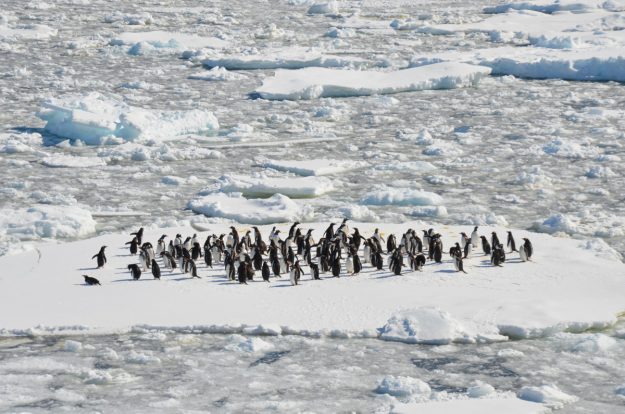
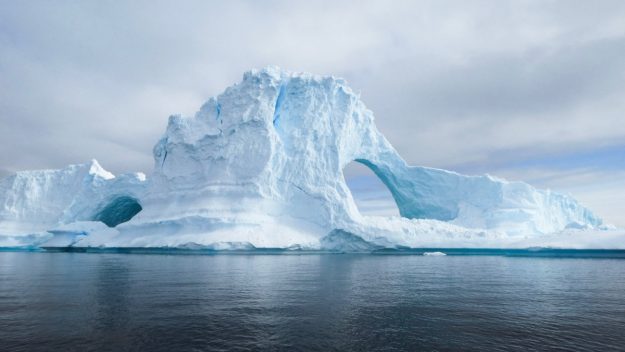
Photo by Derek Oyen on Unsplash

Norway is one of the 29 consultative parties to the Antarctic Treaty, which marks its 60th anniversary in 2021. Many celebrate that the treaty has achieved peace and scientific cooperation. Additionally, it is 30 years since the Protocol on Environmental Protection (widely known as the Madrid Protocol) was agreed. Since then no further legal instruments have been developed to deal with new challenges – above all, the climate crisis. We argue that the Antarctic Treaty does not lack the necessary tools to address this challenge, and that instead it is a matter of more ambitiously interpreting the texts that already exist, and the responsibilities of the individual countries involved.

The Madrid Protocol states that the parties commit to protecting “the Antarctic environment and dependent and associated ecosystems.” This phrase (which occurs nineteen times in the text) leads to the question: what does it mean to protect ecosystems that are dependent and/or associated with Antarctica? The Protocol, like the Treaty itself, covers the area from the South Pole to latitude 60 degrees south, but to attain that goal it is necessary to act further north. Actions outside the geographic boundaries of the Antarctic Treaty should therefore be taken into account when evaluating the extent to which a state fulfills its commitments to protect Antarctica.

The Protocol also asserts that Antarctica has “intrinsic value”. Intrinsic value stands in contrast to instrumental value. Using Antarctica as a laboratory is an example of the latter, where Antarctica functions as a means to achieve the end of increasing scientific knowledge. Intrinsic value, on the other hand, demands that we treat Antarctica as an end in itself. What exactly that means is a discussion that the Antarctic Treaty parties are yet to have, but which could lead to a more ambitious interpretation of the Protocol’s mandate.

The processes that drive climate change and loss of biodiversity do not follow political geographical boundaries. For Antarctica, it is not enough to regulate activities within the Treaty area itself: activities beyond must also be considered. The states that signed the Madrid Protocol committed themselves, in a way, to protect the whole world. It is high time that citizens of the signatory states voiced that demand, particularly in the context of elections. Committing to meet or exceed the targets set in the Paris Agreement would be a good start.

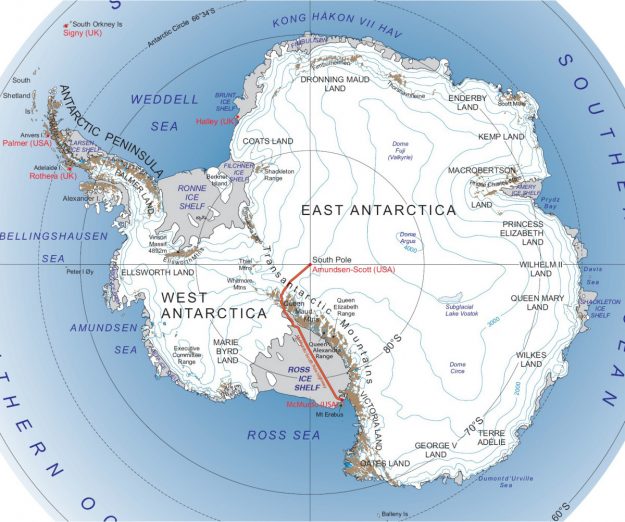
Map of the South Pole Traverse

As a founding member of the Antarctic Treaty that continues to be active in the continent, Norway should take the lead in this process. The country has a self-image as an enthusiastic advocate of human rights and environmental causes at the global level. If it wishes to live up to its reputation, Norway ought to begin by stopping issuing new permits for oil exploration and taking concrete steps toward reducing fossil fuel production. Thus can Norway truly make a contribution to protecting Antarctica.


Sabine Höhler in the Cultural Histories Series

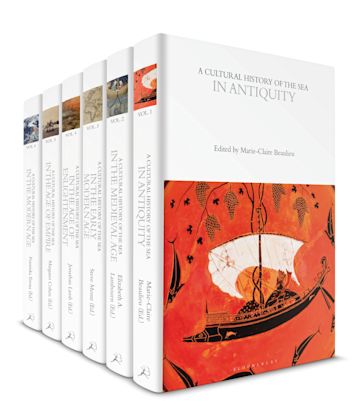
Sabine Höhler recently contributed with the chapter “Creating the Blue Planet from Modern Oceanography” in the sixth volume of the The Cultural Histories of the Sea in the Global Age (Bloomsbury Publishing, 2021).

Throughout history, how has the sea served as a site for cross-cultural exchange, trade and migration? As historians, how do the fields of naval history, maritime history and oceanic history intersect?
About the series, from Bloomsbury

Sabine’s chapter is available open access here: Creating the Blue Planet from Modern Oceanography

The full series can be purchased through the Bloomsbury link under the above qoute.

Information

Hoehler, S. (2021)
Creating the Blue Planet from Modern Oceanography: Creating the Blue Planet from
Modern Oceanography
In: Franziska Torma (ed.), A Cultural History of the Sea in the Global Age (pp. 21-44).
London: Bloomsbury Academic
The Cultural Histories Series

Projects

Formas SDGs: The Mediated Planet: Claiming Data for Environmental H2020-ERC-2017-ADG: SPHERE Study of the Planetary Human-Environment Relationship: The Rise of Global Environmental Governance

Funder

Swedish Research Council Formas, 2020-00512
EU, European Research Council, 787516

Environing technologies: a theory of making environment – open access

Division professors Sverker Sörlin and Nina Wormb’s article “Environing technologies: a theory of making environment” from the 2018 December issue of History & Technology, is available open access. Read the abstract  and find the link for the full article below

The central proposal of this article is that environing technologies shape and structure the way in which nature becomes environment, and as such used, perceived and understood. The argument builds on the understanding that environment is the result of human intervention. Technology is here understood broadly as a terraforming practise, materially and conceptually. We suggest that the compound environing technologies enable us to see environmental change on multiple scales and in new registers. That technologies alter the physical world is not new; our contribution focuses on the conceptual, epistemological, economic and emotional appreciation of systems and aggregates of technologies that is part and parcel of material change. The environing technologies that enable such articulation and comprehension hold potential in the future transformation that our societies need to undergo to overcome the crisis of environment and climate.

Full article

Higher Seminars at the Division

While many people slow down and prepare for vacation, the higher seminar coordinator is in heavy planning for the fall. The Higher Seminar is the colloquium series of the Division where invited guests as well as our own researchers presents seminar on themes from our core areas of history.
The fall of 2021 offers a mix of doctoral defenses, mid-seminars and the annual Archipelago Lectures. Read more in the preleminary program, and feel warmly welcome to attend. This coming semester we hope to be able to have some on-site seminars, but we start on zoom. Do you want som background on the seminar series? See cooridnator Katarina Larsen’s text from our report below.

Higher Seminars at the Division

Text by Katarina Larsen, from the Biennial Report, 2019-2020

The higher seminar series at the division reflects the broad range of exciting topics of research. From “A sea change in Environmental humanities” to studies of history of indigenous communities in the Arctic context, nuclear technology, educational imaginaries, science policy studies, health development projects and innovation in Mozambique, and urban water management. These were just a few of the topics that we had the chance to and discuss during 2019 and 2020. Usually, we have between eight to ten seminars per semester. Adding up the numbers for the past two years, we had about 34 presentations, in addition to a handful of doctoral dissertations and the annual Archipelago lectures.

The higher seminar has a longstanding history at the Division. A text is circulated about a week before the seminar, the author presents for 45 minutes and the next 45 minutes are devoted to discussion. The regular schedule is Mondays 13.15–14.45. The seminar is an institution allowing for scholars at the division to present their ongoing work and also for us all to hear invited speakers. Among presentations we also follow the process that graduate students go through in the program, from presenting the from doctoral plan (the “PhD PM”), through mid-seminar (at 50%) and the final seminar (80 to 90%). Both the mid-seminars and final seminar have invited discussants. Moreover, these presentations give a chance for doctoral students in early stages of their PhD-project to “open a window” to see how the final stages of the doctoral projects take shape and allowing for cross-cohort learning for doctoral students.The seminar series is an open to anyone. The schedule is published online and we frequently have quests in the audience. As organizer of the higher seminars during 2019–2020, I often get comments like “it seems like your colleagues really do show up at your seminars” and “you have some really interesting topics so I would like to hear more about the upcoming seminars”.

During spring 2020, the pandemic turned the higher seminars into an online event, which provided both limitations and opportunities. More scholars from universities abroad, and in Sweden, have found their way to our higher seminar series. This is reinforcing the idea that the series should be a place to meet and exchange ideas, present arguments, discuss virtues and limitations of different research methods, and constitute a space for scholars to learn across scientific disciplines and thematic areas. So, we hope to see you, too at the next higher seminar, starting Monday 13.15, Stockholm time!

Warmly,
Katarina Larsen,
Coordinator of the Higher seminar series, 2019–2020
Div. History of Science, Technology and Environment

Siegfried Evens on Marcinelle and the European Coal and Steel Community

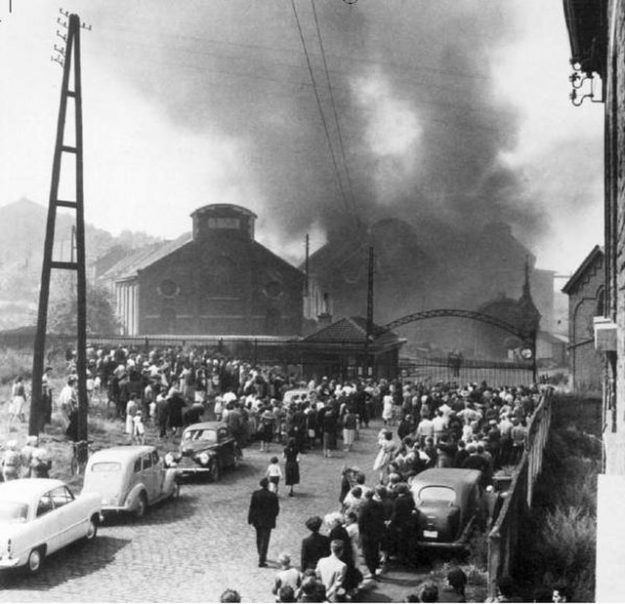
Our NUCLEARWATERS doctoral student Siegfried Evens, just got published with an article on the accident in the Bois du Cazier coal mine in Marcinelle, Belgium on 8 August 1956. You find the arcticle open access in European Review of History: Revue européenne d’histoire, or you can read a summary below!
https://commons.wikimedia.org/wiki/File:Catastrophe_Marcinelle.jpg

Siegfrieds own, terrific summary which you also can find on his Twitter account:

In 1956, a terrible accident with a mine chariot happened in the Bois du Cazier coal mine in Marcinelle, Belgium. 262 miners died, of which 136 Italians. The disaster was in many ways transnational. Casualties came from all over Europe (mostly Italy), but the risks that led up to the disaster were similar in other countries too.
My argument: the European Community of Steel and Coal (ECSC) seized this opportunity to increase its power. In doing so, it laid the foundation of later risk management policies, or what we can call ‘the European risk society’. Marcinelle shaped how the EU deals with risk! EU historians have often argued that the impact of Marcinelle on the ECSC was limited and that ECSC failed in mine safety policy. While it was indeed not their proudest moment, we do not have to be too skeptical either. Yes, a lot of social measures regulating wages, working times, and immigration did not materialise. But a lot of other (more technical) measures did. Understanding the impact of Marcinelle thus means looking at risk management at large. The ECSC went all-in on social policy (still a difficult area for the EU today) and therefore created a (fake) contrast with other technical safety measures. Ironically, it is in the latter category it would be the most successful. Social and technical are hardly separable.

In the article, I follow the developments of a conference on mining safety and the foundation of the Mines Safety Commission. Both were important for internationalising many safety discussions and agenda-setting. They also brought risk assessment into the European institutions. Lastly, we have to analyse Marcinelle long-term. Whether the mines actually became much safer is doubtable. Many mines also closed soon after. But European risk management continued, especially in the Single Market. I even found references to Marcinelle in the Euratom archives.


The Art of Arctic Podcasting – Liubov Timonina in Conversation with Eric Paglia

Liubov Timonina (or Liuba as we call her) is not only our doctoral student in the MISTRA Sport and Outdoor project. She is also affiliated with the Arctic Institute since 2018, and produces a podcast together with two colleagues: the TAI Bookshelf Podcast. In the latest episode she interviews our very own podcast host Eric Paglia!

With this podcast Liuba and colleagues are out on a mission! To make the Arctic easy and accessible to everyone, by serving the listeners in-depth conversations with scholars and experts. Eric was invited for a chat on the art of Arctic podcasting.

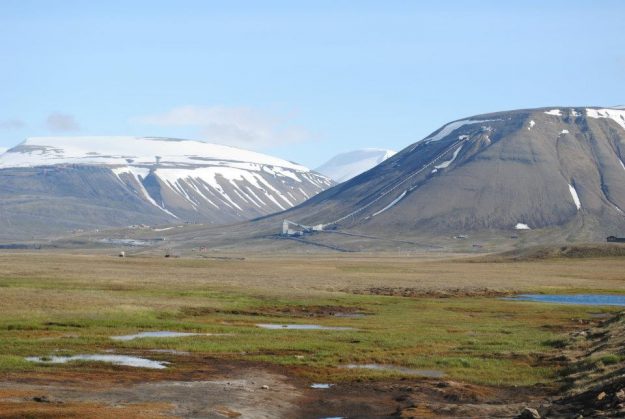
Svalbard, July 2016. Photo: Eric Paglia

– A relaxed and genuine conversation, which sheds light on the everyday of podcast-making, its challenges and funny moments, on the joy of sharing our thoughts and experiences with others and of being part of a dedicated community 🙂 Podcasts are indeed a great way of learning and communicating research, which makes our academic work so vibrant and fun, Liuba says about the episode.

Read more and listen to the podcast here!


Film launch: Resource Extraction and Sustainable Arctic Communities – REXSAC

REXSAC – Resource Extraction and Sustainable Arctic Communities – is a Nordic Centre of Excellence in Arctic research, funded by Nordforsk and led by the Division, together with Stockholm University and Stockholm Environment Institute. Representants in REXSAC from the Division are researcher and LTU Professor Dag Avango, Professor Sverker Sörlin and doctoral students Jean-Sébastien Boutet and Camilla Winqvist. Today the new REXSAC film was launched.
The film “Resource Extraction and Sustainable Arctic Communities” with results and conclusions from the work in REXSAC is availabe and open access. The film highlights how mineral extraction systems combined with other societal activities and climate change exert pressures on Arctic ecosystems & local- and traditional livelihoods. Follow the link to the REXSAC blog below, to read more about why and how the film was made, and also to watch it.

Lize-Marié van der Watt and Kati Lindström on Tourism and Heritage in Antarctica

Polar Geography has just released an article from the Creating Cultural Heritage in Antarctica Project (CHAQ) with both Kati Lindström and Lize-Marié van der Watt, the project’s PI, as co-authors. The article “Tourism and heritage in Antarctica: exploring cultural, natural and subliminal experiences” explores the inseparability of natural and cultural features in the tourist appreciation of heritage in Antarctica.
Remains of the first Swedish Antarctic Expedition (1901-1903) at Snow Hill island, Antarctica, documented by Swedish-Argentine research expedition CHAQ 2020. Division researchers Kati Lindström and Dag Avango (also at LTU) took part of the expedition. Photo: Kati Lindström

Abstract

The guidelines on heritage management adopted by the 2018 Antarctic Treaty Consultative Meeting provide the most recent iteration for an Antarctic tourism sector which had, prior to the COVID-19 pandemic, been projected to increase further with various risks and potential impacts requiring careful management. In this paper the role of cultural heritage for tourism prior to the COVID-19 pandemic is examined through three empirical perspectives. First, how the Antarctic cultural heritage is represented through the designation of Historic Sites and Monuments and Site Guidelines for Visitors; then how this is presented through tourism operators’ websites; and, finally, how it is experienced by visitors as narrated in open-source social media information. Each dataset suggests that, while cultural heritage is an important component of an increasingly commodified tourist offering, it is only part of an assemblage of elements which combine to create a subliminal and largely intangible Antarctic experience. In particular, a polarization of the heritage experience between cultural and natural does not appear productive. The paper proposes a more nuanced understanding of heritage tourism in Antarctica which accommodates the notion of a hybrid experience that integrates cultural heritage, the history and stories this heritage represents, and the natural environmental setting.

Link to the full article: Tourism and heritage in Antarctica: exploring cultural, natural and subliminal experiences by Bob Frame ,Daniela Liggett, Kati Lindström, Ricardo M. Roura  & Lize-Marié van der Watt.

Notes from the North

The Division is currently working hard to put together the history of 2019 and 2020 in a new biennial report. While waiting for the final print, we have picked up this nice piece from our former report, written by Rexsac doctoral student, Jean-Sébastien Boutet. Enjoy!

Notes from the north, 2019

Text by: Jean-Sébastien Boutet, 2019

This past summer I had the chance to travel to Canada to participate in different field schools and explore new research possibilities in the general area of Indigenous economic history. Anthropologists and ethnographers might refer to this period as their “pre-fieldwork,” or “fieldwork: season 0,” but whichever the name, it is invariably made of a strange mix of uncomfortable encounters, beginner mistakes, and a very unhealthy dose of self-doubt.

I started off in a sense where I began, in Schefferville, along the Québec-Labrador borderlands, the site of my previous graduate fieldwork where I wrote about the mining history of the region. It was special, almost surreal, to come back to this place after so many years to witness all the changes, but perhaps most extraordinarily the continuities that characterize the close-knit and isolated communities who depend, for better or for worse, on the industrial production of iron ore. Due to a lack of imagination, or better terms, I entered people’s homes introducing myself as the researcher from a decade ago who came to write about you, and has not returned since. Amazingly, I was offered coffee and a willingness to tell more stories in exchange; some even remembered me, and with guilt I could only produce, like last time, a vague promise to return again, “soon…”

I thought, in Schefferville, about the passage of time. The mining industry, much like researchers, cyclically staging a return as a function of financial swings, following the devastation of a previous abandonment. Elders whom I once interviewed have now passed, or are travelling to a far away hospital, unsure about when they will be able return to their family and home community. I’m told there are only about 30 elders left here, people who were born in the forest, sur le territoire. Surely their precious life history must never be forgotten, but how?

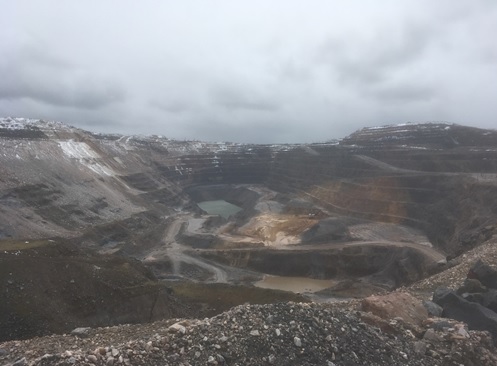
Mining the Québec-Labrador border. (Photo by author)

From Québec I carried on to the west coast for a short stop on the upper canyons of the Fraser River. There was also a going back to the roots of sort, in this case to the beginning of the Canadian mining industry (at least to my mind…). Indeed, on the Fraser, accompanied by incredibly knowledgeable Indigenous guides, rafting superstars and field scholars, we negotiated a relatively tame portion of the river – the one between Lillooet and Lytton – and visited river bars where, starting in the mid-19th century, Chinese migrants expertly operated placer gold mines in the most rigorous conditions imaginable. All this, interestingly, almost half a century ahead of the nation defining moment that constitutes, in the Canadian imagination, the Klondike gold rush. Despite the impressive work of scholars that have made these abandoned sites come alive again, there is still much mystery surrounding the composition of social life and labour conditions at the mines, whether these early miners could turn a decent profit, and most interestingly for me, the nature and extent of Indigenous peoples’ involvement with Chinese labourers.

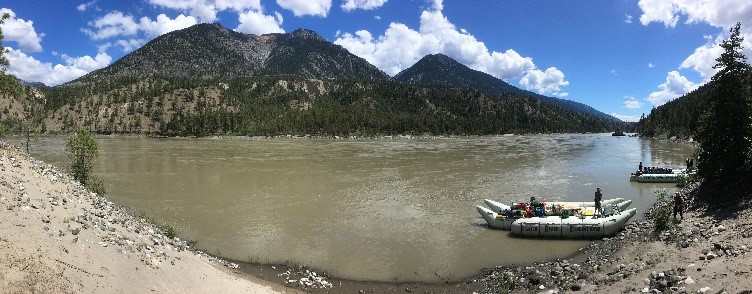
Descending the Fraser River. (Photo by author)

The third major component of the travels took me to Winnipeg, and from there by road all the way past Thompson to northern Manitoba. This portion of the trip assembled an eclectic group of professors, students and artists dedicated to learning first hand about the impacts of hydroelectric development on First Nations communities in the province. Despite the enthusiasm of the group and endless humour from our Indigenous guides, this place had a more sombre tone. Compared to former and operating mine sites, which are certainly destructive but equally so full of life or traces of past lives, there is a deadening aspect to river damming ines; houses and school buses abandoned on submerged lands; a drowned moose, sick fish, and the abstract fear of possible methylmercury contamination; to sum it al local economies.

Evidently, I do not know what of make of it all. It was, at minimum, a productive year zero in the field for me. I was glad to be reminded about the field, how much I love the field, how much I miss it, how difficult and real it is. I remembered where I am most comfortable, at the kitchen table, on the lake, listening to the words and not saying very much, just awkwardly explaining myself and the purpose of our presence here.

Tataskweyak (Split Lake), July 13, 2019.
—Did I tell you the story of when I went to look for porcupine with my dad in 1975?
—No.
—Ok. I will tell you the story of when I went to look for
porcupine with my dad in 1975.
—Ok

It is for these simple encounters, these generous telling
of a story imbued with morality that feels bigger than
the land, that I love the north most. It’s where I hope to
return, “soon…”

Jean-Sebastien Boutet