KTH Logo

New Publication: Investigating potential effects of mobility and accessibility services using the avoid-shift-improve framework

Division researcher Katarina Larsen has published a new article together with her co-authors Hampus Berg Mårtensson and Mattias Höjer, both from the Department of Sustainable Development, Environmental Science and Engineering (SEED) at KTH Royal Institute of Technology. The text with the title “Investigating potential effects of mobility and accessibility services using the avoid-shift-improve framework” is published in Sustainable Cities and Society, Volume 96. It is already available online, and will be published in a physical format in September this year.

Check it out here!

Profile picture of Katarina Larsen

Abstract

Mobility services and accessibility services could contribute to reduced car-dependency and a more sustainable transport system. However, uncertainty remains regarding what the effects will be and further research is needed.

In this paper we examine potential effects on passenger car-travel in an urban context. To do so, we actuate the Avoid-Shift-Improve (ASI) framework using a System Dynamics approach and develop thematic Causal Loop Diagrams. We draw on the findings from a literature study and workshops engaging actors involved in creating visions and planning for the future of mobility and accessibility services in Stockholm, Sweden. The effects discovered are categorized as direct, enabling and structural/systemic, using a retrofitted version of the Three-Levels Model.

Contributions include the mapping of mechanisms through which the services can have positive and negative effects in relation to ASI, demonstrating a high degree of interconnectedness. This includes potential synergetic and competitive relations between the services. In addition, the approach gives insight to potential cumulative impact of the services, relatable to Mobility as a Service, including ‘user near’ effects regarding, e.g., commuting and leisure travel, as well as systemic and structural level effects. A discussion is conducted on the implications for actors and policy-makers.

Keywords

Mobility service; Accessibility service; Mobility as a service; Sustainable urban mobility; Avoid-shift-improve; Car travel; Climate change; Environmental sustainability; System dynamics; Three-levels model of effects

”Två fel gör inte ett rätt” – How China is taken as an argument to not act for the climate

Nina Wormbs, Professor of History of Technology at the division, has published an article relevant in the context of the recent COP26 climate summit in Glasgow in the daily newspaper Dagens Nyheter on 17 November 2021. In the following we will present a short summary of its main points in English, while you can read the original in full length and in Swedish here.

Profilbild av Nina Cyrén Wormbs

Summary:

When climate issues are discussed in Sweden, China is often taken as a comparison. In fact, people use China as an argument to not act in regard to climate change.

During the recent COP26 summit in Glasgow, the focus was also on China, since the country is highly invested in coal both at home and abroad. It is obvious that we need to work with China together, since its emissions are enormous. Despite this, China has recently undertaken steps towards a sustainable society.

In particular, it has become normal to point to China in a debate, if one does not want to engage with those questions the current climate crisis is bringing up. This can include coal power plants but also a justification for flying to Mallorca or Thailand for fun, because Chinese tourists could be seen in Gamla Stan. In order for this practice not to spread further, we have to understand why those arguments are not valid and what they result in.

First, it makes no sense to motivate one’s own harm-doing by arguing that someone else would produce even more harm.

Secondly, the comparison with China’s emissions are an eternal but nevertheless problematic way of relativising one’s own influence. Because you are always able to find someone who produces more emissions than yourself. More than Sweden. More than Europe. Of course it is important how much we emit as humanity, but the China-argument suggests that there would be some form of give- and take, like as if life would be a zero-sum-game. Instead, it is the opposite: every ton of CO2 counts.

Additionally, the China-argument points to an understanding, in which one does not have to do a tiny bit of right, while someone else does so much wrong. Maybe this argument is spreading, because more and more people repeat it. People in Sweden have limited knowledge of China. China is bigger, has more people, and all of them are striving towards a better life. That’s why it might be easy to point to China, in order to relativise one’s own responsibility.

Thirdly, China is often portrayed as an enemy in Swedish media. It can therefore be seen as a nation different from Sweden, being imagined like the negative “other”.

Why are the USA never mentioned in this context, despite their higher historical and per-capita-emissions (IPCC and carbonbrief.org)? Qatar, Kuwait and the United Arab Emirates are also hardly ever named, even though they are leading the per-capita-emissions statistics.

If one looks into the emissions of production chains of consumer goods, of which a lot are produced in China but used somewhere else like in Sweden, the territorial basis for emission-calculations seems off.

Furthermore, within most individual nations the gap between rich and poor gets bigger, which means that the individual emissions are not what the average suggests, but rather high if you are rich, or low if you are poor. Therefore, it would be a great idea to change the focus from nations to individuals, like Chancel and Piketty suggested in 2015.  This makes even more sense, since the richest 10% of the world’s population accounted for 50% of emissions since 1990. Those 10% can be found in every country, but they are not evenly distributed. More so, since 40% of those live in the USA, while only 10% live in China. It might be a cold shower for a Swedish discussant that every Swede with a monthly income of over 27,500 SEK belongs to this group.

This is not being written to support China’s climate policies. Instead, it is to show that China is not relevant if one wants to discuss a domestic climate action plan, as the relationship between being rich and producing lots of emissions is evident – and Sweden is one of the richest countries on earth.

Open Access to Knowledge, Fear, and Conscience: Reasons to Stop Flying Because of Climate Change

Division professor Nina Wormbs researches along with Maria Wolrath Söderberg from Södertörn University, in the project Understanding justification of climate change nonaction. The project runs 2019-2021 and is financed by The Swedish foundation for humanities and social sciences, Riksbankens Jubileumsfond. This June Nina and Marie published the article Knowledge, Fear, and Conscience: Reasons to Stop Flying Because of Climate Change in Urban Planning. Find the link to full text and read the abstract below.

Photo by Marcus Zymmer on Unsplash

Link to Publishers full text.

Link to Understanding justification of climate change nonaction project page 

Abstract

Much research on the societal consequences of climate change has focused on inaction, seeking to explain why societies and individuals do not change according to experts’ recommendations. In this qualitative study, we instead consider people who have changed their behaviour for the sake of the climate: They have stopped travelling by air. We first asked them to elaborate their rationales for the behaviour change. Then, using topos theory to find thought structures, we analysed their 673 open-text answers. Several themes emerged, which together can be regarded as a process of change. Increased knowledge, primarily narrated as a process by which latent knowledge was transformed into insight, through experience or emotional distress, was important. Contrary to certain claims in the literature, fear stimulated change of behaviour for many in this group. Climate change was framed as a moral issue, requiring acts of conscience. Children were invoked as educators and moral guides. Role models and a supportive social context played an important part. Alternatives to flying were brought forward as a motive to refrain from flying. Only a few mentioned shame as momentous. Instead, stopping travelling by air invoked a feeling of agency and responsibility, and could also result in a positive sensation.

Keywords:  arguments; children; climate change; flight shame; inner deliberation; knowledge-action gap; stop flying; topos
Published:   9 June 2021

Where do we publish?

As a division, we publish a lot in many different outlets. Klara Müller, Linus Salö and Sverker Sörlin have compiled the following discussion of our publication pattern in our last Biennial report, which you can find here.

Trends in Publishing

The following section is dedicated to an analysis of the Division’s publication patterns and is based on information collected from Digitala Vetenskapliga Arkivet, DiVA. The information in DiVA is uploaded by the researchers themselves. “Scientific publications”, as defined here, are publications registered in DiVA as “refereed” or “other academic”. The category does not include the content-type “other (popular science, discussion, etc.)”. For this year’s report, we have also excluded the subcategories “oral presentation only”, “oral presentation with published abstract”, and posters.

Thus defined, the output of scientific publications in 2019 and 2020 combined is 212. The two dominant publication types are article in journal (102) and chapter in book (61). Together, these two publication types amount to 77 % of all scientific publications. The remaining publication types consist of book reviews (14) and books (9) along with doctoral theses (4), reports (7) and edited collections (8).

Why should we analyze publication data?
Scholars from a wide range of subjects have criticized the usage of metrics to evaluate research, and this critique has been particularly forceful from scholars active in humanities disciplines. We hope that by compiling publication data from DiVA, we can identify patterns that would not be possible to determine otherwise. This analysis acknowledges certain aspects of the Division’s publication output mediated through visualizations, numbers and charts. We can use the data to identify trends, strengths and weaknesses in publication patterns. But it is, of course, only possible to reflect certain aspects of what the members of the Division have been working on the last couple of years. It also brings up important questions about what we should measure, what this type of analysis of this type of data can tell us, and what research output we should focus on. How much can the Division publish, while maintaining high-quality publications? What is high-quality research, and what can we do to produce that? This analysis will not answer these broad questions, but might instead provoke new insights on what we can use metrics for.

Overall trends 2010 – 2020
Overall, the Division’s publications have seen a stable increase during the last decade. The most prominent category is refereed journal articles, while the output of the other categories (refereed book chapters, books, dissertations, other academic publication types) have been fairly stable. To put this in context, the Division’s research output has grown in a period when such output has in a general decreased in Sweden. According to the latest UKÄ report (February 2021), total publications dropped by 17 %, and in Humanities and Art the decrease has been no less than 23 %. The total number of peer-reviewed articles in the latter category was 1164 in Sweden during 2020.

The 2017 – 2018 Division report identified a salient rise in peer-reviewed publications and publications published in English. These trends are persisting. In 2010, the largest content type was “other”, followed by “other academic” and “refereed”. A decade later, in 2020, the proportions were reversed, with refereed publications being the most numerous and the proportionally largest content type.

Publishing languages
Because Swedish is by far the most common language used in output categorized as “other”, the relative share of Swedish-language publications in the Division has dropped from 55 % in 2010 to 39 % in 2020 when all content types are considered. It follows that this tendency is even stronger when only scientific publications are examined. In 2010, a third of the scientific publications were published in Swedish; in 2020, we are down to a fifth. That said, the trend does not point to a continuous decrease in Swedish-language scientific publications.

Refereed journals 2019 – 2020
The larger the word, the more frequent it is in the titles of the refereed journals that members of the Division have been publishing in over the last two years. This gives a hint of the areas of interest of members of the Division.

During the past two years, members of the Division have been publishing in the following outlets:

Peer-reviewed journals
• Ab Imperio: Theory and History of Nationalities and Nationalism in the Post-Soviet Realm
• Ambio: A Journal of Environment and Society
• Annals of the American Association of Geographers
• Body & Society
• Cahiers du Monde Russe
• Cogent Arts and Humanities
• Current Anthropology
• Current Opinion in Environmental Sustainability
• Ecocene: Cappadocia Journal of Environmental Humanities
• Ecology & Society
• Ecology and Evolution
• Energy Policy
• Energy Research & Social Science
• Environment and History
• Environmental History
• Environmental humanities
• Environmental Justice
• Environmental Science and Policy
• Ėtnograficheskoe Obozrenie
• Fennia: International Journal of Geography
• Fish and Fisheries
• Frontiers in Energy Research
• Geographical Journal
• Global Environment
• Green Letters: Studies in Ecocriticism
• H-Environment Roundtable Reviews
• Historiallinen Aikakauskirja [Historical Journal]
• History and Anthropology
• Humanities
• Industry & Higher Education
• International Journal of Urban and Regional Research
• Journal of Archaeological Method and Theory
• J ournal of Environmental Policy & Planning
• Journal of Historical Geography
• Journal of Northern Studies
• Journal of Transport History
• Land Use Policy
• Landscape and Urban Planning
• Landscape Research
• Language in Society
• Leonardo Music Journal
• Media Theory
• Minerva: A Review of Science, Learning and Policy
• Mobilities Journal
• Multilingua: Journal of Cross-cultural and Interlanguage Communication
• Nature
• Nature Climate Change
• Niin & Näin: filosofinen aikakauslehti
• NTM: International Journal of History and Ethics of Natural Sciences, Technology and Medicine
• Polar Geography
• Polar Record
• Popular Communication
• Progress in Planning
• Public History Weekly
• Resilience: A Journal of the Environmental Humanities
• Scandinavian Economic History Review
• Scandinavian Journal of History
• Scientia Canadiensis: Canadian Journal of the History of Science, Technology and Medicine
• Sibirskie Istoricheskie Issledovaniia
• Sport in Society: Cultures, Media, Politics, Commerce
• Studies in History and Philosophy of Science
• Sustainability
• Sustainability Science
• Technology and Culture
• Technology in Society
• Tertiary Education and Management
• The Extractive Industries and Society
• Tijdschrift voor Geschiedenis
• Trace: Journal of Writing, Media, Ecology
• Turkish Studies
• Urban Geography
• WIREs [Wiley Interdisciplinary Reviews] Water
Books with the following publishing houses:
• KK-stiftelsen (Stockholm)
• Routledge (3)
• Natur & Kultur (Stockholm)
• Baggrund.com (Copenhagen)
• Ellerströms förlag (Lund, SE)
• Campus Verlag (Frankfurt)
• Bokförlaget Atlas (Stockholm)
• MIT Press (Cambridge, MA)
Chapters in books with the following publishing houses:
• Aalto ARTS Books (Helsinki) (2)
• Arche Press (Gothenburg)
• Arkiv förlag & tidskrift (Lund) (3)
• Art and Theory Publishing (Stockholm)
• Bentham eBooks
• De Gruyter (Berlin)
• Deutsches Museum Verlag (Munich)
• Dialogos Förlag (Stockholm) (2)
• Föreningen för folkbildningsforskning (Stockholm)
• Gnasso Editore (Aversa, IT)
• John Wiley & Sons
• Jovis Verlag GmbH (Berlin)
• Kungl. Ingenjörsvetenskap-sakademien (Stockholm) (3)
• MIT Press (3)
• Natur & Kultur (Stockholm)
• Nordiska museets förlag (Stockholm) (3)
• Open Book Publishers (Cambridge, UK) (5)
• Open Humanities Press (London)
• Palgrave Macmillan (4)
• PM edizioni (Varazze, IT)
• Polaris (Stockholm)
• Regeringskansliet (Stockholm)
• Routledge (22)
• Sage Publications (Los Angeles & London)
• SISU Idrottsböcker (Stockholm)
• Springer Nature (2)
• Tartu University Press (Tartu, FI)
• Taylor & Francis (7)
• The University of Alabama Press

Topics
Keywords corroborate the impression from journal titles that environment is a cross cutting theme in much of the Division’s research. The strong social concern is also visible (words such as political, justice, human, labour), along with an interest in urban issues, infrastructures, and energy in various forms. Science and technology also loom large as do gender/feminist, heritage, climate, and the Anthropocene. A significant category is “earth objects” such as sea, earth, air, water. As for geographical spread many regions appear, from the Philippines to the Baltic, but Sweden and Polar/Arctic are the most frequent ones, reflecting major research efforts in these areas. Our two special hubs are reflected in a strong presence of “Environmental Humanities”, and “Posthumanities”.

Collaboration
Collaboration in academic publishing is a strong trend. On page 35 we have listed the Division’s unique collaboration partners during 2019 and 2020, through co-authorships registered in DiVA. It is possible to identify certain clusters – outside of Sweden, universities in the US and the UK are frequent collaboration partners in our publishing. There are also many collaboration partners in the north – Norway, Iceland, Russia, Canada and Finland.

The rise of our co-authorships reflects, above all, continued internationalization, both of research collaboration and research content. This is in line with a general trend in humanities research in Sweden for more than a decade. According to a report from the research council VR (The Research Barometer 2019, p. 62), the share of Arts and Humanities publications co-authored internationally grew from 18 to 30 % from 2007 to 2017. As the figure illustrates the Division has moved in the same direction, only somewhat earlier and in a more pronounced way. In 2020 such publications made up around 50 % of our total publications (taking into account that a small handfulof the co-authorships are within Sweden). Part of the explanation is probably the relatively high proportion of non-Swedes among our researchers, but our collaboration networks are also important.

Publishing for other audiences
The following category of publications is not included in the analysis of scientific publications, since it is based on what is defined as “other (popular science, discussion, etc.)” in DiVA. This review was made to get a better understanding of how the Division’s publishing engages with audiences outside academia. In 2019 and 2020, members of the Division’s most frequent “non-scientific” publications, were in the newspapers Dagens Nyheter (16) and Svenska Dagbladet (9). The web-based magazine Curie, issued by the Swedish Research Council (Vetenskapsrådet), has also been a dominant outlet for non-scientific publications.
As the word cloud indicates, with newspapers as the dominant outlet, “article in journal” is the most common outlet in the category “other”, with 54 posts. But it is not the only one. There are also “chapter in book” (6) and, again, “other” (16). In this category, we find a mixture of blog posts and other online discussion outlets.
The category “other” has been fairly stable the last decade, except for a dip in 2013 and a rise in 2020. The stability indicates that members of the Division have not published less in non-peer-reviewed outlets, for example, newspapers, due to the rise in refereed articles and book chapters. We can also identify a notable rise in publications in the category “other” during 2020. A possible explanation of this rise in publications during 2020 might be the Covid-19 pandemic and the need for researchers to engage in public debates, which members of the Division have done with at least 10 texts reflecting on the crisis.

In the category “other”, Swedish is the dominant language with 61 publications, followed by English with 10 publications. This can be compared to the Division’s scientific publications, where English has been the dominant language of use since 2006.

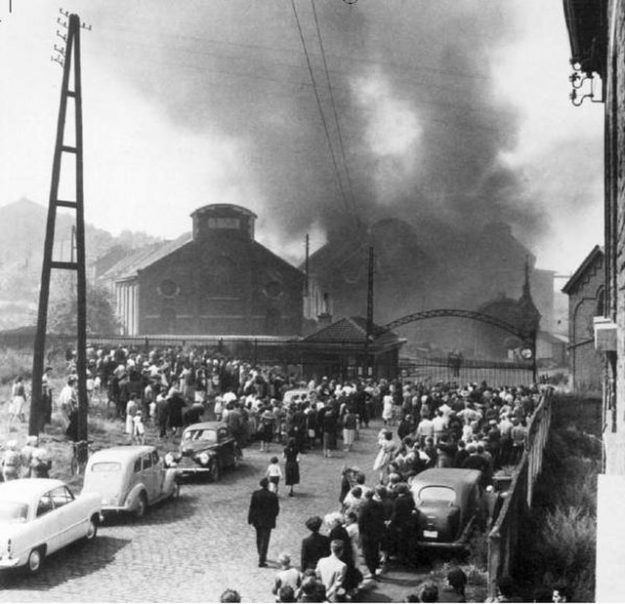
Siegfried Evens on Marcinelle and the European Coal and Steel Community

Our NUCLEARWATERS doctoral student Siegfried Evens, just got published with an article on the accident in the Bois du Cazier coal mine in Marcinelle, Belgium on 8 August 1956. You find the arcticle open access in European Review of History: Revue européenne d’histoire, or you can read a summary below!
https://commons.wikimedia.org/wiki/File:Catastrophe_Marcinelle.jpg

Siegfrieds own, terrific summary which you also can find on his Twitter account:

In 1956, a terrible accident with a mine chariot happened in the Bois du Cazier coal mine in Marcinelle, Belgium. 262 miners died, of which 136 Italians. The disaster was in many ways transnational. Casualties came from all over Europe (mostly Italy), but the risks that led up to the disaster were similar in other countries too.

My argument: the European Community of Steel and Coal (ECSC) seized this opportunity to increase its power. In doing so, it laid the foundation of later risk management policies, or what we can call ‘the European risk society’. Marcinelle shaped how the EU deals with risk! EU historians have often argued that the impact of Marcinelle on the ECSC was limited and that ECSC failed in mine safety policy. While it was indeed not their proudest moment, we do not have to be too skeptical either. Yes, a lot of social measures regulating wages, working times, and immigration did not materialise. But a lot of other (more technical) measures did. Understanding the impact of Marcinelle thus means looking at risk management at large. The ECSC went all-in on social policy (still a difficult area for the EU today) and therefore created a (fake) contrast with other technical safety measures. Ironically, it is in the latter category it would be the most successful. Social and technical are hardly separable.

In the article, I follow the developments of a conference on mining safety and the foundation of the Mines Safety Commission. Both were important for internationalising many safety discussions and agenda-setting. They also brought risk assessment into the European institutions. Lastly, we have to analyse Marcinelle long-term. Whether the mines actually became much safer is doubtable. Many mines also closed soon after. But European risk management continued, especially in the Single Market. I even found references to Marcinelle in the Euratom archives.


Lize-Marié van der Watt and Kati Lindström on Tourism and Heritage in Antarctica

Polar Geography has just released an article from the Creating Cultural Heritage in Antarctica Project (CHAQ) with both Kati Lindström and Lize-Marié van der Watt, the project’s PI, as co-authors. The article “Tourism and heritage in Antarctica: exploring cultural, natural and subliminal experiences” explores the inseparability of natural and cultural features in the tourist appreciation of heritage in Antarctica.
Remains of the first Swedish Antarctic Expedition (1901-1903) at Snow Hill island, Antarctica, documented by Swedish-Argentine research expedition CHAQ 2020. Division researchers Kati Lindström and Dag Avango (also at LTU) took part of the expedition. Photo: Kati Lindström

Abstract

The guidelines on heritage management adopted by the 2018 Antarctic Treaty Consultative Meeting provide the most recent iteration for an Antarctic tourism sector which had, prior to the COVID-19 pandemic, been projected to increase further with various risks and potential impacts requiring careful management. In this paper the role of cultural heritage for tourism prior to the COVID-19 pandemic is examined through three empirical perspectives. First, how the Antarctic cultural heritage is represented through the designation of Historic Sites and Monuments and Site Guidelines for Visitors; then how this is presented through tourism operators’ websites; and, finally, how it is experienced by visitors as narrated in open-source social media information. Each dataset suggests that, while cultural heritage is an important component of an increasingly commodified tourist offering, it is only part of an assemblage of elements which combine to create a subliminal and largely intangible Antarctic experience. In particular, a polarization of the heritage experience between cultural and natural does not appear productive. The paper proposes a more nuanced understanding of heritage tourism in Antarctica which accommodates the notion of a hybrid experience that integrates cultural heritage, the history and stories this heritage represents, and the natural environmental setting.

Link to the full article: Tourism and heritage in Antarctica: exploring cultural, natural and subliminal experiences by Bob Frame ,Daniela Liggett, Kati Lindström, Ricardo M. Roura  & Lize-Marié van der Watt.

Cosmopolitanism in the Anthropocene (with a Postscript on the coronavirus)

By Prof. Miyase Christensen (Stockholm Univesity & Royal Institute of Technology, Sweden)

This is a moderated version (see Postscript at the end) of a chapter published in “The Sage Handbook of Media & Migration” (Sage, 2020). Editors: Kevin Smets, Koen Leurs, Myria Georgiou, Saskia Witteborn & Radhika Gajjala.

Introduction

In early 2019 it was announced that Greta Thunberg, a 16-year old Swedish climate activist, had been nominated for the Nobel Peace Prize. Thunberg originally gained national and international fame with her (then) solo climate-protest outside of the Swedish parliament building in Stockholm, a protest that grew in fame to the point where it developed into the ‘School Strike for Climate’ movement and the genesis for tens of thousands of student ‘strikes’ worldwide. The question, for some, was what Thunberg’s environmental protests had to do with peace. The answer can be found in, among other places, Africa where disputes over access to water along the Nile continue to escalate (with the threat of military intervention). In addition, and just a few days after Thunberg’s nomination, a cyclone hit the African countries of Mozambique, Zimbabwe and Malawi, killing large numbers and causing floodwaters in excess of 20 feet, destroying 90 percent of Mozambique’s fourth largest city, Biera. Thus, the concept of ‘peace’ cannot be separated from nature, as we witness both military conflict and humanitarian catastrophe in the Anthropocene (the current geological age marked by human influence on the environment), nor can it be separated from how human impact on the environment shapes migration, mobility and peace.

As Burke (2013) has noted in relation to what he calls the ultimate failure of a ‘moral community’, recent events such as those in north and east Africa are stark reminders of the futility of considering rising global temperatures, resource depletion or natural disasters simply as issues of national relevance:

When states draw on the same water sources, experience a common climate, depend on global prices and currency values, transmit conflict and weapons beyond their borders, and threaten and affect the lives of others far away, enclosed or circular models of moral community — however generous — fail to reflect an urgent reality. It is no longer a matter of deciding whether national interests and global goods must clash, but of honoring the common space of life and death that we have created.
Clearly, in all of these cases — from warfare to famine to human/natural disasters — mobility and migration are central components. It is the purpose of this chapter to offer a discussion of cosmopolitanism vis-à-vis mobility and migration from the standpoint of planetary politics and the Anthropocene, rather than within a global framing. Here, cosmopolitanism and mobility are considered in an integrativemanner in which the material and symbolic aspects can be considered together to open up new cosmopolitan horizons.

A Brief History Of Cosmopolitan Thought

In her 1980 collection of essays, Under the Sign of Saturn, Susan Sontag wrote a chapter on the Bulgarian-born writer Elias Canetti, who was taken from Austria to Britain in 1938 to escape the incoming Nazi regime. Canetti, described as the ‘son of a family of wandering Sephardic Jewish merchants’ and inspired by Goethe, wrote of his experiences in war-torn London. Sontag saw the connection between Canetti’s personal history, his writing and his connection to cosmopolitanism, and wrote of him:
He has, almost by birthright, the exiled writer’s easily generalized relation to place: a place is a language. And knowing many languages is a way of claiming many places as one’s territory. Canetti has the privilege and the burden of understanding, Jew that he is, the higher cosmopolitanism. (Mitgang, 1981)

Sontag continued by writing that a great deal of Canetti’s works point toward the importance of ‘how to pay attention to the world’ and that, in his work, ‘there is no doctrine’. Of course, the very form of cosmopolitanism that Sontag ascribed to Canetti — the fluid, exiled Jewish artist able to adapt and understand multiple cultural contexts — was the same form reviled by Stalin in the late 1940s and early 1950s Soviet Union. Employing the term ‘rootless cosmopolitan’ (originally used in 19th century Russia against Jewish writers), an anti-Semitic campaign to smear Jewish intellectuals was put into action in which their loyalty to both party and nation were questioned.

The flexibility and utility of the terms cosmopolitanand cosmopolitanism — there were, after all, only 30 years between the pejorative Stalinist use and Sontag’s celebration — speak to the long, rich (and often problematic) history of the terms. The concepts of cosmopolitanism and the cosmopolitan have, in various iterations and for various political and social ends, been woven into the intellectual history of humankind: from early Chinese Confucianism, to the ancient Greeks to Stalinist Russia. Ancient Greece is perhaps most famous for what was clearly not a cosmopolitan political and social project, namely evident in the political philosophies of Plato and Aristotle, in which men (and only men) swear their allegiance to a specific city (‘polis’) and its inhabitants alone. This essentially anti-cosmopolitan ideology — where sharing or collaborating with those who resided outside of polis was frowned upon, and where the only foreigners with whom one could/should interact were those already living within the walls of the polis — was juxtaposed by the philosophy famously attributed to the Cynic Diogenes, a 4th century BC resident of Sinope (now part of the Black Sea region of Turkey) who, when asked where he came from, answered: ‘I am a citizen of the world (kosmopolitês)’. This philosophy was then adapted by the Stoics and crystalized by the philosopher Hierocles who envisioned Stoic cosmopolitanism in the form of concentric circles with the human mind at the center, expanding outward to encompass family, extended family, local community, wider community, country/nation and, at the outer edge of the circles, the entirety of the human race. The goal, Hierocles posited, was to pull these various circles inward, thereby making the human, the national and the local issues of the person and the mind.

The ‘citizen of the world’ position taken by Diogenes was later adopted by intellectuals such as Thomas Paine. While in Paris in the late 1790s, Paine argued that, although not French by birth, his opposition to the execution of the deposed king Louis XVI — Paine claimed that capital punishment was inhumane and that the former monarch should be exiled — should be taken seriously because he was a ‘citizen of the world’. As Lamb (2014) writes, there is perhaps no political thinker in the post-ancient era that is so closely associated with the philosophy originally espoused by Diogenes. Lamb (2014: 638) notes that Paine regularly points out the ‘universal validity (and falsity) of moral and political claims’ and that their ‘evaluation can never be confined to one particular national, historical or cultural context’. In a famous line from his pamphlet Common Sense, and in the spirit of universalism and inter-connectedness, Paine (2003) unwittingly presaged questions related to environmental degradation and the Anthropocene when he wrote, ‘the cause of America is in great measure the cause of all mankind’. At almost precisely the same time as Paine was writing Common Sense, Immanuel Kant published Perpetual Peace: A Philosophical Sketch(1970) in whichhe outlined his ideas for a program of global peace to be enforced by national governments. In addition to a list of articles intended to eliminate warfare, three additional articles were included to ensure that peace and stability could be maintained with the third of these directly related to cosmopolitanism: ‘The law of world citizenship shall be limited to conditions of universal hospitality’. This ‘Cosmopolitan Law’ was an addition to constitutional and international law and was predicated on the belief that human beings have inalienable rights as citizens of earth and not just as citizens of states.

What this brief history of cosmopolitanism shows us is not only the flexibility in how the term has been used, but, also, how the conception of being a ‘citizen of the world’ tends to dominate the epistemological framing of being a cosmopolitan. This is a citizenship that is on the surface dynamic, but ultimately static and rooted in time. Interestingly, however, it was the original proponent of cosmopolitanism, Diogenes, who provided the most forward-thinking and radical conception of the term. For Diogenes, cosmopolitanism was more than simply the acceptance of ‘the other’, it was about active (rather than theoretical) participation in dissent: to challenge prevailing wisdom, to question power, to expose excessive consumption and greed and to live a life free of material possessions and waste. The ‘anti-elite and anti-institutional notions of belonging and citizenship’ held by Diogenes and the Cynics were in opposition to the more conservative Stoic tradition (Delanty, 2012: 3). It is this conception of cosmopolitanism that is perhaps most useful when considering the relationship to the Anthropocene and environment as it foregrounds the long-term, temporal impact of human action (and inaction) rather than focusing on short-term impact. For example, Marxist notions of dominating nature and expanding production to benefit workers were geared toward an ultimately cosmopolitan end: the erosion and collapse of nation-states and the emergence of a classless, humanitarian society. Yet, this end is untenable and can result in the destruction of earth if no governed tightly and sensibly. In the subsequent sections, how cosmopolitanism must embrace not only a philosophy of inclusion, but one of dissent and activism in the face of radical environmental change, will be addressed.

Cosmopolitanism in the Mediated Anthropocene

How might we conceive of a cosmopolitan vision connecting the concepts of the Anthropocene and migration within the more radical tradition of Diogenes and the Cynics? One way to start would be to challenge the ways in which media and communication studies have traditionally addressed questions of cosmopolitanism and the media. To date, the mediated ‘cosmopolitan vision’ has usually been discussed within the parameters of consumption of various forms of representation: from popular culture to news (Robertson, 2019). Such a focus, however, runs the risk of reducing media ‘consumption’ to the act of reading, listening or seeing. It doverces the acts of producing and purchasing media hardware from the act of absorbing representation. This conception also ignores what Parikka (2012; in Christensen & Nilsson, 2018) described as the ‘dirty matter’ produced in modern society. This matter includes the chemicals and minerals required for the production of contemporary communication technology hardware: chemicals and materials that are mined in predominantly poorer nations, with catastrophic environmental effects. In addition to the devastating consequences of the extraction of these materials, there exists similarly devastating environmental consequences for the disposal of the same materials. Cultural imperialism studies (e.g. Boyd-Barrett, 1977; Schiller 1976; 1991) addressed the ‘core-periphery’ relationship between ‘developed’ and ‘developing’ nations, yet reduced the material that would flow back from core (wealthy nations) to periphery (poorer nations) to media/cultural products (TV programs, films, music). This analysis, while canonic and highly insightful, overlooked the extent to which the discarded hardware of media, including vast quantities of toxic material (in the case of, for example, computers), are also dumped in poorer nations, again leading to environmental degradation (Christensen & Nilsson, 2018: 271–2).

In relation to the Anthropocene and migration, therefore, a radical cosmopolitan perspective must take into account the material impact of the consumption of media hardware upon the environment, and the potential of that consumption to contribute to the conditions that lead to forced and involunatry migration. This follows the longitudinal perspective, embraced by Diogenes, within which all stages and all forms of media ‘consumption’ — from the mining of the materials required to produce media hardware to their eventual disposal in the form of e-waste — must be considered for a truly radical and holistic cosmopolitian understanding of media consumption. This is what Parikka (2012: 97) termed ‘media-natures’, which would be used for the study of the ‘continuum between mediatic apparatuses and their material contexts in the exploitation of nature’.
In media and communication studies, notable perspectives and empirical analyses have been produced over the past few decades. Yet, we have probably just begun to scratch the surface in terms of the potential of cosmopolitan thought. As a result of media and communication studies being the off-shoot of various other disciplines (for example, Literary Studies in the US), as well as being periodically ridiculed in popular press as ‘Mickey Mouse Studies’ in the UK not so long ago, there has, at times, been a tendency to defer to dominant paradigms of thought and research, and not to develop new, radical, progressive theory (related to, for example, issues of central importance to the earth on which we live). It is telling that many of the strands of theory and thought that were perceived as marginal to media and communication research — such as environmental humanities — should, in truth, be at the heart of media and communication studies. It is only this form of thinking that will enable media and communication studies to take the steps required to address the relationship between, for example, the Anthropocene and media consumption. In concrete terms, Peters (2015: 2) has argued that we should ‘conceive of the media as both nature and culture’.

One connective tissue between this new form of theory and research, the Anthropocene and the theme of migration, is that of geo-politics. The traditional conception of geopolitics has been one of ‘the world’ or ‘the global’, yet we need to move beyond these concepts and embrace the notion of planetary politics. Along these lines, Elden (2013) suggests that we think of a ‘politics of the earth’ rather than a ‘politics of the global’. This meshes well with Burke’s (2013) cosmopolitan notion of ‘honoring the common space of life and death that we have created’. Of course, migration is one part of geo-politics and so a cosmopolitan vision should go beyond moral, ethical, legal and representational notions, and develop a more holistic understanding within the framework of the Anthropocene. As Christensen and Nilsson (2018: 272–3) write: ‘bringing in geopolitical perspectives (makes) visible the planetary scale through addressing questions of geographic interplay as well as the human scale through an emphasis on politics and power (such as colonial legacies and contemporary dynamics of subordination)’.

Conclusion

In this short essay, the goal has been to stimulate thought on the relationship between cosmopolitanism, migration and the Anthropocene, but to also consider how media and communication studies can and should adapt to contemporary planetary environmental conditions. The Nobel Prize nomination given to Sweden’s Greta Thunberg was presented as a starting point to consider how climate and peace are interconnected. Thunberg’s Swedish nationality is a good place to end. As has been well documented, Sweden has, per capita, taken more refugees than any other country in Europe and far more per capita than countries such as the United States, Canada and Australia. Much has also been made of the fact that a majority of these refugees have come from war-torn Syria and, just over a decade ago, from war-torn Iraq. The destabilization of Iraq, and the political and military vacuum that followed, contributed to the formation of the Islamic State (IS) which, in turn, led to the de-stabilization of Syria. Sweden’s intake of refugees and immigrants from these nations has a direct relationship to the Anthropocene: the US bombing of Iraq in the early 1990s and the US/UK invasion and occupation of Iraq that began in 2003 were both efforts to secure US and European access to oil. Thus, it can be reasonably argued it was the excessive demand for oil and petroleum products that contributed to Sweden’s considerable intake of refugees from Iraq and Syria.

How does this bring us back to cosmopolitanism and academic research? To take the case of media and communication studies, the analysis of, for example, the representation of migrants from Syria or Iraq has usually defined these groups as fleeing conflict or war. Less common (if at all) is to define them, ultimately, as victims of a hyper-consumption fuelled by the media that cover them, politicians who use them as pawns and media consumers who now read reductionist stories about them. Thus, framing refugees and migrants as the effects of specific conflicts bypasses deeper global environmental and consumption issues in favor of discourses of war which absolve the reader (and researchers) from personal responsibility.
Cosmopolitanism has usually been framed as a question of space, and empathizing with those from other places. What it rarely has been framed as, however, is a question of empathy and engagement across time. As history changes, the work and activism of Diogenes reminds us of the need to think of cosmopolitanism in temporal terms, as our actions today will have effects many years down the road.

Postscript, March 2020

Given the issues raised in this chapter, the current coronavirus (COVID-19) outbreak is a stark reminder of how those who work within the field of Media and Communication Studies (and academia in general) would do well do consider how our own professional practices are often at odds with the (admittedly laudible) egalitarian and pro-social framework within which a great deal of research is conducted. Earlier in this piece, I noted how the technology hardware used in the media industry, and by academics, make a significant contribution to environmental degradation: a fact that often goes without comment in political economic and social analyses of the “impact of media.” By the same token, we might ask how and why these same technologies that, at the very least, allow for instantaneous visual and aural communication over great distances — technologies used on a daily basis in so many other areas of our work — are suddenly abanadoned in favor of highly damaging long-distance travel for events such as academic conferences. That it takes an outbreak like COVID-19 to stop these practices, even in the face of existing overwhelming evidence of the damage caused by things such as air travel, speaks to the chasm between much academic rhetoric on progressive practice and action.

References

  • Boyd-Barrett, O. (1977). Media imperialism: Towards an international framework for the analysis of media systems. Mass Communication and Society, 116–135.
  • Burke, A. (2013). Security cosmopolitanism. Critical Studies on Security, 1(1), 13–28.
  • Christensen, M., & Nilsson, A. E. (2018). Media, communication, and the environment in precarious times. Journal of Communication, 68(2), 267–277.
  • Delanty, G. (2012). Introduction: The emerging field of cosmopolitanism studies. In G. Delanty (ed.), Routledge handbook of cosmopolitanism studies. (pp. 20–27). London: Routledge.
  • Peters, J. D. (2015). The marvelous clouds: Toward a philosophy of elemental media. Chicago, IL: University of Chicago Press.
  • Kant, I. (1970). Perpetual peace: A philosophical sketch(Vol. 1991). Cambridge: Cambridge University Press.
  • Lamb, R. (2014). The liberal cosmopolitanism of Thomas Paine. The Journal of Politics, 76(3), 636–648.
  • Mitgang, H. (1981). Cosmopolitan in tradition of Goethe. New York Times, 16 October. Available at: https://www.nytimes.com/1981/10/16/books/cosmopolitan-in-tradition-of-goethe.html
  • Paine, T. (2003). Common Sense and Other Writings, ed. Gordon S. Wood (New York: The Modern Library, 2003), xxi–xxii.
    Parikka, J. (2012). New materialism as media theory: Medianatures and dirty matter. Communication and Critical/Cultural Studies, 9(1), 95–100.
  • Robertson, A. (2019). Media Cultures and Cosmopolitan Connection. In G. Delanty (ed.), Routledge handbook of cosmopolitanism studies. London and New York: Routledge.
  • Schiller, H. I. (1991). Not yet the post-imperialist era. Critical Studies in Media Communication, 8(1), 13–28.
  • Schiller, H. I. (1976). Communication and cultural domination. White Plains: International Arts and Sciences Press.


The “Grounding book” is now out! Published as #OpenAccess by MIT Press. “Grounding Urban Natures”.*

by Henrik Ernstson

We won the MIT Press Library Award! Our recently published edited book Grounding Urban Natures: Histories and Futures of Urban Ecologies (2019, MIT Press) can now be downloaded #OpenAccess as a searchable PDF from The MIT-Press website (press link above).

For colleagues with permanent jobs or research funding, consider to (also) buy the real and heavy book because its so nice!

The book provides well-written chapters on urban natures, their social lives, their vibrant matters, and their politics across a varied geography, from the global South to North. Bringing together ethnography and environmental history in a comparative gesture, the chapters are great to teach from as students can trust experienced scholars to unpack the multiplicity of urban nature in narrative form that is kept free from jargon. Let me know if you teach from it through my twitter handle @rhizomia (Henrik Ernstson).

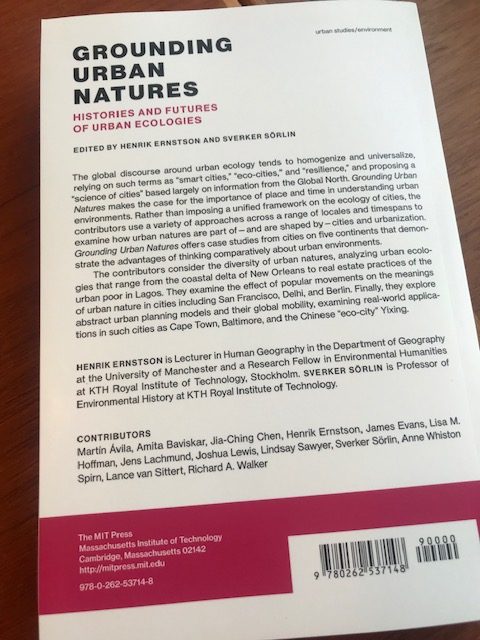
Back cover of Grounding Urban Nature

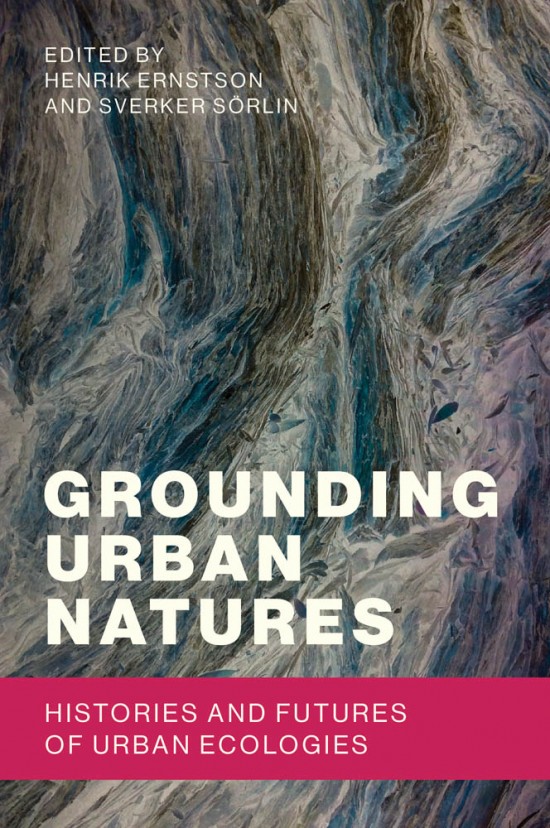
Front cover of Grounding Urban Nature

The book Grounding Urban Natures unpacks the multiplicity of urban natures across a wide geography, from global South to North. It opens a space to re-think how we think urban environmental politics for the 21st century. Written by leading scholars it is divided in three sections: Unexpected Natures, Popular Natures, and Technological Natures, couched within an Introduction and Conclusion written by the editors Henrik Ernstson and Sverker Sörlin.

The chapters are made for teaching as they contain no jargon. They effectively open up urban natures from a multiple of perspectives, and bring case studies from across the world—from new emergent forms of urbanism of the global South, to re-worked cities in the global North. Students will have a wealth of experience to rely on as urban natures are shown to be shaped in sometimes unexpected ways through:

  • a multiplicity of agencies;
  • the role of historical changes, from colonisation to industrialisation;
  • the impact of race and class structures—but also social movements;
  • the circulation of ideas, from Confucianism to neoliberalism; and
  • the heavy hand of expert models and engineering standards.

Constructive review of urban ecology as an interdisciplinary field from especially the 1990s onward is given in the Introduction. The shear explosion of exciting thinking that have emerged and pushed the humanities and the social and natural sciences to regard urban nature very differently today than simply 20 years back. The Introduction includes debates and tensions between different perspectives from socio-natures, more-than-human, urban political ecology, and social-ecological systems theory (including resilience), which is paired with a close reading of how postcolonial and Southern urbanism, which has grown strongly in urban studies in the last 15 years, can help to open up a space to think urban nature from a wider lens, from a “world of cities” (1).

The chapters are written by leading scholars in the field. This includes chapters from one of the true founders to think cities as socio-natures, Ann Whiston Spirn who wrote The Granite Garden-classic in 1984 and here contributes an intimate chapter on teaching high school kids about landscape literacy in Philadelphia and theorising democratic practices; to Lindsay Sawyer’s chapter on Lagosian’s mode of building auto constructed real-estate; to Martín Ávila (with Henrik Ernstson) on infrastructures and scorpions and the problem of co-habitation in Córdoba, Argentina; how a huge engineering lock made a river disappear in New Orleans by Joshua Lewis; “alien” plant clearing in Chinese Dalian by Lisa M HoffmanAmita Baviskar on parks, forests and couples falling in love in New Delhi; and how Chinese “eco-cities” is linked to massive dispossession of farmers from their land in China by Jia-Ching Chen; and several more chapters from Richard A. WalkerLance van SittertJens Lachmund and James Evans.

Chapters are placed between an Introduction and Conclusion that provides historical background and theory from an expanding field. These chapters opens up a space to re-think urban environments from new locations. With rapid urbanisation and radically new ways through which urban natures are shaped across global South and North, we cannot trust old models nor unreflectively reproduce global models such as “eco-cities,” “smart cities,” “resilience cities,” or a new “science of cities” without paying attention to how place matters. Through a critique of how global discourse tend to homogenise and universalise how we think about cities, the Introduction and Conclusion opens a space to re-think our urban environmental crisis.

This book provides a step to gather a more inclusive and generous practice for thinking and formulating urban environmental policy and activism in the Urban Age of the 21st century. Drawing on the strong resurgence of Southern and postcolonial perspectives in urban studies, we as editors argue for a “comparative urban environmentalism” to create this space of critique and dialogue. The Introduction argues for combining the “wild” libraries of urban socio-nature from the 1990s onward, with postcolonial or “Southern urbanism” from urban studies, to invigorate thinking while decentering the global North as the locus of thought. This opens the global phenomena of rapid urbanisation and environmental crisis to be theorised from more places and disciplines. In the tradition of William Cronon’s edited volume Uncommon Ground, a truly eclectic and somewhat boistorous collection of writers, our “Grounding-book” offers a strong contribution to urban ecology, to environmental humanities, to political ecology, and to environmental thought more generally.

We hope you like it!

Published by MIT Press in their series on Urban and Industrial Environments in August 2019. Made Open Access through the MIT Press Library Award on 7 October 2019.

Contributors: Martín Ávila, Amita Baviskar, Jia-Ching Chen, Henrik Ernstson, James Evans, Lisa M. Hoffman, Jens Lachmund, Joshua Lewis, Lindsay Sawyer, Anne Whiston Spirn, Lance van Sittert, Richard A. Walker.

Editors: Henrik Ernstson and Sverker Sörlin.

(1) The expression is taken from Jennifer Robinson, a founding and generous sister of Southern urbanism. More on that in the Introduction.

*Reprinted with permission from http://www.situatedecologies.net/archives/2225

Environmental Themes in Popular Narratives 

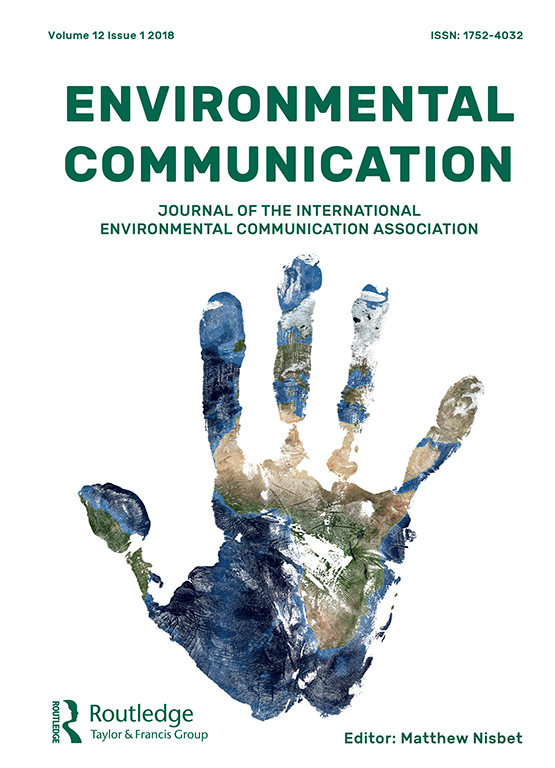
Considering the current state of global and American affairs re the environment in general and climate in particular, I think we can humbly hope that this special issue has come out when it did to contribute to the debate about mediating and narrating environmental issues through popular communication (from film, music and literature to FB, news and TV). /Miyase Christensen

(2018). Environmental Themes in Popular Narratives. Environmental Communication: Vol. 12, No. 1, pp. 1-6.

You better not miss that Environmental Communications recently published an article with big represenation from our Division. Our guest professor and researcher Miyase Christensen is the author of the article together with co-editors Anna Åberg, who defended at the Division in 2013, researcher Susanna Liström who is currently on parental leave in San Diego and researcher Katarina Larsen who among other things is in charge of our Higher Seminars.

You can access the article by going here : Environmental Themes in Popular Narratives: Environmental Communication: Vol 12, No 1