
The students' report on Starlink has been downloaded over 7500 times

How is satellite-based internet affected by rain and time of day? KTH students Emil Fredriksson and Céline Careau investigated this in their thesis - and they got it right. Their report has now been downloaded 52 times more than the average of all publications on diva in 2024, and the work has been nominated for the Best Paper Award at the international conference SPACOMM 2025 in Nice.

Starlink, the satellite network that connects the world to the internet, has quickly become a major player in wireless communications. But how robust is the technology - especially in Nordic conditions? That was the question Emil Fredriksson and Céline Careau asked themselves when they started their bachelor's thesis at KTH.
"We had started to get interested in wireless systems and saw Starlink as an exciting, somewhat unexplored area - especially in Sweden," the students say.
Their study investigated how the connection via Starlink is affected by rain, time of day and the transport protocol used. The measurements showed that the speed deteriorated during rain, and the connection was fastest at night - probably due to lower user pressure.
"We have learnt in our education that different factors can affect wireless communication, but it's great that it shows up so clearly on the graphs," said the students.
The report has attracted significant interest both within and outside the academy, with over 6900 downloads - 12 times more than the average for KTH's publications on Diva 2024. In May, they presented their results at the SPACOMM 2025 satellite conference in Nice.
"We chose a topical subject that many people are curious about - it has paid off," said the students.
Read the report: Supervisors


Related news

EECS replaces three master's programmes with two, betting on AI and scale
From autumn 2027, KTH's EECS school is consolidating its master's offering in communication, information engineering and distributed systems: three existing programmes — Communication Systems, Informa...
Read the article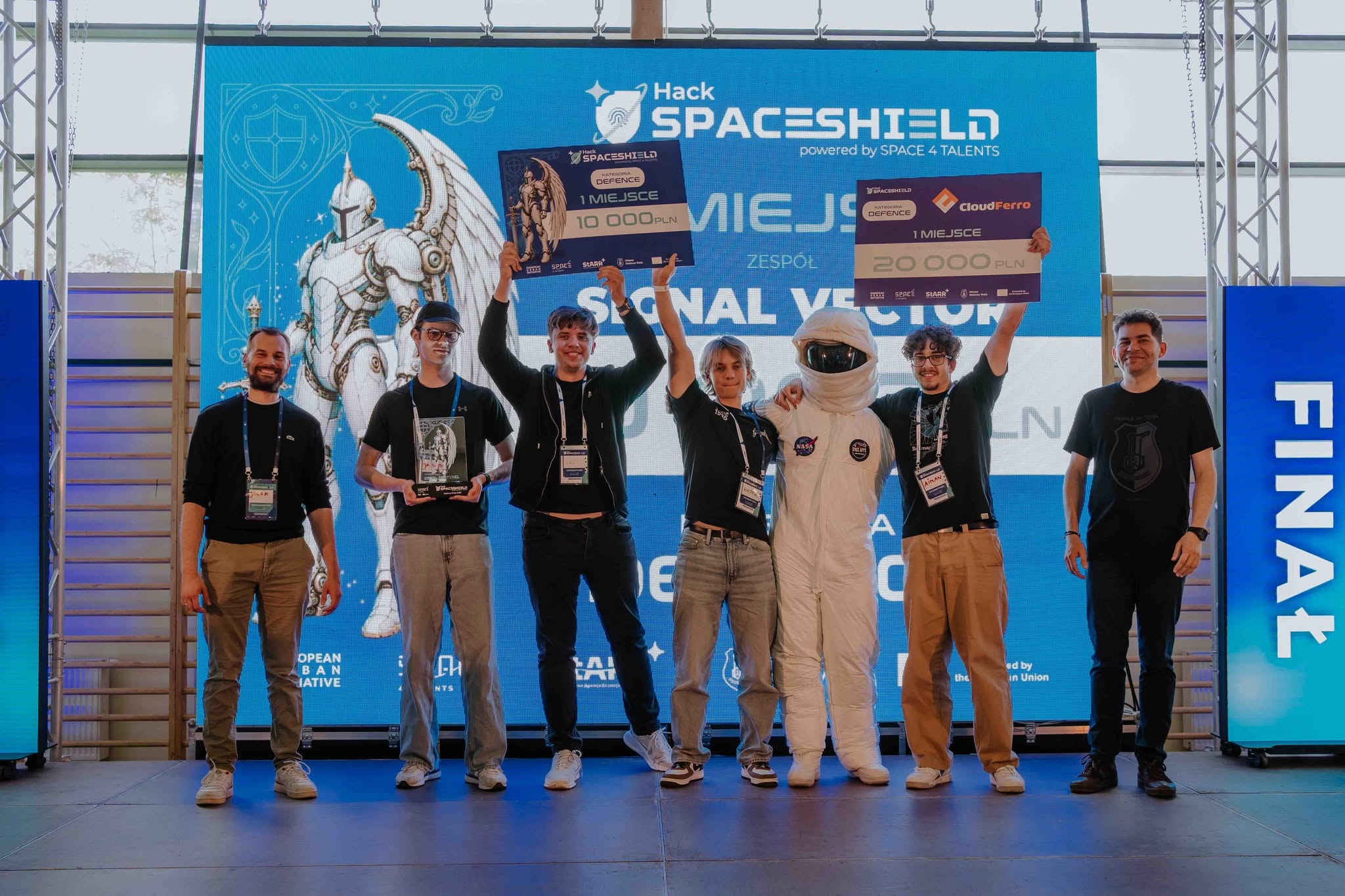
KTH student wins first prize in international space and defence hackathon
How can technology help cities prepare for crises and protect important infrastructure? That was the challenge KTH student Kacper Lisik and his team won first prize for at one of Central and Eastern E...
Read the article
The students' report on Starlink has been downloaded over 7500 times
How is satellite-based internet affected by rain and time of day? KTH students Emil Fredriksson and Céline Careau investigated this in their thesis - and they got it right. Their report has now been d...
Read the article