
New study enables safe reuse of concrete
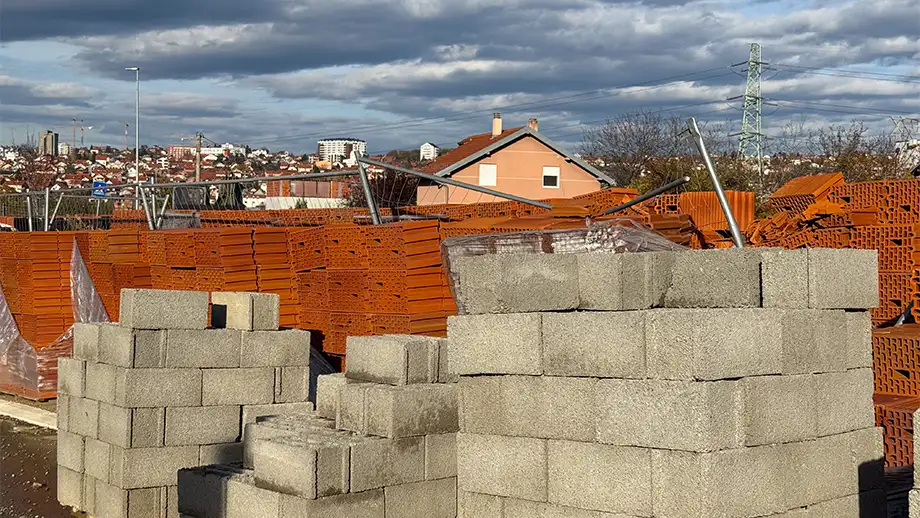
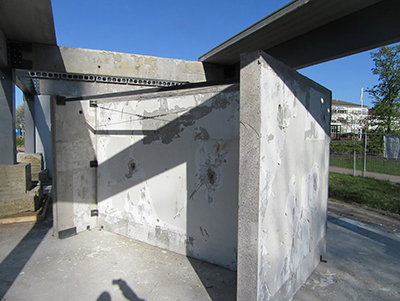
Recent research in Sweden and Finland shows how used concrete’s lifespan can be extended another 50 to 100 years when incorporated into new construction.
A team from KTH Royal Institute of Technology and Tampere University report they have developed a framework that enables builders to reuse structural elements confidently, saving resources and reducing the climate footprint of construction.
Kjartan Gudmundsson, head of the Division of Sustainable Buildings , School of Architecture and the Built Environment at KTH, says the study provides a pathway for circular construction and a more sustainable building sector.
“Reusing concrete is one of the most effective ways to cut emissions,” Gudmundsson says. “Our framework gives designers and engineers the tools to make informed decisions, reducing waste and pollution, and keeping materials in use longer — which is at the core of the circular economy.”
The results were published in the leading journal, Materials and Structures.
Without reliable methods for evaluating used precast concrete, reuse is risky. Regulations are designed for new concrete and no clear guidance is available for reusing elements.


But armed with data from two dismantled buildings in Sweden and Finland, the researchers ran thousands of computer simulations that they say enable accurate predictions of concrete lifespan under different scenarios, such as indoor versus outdoor reuse, and with or without repairs.
To evaluate these risks, the researchers also considered data from years of research and measurements on carbonation and corrosion in Nordic conditions.
These probabilistic forecasts are more reliable because they are performance-based, says the study’s lead author Arlind Dervishaj , a doctoral candidate at KTH. In other words, it uses real measurements of the concrete’s condition after decades of use and exposure—not just generic rules—to make these predictions.
Among the findings were new insights into how humidity and rising CO₂ levels can influence and accelerate the natural process of carbonation. “This is particularly critical to consider when exposure conditions change during reuse,” Dervishaj says. Carbonation reduces concrete’s protective alkalinity and can lead to steel reinforcement corrosion, such as when a concrete panel from a dry indoor environment is moved to a humid outdoor setting.
The study also shows the dramatic difference surface treatments and targeted repairs can make. Applying water-repellent coatings or silicone-based treatments can cut corrosion rates by up to 70 percent. That would extend the time before first cracks appear and ensure structural integrity and service life for decades, the study finds.
Even after decades of use, concrete elements can be refurbished and reused safely, provided their condition is assessed and appropriate measures are applied, according to the study.
“The strength of the study is its integrated approach,” Dervishaj says. Previous standards often assumed that once carbonation reached the steel, the service life was over. This research goes further, modeling both the beginning and continuing phases of corrosion and factoring in storage periods, exposure changes and repairs, he says.
The work is a contribution toward creating a national standard for reusing precast concrete elements, Gudmundsson says. The elements would include hollow core floor slabs and massive slabs, beams and columns, double T slabs, walls and stairs. Both Gudmundsson and Dervishaj serve on the Swedish Standards Institute committee for the reuse of prefabricated concrete products.
David Callahan