
81 million to research environments in nuclear technology at KTH
The Swedish Research Council has decided to allocate 108 million Swedish crowns to research environments in nuclear technology at universities and colleges. Of the four grants, three go to researchers at KTH.
In August 2025, the Swedish Research Council issued a call for proposals entitled ‘Grants for research environments in nuclear technology’. A total of 15 applications were submitted to the Council, of which four were approved. In total, the Swedish Research Council is awarding SEK 108 million in grants for the years 2026–2031. The aim is to build up activities and environments for basic research in nuclear technology at universities and colleges.
Three of the research environments now receiving support from the Swedish Research Council are located at KTH. Jonas Faleskog, Payam Pourmand and Mats Jonsson are primarily responsible for the applications.
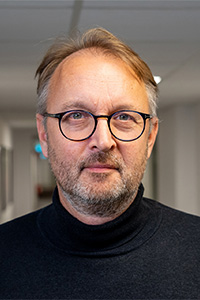
“It feels good, overwhelming. I hadn't expected it. This is an area where it hasn't always been easy to obtain research funding. It feels like confirmation that we did the right thing after all when we persevered and tried to develop the area,” says Mats Jonsson, Professor of Nuclear Chemistry at the Department of Chemistry.
Of crucial importance in terms of safety
Together with his fellow researchers Eric Tyrode from Chemistry, Claudio Lousada from Materials Science and Michael Holmboe from Umeå University, Mats Jonsson will establish a research environment in the field of radiation chemistry in phase interfaces, focusing on radiation-induced processes in oxide-water interfaces.
“These types of processes occur in most parts of the nuclear fuel cycle and are of crucial importance in terms of both safety and process optimisation,” Jonsson says.
Previously, research in this area at KTH has mainly been conducted within Mats Jonsson's group, but with the grant from the Swedish Research Council, more senior researchers can be involved.
"We hope to be able to start establishing the research environment shortly, which will also involve doctoral students and postdoctoral researchers who are active in the field but have other funding. In addition to establishing and developing the environment, we will also develop methodologies for both experimental and theoretical studies in the field," Jonsson says.
A few months ago, it was decided that KTH will host one of the few international conferences in the field of radiation chemistry (Miller Conference on Radiation Chemistry) in 2027.
“I see this as a golden opportunity to present the new research environment internationally,” Jonsson says.
Jon Lindhe ( jlindhe@kth.se )