
Study explains why new kinds of steel needed to build lead cooled reactors
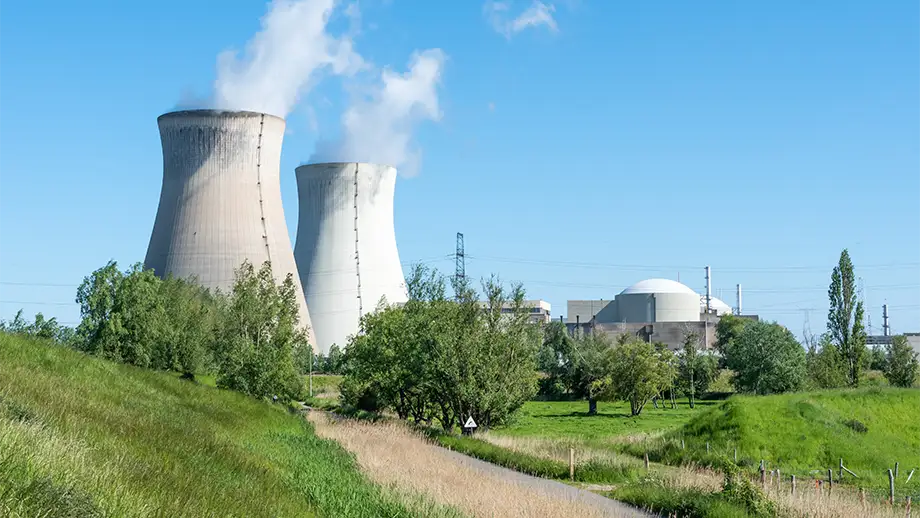
Promising safer operation, better fuel efficiency and lower waste, lead-cooled nuclear power represents a potentially dramatic shift from the water-cooled nuclear stations the world has relied on since the mid 20th century. A recent Swedish study casts new light on how to avoid corrosion in the steel used to build these next-generation nuclear facilities.
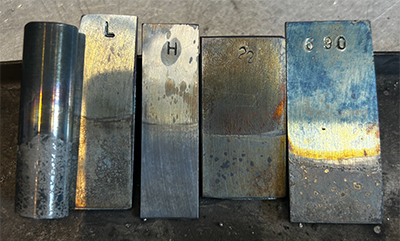
Researchers at Stockholm’s KTH Royal Institute of Technology report new details about how stainless steel corrosion occurs when exposed to liquid lead, revealing why some classes of steel may work better than others, so reactor parts last longer.
The findings were published in the journal, Corrosion Science.
Because liquid lead is highly corrosive to conventional structural steel, development of new steel composites for power plants has been a high priority for the industry.
The new study focused on an alloy known as AISI 316L, whih is preferred for water-cooled nuclear facilities on account of several qualities, including mechanical strength at high temperatures and the ease with which they can be fabricated and welded for complex reactor parts. It is referred to as an austenitic stainless steel, on account of its high nickel content as well as chromium and other elements.

Contradicting assumptions
The researchers found that corrosion is initiated by the formation of an ultrathin liquid-lead film—as thin as one micron—that drives rapid dissolution at the steel surface. This finding contradicts assumptions about the corrosion mechanism. And it confirms what many have suspected about why steel deterioration accelerates so dramatically when exposed to liquid lead.
A number of experts in the field have held that ferrite grows directly on top of the austenite with liquid lead infiltrating later. The researchers found rather that the austenitic structure destabilizes and begins to decompose at the elemental scale, says Kin Wing Wong and Peter Szakálos, researchers in the Division of Nuclear Science and Engineering at KTH .
Wong says nickel atoms, which are highly soluble in liquid lead, diffuse out of the steel and dissolve into the surrounding metal. The remaining iron and chromium reorganize into a ferritic phase—but this newly formed ferrite is weak and highly porous.
“Under flowing lead, these porous, lead-filled paths are easily torn away, dramatically accelerating material loss,” he says. This explains why liquid flowing lead strips away metal at such a high rate—sometimes several millimeters per year—faster than anyone thought.”
What will work?
The findings also explain why developing a single “corrosion-proof” austenitic steel is unlikely to work. Liquid lead doesn’t lay on the surface; it seeps in and strips away chromium and nickel from the inside, the structure of austenitic steel gradually falls apart—no matter how its composition is tweaked. Instead, the researchers say the future lies in combining different types of steel so each layer does what it does best.
Wong says one promising option is the new class of alumina-forming ferritic steels (FeCrAl), recently developed at KTH Royal Institute of Technology by Szakálos, which form a thin, self-healing alumina film (Al₂O₃) that demonstrated excellent corrosion resistance even at temperatures up to 800 °C. —well above typical reactor operating temperatures.
“When used together with conventional austenitic steels as layered materials, these materials could provide the long-lasting protection needed for tomorrow’s lead-cooled reactors,” he says.
David Callahan