
Alternative to BPA passes toxicity and sustainability standards set by EU innovation guidelines

Polyester and a host of other plastic products could potentially be manufactured with non-toxic and sustainable BPA alternatives identified in a multidisciplinary study published today by researchers at KTH.
The identification of safe bisphenol alternatives resulted from a design, assessment and development workflow introduced by a team of chemists, data scientists, toxicologists and material experts at KTH Royal Institute of Technology and Stockholm University. Their aim was to find safe, non-estrogenic alternatives to Bisphenol A (BPA) and its analogs, which are key ingredients in – among other things –polycarbonate plastics used to make scores of consumer and industrial products. The study paid particular attention to bisphenols that could be made from renewable resources.
By aligning with the European Commission’s Safe-and-Sustainable-by-Design (SSbD) framework, their approach puts these bisphenols on track for regulatory approval and eventually industrial adoption. SSbD is a voluntary framework to guide the innovation process for safe chemicals and materials. The research was published in the journal Nature Sustainability.
Polyester tested
The study identified three bisphenols with negligible estrogenic effects, all of which are obtainable from renewable bio-materials. One of these compounds – bisguaiacol F (BGF) – was incorporated into a polyester matrix. The synthesized polyester demonstrated thermal stability and mechanical properties comparable to BPA-based plastics. All three were identified as potential substitutes for BPA in a wide range of applications, including consumer products such as water bottles, furniture and eyeglasses.
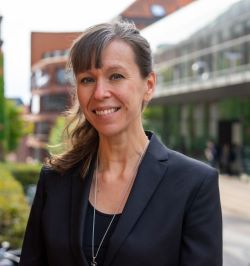
Lead author Helena Lundberg , associate professor in organic chemistry at KTH Royal Institute of Technology, says the study demonstrates the advantages of working in a multidisciplinary team to minimize negative health and environmental impacts of new chemicals and materials. “The workflow we delivered is a key point of this research. The way we collaborate between different disciplines to align with the SSbD framework can be generalized for various types of toxicity and for various kinds of chemical compounds meant for consumer products.”
High-throughput toxicology
Beginning with more than 170 potential bisphenols, the researchers combined computational screening, sustainable synthetic chemistry and in vitro toxicology to eventually winnow down the field of candidates. Senior authors Oskar Karlsson (toxicology, Stockholm University), Minna Hakkarainen (polymer technology, KTH) and Ulf Norinder (data science, Stockholm University) say the project’s multidisciplinary structure was essential for evaluating both safety and performance of the candidate bisphenols.
“High-throughput toxicology allows us to rapidly evaluate many candidates, which is essential to ensure that only the safest options progress,” Karlsson says.
Further testing, including long-term toxicology and full life-cycle assessments must be carried out before the BGF-based materials can be brought to market. However, Lundberg says the research marks a significant contribution towards eliminating harmful chemicals in our daily lives, particularly by demonstrating an example of an effective SSbD workflow.
“The Safe-and-Sustainable-by-Design approach helps scientists to provide new materials for everyday products that are free from hidden health risks and produced with minimal environmental impact,” she says. “That means that consumers are provided with better products without compromising quality or convenience.”
David Callahan