
Recycling water opens up energy savings
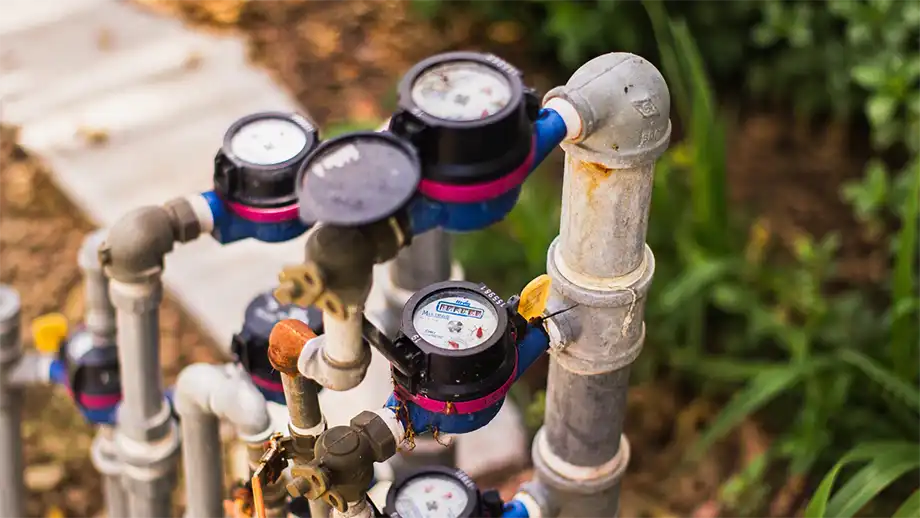
Water used in our buildings does not have to be a depleted resource. By integrating water and energy systems, we can recover both water and energy. A new doctoral thesis from KTH Royal Institute of Technology shows how buildings of the future can become more resource-efficient.
Energy and water are essential to almost everything we do in society, and water is used for far more than just drinking. Infrastructure needs to be gradually modernised, requiring substantial investment, while resource consumption must also be reduced. Energy and water are closely interconnected: energy is needed to pump, treat and heat water, while water itself carries energy that is often lost.
From linear systems to reuse
Today, our water and wastewater systems are largely linear. Drinking water is supplied to buildings, and wastewater is then discharged. Along the way, both water and energy are lost.
A new doctoral thesis from KTH explores how we can rethink this approach and instead view water flows within buildings as a resource.
Different stakeholders and different needs
By recovering both energy and water from the built environment, we can increase circularity and improve water and energy efficiency. However, this requires agreement and collaboration between municipalities, property owners, and water and energy utilities. Today, these stakeholders have different interests and priorities, including cost, environmental impact, health and resilience.
Based on these insights, a decision-support tool has been developed to enable different solutions to be compared across several perspectives simultaneously.
Measurable benefits
Integrated water and energy systems were investigated in two case studies. In the first, the results showed that a system combining rainwater with evaporative cooling could reduce energy use in commercial buildings by 19–28 per cent during the cooling season.
The second case study examined a solution at HSB Living Lab in Gothenburg, where greywater recycling was combined with heat recovery. This resulted in energy savings of 22–23 per cent and a 92 per cent reduction in water use for toilet flushing.
Holistic approach is needed
The thesis shows that a technically viable solution is not automatically easy to implement. Regulations, economics, the allocation of responsibilities and the interests of different stakeholders all play an important role. For new system solutions to gain wider adoption and contribute to greater circularity and resilience, they must also be supported by the stakeholders involved.
Viktor La Torre Rapp hopes the thesis will help identify and overcome the barriers that hinder improvements in water and energy efficiency. By taking a holistic approach and reusing water and energy, resource consumption can be reduced while creating more sustainable and flexible systems for the future.
Text: Rita Nõu