
Professor Richard T. Olsson

Olsson Group at Lab 371
Dr. Richard T. Olsson earned his PhD in 2007 at the Royal Institute of Technology (KTH), Sweden, on the topic of microwave-absorbing nanocomposites developed for the Swedish Defence Research Agency (FOI). Prior to his doctoral studies, he developed an early interest in polymeric materials while working with optical fibre coatings at École Nationale Supérieure de Chimie de Montpellier, France (–2000), and at Bell Labs, USA (2000–2001).
Olsson’s doctoral work (2002–2007) focused on magnetic nanoparticle dispersions in thermoset polymers. This was followed by the development of a nanofibre-reinforced silicone material for Mölnlycke Health Care AB (2007–2008), a project conducted at Stellenbosch University, South Africa. Between 2008 and 2010, he carried out postdoctoral research at the Consejo Superior de Investigaciones Científicas (IATA-CSIC) in Spain, focusing on renewable nanomaterials for bioplastics in food packaging applications. In 2010, he returned to KTH to pursue advanced polymer nanocomposite engineering at the Department of Fibre and Polymer Technology.
Dr. Olsson currently supervises two PhD students and two postdoctoral researchers within the Olsson Group at Lab 371. His research focuses on nanocomposite materials synthesis and the interfacial and interphase phenomena between nanoparticles and polymers, with particular emphasis on structure–property relationships in magnetic and dielectric composite materials. He is widely recognized for his pioneering work on magnetic cellulose, being the first to demonstrate covalent grafting of magnetic nanoparticles onto individual crystalline cellulose nanofibres via tailored condensation chemistry, published in Nature Nanotechnology ( 2010 ).
A consistent focus on the realization of functional nanocomposite materials and scalable nanoparticle preparation methods has been maintained throughout his career. The inorganic nanoparticle-based composites developed by his group have been applied to high-voltage direct current (HVDC) cable insulation, with several studies highlighted as HOT Papers in Journal of Materials Chemistry A ( 2015 & 2016 ).
In the growing field of organic nanoparticles for HVDC insulation, his recent work targets large-scale conductive carbon black particles for the development of ultra-insulating dielectric composites ( WO Patent ), in collaboration with NKT AB under the Wallenberg Initiative Materials Science for Sustainability ( WISE ).
Most recently, Dr.Olsson with students demonstrated for the first time how to effectively exfoliate graphene oxide from synthetic carbon fibres, published in Small ( 2025 ). This breakthrough enables a sustainable and ultrapure route to graphene and doped graphene oxide production, eliminating the reliance on natural, mineral-contaminated graphite, now listed as Critical Raw Material by the European Union. The work is presently patented and explored under the guidance of KTH Innovation , recognized by Financial Times as Europe's Leading Start-Up Hubs.
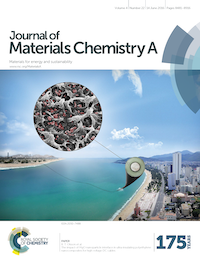
Natural polymers are a central theme in Dr. Olsson’s research, and cellulose nanofibres' interaction with metal ions have been a consistent focus over the past decade through his membership in the Wallenberg Wood Science Center (WWSC) . The use of natural polymers in biomass as a coordinating matrix for inorganic metal ions has been further developed and extended into the recycling and recovery of lithium-ion batteries, in collaboration with Dr. Kerstin Forsberg at the Division of Resource Recovery , KTH. Within this field, Dr Olsson has directed and published the first reported works on ultrasound process intensification (and modelling), the extraction and recovery of valuable metal ions from lithium-ion battery blackmass, published in the journal Green Chemistry, 2021 .
Since 2015, Dr. Olsson has served as an Editorial Board Member for the multidisciplinary open-access journal Scientific Reports , which maintains a 5-year impact factor of 4.58. His editorial appointment lies within the field of Atomic and Molecular Physics and is renewed on a biennial basis. Beyond his editorial responsibilities, Dr. Olsson is actively engaged in promoting the independence of early-career researchers and provides individual mentoring and specialized classes in scientific writing and publishing.
Dr. Olsson currently serves as Deputy Head of the Department of Fibre and Polymer Technology at KTH Royal Institute of Technology , Stockholm.
Interests and Projects
Main focus: Polymer nanocomposite fabrication (thermoplastics, thermoset and biobased) with rapid turnover polymer formulation investigations, surface adaption of nanoparticles to polymer interfaces, in-situ formation of nanoparticles, extrusion and electrospinning for anisotropic/isotropic composite fabrication.
Additonal expertise: Inorganic metal oxide crystal synthesis, aqueous nanoparticles preparation, cellulose crystal extractions, (±) nanoparticle coating stabilization by covalent/adsorption assemblies, and miniature reaction technologies are topics of interest.
Direction: Dielectrics, magnetics, ultrathin fiber systems (electrospinning), thincoatings and porositiy preparation strategies, for use in applied reseach materials investigations.
- SweGRID: Towards an ultra-high voltage DC cable insulation – adsorption of charge carriers in polyethylene, ABB sponsor
- WWSC: Inorganic-organic nanocellulose hybrids
- Swedish Research Council: Reinforced and ductile aerogels for thermal insulation made from inorganic/organic hybrid cellulose crystals
- Swedish Energy Agency: PERLI – Processes for Efficient Recycling of Lithium Ion Batteries
- Vinnova: EcinRaw – Electroactive carbon fibers for intelligent recycling of raw materials
- Bo Rydins Stiftelse: SaniSOLE - Sanitary solutions using large scale extrusion of protein with cellulose fibres
- CSC Projects: We are welcoming applications from China Scholarship Council (CSC) students, the KTH-CSC programme is based on the agreement between KTH and the China Scholarship Council (CSC), see further: www.kth.se/en/studies/phd/kth-csc-programme-1.12818
Professional Engagements
- European Research Council (ERC) – Grant evaluator
- Nature Publishing Group – Editorial board Member for Scientific Reports
Awards
- Lars-Erik Thunholms stiftelse: – "Young Investigators stipend", 2013.
- Knut och Alice Wallenbergs: "Mikro/Nanovetenskap stipend ", 2008.
- Carl Klason Prize, POLYCHAR-14, Annual World Forum on Advanced Materials, 2006.
Courses
- KF2505 Polymer Materials Processing; 7.5 credits – Lecturer, Course responsible and Examiner
- KF2110 Mechanical Properties of Materials; 7.5 credits – Lecturer
- KF1050 Polymeric Materials; 7.5 credits – Lecturer
- KFxxxx FPIRC Course no 35: Non Woven - From fundamentals to processing – Lecturer
- KF3260 Characterization Methods for Fibre and Polymer Science; 7.5 credits – Lecturer
- KF2500 Polymer Engineering; 9.0 credits – Lecturer, Course responsible and Examiner
- KF1070 Perspectives on Materials Design; 10.5 credits – Lecturer, Course responsible and Examiner
- KA101X Degree Project in Chemical Science and Engineering; 15.0 credits – Project responsible and Examiner
- KF102X Degree Project in Polymeric Materials, First Cycle; 15.0 credits – Project responsible and Examiner
- KF206X Degree Project in Polymeric Materials, Second Cycle; 30.0 credits – Project responsible and Examiner
Patents
-
EP4401094A1; Electrical insulation composition comprising carbon-based nanoparticles
-
WO2024205475A1; Protein blend material with zein and a second plant protein
-
WO2020249214; ABSORBENT ARTICLE WITH PLANT PROTEIN BASED ABSORBENT MATERIAL
- SE 543429; Method of preparing plant protein based absorbent material and absorbent
- WO2017093181; Silicone implant with reinforcing fibers
- WO2017149086A1; Polymer composition and devices with advantageous electrical properties
- WO2017149087A; Polymer composition and electrical devices
- WO2013119179; Cellulose Nanofibril Decorated with Magnetic Nanoparticles
- WO2011008151; Real Time Monitored Synthesis Of Ultra Low Coercivity Magnetic Nanoparticles
- WO2008121069; Magnetic nanoparticle cellulose material
- US6652975; Adherent silicones
- US6396983; Formation of gratings in optical fibers coated with UV-curable polymer
Book Chapters
Cellulose nanofillers for food packaging. In: Lagarón, J. M. Multifunctional and nanoreinforced polymers for food packaging . Cambridge: Woodhead Publishing Limited. pp. 86-107 (2011).
Publications (50 most recent)
Additional information
- ResearcherID: B-8715-2012
- ORCID iD: https://orcid.org/0000-0001-5454-3316