Skolan för elektroteknik och datavetenskap
Skolan för elektroteknik och datavetenskap (EECS) är en av fem skolor vid KTH. Här bedrivs internationellt framstående forskning och utbildning inom flera områden. Här kan du läsa om vår forskning, våra utbildningar och senaste nytt. Verksamheten finns på KTH Campus.
EECS Institutioner




Senaste nytt från EECS

KTH-forskare utnämns IEEE-fellow
Lina Bertling Tjernberg, professor i elkraftsystem och Martin Monperrus, professor i programvaruteknik, vid Skolan för Elektroteknik och Datavtenskap på KTH, har utsetts till IEEE Fellows Class 2026....
Läs artikeln
What is the rare interstellar object made of? New observations give clues
A mysterious visitor from outside our solar system has once again captured global attention — and researchers from KTH Royal Institute of Technology played a key role in uncovering what it really is.
Läs artikeln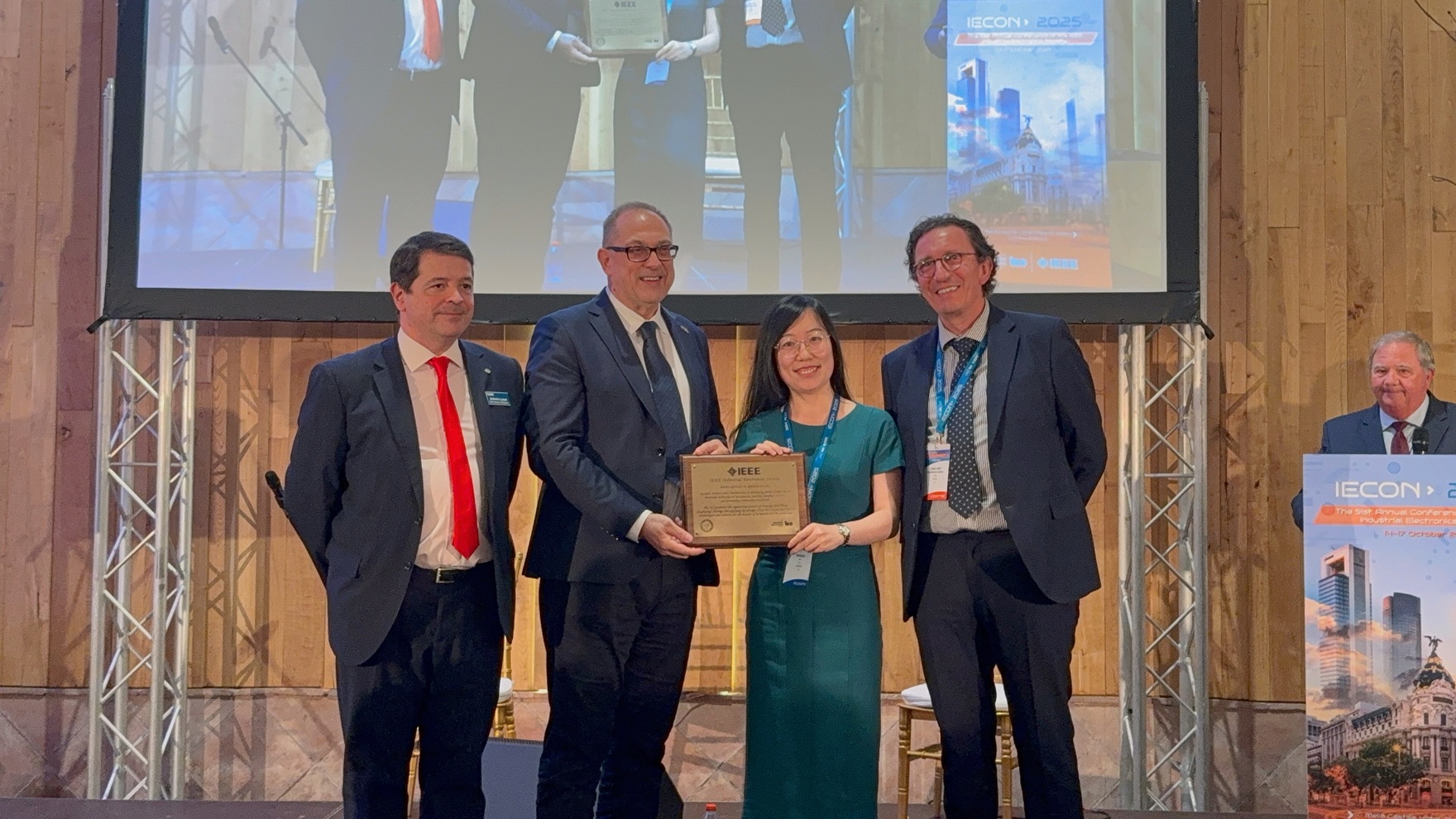
Prestigefyllt IEEE-pris till docent vid EECS
Förra veckan fick Qianwen Xu, docent vid EECS avdelning för elkraftteknik, ta emot J. David Irwin Early Career Award från Institute of Electrical and Electronics Engineers (IEEE).
Läs artikelnFler nyheter
- KTH-forskare utnämns IEEE-fellow
16 dec 2025
- What is the rare interstellar object made of? New observations give clues
13 nov 2025
- Prestigefyllt IEEE-pris till docent vid EECS
22 okt 2025
- Under EECS:s Research & Impact Day visades framstegen bakom vår digitala framtid
26 aug 2025
- Aurorae reveal Uranus’s true rotation – with unmatched precision
16 jun 2025
Kalender
-
Docentföreläsningar
fredag 2026-01-16, 09.00 - 10.00
Medverkande: Matthieu Barreau
Plats: D37
Videolänk: Zoom
2026-01-16T09:00:00.000+01:00 2026-01-16T10:00:00.000+01:00 Maskininlärning hand i hand med kontrollteori (Docentföreläsningar) D37 (KTH, Stockholm, Sweden)Maskininlärning hand i hand med kontrollteori (Docentföreläsningar) -
Disputationer
fredag 2026-01-16, 10.00
Plats: Salongen, Osquars backe 31, Stockholm
Videolänk: https://kth-se.zoom.us/s/61617488895
Respondent: Vishnu Narayanan Moothedath , Teknisk informationsvetenskap
2026-01-16T10:00:00.000+01:00 2026-01-16T10:00:00.000+01:00 Towards Efficient Distributed Intelligence (Disputationer) Salongen, Osquars backe 31, Stockholm (KTH, Stockholm, Sweden)Towards Efficient Distributed Intelligence (Disputationer) -
Conferences and workshops
onsdag 2026-01-28 - 14.00
Plats: Konstfack, LM Ericssons Väg 14, 126 27 Hägersten
2026-01-28T00:00:00.000+01:00 2026-01-28T14:00:00.000+01:00 NAVET workshop and presentations at Konstfack Research Week 2026 (Conferences and workshops) Konstfack, LM Ericssons Väg 14, 126 27 Hägersten (KTH, Stockholm, Sweden)NAVET workshop and presentations at Konstfack Research Week 2026 (Conferences and workshops)