
KTH empties a family’s home of plastic
Is it possible to live a good everyday life without plastic? In an unusual experiment, researchers at KTH Royal Institute of Technology emptied a family home – and rebuilt it almost entirely without plastic.
The Hesse family is at the centre of an experiment led by Professor Sara Ilstedt at KTH. Her research focuses on creating prototypes for sustainable futures and testing them in real-life settings. In this case, the goal was to reduce the amount of plastic in an ordinary household.
“For one month, our experimental family used plastic-free alternatives, items made of wood, metal, glass, wool and ceramics,” says Sara Ilstedt.
All belongings in the garden
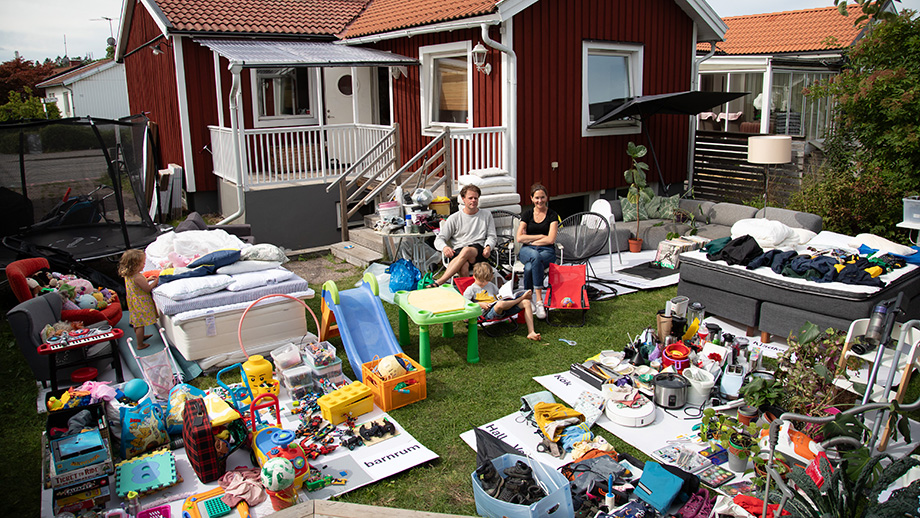
One August day, a KTH team of 13 travelled to the family’s home in Tallkrogen, south of Stockholm, to remove as much plastic as possible. Over the course of a few intense hours, large parts of the household were carried out onto the lawn. The sofa. The beds. Cleaning products followed. Even a design classic was rejected – a mixing bowl made from a type of plastic now banned under EU regulations. The children’s rooms, along with the kitchen, proved to be the most plastic-intensive and were left particularly bare.
“The family was probably quite shocked when everything was spread out on the grass. No one knew what they would get back,” says Ilstedt.
Each family member – two adults and two young children – was allowed to keep ten items each. A vacuum cleaner, bicycle helmet, certain household appliances, trainers and rainwear were among the things the parents were unwilling to give up.
New natural materials
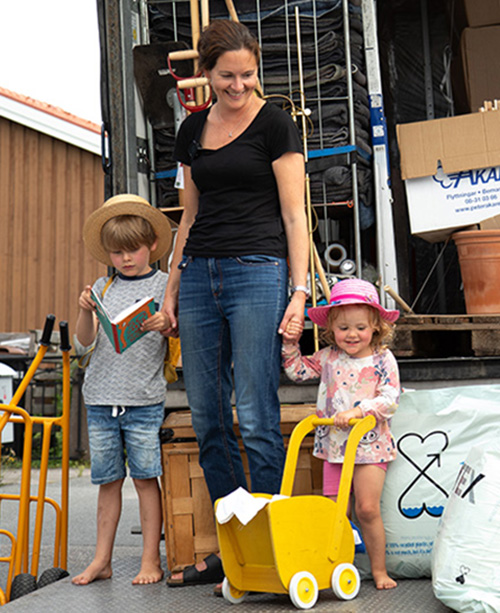
But the mood changed when the truck carrying replacement items arrived.
“The children immediately found new favourites to play with.”
The living room was furnished with a new sofa made from natural materials. The bedrooms received new mattresses filled with kapok – fibres from the seed pods of tropical trees. Many of the replacement items, including lamps, toys and storage baskets, were second-hand.

Not all plastic could be replaced. Electronics such as phones, refrigerators and computers contain plastic for which there are currently no viable alternatives. But items that wear out and can release microplastics, such as many kitchen utensils, textiles and items of clothing, can often be swapped out.
“We generally have a lot of lazy plastic in our homes,” says Ilstedt. “Especially synthetics in cushions, duvets and textiles that simply aren’t necessary.”
Stainless steel bowls for Christmas
The project has also influenced her own habits.
“I’ve started clearing out my kitchen. I even bought stainless steel mixing bowls as Christmas presents for my children. When it comes to clothing, a good wool jumper lasts much longer than one made from polyester, and it’s more comfortable to wear. The takeaway is that there are plenty of good, affordable alternatives.”
Text: Anna Gullers (agullers@kth.se)
Read more about the experiment on this websiteRead more articles on plastics:
Wood-based plastic may enable circular home furnishings and building materials