
She put Sweden on the global space map
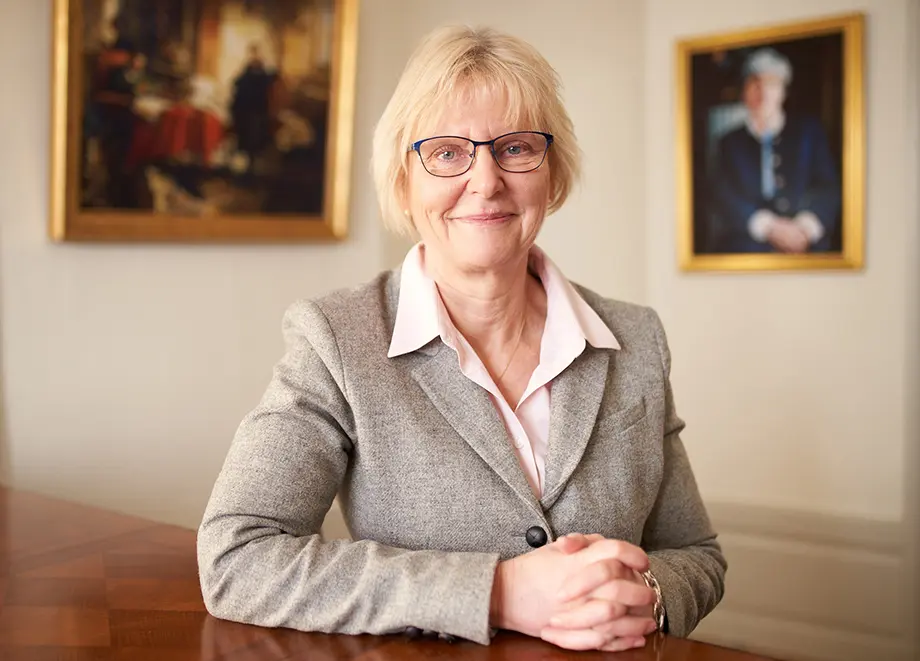
As one of Sweden’s leading figures in the space sector, Anna Rathsman has played a key role in shaping space policy, research, and international cooperation for many years. She has now been awarded an honorary doctorate by KTH.
“I feel incredibly honoured and happy. And happy that space exploration is being highlighted – it feels really important.”
Rathsman began working with space issues in the late 1980s and has held several leading roles, including technical director at the Swedish Space Corporation (SSC), director general of the Swedish National Space Board and chair of the ESA.
She wants to see a stronger commitment to Swedish space activities and believes that modern space technology will only become more important.
“Just think about satellites. Together, they form an infrastructure that is absolutely crucial for us on Earth. We use information from space many times every day, even though we often don’t think about it.”
Space provides insight into the world – from wars and natural disasters to the actual state of the Earth, where climate reports are largely based on space data. Satellites help us farm smarter, plan transport more efficiently and give countries with space capabilities greater international appeal.
“A strong space sector creates a positive spiral where expertise stays in the country and new companies and research emerge. At the same time, space sparks interest in technology and science among children and young people.”
Unstable global situation
According to Rathsman, the unstable global situation has made space technology even more important – satellites provide insight and transparency that is difficult to hide, from troop movements and destruction to refugee flows and environmental changes.
“Space is also crucial for positioning and communication, where systems such as GPS, Galileo and satellite communication have been central, not least in Ukraine. Today, space is seen as critical infrastructure, and countries are investing more than ever, both civilly, commercially and militarily.”
Rathsman ended up in the space industry almost by chance. Initially, she wanted to study music and was determined not to become an engineer.
“Then I played in the Kårspex orchestra at KTH and met many engineers with interesting jobs. That made me reconsider, and I started studying electrical engineering.”
She decided on satellite communications – somewhat at random.
“I don’t really know where it came from, but that’s the path I’ve followed. I've worked with space my entire career, except for a couple of years at Ericsson, which I'm very happy about.”
Designing research satellites
What she is most proud of is having been involved in building up Swedish satellite expertise.
"I was part of the design team for the Freja research satellite – the first one built in Sweden – and later became project manager and systems engineer for the Astrid microsatellite.”
KTH was one of the research groups that had experiments on board Freja, and has also participated with space researchers in several of the Swedish National Space Board's international projects during her time at the agency.
From her time at the Swedish National Space Board, she also highlights Sweden's success in getting astronaut Marcus Wandt into space, where her international contacts, including within ESA, played a decisive role.
As a semi-retired person, Rathsman is still active in space, including through board assignments at the state-owned company EISCAT. At the same time, music has once again taken a greater place in her life – now as a viola player in a small trio.

Text: Christer Gummeson ( gummeson@kth.se )