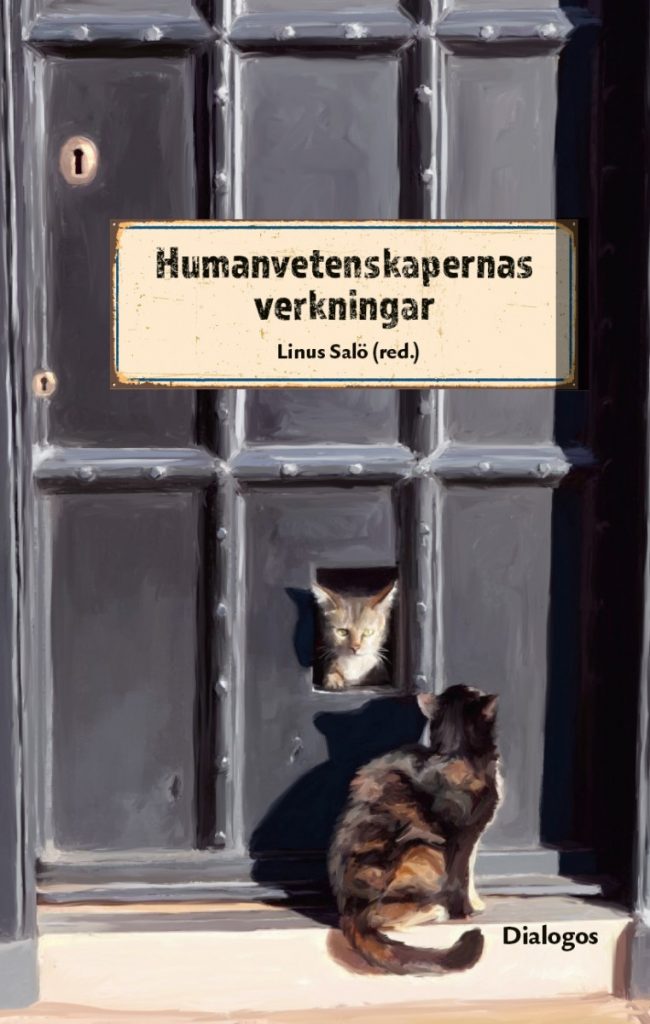
Several of the Division’s researchers have contributed to a new Swedish anthology: Humanvetenskapernas verkningar: Kunskap, samverkan, genomslag (The effects of the humanities: Knowledge, collaboration, impact). Editor, former Division postdoc, Linus Salö re-joined the Division again this year as the supervisor of Klara Müller and as researcher in the research platform Making Universities Matter. Other participating researchers from the Division in the anthology are Fredrik Bertilsson, Ulrika Bjare, and Sverker Sörlin as well as our former colleagues, with Lund University as base, Mats Benner and Eugenia Perez Vico.
The anthology is published by Dialogos Förlag, and translated from the Swedish backside of the book, this is what it is about:
In the discussion about how universities and colleges can better meet the great challenges of our time, the social sciences and humanities have begun to take an increasing place. This is not least due to the fact that a new line of research policy is taking shape, where the humanities are given greater weight than before.
This ongoing shift opens up new ideas about how academic knowledge is disseminated and used. Research collaboration is not limited to industry and business, but takes place and has always taken place with many parts of society. Innovations are not just technical or medical news and progress, but also social renewal that concerns language, media, culture, politics, economics, behavior, religion – yes, most things that people do, think and feel.
The humanities’ movements between academia and other spheres of society, not least politics, can be seen as passages through a cat door in an otherwise locked gate. This metaphor runs like a thread through the book. Who has moved through the cat door, and what kind of knowledge effects has it had? How is this activity mentioned and valued?
In the ten chapters of this anthology, a number of humanities seek to answer these questions. The participating authors are active in various fields of science at various Swedish universities. The purpose of the book is to give momentum and energy to the discussion about the effects of the humanities – and ask new questions about the universities’ goals and meaning.
Anna Svensson was a doctoral student with the Division and the Environmental Humanities Laboratory, and successfully defended her thesis A Utopian Quest for Universal Knowledge – Diachronic Histories of Botanical Collections between the Sisteenth Century and the Present in 2017, when she left us for new flowers to pick. Anna was our unofficial florist, and could often be seen decorating even the darkest day with brilliant flowers and plants. One of her contributions during her time with us, other than being a wonderful colleague, was the window farm. Today’s blogpost is a text about the story of the Window Farm, written by Anna for the Stories of the Anthropocene Festival (26–29 October 2016).
This is the story of a window farm – the beginning, the end, and the afterlife.
This story begins with the Division of History of Science, Technology and Environment (home of the Environmental Humanities Laboratory) moving to a newly built, climate controlled premises. It had a spacious kitchen and big windows. As these windows could not be opened, however, the air felt stale and dry. Building a windowfarm was a practical measure to improve our common working environment, improving the air quality and making ourselves feel more at home.
Over the past two years, these plants have breathed with us, and the humming of the pump and the dripping along the chains have filled the pauses in our conversations over lunch. The first attempt was a mediocre success: a few plants (basil and lemon balm) died almost immediately; the ivy and coffee plants fared much better, but eventually succumbed to systemic problems. The nutrient solution evaporated too quickly – we added plastic pipes along the chains to minimise splashing, but this did not fix the problem – eventually causing the system to clog up completely.
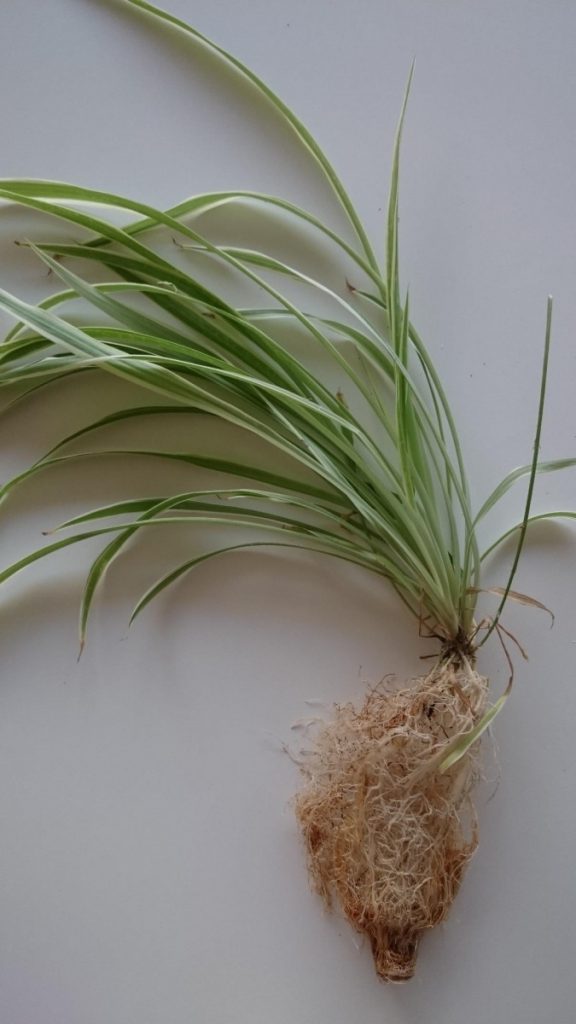
Learning from past mistakes, the next reincarnation of the windowfarm in the fall 2015 only contained plants that have robust root systems and survive for a long time in water without the addition of nutrient solution. The result was astonishing. The spider plants grew explosively, sending out shoot after shoot like a verdant fire-work show. (The pump died and was replaced.) Gradually, however, this enthusiastic growth became a cause for concern. The many shoots were thirsty, and eager roots began to seek their way through the water holes at the bottom of the bottles and creep along the chain. Several Monday mornings I was greeted by the silence of a system run dry. The roots and chains were so interlaced that replanting was not an option. We could either dismantle it or watch it wither.
Since taking it down, it has left an emptiness in the kitchen. I still register the silence that meant the tanks were empty or the system had clogged. In a concrete way, the windowfarm has played out like a pageant of the technofix, a microcosmic drama between the biosphere and technosphere that hovers between comedy and tragedy. Is this a story of survival? The windowfarm is itself a DIY innovation (and later corporate venture) encouraging a growing global community of windowfarmers to green the city beginning with each individual home, a promise towards self-sufficiency. What initially seemed so straightforward gave way to complication after complication, in which the very successful growth of the second planting required its destruction: there are limits to growth in the technosphere.
What, then, is the afterlife of the windowfarm? The shoots have been rooting in glass jars along the kitchen windowsill, with the main plants in pots of water. The torn bottles and rusty chains cannot be used again. While the windowfarm made the office kitchen more home-like for me, the university is not my home and with the migratory life of an academic I could not ensure its survival through the empty summer months. It became a burden.
In early summer 2020, Sverker Sörlin published the book “Kris! Från Estonia till Corona” (Crisis! From Estonia to Corona) on Bokförlaget Atlas. Here he puts the Corona pandemic as a crisis in a historical perspective along with other big crises in our society. He also shares his own experience from being ill with Corona. The publisher together with Sverker decided early on that the income of the book would go to scholarships for those who writes about crises. Last week the two reciepients of the scholarship was announced: Rasmus Landström, who will write a book about the hidden solutions to the climate crisis, and Ingrid Eckerman, Jan Stattin, and Karin Fridell Anter that will write about the refugee crisis, civil society and the rule of law. The two projects will recieve a total of 25 000 sek each.
“Rasmus Landström’s project Ustopi: The Hidden Ways of the Climate Crisis will result in an essay and a subsequent book. Rasmus is a literary scholar, critic and author of the critically acclaimed book Arbetarlitteraturens återkomst (2020). In his application, he writes that utopias are often criticized for “advocating over-planned model societies. That critique is based on a misunderstanding of utopia as a literary genre. But also that the concept of ‘planning’ is in such a state of disrepute today. The climate crisis shows an enormous need for democratic planning of the economy. That we expand the welfare sector to more parts of society and disconnect parts of the economic life from the market’s chaotic price signals. ” Ustopia is a combination of utopia and dystopia, coined by author Margaret Atwood.
Jan Stattin, Ingrid Eckerman and Karin Fridell Anter’s project Flyktingkrisen – Civilsamhället, rättssäkerheten och de unga flyktingarna 2015–2020 (The refugee crisis – Civil society, the rule of law and the young refugees 2015–2020) will result in a book. A historian, a doctor and an architect have chosen to come together to critically examine one of the crisis understandings that have characterized our time most deeply. In the application, they write that “refugee crisis” is a word that has been used extensively in debate and the mass media since 2015, but which is rarely given a more precise meaning. “We who are involved in the civilian work of civil society see the crisis of asylum seekers and our own, when we try our best to support people whose lives are being torn apart. We also see an ever deeper social crisis where the handling of refugees exposes major shortcomings in what is claimed to be legal certainty, and where the public debate is based on untruths that are never questioned,” the authors write further. Translation of the article: Intäkterna från Sverker Sörlins bok Kris räckte till två stipendier: Rasmus Landström ska skriva om klimatkrisens dolda utvägar. Ingrid Eckerman, Jan Stattin, och Karin Fridell Anter ska skriva om flyktingkrisen, civilsamhället och rättssäkerheten published in Arena Idé, February 2021.
Division researcher Fredrik Bertilsson is published in the scientific journal the Journal of Transport History. In the article Politics, industry, and tourism: The conceptual construction of the blue highway Fredrik focus on Swedish governmental reports and national press between the 1950s and the 1970s to examine how the Blue Highway was conceptualized. The Highway runs from Mo i Rana on the Norwegian Atlantic coast through Västerbotten in Sweden, Ostrobothnia in Finland and to Pudozh near Petrozavodsk (Petroskoj) in Russia. Today seen upon as a tourist attraction, but the highway played a role in both political and industrial agendas in the mid-twentieth century. Please find the abstract and link to the publication as well as a blog post (in Swedish) from Fredrik below.
Fredrik Bertilsson came to the Division of History of Technology, Science, and Environment in 2018. His main research focus is within the area of knowledge management and research policy.
Abstract
This article contributes to the research on the expansion of the Swedish post-war road network by illuminating the role of tourism in addition to political and industrial agendas. Specifically, it examines the “conceptual construction” of the Blue Highway, which currently stretches from the Atlantic Coast of Norway, traverses through Sweden and Finland, and enters into Russia. The focus is on Swedish governmental reports and national press between the 1950s and the 1970s. The article identifies three overlapping meanings attached to the Blue Highway: a political agenda of improving the relationships between the Nordic countries, industrial interests, and tourism. Political ambitions of Nordic community building were clearly pronounced at the onset of the project. Industrial actors depended on the road for the building of power plants and dams. The road became gradually more connected with the view of tourism as the motor of regional development.
Full article: Politics, industry, and tourism: The conceptual construction of the blue highway
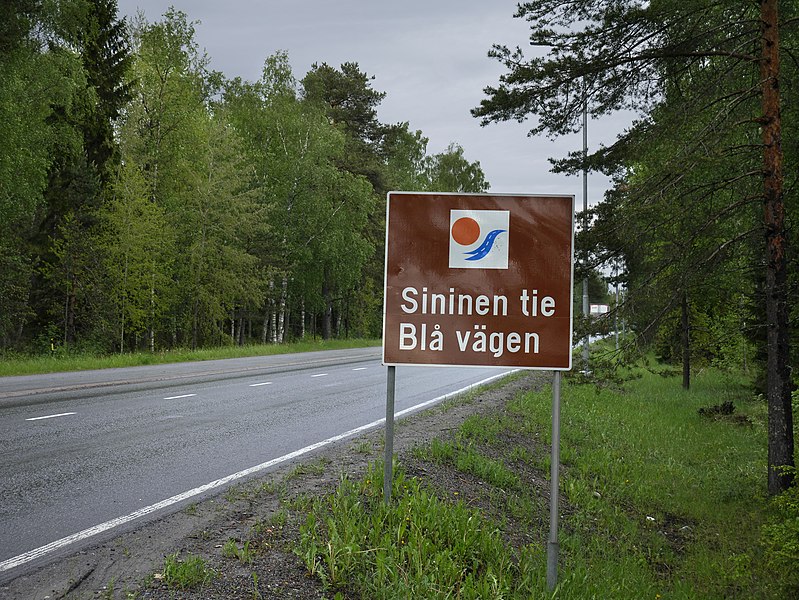
Sininen tie sign by Santeri Viinamäki . https://commons.wikimedia.org/wiki/File:Sininen_tie_sign_20190603.jpg
Blå vägen: Politik, industri och turism
Fredrik Bertilsson
Många av samhällets grundläggande funktioner bygger på vägtransporter. Utbyggnaden av det svenska vägnätet under efterkrigstiden spelade stor roll för samhällets utveckling. Vägar är inte bara materiella konstruktioner. Meningsskapandet kring vägar pågår i förhållande till bredare sociala, ekonomiska, politiska och kulturella förändringsprocesser. I historien om det moderna vägnätets expansion under andra halvan av 1900-talet står ofta den tekniska expertisen eller betydelsen av personbilen i centrum. Turismens inflytande har väckt mindre intresse i den historiska forskningen. Blå vägen är ett exempel på hur politiska initiativ, den industriella utvecklingen och turistnäringen samverkade.
Blå vägen går nu från Mo i Rana vid den norska atlantkusten genom Västerbotten i Sverige, Österbotten i Finland och till Pudozj nära Petrozavodsk (Petroskoj) i Ryssland. Numer betraktas vägen vanligen som en turistväg men flera intressen låg bakom dess tillkomst. Initiativet till att bygga vad som senare blev Blå vägen togs på 1950-talet men det fanns färdvägar och marknadsplatser längs sträckan långt tidigare. Vägen mellan Umeå och Lycksele byggdes under första delen av 1800-talet. Blå vägen invigdes 1964 och blev i början av 1970-talet en europaväg. Namnet Blå vägen anspelar på att vägen går längs med Umeälven i Sverige men det lär i själva verket ha tillkommit efter att vägen markerats ut på en karta med en blåfärgad penna.
Blå vägen förankrades i ett politiskt arbete med att förbättra relationerna mellan Sverige och Norge efter andra världskriget. Det skapades en större rörelsefrihet mellan de nordiska länderna. Från 1952 kunde skandinaver resa utan pass mellan Sverige, Norge och Danmark. Passfriheten sträckte sig till Finland 1953 och Island 1955. Passkontrollen för samtliga resande flyttades till Nordens yttre gränser 1958. Det fanns under mitten av 1960-talet förhoppningar om att Blå vägen skulle dras ända in i dåvarande Sovjetunionen, vilket skulle bidra till att öppna upp de rigida gränserna mellan Öst och Väst under kalla kriget. Det dröjde till slutet av 1990-talet innan den vägsträckningen blev verklighet.
Den stora statliga planen för utbyggnaden av svenska vägnätet som presenterades i slutet av 1950-talet utgjorde en grundplåt för moderniseringen av de svenska vägarna. Bättre vägar skulle lösa dels ett kapacitetsproblem som skulle uppstå när fler fordon måste trängas på vägarna, dels ett säkerhetsproblem: trafikolyckorna befarades öka om vägarna inte förbättrades. Blå vägen inrymdes inte i den ambitiösa vägplanen. Vägen finansierades istället av Vattenfall och genom kommunala insatser.
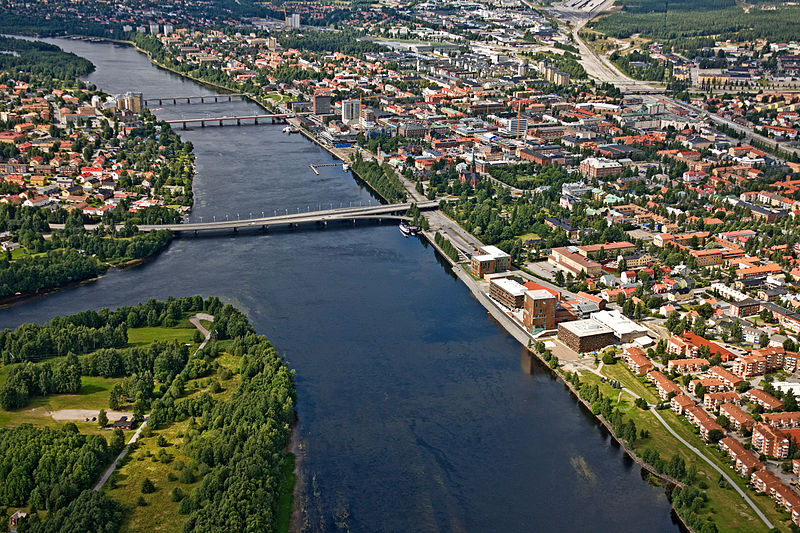
Aerial view of Umeå Arts Campus. Wikimedia Commons.
Industriella aktörer hade tydliga intressen i en ny väg. En väg till en isfri norsk hamn skulle gynna den omfattande transporten och exporten av trä och virke. Viktiga delar av den väg som fanns var stängd vintertid. Skogsindustrins intresse i en moderniserad väg förstärktes av att flottningen alltmer ersattes av lastbilstransporter. Det fanns också ett tydligt intresse av att rusta upp den befintliga vägen för att klara av den trafik som uppstod i samband med att vattenkraftverken i Umeälven byggdes.
Fler intressenter involverades successivt. Den så kallade Blå Vägen-föreningen bildades i början av 1960-talet för att påskynda vägbygget. Föreningen bestod av representanter från politiken, näringslivet och turistnäringen. Det fanns representanter även från Norge och Finland. Kommersiella intressen stod ofta i fokus. Blå vägen-föreningen fick draghjälp av den svenska pressen där den kunde föra ut sitt budskap och stärka intresset för vägen både lokalt, regionalt och nationellt. Det gjordes även program i radio.
Blå vägen betraktades som en lösning på flera stora problem som Västerbottens inland ansågs stå inför, inte minst vad gällde avfolkning och arbetslöshet. Byggandet av vägar hade varit ett sätt att skapa arbetstillfällen under lågkonjunkturerna under 1920- och 1930 talen. Vägarbetet var ett säsongsbetonat komplement till övriga inkomster men det genomfördes vanligen under svåra omständigheter och ersättningen var ofta låg. Från ett längre perspektiv var det ett led i en omställning från ett jordbruksbaserat samhälle till ett där industrier och servicenäringar har större betydelse.
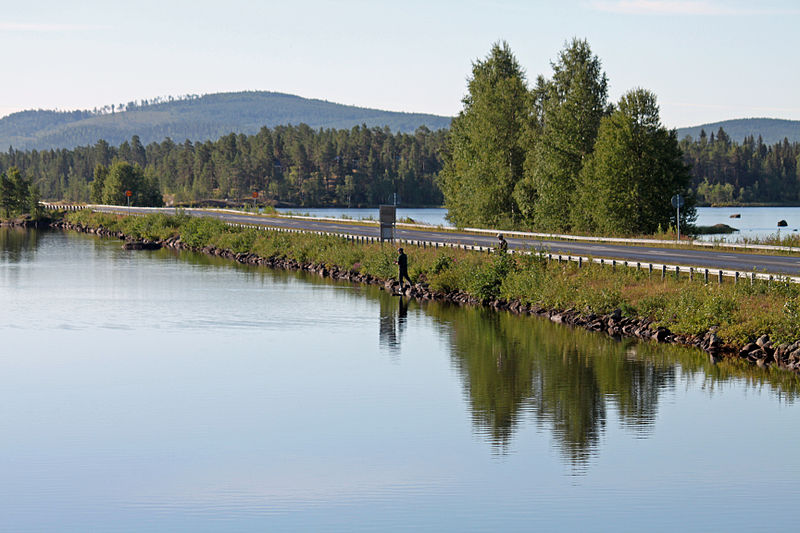
The Blue Highway, Kattisavan Västerbotten. Wikimedia Commons.
Vägens betydelse för turistnäringen betonades allt tydligare. Västerbotten låg länge efter andra områden vad gällde turismen. Redan i slutet av 1800-talet fanns turistförbindelser till fjällvärlden i Abisko. Turistnäringen i Jämtland var också utvecklad. När Västerbottens turism drog igång på allvar var det inte längre aktuellt att satsa på järnvägar. Bilen betraktades dessutom som ”folkligare” än järnvägen.
Blå vägen laddades med stora förväntningar. I riksmedia målades en bild upp av en omfattande turisttrafik. Enligt en uppskattning i Expressen (26/7 1963) skulle hundratusentals turister åka längs Blå vägen under det första året och sedan väntades trafiken öka. Dagens Nyheter (7/12 1963) påpekade att Hemavans fjällhotell kunde byggas ut i samband med Blå vägens expansion. Turismen till skidanläggningarna i Västerbottensfjällen är en viktig inkomstkälla. Det går att spekulera i vilken betydelse turistekonomin fått för utvecklingen av skidnäringen i stort. Från Tärna kommer flera av Sveriges mest kända skidåkare, bland andra Anja Pärsson, Ingmar Stenmark och Stig Strand.
Marknadsföringen av Blå vägen spelade på stereotyper eller fantasier om norra Sverige. Det talades om en omvandling av landskapet, ett slags återanvändning av det gamla jordbrukssamhället som skulle bli till pittoreska vyer för moderna turister. Enligt Göteborgs-Tidningen (21/6 1964) gav en resa längs Blå vägen ”hela skalan av det svenska landskapets olika nyanser”, dvs. en modern universitetsstad i Umeå, bördig jordbruksbygd i kustlandet, gles bebyggelse i inlandet, ”milsvida skogar” och en ”fascinerande fjällvärld där snön ligger kvar året runt”. Samtidigt skulle turisterna få ta del av det moderna samhällets alla bekvämligheter.
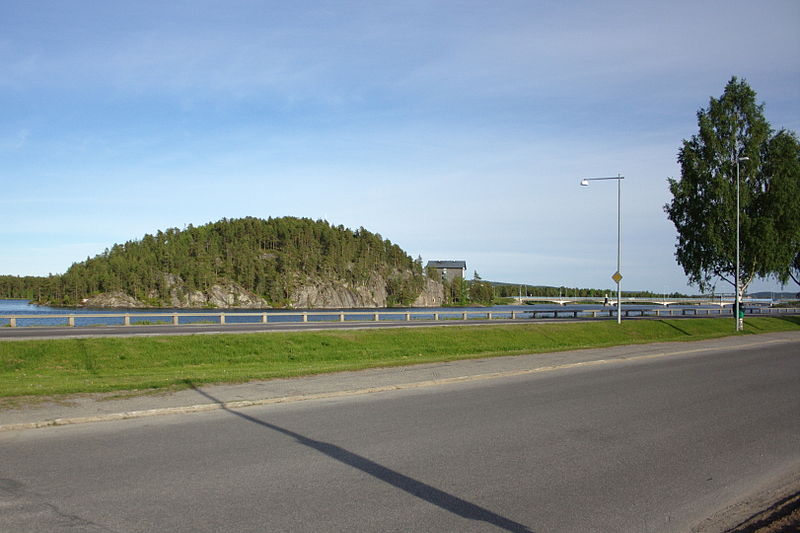
Korpberget, Raven mountain, in Lycksele, with the E12 Blue Highway crossing the Ume river. Photo by Mikael Lindmark, WikiCommons
I många nutida sammanhang beskrivs Blå vägen främst som en turistväg utan att kopplingarna görs till det industriella arvet. De politiska betydelser som satte igång vägbygget träder också i bakgrunden. Den berättelsen ska ses i ljuset av de historiska narrativ som nu etableras om norra Sverige där turismen snarare än den industriella produktionen och utvinningen samt förädlingen av råvaror står i fokus. Blå vägens historia ger en inblick i hur politiska ambitioner, den industriella utvecklingen och efterkrigstidens turistnäring hängde ihop. Det skapades nya former av samverkan men det fanns också slitningar mellan olika intressen.
*
Texten bygger på en artikel som publicerats i Journal of Transport History, ”Politics, Industry and Tourism: The Conceptual Construction of the Blue Highway” (https://doi.org/10.1177/0022526620979506). Forskningen har finansierats av Brandförsäkringsverkets stiftelse för bebyggelsehistorisk forskning.
“Water is everywhere in our economy, in nature and culture. Billions of years ago our planet had cooled down enough for the surrounding gas clouds to condense, fall down to Earth’s surface, and form the oceans. Everything started with water and water is still a precondition to all life. No wonder that World Economic Forum in 2016 listed water as the largest risk factor for sustained well-being on the planet.” https://www.kth.se/water/about
With the focus on water, one thing led to another a few years ago and in 2017 the WaterCentre was initiated at KTH Royal Institute of Technology – linked to our Division through center director David Nilsson, and research coordinator, Timos Karpouzoglou, both researchers with us. The Centre is a collaboration with a “mission to bring about water innovations for a sustainable future of the Earth”.
In line with their own motto “expect the unexpected”, the WaterCentre managed to sum up their four first year in a covid-19 safe conference last week. Read all about it in their blog, and visit their homepage for more news, research and other interesting pieces:
The WaterCentre@KTH has already existed for four years. Wow, time flies! To mark the ending of our first mandate period, we had decided to organise a water conference showcasing research, water inn…
Both EHL director Marco Armiero and Division guest professor Cecilia Åsberg was published in the 2020 summer issue of Ecocene: Cappadocia Journal of Environmental Humanities. Ecocene is a digital, open-access, peer-reviewed, international, and transdisciplinary journal of the Environmental Humanities.The June issue of the journal wrapped sixteen articles from different authors under the title Environmental Humanists Respond to the World. Read the abstracts and find links to the open access articles below.
Abstracts
Beyond Nonpartisan Discourses: Radical Knowledge for Extreme Times
by Marco Armiero
The majority of scientists agree on climate change and on the most daunting environmental problems humans are facing today. Moved by a commendable desire to contribute to the solution of these problems, several scientists have decided to speak up, telling the scientific truth about climate change to decision-makers and the public. Although appreciating the commitment to intervene in the public arena, I discuss some limits of these interventions. I argue that stating the reality of climate change does not prescribe any specific solution and sometimes it seems faint in distributing responsibilities. I ask whether unveiling/knowing the truth can be enough to foster radical transformations. Can knowledge move people towards transformative actions if power relationships do not change?Various environmental justice controversies prove that even when science is certain—and this is rarely the case in that kind of controversies—knowing might be not enough in the face of power structures preventing free choices and radical changes. In the end of my article, I state that it is fair to recognize that scientists have done their parts, and it is now up to social movements to foster the radical changes in power relationships that are needed for transforming societies.
A Sea Change in the Environmental Humanities
by Cecilia Åsberg
As we are living through a transformative response to a viral pandemic, this think piece suggests a reimagining of the environmental humanities in the open-ended inventories of feminist posthumanities and the low trophic registers of the oceanic. Sea farming of low trophic species such as seaweeds and bivalves is still underexplored option for the mitigation of climate change and diminishing species diversity in the warming oceans of the world. The affordances of low trophic mariculture for coastal life and for contributing to society’s transition into climate aware practices of eating, socializing and thinking is here considered, and showcased as an example of the practical uses of feminist environmental posthumanities.
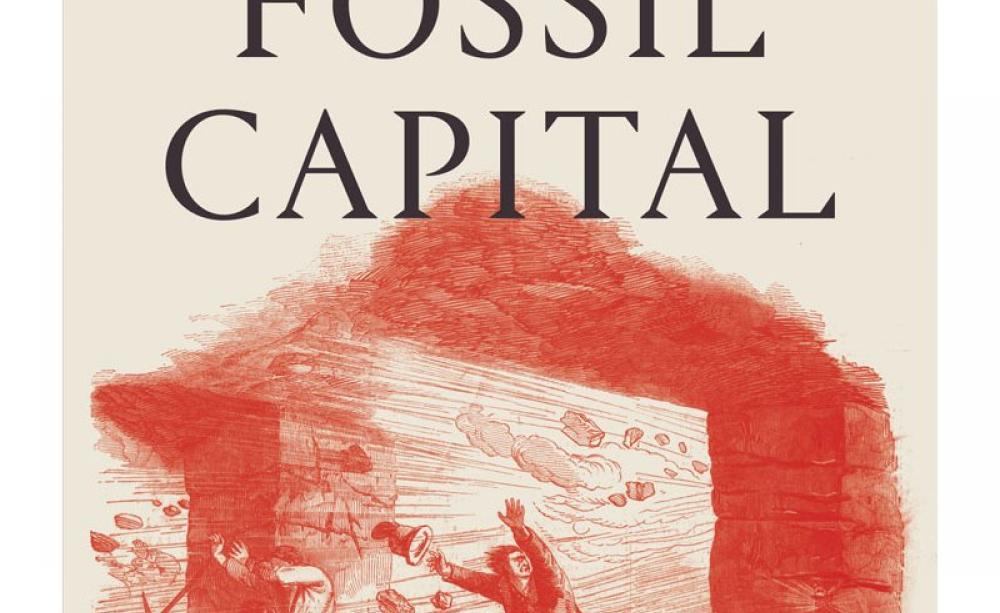
Under the theme of remembering the text (being a division of history after all) we will start a series of re-published texts from the enormous archive of different publications at the Divison. First out is Irma Allen’s review on Fossil Capital: The Rise of Steam Power and the Roots of Global Warming’ by Andreas Malm (Verso Books). This was originally published in the Swedish newspaper Dagens Nyheter, and then later in the Ecologist.
Irma is a doctoral student within the EHL at the Division. Her research focuses on how coal, as a substance and a material of labour, has shaped ideas of the Polish nation. She will defend during 2021.
From front cover of ‘Fossil Capital: The Rise of Steam Power and the Roots of Global Warming’ by Andreas Malm (Verso Books).
We all know that coal and steam vanquished over water power in Britain’s – and the world’s – industrial revolution, writes Irma Allen. But as Andreas Malm sets out in his fascinating new book, the deciding factors in that victory were the unconstrained mastery over people and nature that coal provided mill owners. And so the model was set for the fossil age that may only now be coming to an end.
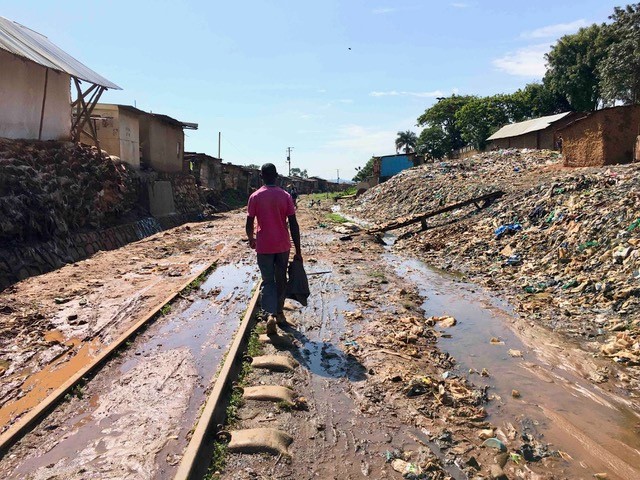
Division and EHL researcher Henrik Ernstson, together with Mary Lawhon, University of Edinburgh and Hakimu Sseviiri, Shuaib Lwasa and Revocatus Twinomuhangib from Makerere University (Urban Action Lab) are published in a forthcoming issue of the scientific journal Urban Geography. In the peer review article “Claiming value in a heterogeneous solid waste configuration in Kampala” they examine recycling in Kampala, the city’s complex waste systems and why little waste moves through it.
Photo: Henrik Ernstson http://www.situatedupe.net/hiccup/hiccup-resources-outputs/
Abstract
Kampala has a complex set of regulations describing actors, rules and procedures for collection and transportation of waste, and requires waste to be disposed of at the landfill. Yet little of the city’s waste moves through this “formal system”. Building on wider scholarship on urban infrastructure and calls to theorize from southern cities, we examine recycling in Kampala as a heterogeneous infrastructure configuration. Kampala’s lively recycling sector is socially and materially diverse: it is comprised of entrepreneurs, publicprivate partnerships and non-governmental organizations, as well as a range of materials with different properties and value. We articulate how actors assert claims, obtain permissions, build and maintain relationships as they rework flows away from the landfill. We argue that recognizing sociomaterial heterogeneity throughout the waste configuration enables a clearer analysis of contested processes of claiming value from waste. We also demonstrate how these efforts have pressured the state to reconsider the merits of the modern infrastructure ideal as a model for what (good) infrastructure is and ought to be. Various actors assert more heterogeneous alternatives, raising the possibility of alternative modes of infrastructure which might generate better incomes and improve service provision.
This article is a part of the Heterogenous Infrastructure Configurations in Uganda (HICCUP) project, funded by the Swedish Research Council.
Henrik is a long time research fellow of the Environmental Humanities Laboratory and the Division. He is a political ecologist, lecturer at the University of Manchester, world wide resident, honorary associate professor of the University of Cape Town, a postcolonial urbanist and a filmmaker to mention only a few things on a long list of engagements. Keep up with Henrik on Twitter: https://twitter.com/rhizomia
It is a new week at the Division of History of Science, Technology and Environment and this one begins with the official launch of the SPHERE podcast – produced by our very own Eric Paglia.
About the Podcast:
SPHERE is a podcast that investigates the historical evolution of global environmental governance through in-depth discussions with a wide array of scholars, scientists, and practitioners—including politicians, diplomats and other government officials—who have played decisive roles in shaping the course of environmental politics, science and activism over the past half century or more.
In the first episode, with 1948 as a starting point, Eric talks to prof. Sverker Sörlin on “the idea of “the environment” emerged at the outset of a radical reconfiguration of the human-environment relationship precipitated by an unprecedented post-war economic expansion that put enormous pressure on ecosystems and the Earth.”
Sverker is a professor of Environmental History at the Division, an author, writer, frequent debater and outdoor sports entusiast with an inexhaustible source of energy.
The SPHERE project is a historical study of humanity’s relation to planetary conditions and constraints and how it has become understood as a governance issue.
Enjoy a virtual talk between Marco Armiero and Serenella Iovino from October 2020. This webinar was a part of Serenella’s course: Entangled Emergencies. Theories (and Stories) to Think with the Virus. An Environmental Humanities Approach at the University of North Carolina Chapel Hill.
Serenella is a Professor of Italian Studies and Environmental Humanities, a literary theorist, an ecocritic and a friend of the Division and the EHL, and she has been engaged in several events and projects with us over the years.


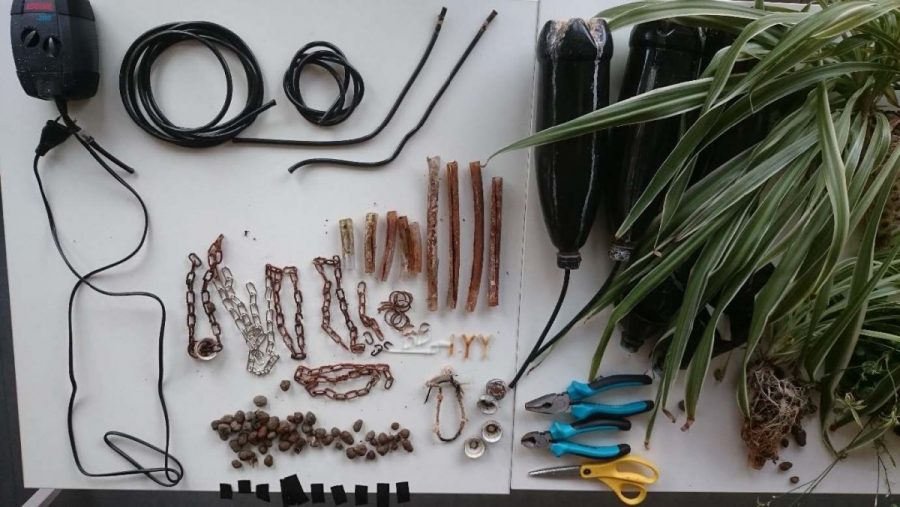 Over the past two years, these plants have breathed with us, and the humming of the pump and the dripping along the chains have filled the pauses in our conversations over lunch. The first attempt was a mediocre success: a few plants (basil and lemon balm) died almost immediately; the ivy and coffee plants fared much better, but eventually succumbed to systemic problems. The nutrient solution evaporated too quickly – we added plastic pipes along the chains to minimise splashing, but this did not fix the problem – eventually causing the system to clog up completely.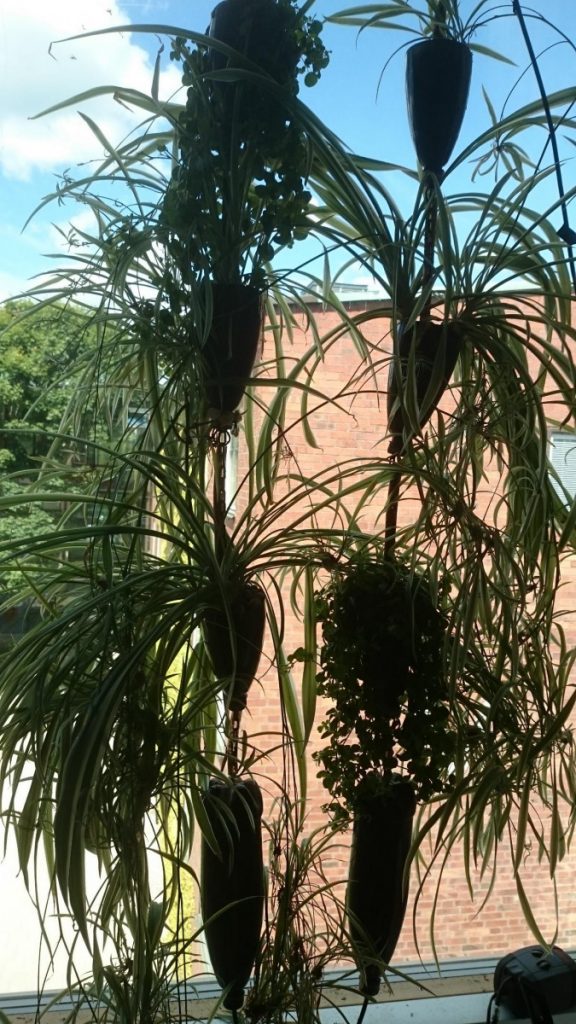

 Fredrik Bertilsson came to the Division of History of Technology, Science, and Environment in 2018. His main research focus is within the area of knowledge management and research policy.