
KTH researchers receive grants for technology promoting independence
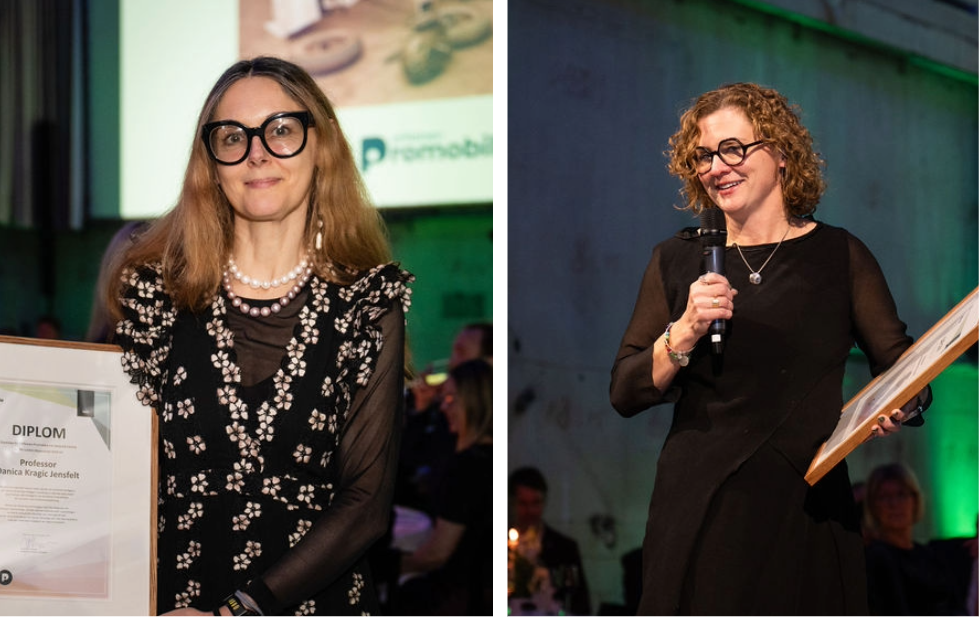
How can technology give people more freedom in their daily lives? It’s a question that unites KTH professors Danica Kragic Jensfelt and Lanie Gutierrez Farewik who have now been recognised by the Promobilia Foundation for their contributions to assistive technology.
The foundation celebrated the centenary of visionary inventor and Permobil founder Per Uddén with a gala dinner in the KTH reactor hall on 26 November. During the evening, KTH took centre stage when scholarships were awarded.
The Per Uddén Scholarship for 2025 goes to KTH professor , honoured for her pioneering work in robotics, where technical aids are designed to enhance independence and quality of life for people with disabilities. Her goal is to develop robots that not only assist with tasks, but truly enable activity, autonomy and meaningful participation.
With the long-term support you are now receiving from Promobilia – what do you hope your research will have accomplished in people’s homes ten years from now?
“Once the project is completed, we will have a clearer understanding of what humanoid robots can realistically contribute in the home – and what challenges arise,” says Danica Kragic Jensfelt. “These insights will help shape the next generation of humanoid robots so they function better in different environments and for people who need additional support”, she says.
Starting with capabilities
The Kaj Sigstam Scholarship is awarded to Lanie Gutierrez Farewik, professor at KTH and director of the Promobilia Move Ability Lab. She was the first recipient when the scholarship was introduced in 2024, and this year she accepted her diploma in the presence of Kaj Sigstam himself – the civil engineer who led the Promobilia Foundation for more than six decades.
Gutierrez Farewik’s research brings together biomechanics, sensor technology and robotics to better understand human movement – and how technology can help people regain or improve their mobility.
You work every day to understand how people move. What do you hope your research will help change?
”In rehabilitation technology, the focus often lies on compensating for what is difficult. I want to broaden that perspective so that we equally build on people’s strengths”, Gutierrez Farewik’s says. “My research aims to understand the capabilities that are actually present and how technology can be designed around them. That’s the shift I want to drive — using technology to help people make the most of their own abilities, so more individuals can move freely, safely, and with dignity.”
With this year’s awardees, Promobilia continues to advance innovation closely aligned with Per Uddén’s original vision: that all people, regardless of functional ability, should have the opportunity to live a life characterised by movement, independence and participation.
Text: Anna Gullers