To KTH's start page

MULTICLIMACT

Information about the project

Short project facts

Funded by: European Commission
Time period: 2023-2026
Project members: INDEK and partners listed on multiclimat.eu .

Background

MULTICLIMACT is committed to safeguarding Europe’s built environment from the escalating risks posed by natural and climatic hazards. Recognizing the increasing frequency and severity of floods, earthquakes, extreme weather events, and heatwaves, the project emphasizes the urgent need for adaptive, forward-looking measures that strengthen resilience at both local and regional levels.

To achieve this, MULTICLIMACT deploys innovative strategies tested across four pilot sites, each representing diverse climatic conditions and socio-economic contexts. These pilots serve as living laboratories where adaptive solutions are validated, refined, and scaled, ensuring that outcomes are transferable across borders and adaptable to varying national circumstances.

Our objective in the project is to design and analyze supply chains for critical materials and technologies. By mapping dependencies and vulnerabilities, MULTICLIMACT ensures that retrofitting and maintenance of the built environment, including cultural heritage assets, can be carried out with resilient, sustainable, and efficient supply chain operations. This perspective not only addresses immediate operational needs but also anticipates long-term challenges such as resource scarcity or logistics bottlenecks.

Beyond technical innovation, MULTICLIMACT contributes to policy and governance frameworks, offering guiding principles for adaptive planning, cross-border collaboration, and stakeholder engagement. By integrating scientific research, operational pilots, and institutional dialogue, the project aims to embed sustainable and resilient supply chains into Europe’s construction, maintenance, and heritage preservation practices.

Project contact persons
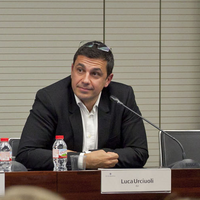
Luca Urciuoli
Luca Urciuoli associate professor
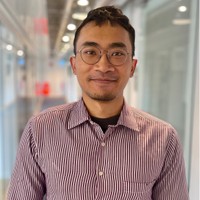
Ari Carisza Graha Prasetia
Ari Carisza Graha Prasetia doctoral student
Page responsible:Sebastien Gustin
Belongs to: Industrial Economics and Management
Last changed: Mar 10, 2026
Title
ACCELERATE Center – Accelerate the Transition to and Scale-Up of bio-CO2 Utilization
AI in the media industry
Aligning GHG emission reduction with economic resilience - the case of Science-Based Targets in the dairy sector
Analysing circular business models and circular supply chains in the Swedish process industry
Artificial Intelligence and industrial transformations
Blade2Circ
CircSolar - a circular solution for solar panels
Data-driven sustainable food: The case of One Planet Plate
EDU ABCM - Capacity Building on Student-Centered Energy Education In Cameroon, Ethiopia, Mauritius and Mozambique
Evaluating the economic effects of environmental regulations in the Swedish trucking industry
Is the green transition economically sustainable?
Improving resilience: Using insurance data to design better loss prevention
ISAC
Masculinities and homosociality in Academia
Men in focus - exploring homosocial cultures in organizations and developing methods to prevent sexual harassment
MULTICLIMACT
NORM – Networked model for employee-driven improvement of climate-smart and healthy workplaces
R&I programme management - organization design and value creation in the High Capacity Transport programme
Revisiting engineering culture(s): a feminist study on gender and work for change in Swedish engineering
The impact of the EU Emissions Trading System on firm behavior and CO2 emissions