KTH Logo

Salaries, leadership and working environment

Dear colleagues,

The fall semester has gone fast and we are already at the end of November, soon reaching the New Year! During the fall, the ITM management has worked on many issues as you probably have seen in different blogs and newsletters.

As all of you know, we have worked with salary negotiations during the fall. From the managements side we have identified groups or departments where large imbalances exist and tried to take measures to decrease these differences. Here, it is very important that we compare individual salaries with the salaries on a KTH level. We believe that this approach will lead to more equal salaries for all individuals and functions based on the performance in connection to the task of the function and independently of in which unit they are active. Overall, the process has been good. Me and Anna Blendow had the last negotiations with KTH and the unions on Monday and we resolved all remaining questions with respect to the salary suggestions. Thus, all of you could expect to receive your new salary in December.

Currently we are finishing the leadership course with focus on gender aspects under the lead of our JMLA Professor Annika Borgenstam. This fourday education of all unit leaders including home work with their own organizations will by wrapped up at a meeting at the end of November at HPU in Södertälje. Thereafter, we will gather all unit leaders at our annual leadership conference, which will take place on January 16 and 17, 2020. Here we will make plans on how to continue the work on gender and equal treatment issues in our organization.

ITM has continued to work in a systematic manner with work environment and safety issues in our so-called Quality (Q) group. Here, we discuss issues such as chemicals, fire protection, inflammable goods, responsible for the laboratories, etc. As you may know, we meet four times per year. The purpose is to systematically improve our work in all these areas based on best practice. During the last meeting we discussed the necessary investments in courses to educate the personnel in fulfilling their tasks at the departments as well as investments in equipment that are necessary to improve the safety. ITM management team has a special budget to make sure that this is done in a systematic manner, which will benefit us all.

I wish to especially point out the importance of having active Health and Safety representatives, which work together with the ITM management in many issues such as the systematic environmental work, reorganizations, reconstructions, etc. Currently, the ITM school lack representatives in several departments as well as a main representative for ITM. We have had discussions with both union representatives as well as experts from KTH on how to stimulate more individuals to take these responsibilities. We will continue to discuss with the unions until we have some active and competent Health and Safety representatives in place.

/Pär Jönsson, Acting Head of School


New leadership at ITM and welcome back

Dear colleagues,
I wish to welcome you back from your vacations. I hope that all of you now have returned with an extra boost of energy so that you are ready to continue your work tasks in a successful manner!

As you all know by now, the President has initiated a process to select a new Head and Deputy Head of the ITM School. A committee consisting of participants from both KTH and ITM will be formed. The goal is to select the new leadership during the autumn so that they can start their positions in January 2020.

The President has appointed me as a Acting Head of School and Martin Törngren as the Deputy Head during the period of July 1 to December 31. Martin’s focus will be to lead an integrated research initiative that the ITM Management group has decided on earlier this year. I will let Martin explain more about this in his own blog.

My job will be to carry out the Head’s tasks in a similar way as was done by the previous one. This means, for example, that every second Tuesday I will meet the Head of Administration Christina Carlsson, the Director of First and Second Cycle Education (GA) Anna Jerbrant, the Director of Third Cycle Education (FA) Malin Selleby, and the Responsible for the research initiative Martin Törngren. The purpose with these meetings is mainly to prepare relevant questions that we will discuss in the ITM Management group, which also are held every second Tuesday. The Management group also consists of the Department Heads, the responsible for the faculty and a student representative.

I also wish to inform you about a couple of activities that will take place during the fall:

  • The salary negotiations between managers and employees will take place in September.
  • The quality system for the education at KTH will be evaluated. We will inform you more in detail later. Now we now that the dates for evaluations will be October 1 and November 25 to 28.
  • The preparations for the assessment of the research (RAE2020) will start. This event will take place late August 2020.

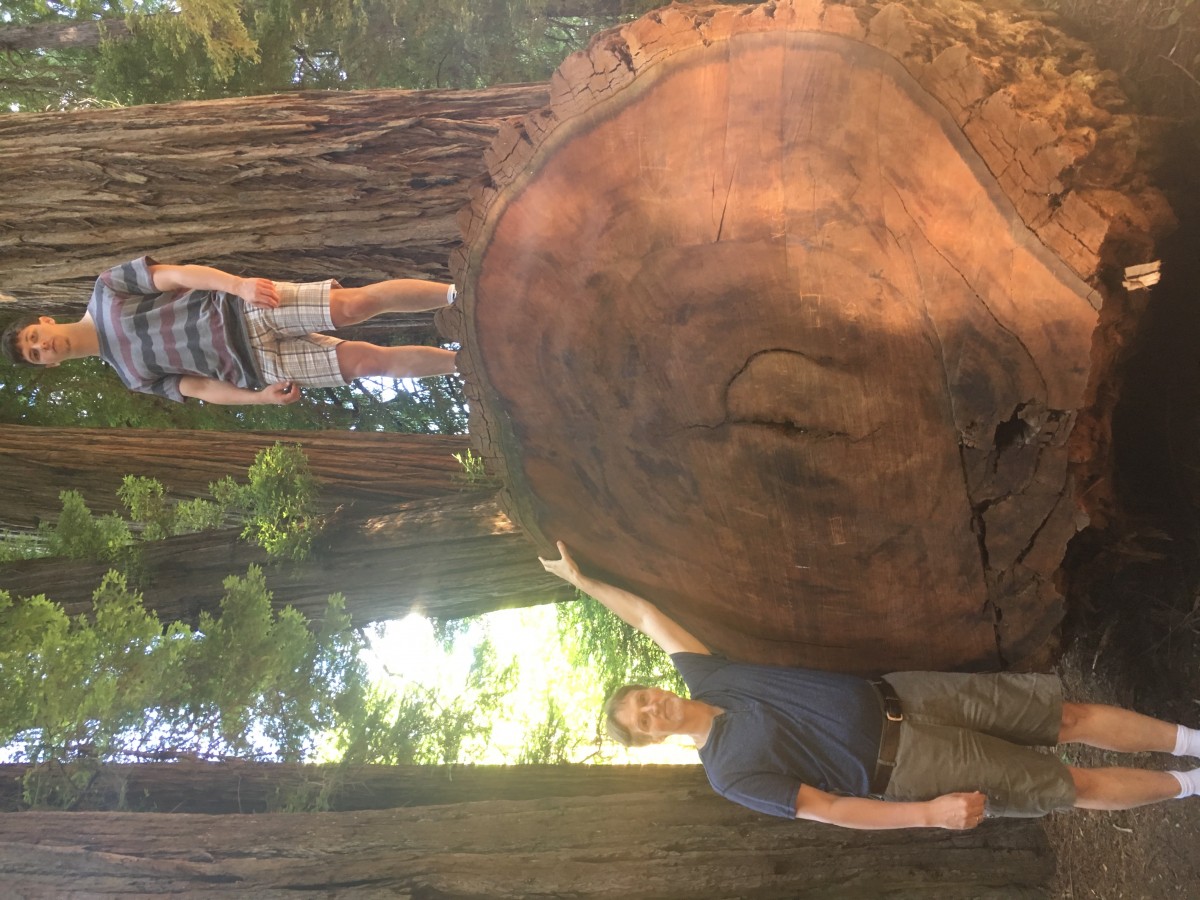
Pär Jönsson and his son in the Jededia Smith’s Redwood State Park Finally, I wish to share some of my summer activities. The most amazing thing I did during the vacation was the visit to Jededia Smith’s Redwood State Park, where a Star Wars movie was filmed. It is a fantastic feeling to take a walk in such a forest full of very tall trees that are more than 2000 years old. I strongly recommend a visit to a Redwood park if you get a chance!

/Pär Jönsson, Acting Head of School

Testing new ways of examining knowledge in the master program

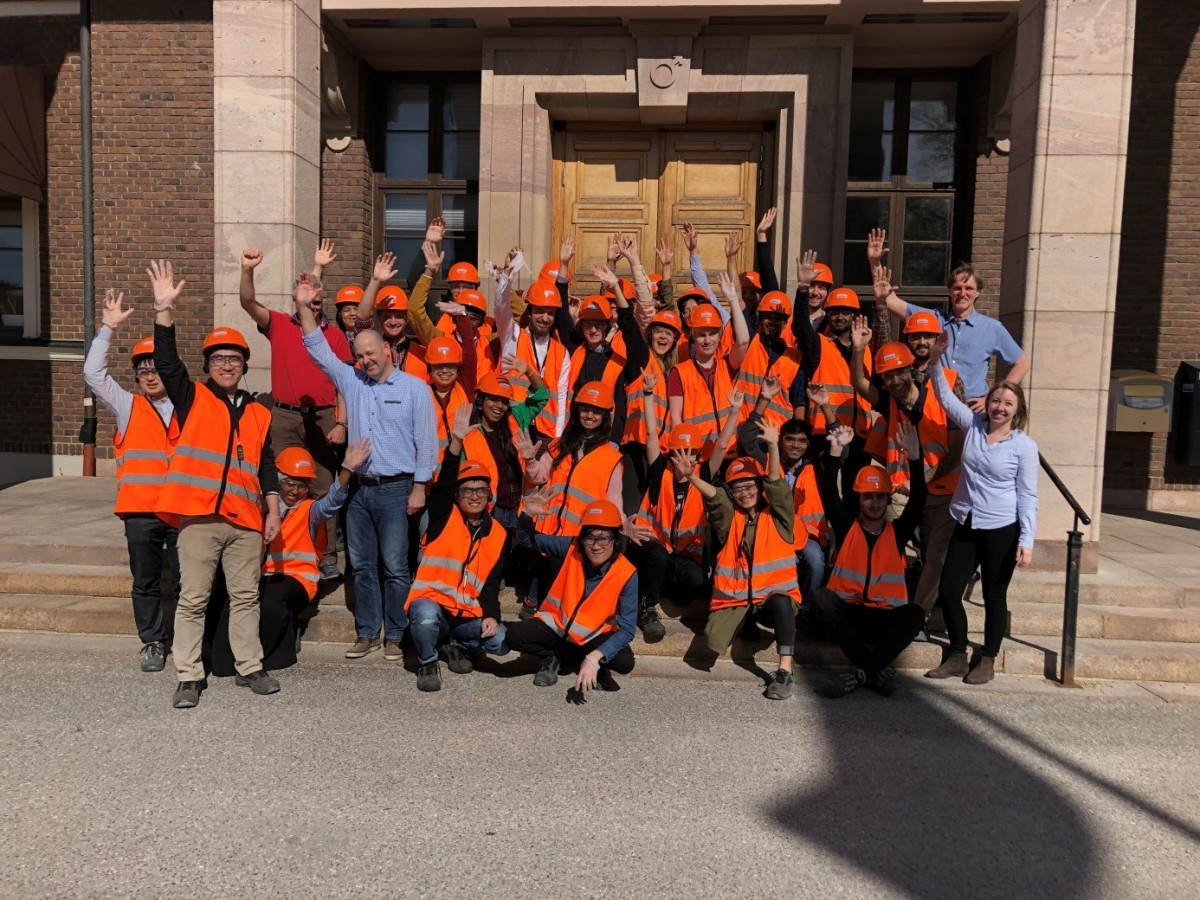
A picture taken just after that the students’ visit at SMT’s plant in Sandviken.

A new examination idea

Many teachers at the ITM School often think of new ideas on how to examine the required knowledge in a course, and I am one of them. I wish to share some recent experiences. Together with my colleague Assistant Professor Björn Glaser we teach in the course Advanced Process Science. The purpose of the course is to teach students about reactor design and process control in industrial metallurgical processes. Based on their previous obtained knowledge (for example thermodynamics and kinetics), we teach them on how to apply this knowledge on current industrial processes.

During the course evaluations the last 5-8 years, the students have suggested to examine the course goals in other ways than through a traditional written exam. Based on this we have tested open 24 hours exams where students have been given the task eight o’clock in the morning and then turned in their answers 24 hours later. The responses from the students have been very positive!

In close collaboration with Sandvik

Together with the company Sandvik Materials Technology (SMT), who sponsors parts of the travels in the course, we tested a new idea this year. Previous years we have visited SMT at the end of the course. The company has presented their work on selected processes and the students have had a tour to the steel and working mills.

This year we tried out a different approach. Together with Olle Sundqvist and Fia Vikman from SMT we defined five topics for the students to work on to acquire the knowledge needed to fulfill the course goals. Olle visited KTH to give introductory lectures in January. Thereafter, the groups were formed, and one supervisor from SMT together with one from KTH were designated to each group. As next step, each group visited SMT in Sandviken to study their process part and to discuss details of the project with the supervisor.

Examination in relation to the industry

Back at KTH the students had to answer three large questions related to process control and reactor design, based on course material given in the lectures and information from the literature. The fourth question was a more open question where the students should suggest innovative solutions to improve the specific process task given by SMT.

After almost two periods of work, the student findings were presented in a report as well as at a seminar in Sandviken in May. Here, the whole project was presented for a larger audience and the performance was judged by the teachers. In a way this corresponded to our previous 24 hours exam level. In addition, the innovative solutions were discussed in detail separately in small groups including the specific supervisors. After a full day’s work in Sandviken, SMT invited the students and teachers to a fantastic three-course dinner at their restaurant.

Improved motivation and innovative solutions

Overall, our experience is that the motivation of the students was much higher and the innovative solutions were detailed and more realistic, when we used this approach instead of a traditional way of examining their knowledge. In their work they clearly showed that they used their previously obtained knowledge in coming up with innovative solution.

In addition, they also discovered that the current metallurgical tools to determine thermodynamics and kinetics cannot always be used for real industrial applications, since for example databases and knowledge are missing. One important learning was that our theoretical knowledge is not always enough to solve all industrial problems. Thus, as future engineers the students need to work hand-in-hand with skilled personnel in industry that has the hands-on knowledge to solve challenging industrial tasks!

/Pär Jönsson, Vice Head of the ITM School

Celebrating 200 years of education in Materials Science and Engineering!

Dear all,

This time I wish to tell you about the importance of 2019 for MSE, ITM and KTH. We celebrate that it is now 200 years since the King Karl XIV Johan laid the foundation for higher technical education in Sweden through the decision to establish Bergsskolan in Falun. This was later moved to Stockholm and became part of KTH. The first Professor in 1819 was Gabriel Sefström and he represents the first among many Professors related to the current MSE department.

The Department Head Annika Borgenstam and her co-workers at MSE have organized a conference to celebrate this jubilee, which will take place during June 17 and 18. The first day is devoted to the education in materials science and engineering. Here, both our President Sigbritt Karlsson as well as Annika Borgenstam will give opening speeches. Thereafter, the Director General of Swedish Council for Higher Education Karin Röding will talk about higher education in Sweden. Among the other speakers I wish to especially mention Professor Greg Olsson from Northwestern University, USA. He will present his views on Materials design: research and education – past experiences and future development.

The second day will be devoted to research. The focus will be on future research areas and the presentations are:

  • Modelling of new alloys
  • Process technology for reduced environmental impact
  • Circular economy
  • Additive manufacturing – materials and applications

The second day is also organized in collaboration with and sponsored by the KTH Materials Platform. Please join us at the conference to celebrate Materials Science and Engineering!

Sign up at here

Pär Jönsson, Vice Dean

Industrial collaborations – focus on faculty

In my last blog I discussed how we could collaborate with industry. I wish to continue on the same theme this time. However, now taking the perspective of a person that is working in industry. How can such a person be part of KTH?

There are two main ways, namely an affiliated faculty or an adjunct Professor.

Typically, what happens is that an individual researcher at a department has collaborated with someone in the industry for some time. The person in the industry enjoys giving lectures, supervising students and writing papers in collaboration with KTH researchers, etc. At this point the person discusses with the KTH contact and the closest manager if it would be possible to have a more official connection to KTH.

At this time I am usually contacted by a Department Head that wishes to know which of the two ways are most suitable. Here it is clear that most external people wish to have the title “Professor”. However, we need to make sure that they fulfil all requirements stipulated by KTH. The requirements for becoming an adjunct professor can be found on the KTH home page:

https://www.kth.se/en/samverkan/partnerskap/personrorlighet/adjungerade/adjungerade-professorer-brobyggare-mellan-kth-och-omvarlden-1.329822

Me, the Department Head and the KTH teacher that wish to establish the collaboration carefully go through the persons CV After that, Dekanus Katja Grillner makes a pre-evaluation of the persons CV to judge whether the person has the qualifications of becoming an affiliated faculty or an adjunct professor. Thereafter, the candidate can officially apply for the position. At this stage of the process, one of our ITM administrators, Helena Lundquist or Malin Bolin, will support the candidate and the department to establish and upload the required documents.

If a person becomes an affiliated faculty it opens up the possibilities to carry out more academic work as part of their work assignments. As mentioned before this may include writing papers on collaborations with KTH researchers and co-supervision of PhD students, which both represents activities that helps to boost a person’s CV. Thus, if the collaboration is successful and appreciated from both organisations, the person could apply for an adjunct professorship in the future.

As shown in the link given above, and adjunct professorship application will be evaluated by external experts as well as by Dekanus. If a person passes this evaluation it is most common to have the position for one day a week (20%), but up to a maximum of a 50% position.

We have seen an increase in the number of people that wish to work closer to us at KTH. This is very positive, since they bring their industrial experience into our KTH academic environment. This helps our students to better understand the industrial situation that most of them will work with in the future.

Finally, I wish to say that I hope that you had a fantastic winter break, “sportlov”.

Myself I took one day of to visit the historical places Uppsala and Österbybruk . At the latter place I picked up my son that had taken a one-week course in stone laying. My hope is that I finally get my drive way fixed this summer….

Pär Jönsson, Vice Dean